
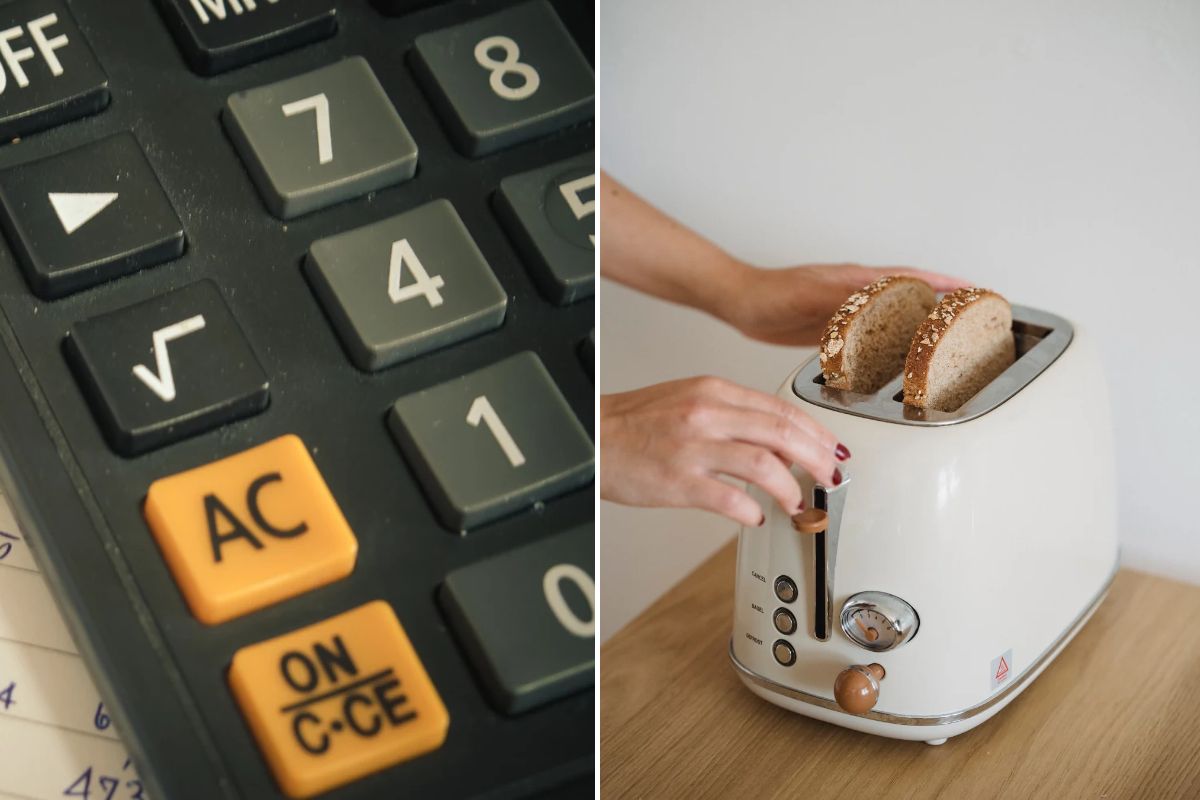
There’s a famous quote from Parks and Rec where lovable goofball Andy Dwyer says, “I don’t know who Al Gore is and, at this point, I’m too afraid to ask.” The quote has become legendary and the subject of endless memes because it’s so relatable. If we’re being honest, we deal with a lot of things in our daily lives that we don’t really understand, but we roll with it and pretend. Because, in the immortal words of Andy Dwyer, we assume everyone else knows, and asking would just make us look dumb. Here are a few of those everyday mysteries, clarified without shame. 1. Those two buttons on your calculator Almost every basic calculator has a C button adjacent to a CE button. Everyone knows that those buttons clear the screen, but few want to admit that almost nobody knows their real function. Or what the difference is between them. In a recent discussion on Threads, most people admitted they just mash both buttons randomly to clear the screen and start over. The truth is pretty simple: C means Clear, as in Clear the entire calculation. CE stands for Clear Entry and removes only the last value you typed. CE is like the Undo or Back button, letting you continue from where you left off. C, or Clear, just starts everything over from the beginning. Calculator discourse on Threads. Photo Credit: @danicaromero/Threads 2. The numbers on your toaster Unlike most other cooking devices, toasters offer only numbered cooking settings, usually 1 to 5 or 6. Intuitively, we all understand that a 6 means longer cooking and/or higher heat, resulting in darker toast, whereas 1 offers a lighter touch. But few of us actually understand what the numbers themselves are referencing. Temperature? Time? Number of slices? We’re too afraid to ask. The answer? The numbers on a toaster don’t refer to temperature or time, but to a combination of both, heavily weighted toward time. The numbers on your toaster’s dial regulate the internal heating mechanism by increasing the electrical resistance, which delays the spring release. So the numbers measure time, right? Well, not precisely. Because if the toaster is already hot from a previous cycle, the same setting will take less time. This is a phenomenon called “toaster memory.” The best way to understand the numbers is that they correspond to “level of toastyness” and that’s all we really need to know. Everyone has measured something with a tape measure before and likely found its little metal end quite handy, if slightly confounding. The metal piece allows the end of the tape measure to hook onto the outside edge of the object to be measured, or to be pressed up against the inside (think measuring the opening of a windowsill). Most people have noticed that, without fail, that little metal piece is always just a bit wobbly or loose-feeling. But that’s not because of wear and tear or bad design; it’s totally intentional. By design, the metal hook is 1/16 inch wide. As a result, the tape measure is 1/16 inch short. When the end of the tape measure is pressed up against something, the hook slides in—so its metal width accounts for the first 1/16th of an inch of your measurement. When it’s hooked on the outside of something, it slides out 1/16th of an inch, allowing your measurement to actually start at 0. 4. The “eject USB” button Thumb drives, or USB drives, were a core element of many Millennials’ upbringing. We relied on them for school projects, sharing music with friends, and college term papers. But the one thing almost none of us ever really understood was why we couldn’t just pull them right out of our computers without properly “ejecting” them first. The whole thing seems so counterintuitive—USB drives just scream “On the go,” so why the extra step? According to Corsair, ejecting a thumb drive “Flushes any pending writes… Closes open file handles… Unmounts the filesystem… and sometimes even powers the device down.” Yanking the stick out too soon risks corrupting the file and possibly the entire USB drive. That fear is what keeps us all hitting “Eject” even though we don’t really understand it. The good news is that pulling a thumb drive out without ejecting first is really only risky for the couple of seconds after your computer is done writing files to the drive. If it’s just passively sitting there, you’re probably good to go—but a true Millennial can never be too sure. 5. Those bumps on the F and J keyboard buttons Almost all standard QWERTY keyboards have small, almost imperceptible bumps on the F and J buttons. We feel them every single day as we type. But what are they? Braille? Finger grippies? Hidden sensors? It’s been so long now that most of us are afraid to ask, or have even forgotten they’re there. The truth is that the bumps on the F and J keys are tactile anchor points for touch typists, or anyone who types quickly and accurately without looking down at their fingers. More specifically, though, the bumps aren’t Braille; they help visually impaired folks who cannot see the keys well, and anyone who types in the dark, locate them. 6. Pasta spoons Have you ever noticed that almost every pasta spoon has a large hole in the middle? Most people either don’t notice it or use it to drain water while scooping noodles. However, the hole has a hidden function: in most cases, it perfectly measures one serving of dry spaghetti noodles. If you’ve never wondered why the holes in every pasta spoon you’ve ever owned are the same size, you might be missing out on a useful kitchen measuring hack. 7. That bottom drawer on the oven Most people use the bottom drawer of their oven to store pans and baking sheets. But if it’s always felt a little off to you, there could be a good reason: Many (but not all) bottom oven drawers are warming drawers, not storage areas. Your oven may have a setting you’re missing that lets you put dishes like casseroles, pasta, etc., in the warming drawer and keep them at the perfect temperature while you keep prepping. Often, this is a great place to “proof” dough and let it gently rise. On some older oven models, that bottom drawer is actually a broiler. So be sure to check, and not just assume it’s a simple storage drawer. 8. The elevator door close button Almost every elevator features a “Door Close” button that people use liberally. We’re sorry to report this, but in most cases, that button does absolutely nothing. The Americans with Disabilities Act outlines strict guidance for elevator doors. They must stay open long enough for someone on crutches or in a wheelchair to enter the elevator. The legislation passed in 1990, and now most door-close buttons can be activated only by firefighters and maintenance personnel. Still, most of the time, they’re just for show. So if you’ve ever wondered about these eight nifty things but were too embarrassed to ask, now you know.
8 things people have used their whole lives without knowing what they actually do
Full Article
Original Source
Read the full article at Upworthy →KhanList aggregates and links to publicly available news content. We do not host full articles from third-party sources. Always verify important information with original sources.