
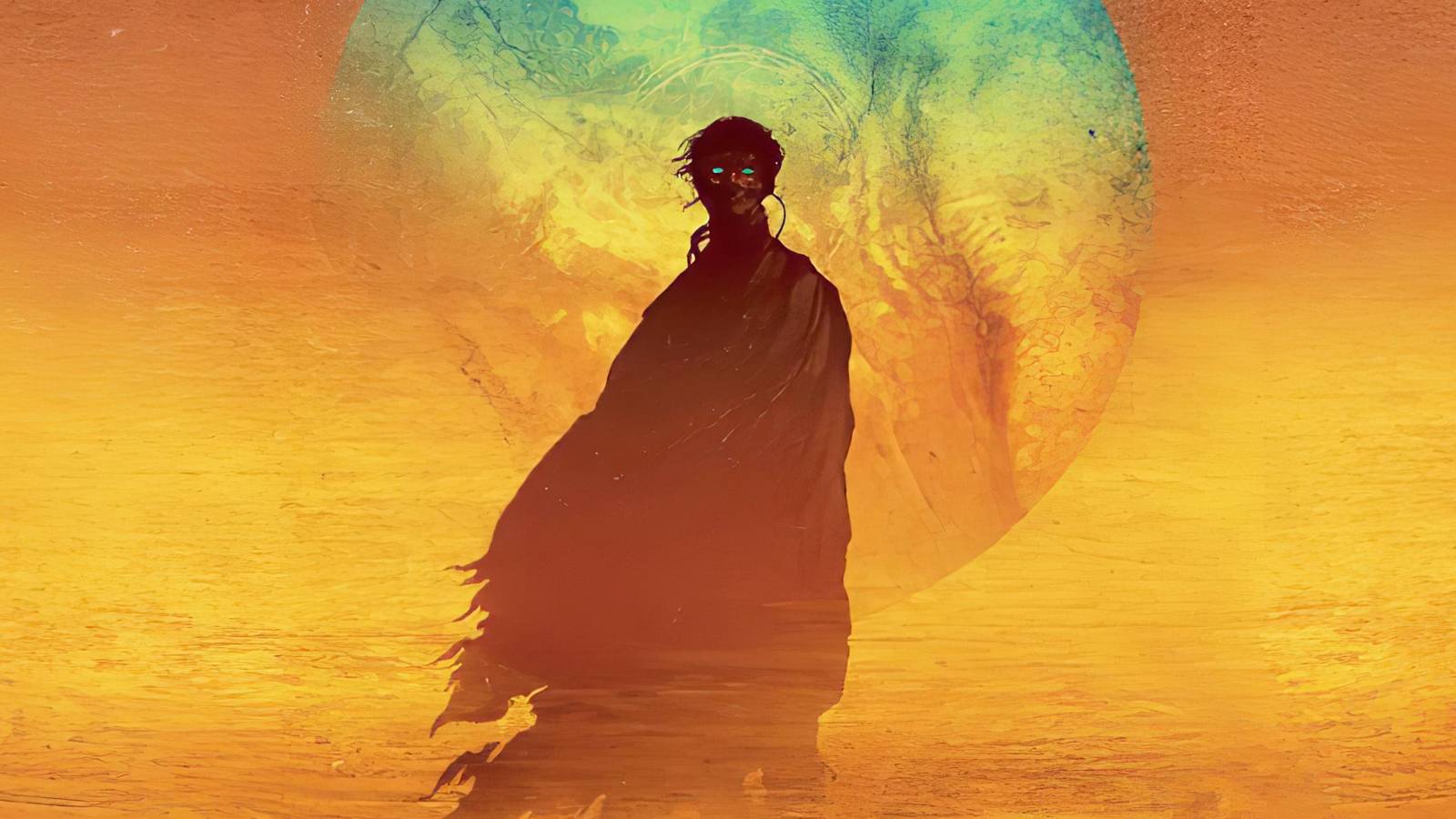
Image via ACE/Matt Griffin Published Oct 5, 2026, 3:41 PM EDT Luc Haasbroek is a writer and videographer from Durban, South Africa. He has been writing professionally about pop culture for eight years. Luc's areas of interest are broad: he's just as passionate about psychology and history as he is about movies and TV. He's especially drawn to the places where these topics overlap. Luc is also an avid producer of video essays and looks forward to expanding his writing career. When not writing, he can be found hiking, playing Dungeons & Dragons, hanging out with his cats, and doing deep dives on whatever topic happens to have captured his interest that week. Sign in to your Collider account Not every great science fiction novel needs to explain exactly how its technology works. Soft sci-fi tends to be more interested in what scientific developments, imagined societies, or speculative circumstances do to people. In other words, these stories prioritize themes and psychology over scientific plausibility. With that in mind, this list looks at some of the subgenre's greatest gems: the books that start strong and maintain that quality the whole way through, whether looking at alien societies and artificial intelligence or cloning and collapsing civilizations. These gems of soft sci-fi are perfect for all those who prefer the genre at its most introspective. 'Station Eleven' (2014) Image via HarperCollins "The king stood in a pool of blue light, unmoored." In Station Eleven, a devastating flu is spreading rapidly across the world. Society is about to collapse, but the novel's attention remains fixed on individual people. That focus defines everything that follows. Rather than becoming a conventional survival thriller, Station Eleven moves backward and forward through time, connecting one man's life before the pandemic with people living two decades afterward. Among them is Kirsten Raymonde, a former child actor who travels with the Traveling Symphony, performing Shakespeare and classical music for scattered settlements of survivors. Through her life, writer Emily St. John Mandel looks at art, celebrity, memory, friendship, and regret. In other words, the plot shifts the spotlight away from the typical post-apocalyptic tropes and shines it on relationships and the ways communities can rebuild through storytelling and creativity. The prose is fittingly restrained and frequently beautiful. 'All Systems Red' (2017) Image via Tor.com "I could have become a mass murderer after I hacked my governor module, but then I realized I could access the combined feed of entertainment channels." All Systems Red is the first installment in the Murderbot series, which was recently adapted into a charming show starring Alexander Skarsgård. The main character is a heavily armed robot that has secretly gained freedom. However, Murderbot has no idea what freedom is supposed to look like beyond binge-watching TV shows. Expertly paced and very entertaining, the book gets plenty of comedy from Murderbot's social discomfort, as well as its withering sarcasm. Murderbot doesn't hate people nearly as much as it claims; it hates being watched, controlled, objectified, and forced into interactions it doesn't understand. Its gradual relationship with Dr. Mensah and her team turns a brisk planetary thriller into a story about autonomy and personhood 'The Left Hand of Darkness' (1969) Image via Ace Books "I was taught as a child on my homeworld that Truth is a matter of the imagination." In The Left Hand of Darkness, protagonist Genly Ai travels to the frozen planet Gethen as an envoy of the Ekumen, hoping to persuade its inhabitants to join a larger interstellar community. However, he faces some cultural barriers. Most strikingly, Gethenians don't possess fixed sexes, instead becoming sexually differentiated only during periods of fertility. Genly considers himself enlightened, yet repeatedly struggles to understand people without filtering them through his assumptions about masculinity and femininity. His uneasy relationship with the politician Estraven becomes increasingly important as those assumptions begin failing him. Author Ursula K. Le Guin (who also wrote the wonderful Earthsea books) uses that premise for some sharp and thoughtful social commentary, without ever becoming didactic. A brilliant novel of weighty yet approachable ideas. 'What We Can Know' (2025) Image via Jonathan Cape "Every archive is an argument with oblivion." This banger from Atonement's Ian McEwan is set in the year 2119, after climate change and rising seas have radically reshaped Britain. From the vantage point of that future, scholar Thomas Metcalfe studies the early 21st century. His particular obsession is a poem once read aloud by Francis Blundy to his wife Vivien at a dinner in 2014. The work has acquired an almost legendary reputation but apparently left no surviving copy. Metcalfe attempts to reconstruct what happened, in the process piecing together a portrait of our era that rings hauntingly true. Indeed, while it's technically futuristic and contains a lot of speculative history (including nuclear confrontations and developments in AI), What We Can Know is really about the present. The mystery of the missing poem consequently grows into a larger question about whether the past can ever truly be recovered. It's very clever, deeply engaging, and finely written the whole way through. 'Dune' (1965) Image via Chilton Books "A beginning is the time for taking the most delicate care that the balances are correct." One of the genre's great masterpieces, Dune leans hard into precise worldbuilding and enduring themes. Our protagonist, Paul Atreides, is awakened before dawn for a frightening test: he must place his hand inside a box, causing overwhelming pain, while a poisoned needle waits at his neck should he withdraw it. It's a wonderfully tense scene that establishes the story in microcosm: the Bene Gesserit, their breeding program, Paul's unusual abilities, and the political danger awaiting House Atreides. From here, the book quickly expands in scope, bringing in spice, gigantic sandworms, the Fremen, an imperial conspiracy, and a planet where water is precious enough to shape an entire civilization. Rather than being technical and plausible, Dune's story is borderline fantastical, replete with mysterious powers and strange beliefs, yet that's also its appeal. Collider Exclusive · Sci-Fi Personality Quiz Which Sci-Fi Hero Are You Most Like? Paul Atreides · Captain Kirk · Princess Leia · Ellen Ripley · Max Rockatansky Five iconic heroes. Five completely different ways of facing an impossible universe. One of them shares your instincts, your values, and your particular way of refusing to back down. Eight questions will tell you which one. 🏜️Paul Atreides 🖖Capt. Kirk ✊Princess Leia 🔦Ellen Ripley 🔥Max Rockatansky FIND YOUR HERO → 01 How do you lead when the stakes couldn't be higher? The way you lead under pressure is the most honest thing about you. AI absorb everything — every variable, every pattern — and move only when I know the path forward. BI read the room, make the call, and own the consequences. Hesitation costs more than mistakes. CI rally people. A cause needs a voice, and I refuse to let fear be louder than conviction. DI assess the threat, establish what needs doing, and get it done without waiting for permission. EI don't lead. I act. Others can follow or not — I'm already moving. NEXT QUESTION → 02 What is your greatest strength in a crisis? The quality that keeps you alive when everything else fails. APrescience — the ability to see further ahead than anyone else and plan accordingly. BImprovisation — I'm at my best when the plan falls apart and I have to invent a new one. CConviction — I know what I'm fighting for, and that certainty doesn't waver under fire. DComposure — I stay functional when everyone around me is falling apart. Panic is a luxury. EEndurance — I outlast things. I take the hit and keep moving long after others have stopped. NEXT QUESTION → 03 What is the thing you'd sacrifice everything else for? Your deepest motivation is your truest compass. AThe survival and dignity of my people — even if I have to become something frightening to ensure it. BThe safety of my crew — every single one of them. No one gets left behind. CFreedom — for my people, for every world still crushed under the weight of an empire. DThe truth — what actually happened, what's actually out there, whether anyone believes me or not. EThe one person — or the one memory — that still makes any of this worth surviving for. NEXT QUESTION → 04 How do you relate to the people around you? Who you are to others under pressure is who you really are. AWith intensity and distance — I care deeply, but the weight I carry makes closeness complicated. BWith warmth and irreverence — I take the mission seriously, not myself. CWith directness and trust — I say what I mean, and I expect the people I work with to rise to it. DWith professional care but clear limits — I'll protect you, but I won't pretend we're family. EWith wariness that slowly becomes loyalty — I don't trust easily, but when I do, it holds. NEXT QUESTION → 05 You're facing a threat that no one else believes is real. What do you do? How you respond when you're the only one who sees it defines everything. APrepare in silence. If they won't listen, I'll be ready when they finally have to. BKeep pushing until someone listens — and if no one does, handle it myself. CBuild the case, find the allies, and make the threat impossible to ignore. DDocument everything. The truth matters even if no one believes it yet. EStop trying to convince anyone. Survive it. That's the only argument that counts. NEXT QUESTION → 06 What has your heroism cost you personally? Every hero pays. The question is what — and whether they'd pay it again. AMy innocence — I've seen what I'm capable of, and I can't unsee it. BPeople I loved — the command chair has a view, but it's a lonely one. CA normal life — I gave up everything ordinary the moment I chose the cause. DMy sense of safety — I know exactly what's out there now, and I can't pretend otherwise. EAlmost everything — and I'm still not sure what I'm carrying it all for. But I keep going. NEXT QUESTION → 07 How do you feel about the rules of the world you're in? Every hero has a relationship with the system. What's yours? AI understand them deeply — and I know exactly which ones must be broken, and why. BI respect the spirit of them and bend the letter when the situation demands it. CThe system is the problem. I'm not here to work within it — I'm here to dismantle it. DI follow protocol until protocol stops being useful. Then I make the call myself. EThe rules collapsed a long time ago. What's left is instinct, and mine are reliable. NEXT QUESTION → 08 When everything is on the line, what keeps you going? The answer is the most honest thing about you. ADestiny — or something that feels so much like it that the difference no longer matters. BThe people on my ship — their faces, their trust, the fact that they're counting on me. CThe belief that what we're fighting for is worth every sacrifice, including this one. DSheer refusal to let it win — whatever it is. I don't stop. That's just who I am. EI'm not sure anymore. But the road is still there, and I'm still on it. REVEAL MY HERO → Your Hero Has Been Identified Your Sci-Fi Hero Is…Your answers point to the iconic sci-fi hero who shares your instincts, your values, and your particular way of facing the impossible. Paul AtreidesYou carry a weight most people would crumble under — the knowledge of what you're capable of, and the burden of what you might have to become. You see further ahead than others and you plan accordingly, even when the vision frightens you. You are driven by loyalty to your people and a sense of destiny you didn't ask for but can't escape. Paul Atreides is not simply a hero — he is someone who understands the cost of power and chooses to bear it anyway. That gravity, that willingness to carry what others won't, is exactly you. Captain KirkYou lead with instinct, warmth, and an absolute refusal to accept a no-win scenario — because you've always believed there's a third option nobody else has thought of yet. You take the mission seriously without ever taking yourself too seriously. Your crew would follow you anywhere, not because you demand it, but because you've earned it. Kirk's genius isn't tactical — it's human. He reads people, bends rules with purpose, and wills outcomes into existence through sheer conviction. That combination of warmth, audacity, and relentless optimism is unmistakably yours. Princess LeiaYou are the kind of person who holds the line when everyone else is losing faith — not because you're fearless, but because giving up simply isn't something you're capable of. You lead through conviction. Your voice carries because your belief is unshakeable. You gave up everything ordinary the moment you chose the cause, and you've never looked back. Leia is not a supporting character in her own story — she is the moral centre of the entire rebellion. That same fierce, principled, unbreakable core is what defines you. Ellen RipleyYou are not reckless, not grandiose, and not particularly interested in being anyone's hero — you just refuse to stop when it matters. You see threats clearly, you document the truth even when no one listens, and when the time comes you handle it yourself. Ripley's heroism is earned, not performed. She doesn't have a speech — she has a flamethrower and a plan. You share her composure under the worst possible pressure, and her refusal to pretend the monster isn't there. When it counts, you don't flinch. That's everything. Max RockatanskyYou have been through fire that would break most people — and what came out the other side is something the world underestimates at its peril. You don't ask for help, don't need validation, and don't wait for anyone to tell you the rules no longer apply. Your loyalty, when it finally arrives, is absolute — but it's earned in silence and tested in action, not in words. Max is not a nihilist. He is someone who lost everything and found, against his will, that he still has something worth protecting. That bruised, stubborn, ultimately human core is exactly yours. ↻ RETAKE THE QUIZ 'Brave New World' (1932) Image via Horizon Ridge Publishing "A squat grey building of only thirty-four stories." While Nineteen Eighty-Four is more iconic, Brave New World might be the most prescient dystopian novel ever written. It imagines a future where human beings are manufactured, sorted into castes, and biologically manipulated for predetermined roles in society. Even more strikingly, nobody needs to conceal what's happening. The World State has converted reproduction, childhood development, consumption, and even happiness into systems of social control, and its citizens have been conditioned to regard this arrangement as progress. The novel's central insight is that tyranny doesn't necessarily require people to feel miserable. The inhabitants of this society receive entertainment, sexual freedom, consumer goods, and happiness-inducing drugs whenever unpleasant emotions intrude. The government doesn't need to send brutal enforcers to make anyone comply; the people have surrendered their freedom willingly. A plausible, terrifying vision. 'Never Let Me Go' (2005) Image via Knopf Doubleday Publishing Group "My name is Kathy H. I'm thirty-one years old, and I've been a carer now for over eleven years." The main character of Never Let Me Go grows up at a seemingly idyllic boarding school alongside friends Ruth and Tommy. However, they eventually realize the grim truth: they are clones, grown to be organ donors for their wealthy doppelgangers, and none of them will make it to old age. Most sci-fi writers would've turned that setup into a pulpy rebellion story, but Kazuo Ishiguro instead spins it into a thoughtful, character-driven drama. Kathy, Ruth, and Tommy know things about their futures that ordinary people would find unbearable, yet they still waste time, hurt one another, fall in love, misunderstand their feelings, and cling to hope. In other words, they behave like everyone else, even in the face of certain death. Through them, the novel makes a powerful statement about mortality, and the ways we all come to terms with, and possibly deny, that our time on this Earth is limited. 'Flowers for Algernon' (1966) Image via Mariner Books Classics "Dr Strauss says I shoud rite down what I think and remembir and every thing that happins to me from now on." This heartbreaking novel centers on Charlie, a mentally challenged man who undergoes an experimental procedure intended to dramatically increase his intelligence. It succeeds, if anything, too well, turning Charlie into a genius. His life totally changes, and new possibilities open up. However, this increasing intelligence also forces Charlie to reinterpret memories he previously understood differently. At the same time, it becomes clear that the results will not last, and Charlie's mind begins to slowly slip away from him once again. He's painfully aware of it, yet powerless to stop it. Few sci-fi stories establish character, premise, and tragedy so efficiently as this gem of soft sci-fi. Flowers for Algernon doesn't need spaceships or elaborate futuristic technology. One scientific breakthrough is enough to ask enormous questions about intelligence, dignity, memory, love, and what actually makes a human life valuable.
8 Perfect Soft Sci-Fi Books That I Knew Would Be Masterpieces From the First 10 Pages
Full Article
Original Source
Read the full article at Collider →KhanList aggregates and links to publicly available news content. We do not host full articles from third-party sources. Always verify important information with original sources.