
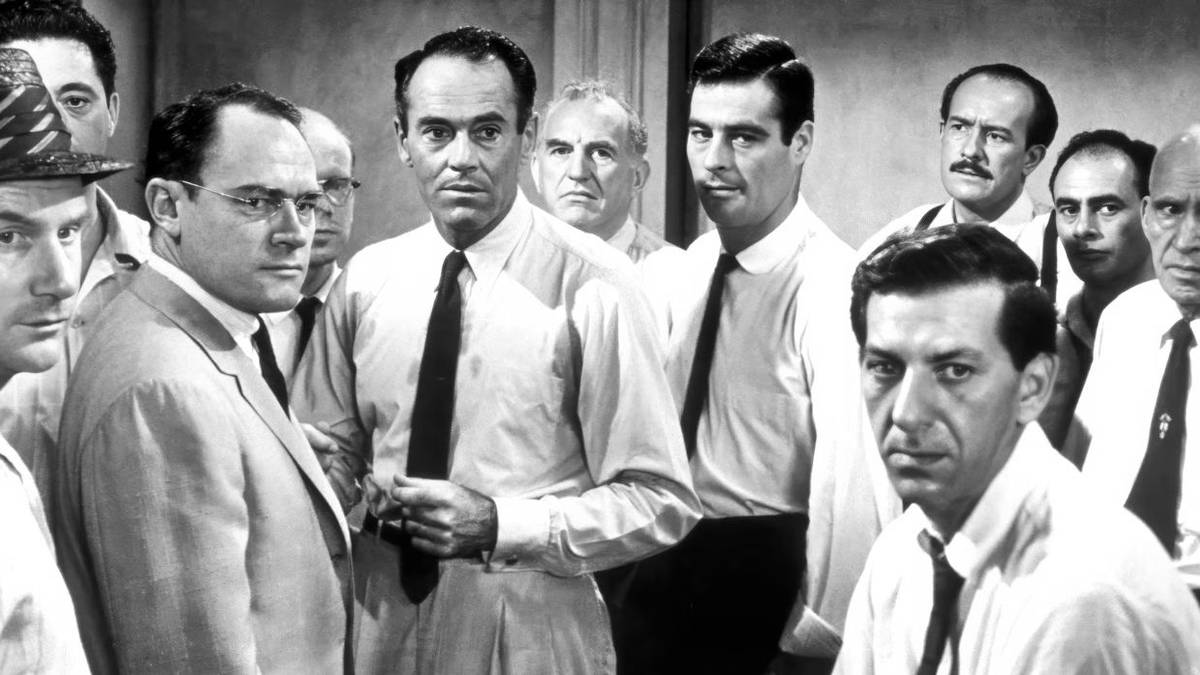
Image via United Artists Published Aug 6, 2026, 6:42 AM EDT Jessica is a young writer from Brisbane, Australia. An avid consumer and lover of all things Film and TV, you will never tear her away from a screen. A tendency rooted from childhood, she once had dreams of becoming a member of the famed kids-band 'Hi-5'. Perhaps that's what pushed her to secure an education with a theater background. But now, as dreams evolved, her passions have turned to admiring performances from afar. Frankly, she's just grateful that she can put her binging skills to good use. Outside of work, Jessica recently completed her undergraduate double degree in Arts/Communications. Other than that, she spends most of her free time with family and friends, probably never forgetting to talk about the new movie or show she watched the day prior. Sign in to your Collider account While modern blockbusters regularly stretch well beyond two hours (and possibly even three), some of cinema's greatest achievements prove that a perfectly paced story can leave an even bigger impression in around 100 minutes. With no room for unnecessary subplots or filler, these films make every scene count, delivering unforgettable characters, emotional depth, and masterful storytelling in remarkably concise packages. Spanning romance, comedy, and thrilling drama, these movies showcase just how much can be accomplished within a lean runtime. And trust that they're still making audiences laugh, cry, or sit on the edge of their seats. Sure, they may be succinct, but each one undoubtedly feels complete from beginning to end. 'The Princess Bride' (1987) Image via 20th Century Studios Framed as a grandfather reading a story to his grandson, The Princess Bride follows farm boy Wesley (Cary Elwes) as he sets out to rescue his true love, Buttercup (Robin Wright), from an unwanted marriage to the villainous Prince Humperdinck (Chris Sarandon). Along the way, he crosses paths with unforgettable characters, including the revenge-driven swordsman Inigo Montoya (Mandy Patinkin) and the gentle giant Fezzik (André the Giant). At just 98 minutes, Rob Reiner's fantasy classic somehow squeezes in romance, comedy, swashbuckling adventure, fairy-tale magic, and endlessly quotable dialogue without ever feeling rushed. Every scene serves a purpose, every supporting character gets a chance to shine, and the film moves with effortless momentum from one iconic moment to the next. It's a true masterclass in economic storytelling—and one of the most endlessly rewatchable movies ever made. 'In the Mood for Love' (2000) Image via Block 2 Pictures Set in 1960s Hong Kong, neighbors Chow Mo-wan (Maggie Cheung) and Su Li-zhen (Tony Leung Chiu-wai) slowly discover that their respective spouses are having an affair. But as they spend more time together trying to understand the betrayal, an unexpected emotional bond develops between them, even as both remain determined not to repeat the same mistakes of their partners. As a true auteur, Wong Kar-wai proves that a love story doesn't need grand declarations or sweeping plot twists to leave a lasting impact. Running just under 100 minutes, In the Mood for Love unfolds with remarkable patience, allowing stolen glances, lingering silences, and ethereal cinematography to communicate what words never could. Every frame feels meticulously composed, resulting in one of cinema's most beautiful and emotionally devastating romances. 'Hunt for the Wilderpeople' (2016) Image via Defender Films After bouncing between foster homes, rebellious teenager Ricky Baker (Julian Dennison) is sent to live with Bella (Rima Te Wiata) and Hec Faulkner (Sam Neill) on a remote New Zealand farm. But when tragedy strikes, Ricky and a reluctant Hec find themselves on the run through the wilderness, becoming the subjects of an increasingly ridiculous nationwide manhunt that transforms their unlikely partnership to a genuine bond. Effortlessly blending heartfelt drama with absurd comedy, Taika Waititi created a coming-of-age adventure that's as funny as it is moving. Neill and Dennison share wonderful chemistry, grounding the film's eccentric humor with genuine emotional warmth. And with it clocking in at just over 100 minutes, Hunt for the Wilderpeople never overstays its welcome, proving that a compact runtime can still deliver unforgettable laughs and heartfelt character development. 'The Truman Show' (1998) Image via Paramount Pictures Truman Burbank (Jim Carrey) has spent his entire life in the idyllic town of Seahaven Island, unaware that every moment of his existence has (and is) being broadcast to millions around the world as part of the most successful television show ever created. But as strange inconsistencies begin piling up, Truman starts questioning the reality he's always accepted, setting him on a journey toward the truth. Long before reality television and social media reshaped modern culture, The Truman Show offered a remarkably sharp commentary on surveillance, celebrity culture, free will, and media obsession. Carrey delivers one of the finest performances of his career, balancing comedy with genuine vulnerability in a film that somehow feels both deeply personal and universally relevant. Such an achievement has become especially impressive given it's barely 100 minutes long. Collider Exclusive · Oscar Best Picture Quiz Which Oscar Best PictureIs Your Perfect Movie? Parasite · Everything Everywhere · Oppenheimer · Birdman · No Country Five Oscar Best Picture winners. Five completely different visions of what cinema can be — and what it can do to you. One of them is the film that was made for the way your mind works. Ten questions will figure out which one. 🪜Parasite 🌀Everything Everywhere ☢️Oppenheimer 🐦Birdman 🪙No Country for Old Men FIND YOUR FILM → 01 What kind of film experience do you actually want? The best movies don't just entertain — they leave something behind. ASomething that pulls the rug out — that makes me think I'm watching one kind of film and then reveals I'm watching another entirely. BSomething overwhelming — funny, sad, absurd, and genuinely moving, all at once. CSomething grand and weighty — a film that makes me feel the full scale of what I'm watching. DSomething formally daring — a film that pushes what cinema can even do. ESomething lean and relentless — pure tension with no wasted frame. NEXT QUESTION → 02 Which idea grabs you most in a film? Great films are driven by a central obsession. What's yours? AClass, inequality, and what people are willing to do when desperation meets opportunity. BIdentity, family, and the chaos of trying to hold your life together when everything is falling apart. CGenius, moral responsibility, and the catastrophic weight of a decision you can never take back. DEgo, legacy, and the terror of becoming irrelevant while you're still alive to watch it happen. EEvil, chance, and whether moral order actually exists or if we just tell ourselves it does. NEXT QUESTION → 03 How do you like your story told? Form is content. The way a story is shaped changes what it means. AGenre-twisting — I want it to start in one lane and migrate into something completely different. BMaximalist and genre-blending — comedy, action, drama, sci-fi, all in one ride. CEpic and non-linear — cutting between timelines, building a mosaic of cause and consequence. DA single unbroken flow — I want to feel like I'm living it in real time, no cuts to safety. ESpare and precise — every scene doing exactly what it needs to do and nothing more. NEXT QUESTION → 04 What makes a truly great antagonist? The opposition defines the protagonist. What kind of opposition fascinates you? AA system — invisible, structural, and almost impossible to fight because it has no single face. BThe self — the ways we sabotage, abandon, and fail the people we love most. CHistory — the unstoppable momentum of events that no single person can stop or redirect. DThe industry — the machinery of culture that chews up talent and spits out irrelevance. EPure, implacable evil — a force so certain of itself it becomes almost philosophical. NEXT QUESTION → 05 What do you want from a film's ending? The final note is the one that lingers. What do you want it to sound like? AShock and inevitability — a conclusion that recontextualises everything that came before it. BEarned emotion — I want to cry, laugh, and feel genuinely hopeful, even if the world is a mess. CDevastation and grandeur — an ending that makes me sit in silence for a few minutes after. DAmbiguity — something that leaves enough open that I'm still thinking about it days later. EBleakness — an honest refusal to pretend the world is tidier than it actually is. NEXT QUESTION → 06 Which setting pulls you in most? Where a film takes place shapes everything — mood, stakes, what's even possible. AA gleaming modern city with a hidden underside — beauty masking rot, wealth masking desperation. BA collapsing suburban life that opens onto something infinite — the multiverse of a single ordinary person. CThe corridors of power and science at a world-historical turning point — where decisions echo for decades. DThe grimy, alive chaos of New York and Hollywood — fame as both destination and trap. EVast, indifferent landscape — desert and highway where violence arrives without warning or reason. NEXT QUESTION → 07 What cinematic craft impresses you most? Every great film has a signature — a technical or artistic element that makes it unmistakable. AProduction design and mise-en-scène — every frame composed to carry meaning beneath the surface. BEditing and tonal control — the ability to move between registers without losing the audience. CScore and sound design — music that becomes inseparable from the dread and awe of what you're watching. DCinematography as performance — the camera not recording events but participating in them. ESilence and restraint — what's left unsaid and unshown doing more work than any dialogue could. NEXT QUESTION → 08 What kind of main character do you root for? The protagonist is the lens. Who you choose to follow says something about you. ASomeone smart and resourceful who makes increasingly dangerous decisions under pressure. BSomeone overwhelmed and ordinary who turns out to be capable of something extraordinary. CA brilliant, tortured figure whose gifts and flaws are inseparable from each other. DA self-destructive artist whose ego is both their superpower and their undoing. EA quiet, principled person trying to make sense of a world that has stopped making sense. NEXT QUESTION → 09 How do you feel about a film that takes its time? Pace is a choice. Some films sprint; others let tension accumulate slowly, deliberately. AI love a slow build when I know the payoff is going to be seismic — patience for a devastating reveal. BGive me relentless momentum — I want to feel breathless and emotionally spent by the end. CEpic runtime doesn't scare me — if the material demands three hours, give me three hours. DI want it to feel propulsive even when nothing is technically happening — restless energy throughout. EDeliberate and unhurried — I want dread to accumulate in the spaces between the action. NEXT QUESTION → 10 What do you want to feel walking out of the cinema? The best films leave a mark. What kind of mark do you want? AUnsettled — like I've just seen something I can't fully explain but can't stop thinking about. BMoved and energised — like the film reminded me what actually matters and gave me something to hold onto. CHumbled — like I've been in the presence of something genuinely important and overwhelming. DExhilarated — like I've just seen cinema doing something it's never quite done before. EHaunted — like a cold, quiet dread that stays with me for days. REVEAL MY FILM → The Academy Has Decided Your Perfect Film Is…Your answers have pointed to one Oscar Best Picture winner above all others. This is the film that was made for the way your mind works. ParasiteYou are drawn to films that operate on multiple levels simultaneously — that begin in one genre and quietly, brilliantly migrate into another. Bong Joon-ho's Parasite is a film about class, desire, and the architecture of inequality that manages to be darkly funny, deeply suspenseful, and genuinely shocking across a single extraordinary running time. Your instinct is for cinema that hides its true intentions until the moment it's ready to reveal them. Parasite is exactly that — a film that rewards close attention and punishes assumptions, right up to its devastating final image. Everything Everywhere All at OnceYou want it all — and this film gives you all of it. The Daniels' Everything Everywhere All at Once is one of the most maximalist films ever made: action comedy, multiverse sci-fi, family drama, existential crisis, and a genuinely earned emotional core that sneaks up on you amid the chaos. You are someone who responds to ambition, who doesn't want cinema to choose between being entertaining and being meaningful. This film refuses that choice entirely. It is overwhelming by design, and its overwhelming nature is precisely the point — because the feeling of being crushed by infinite possibility is exactly what it's about. OppenheimerYou are drawn to cinema on a grand scale — films that understand history not as a backdrop but as a force, and that place their characters inside that force and watch what happens. Christopher Nolan's Oppenheimer is a film about the terrifying gap between what we can do and what we should do, told with the full weight of one of the most consequential moments in human history behind it. You want your films to feel important without feeling self-important — to earn their ambition through sheer craft and the gravity of their subject. Oppenheimer does exactly that. It is enormous, complicated, and refuses easy comfort. BirdmanYou are drawn to films that foreground their own construction — that make the how of the filmmaking part of the what it's about. Alejandro González Iñárritu's Birdman, shot to appear as a single continuous take, is cinema examining itself through the cracked mirror of a fading actor's ego. You respond to formal daring, to the feeling that a film is doing something that probably shouldn't be possible. Michael Keaton's performance and Emmanuel Lubezki's restless camera create something genuinely unlike anything else — a film that is simultaneously about creativity, relevance, self-destruction, and the impossibility of ever truly knowing if your work means anything at all. No Country for Old MenYou are drawn to cinema that trusts silence, that refuses to explain itself, and that treats dread as a form of meaning. The Coen Brothers' No Country for Old Men is a film about the arrival of a new kind of evil — implacable, arbitrary, and utterly indifferent to the moral frameworks we use to make sense of the world. It is one of the most formally controlled films ever made, and its controlled restraint is what makes it so terrifying. You want your films to haunt you, not comfort you. You are not interested in resolution if resolution would be dishonest. No Country for Old Men is honest in a way that most cinema never dares to be. ↻ RETAKE THE QUIZ 'Finding Nemo' (2003) Image via Pixar Animation Studios After young Nemo (Alexander Gould) is captured by a scuba diver and taken to Sydney, his overprotective clownfish father named Marlin (Albert Brooks) embarks on an epic journey across the ocean to rescue him. Along the way, he's joined by the optimistic but forgetful Dory (Ellen DeGeneres), whose unwavering positivity helps Marlin not only face the dangers he never imagined, but also learn to let go of his many fears. Like Pixar at its very best, Finding Nemo tells a story that resonates just as strongly with adults as it does with children. Beneath the colorful animation and unforgettable supporting characters lies a surprisingly mature exploration of grief, anxiety, trust, and parenthood. Of course, the film wastes virtually no time, introducing memorable moments and characters at a brisk pace while also building toward an emotional payoff that remains just as effective decades later. 'Dr. Strangelove' (1964) Image via Columbia Pictures When a rogue American general orders a nuclear strike against the Soviet Union, the act triggers a frantic race among politicians, military leaders, and scientists to prevent global annihilation before it's too late. Unfortunately, almost everyone involved seems hilariously unqualified for the task that lies ahead. Running at just 95 minutes, Dr. Strangelove never gives its audience a chance to catch its breath. Stanley Kubrick packs every scene with razor-sharp political satire, escalating absurdity, and brilliantly deadpan humor, while Peter Sellers delivers three astonishingly different performances that have become legendary in cinematic culture. Sure, more than 60 years have past, but the film's commentary on power, bureaucracy, and nuclear brinkmanship feels every bit as biting—and frighteningly relevant—as ever. 'Fargo' (1996) Image via Gramercy Pictures Desperate for money, struggling car salesman Jerry Lundegaard (William H. Macy) hires two criminals to kidnap his wife, believing the ransom will solve his financial problems. Predictably, the plan spirals spectacularly out of control, leaving cheerful Minnesota police chief Marge Gunderson (Frances McDormand) to investigate an increasingly bizarre trail of violence stretching across the snowy Midwest. The Coen Brothers achieve an almost impossible balancing act, combining grisly crime, deadpan comedy, and heartfelt humanity into one perfectly calibrated package. Naturally, McDormand's Oscar-winning performance acts as the film's secret weapon, as she brings warmth, intelligence, and quiet optimism to an otherwise bleak story. And at just 100 minutes, it's no wonder Fargo has become one of cinema's finest black comedies. '12 Angry Men' (1957) Image via United Artists Following a murder trial, twelve jurors retire to deliberate what initially appears to be an open-and-shut case. But while eleven jurors are ready to convict almost immediately, Juror No. 8 (Henry Fonda) urges the group to carefully examine the evidence before deciding the young man's fate. As the discussion unfolds, long-held assumptions, personal prejudices, and hidden biases begin to surface. Confined almost entirely to a single room, 12 Angry Men demonstrates just how gripping great dialogue can be. Sidney Lumet builds extraordinary tension without elaborate action or visual spectacle, relying instead on brilliant performances and an airtight screenplay that gradually dismantles every piece of evidence. Frankly, at just 96 minutes, it's easily a masterclass in filmmaking—proving that the simplest things are sometimes all you need for a movie to become timeless.
8 Perfect Movies That Are Only About 100 Minutes Long
Full Article
Original Source
Read the full article at Collider →KhanList aggregates and links to publicly available news content. We do not host full articles from third-party sources. Always verify important information with original sources.