
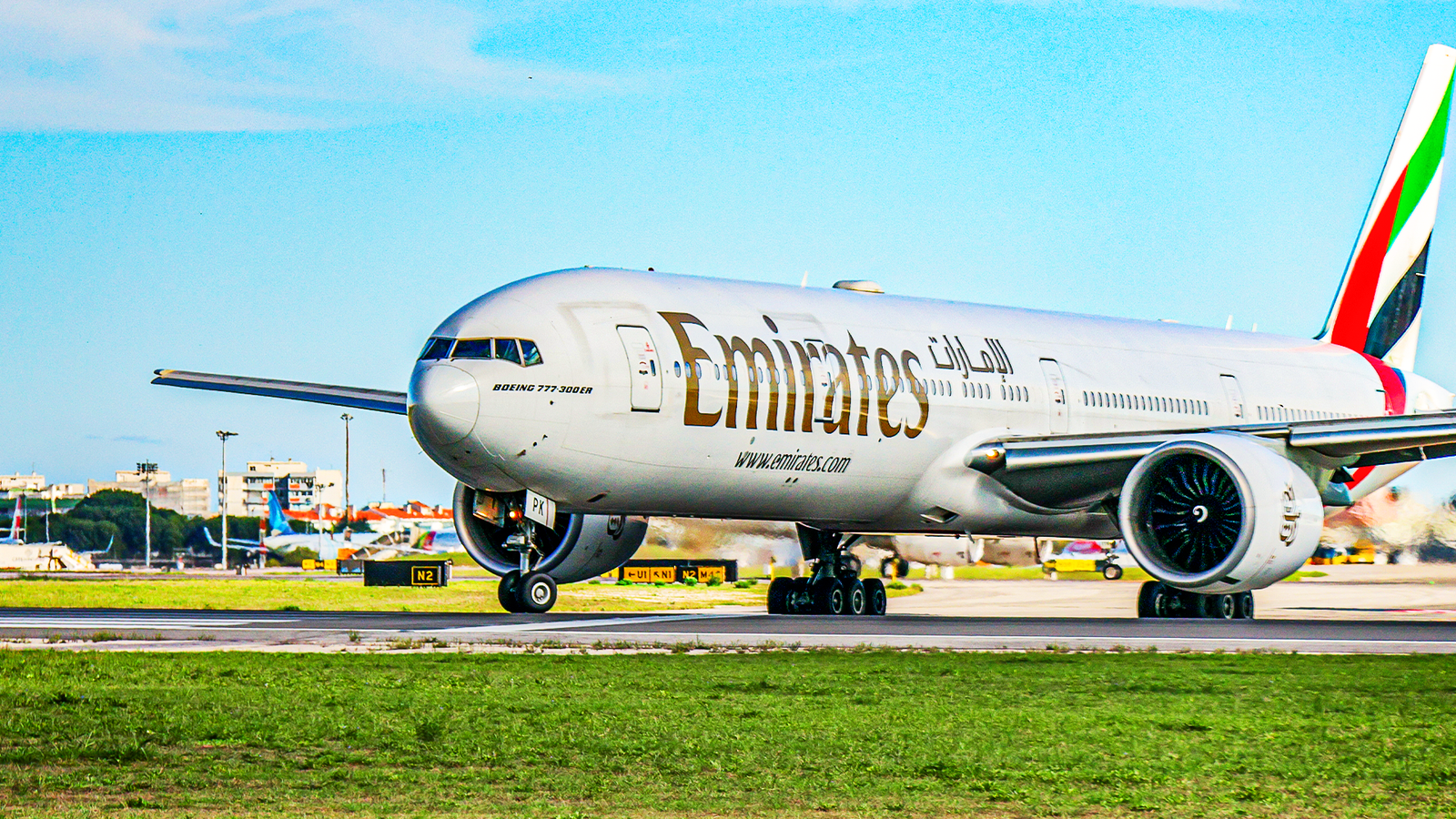
Published Oct 24, 2026, 4:00 AM EDT Louis is a military historian and the staff writer for History of War magazine, a leading military history monthly. He also has an interest in private and commercial aviation. Recent years have seen the rise of long-haul narrowbody jets, like the Airbus A321XLR, that have killed the hub-and-spoke model by making point-to-point travel between niche destinations possible. However, for the world's premium and legacy airlines, often flying from slot-restricted hubs, the capacity and range of widebody aircraft means that they are still indispensable. The airlines mentioned in this list of the world's biggest by widebody fleet size have taken many years at the top of their game to amass enormous fleets of huge aircraft. The largest of them is Emirates. However, particularly for the 'big three' US legacy carriers, the widebody fleets are a consequence of a vast overall fleet. These airlines surpass 1,000 aircraft each, with many more single-aisles than widebodies. 8 British Airways Just over 100 widebodies According to Planespotters.net, British Airways currently operates a fleet of 299 aircraft. Its widebody aircraft are 18 Airbus A350-1000 and 12 A380-800. It also has 59 777s, divided into 42 777-200 and 16 777-300ER. British Airways' 43 Dreamliners are divided into 12 787-8s, 18 787-9s and 13 787- 10s. This gives a total of 132 twin-aisle jets. British Airways used to have one of the world's most significant fleets of 747 aircraft. However, these aircraft have not been in the fleet for several years. Retirement due to the COVID-19 pandemic brought half a century of 747 operations, if we include British Airways' precursor, BOAC, to a sudden conclusion in July 2020. 7 American Airlines Over 130 widebodies Planespotters.net data shows that American Airlines has 67 Boeing 777s, split between 47 777-200 and 20 777-300ER for a total of 137 twin-aisle aircraft. The carrier also owns 70 Boeing 787 Dreamliners. This includes 37 787-8s and 33 789-9s. The table below shows the specifications for the 777-300ER, making use of Boeing's technical data. As is seen throughout this article, the 777-300ER is a workhorse that is immensely popular among these carriers. Capacity 396 (typical two-class) or 365 (typical three-class) Length 242 feet, 4 inches (73.86 meters) Wingspan 212 feet, 7 inches (64.80 meters) Fuselage width 20 feet, 4 inches (6.20 meters) Maximum Takeoff Weight 775,000 lb (351,535 kg) Powerplant 2 × General Electric GE90-115BL high-bypass turbofan engines, 115,300 lbf (513 kN) thrust each Range 7,370 nautical miles (13,650 km) Takeoff distance 10,550 feet (3,215 meters) The American Airlines widebody fleet is a relatively small fraction of the 1,037 aircraft in the fleet. American Airlines' historic widebody fleet includes Boeing 747s and 767s, as well as Airbus A330s. 6 Singapore Airlines Nearly 140 widebodies While British Airways and American Airlines are dominated by narrowbody aircraft, Singapore Airlines is made up of almost exclusively twin-aisle jets. The airline has just 26 Boeing 737s. The table below uses Planespotters.net data to explain the makeup of the widebody fleet, which contains 138 aircraft. Aircraft type In service Parked Total Airbus A350-900 61 4 65 Airbus A380-800 11 1 12 Boeing 747-400 7 7 Boeing 777 (-300ER and 777F) 25 2 27 Boeing 787-10 27 1 28 Total 130 8 138 The unique attribute of Singapore Airlines' widebody fleet is its Airbus A350-900ULR, of which it is the exclusive operator. Singapore Airlines uses this jet to fly the world's longest commercial routes currently in operation. These flights have only premium seats, with just premium economy and business class available. 5 Turkish Airlines Over 160 widebodies Planespotters.net data reveals a substantial Turkish Airlines twin-aisle fleet of 164 planes. It includes 35 A350-900s, 20 A330-200, and 37 A330-300. In terms of Boeing aircraft, the Turkish flag carrier has 33 777-300ER, 12 777Fs, and 27 787-9 Dreamliners. Turkish Airlines has plans for enormous fleet expansions in the years to come, with hopes to reach a total fleet size of 800 aircraft by 2036. This will help the carrier to build a network of 350 destinations with an annual revenue of $50 billion, as reported by Simple Flying. As part of Turkish Airlines' efforts to 'premiumize' its fleet, it wants to reintroduce premium economy to its widebody aircraft, starting in 2028. The airline is examining replacing 8-9% of its current economy cabin with premium economy seats. "Our research shows that around two-thirds of the passengers on long-haul flights are willing to pay a premium for additional legroom and comfort," its former Chief Commercial Officer Ahmet Olmuştur told Forbes. 4 Delta Air Lines Just over 170 widebodies As stated by Planespotters.net, the Delta Air Lines' widebody fleet currently includes just three aircraft families, but has reached a fleet of significant size. The fleet has two Airbus families: the A330 (81 jets) and the A350 (42 jets). It has 11 A330-200s, 31 A330-300s and 39 A330-900s. Its A350s are all examples of the A350-900 variant. Delta has just one Boeing widebody family: the 767 (57 jets). These aircraft are divided into 36 767-300ERs and 21 767- 400ERs. As with American Airlines, this widebody fleet is meager when compared with the narrowbody fleet. Delta has 1006 planes in total, of which just 180 are widebody aircraft. Alone, both Delta's 737 and Airbus A321 fleets are larger than this. 3 Qatar Airways Nearly 230 widebodies Per Planespotters.net, the Qatar Airways widebody fleet is much larger than its narrowbody fleet. The Middle Eastern carrier flies two families of Airbus widebodies: the A380 (eight jets) and the A350 (64 jets). The A350s are divided into 34 A350-900s and 30 A350-1000s. The airline also flies 93 777s (six 777-200s, 57 777-300ERs and 30 777Fs) and 61 Dreamliners (32 787-8s and 29 787-9s). This distribution across four aircraft families produces a total widebody fleet for Qatar Airways of 226 planes. For comparison, the airline flies just 25 Airbus A320s and six A321s, totaling 31 narrowbody aircraft. Qatar Airways recently announced the world's shortest bookable A350 flight. It is between Doha Hamad International Airport (DOH) and Bahrain International Airport (BAH). The route is 80 nautical miles (148 km) and takes the crown off an Ethiopian Airlines' fifth-freedom flight. A shorter leg exists between Bonaire's Flamingo International Airport (BON) and Curaçao International Airport (CUR). It is run by World2Fly for Corendon Dutch Airlines, but tickets cannot be booked for that specific leg. 2 United Airlines Over 240 widebodies The second-biggest widebody fleet belongs to another giant US legacy carrier, United Airlines, according to Planespotters.net data. The airline has 245 widebody planes, none of which are Airbus jets, out of a total fleet of 1,149 planes. United has 53 767 jets, divided between 37 767-300ERs and 16 767-400ERs. United's 787 and 777 fleets are its joint largest at 96 planes. This includes 74 777-200s, 22 777-300ERs, 12 787-8s, 63 787-9s, and 21 787-10s. This legacy airline has an enormous 777 fleet. However, as with all other US carriers, it will not buy any new Boeing 777X planes. There was speculation that United could purchase older 777X aircraft rejected by Emirates. However, Emirates president Sir Tim Clark has confirmed that this will not happen. He said that too many expensive upgrades would be needed to bring them in line with the 777X planes that Boeing is currently building. 1 Emirates Over 290 widebodies According to Planespotters.net data, the airline with the largest widebody fleet is Emirates. Aside from a single A319, the Emirates fleet of 291 planes is exclusively twin-aisle. The planes involved include 28 A350-900s, 116 A380-800s, 10 777-200LRs, 117 777-300ERs and 18 777Fs. The most eye-catching aspect of the Emirates' fleet is its huge 116-jet portfolio of A380s, the world's largest passenger aircraft. The airline has used this jet as a flagship with some of the world's best premium products. This includes private suites and shower spas. The airline has configured the aircraft into two, three, and four-class layouts. One of the two three-class layouts is intended for ultra-long-haul flying, along with the four-class layout. A new flagship is on the way to the Emirates fleet, the 777X. Emirates has an order for 270 of these planes. Emirates' plan is for the 777X to become its long-haul and long-term workhorse for operations out of Dubai International Airport (DXB). It should become a suitable replacement for the airline's aging 777-300ER and A380 planes. Destinations will include countless airports in America, Europe, Africa, and Asia nonstop. The newest of these jets was spotted rolling out of the Everett plant ahead of its paint job this September. “We are deeply honoured that Emirates has once again selected the Boeing 777X to power its future as the airline refreshes its world-class fleet and expands its vaunted global network," said Stephanie Pope, President and CEO of Boeing Commercial Airplanes.
8 Of The World's Largest Widebody Fleets: Who Flies The Most Twin-Aisles?
Full Article
Original Source
Read the full article at Simpleflying →KhanList aggregates and links to publicly available news content. We do not host full articles from third-party sources. Always verify important information with original sources.