
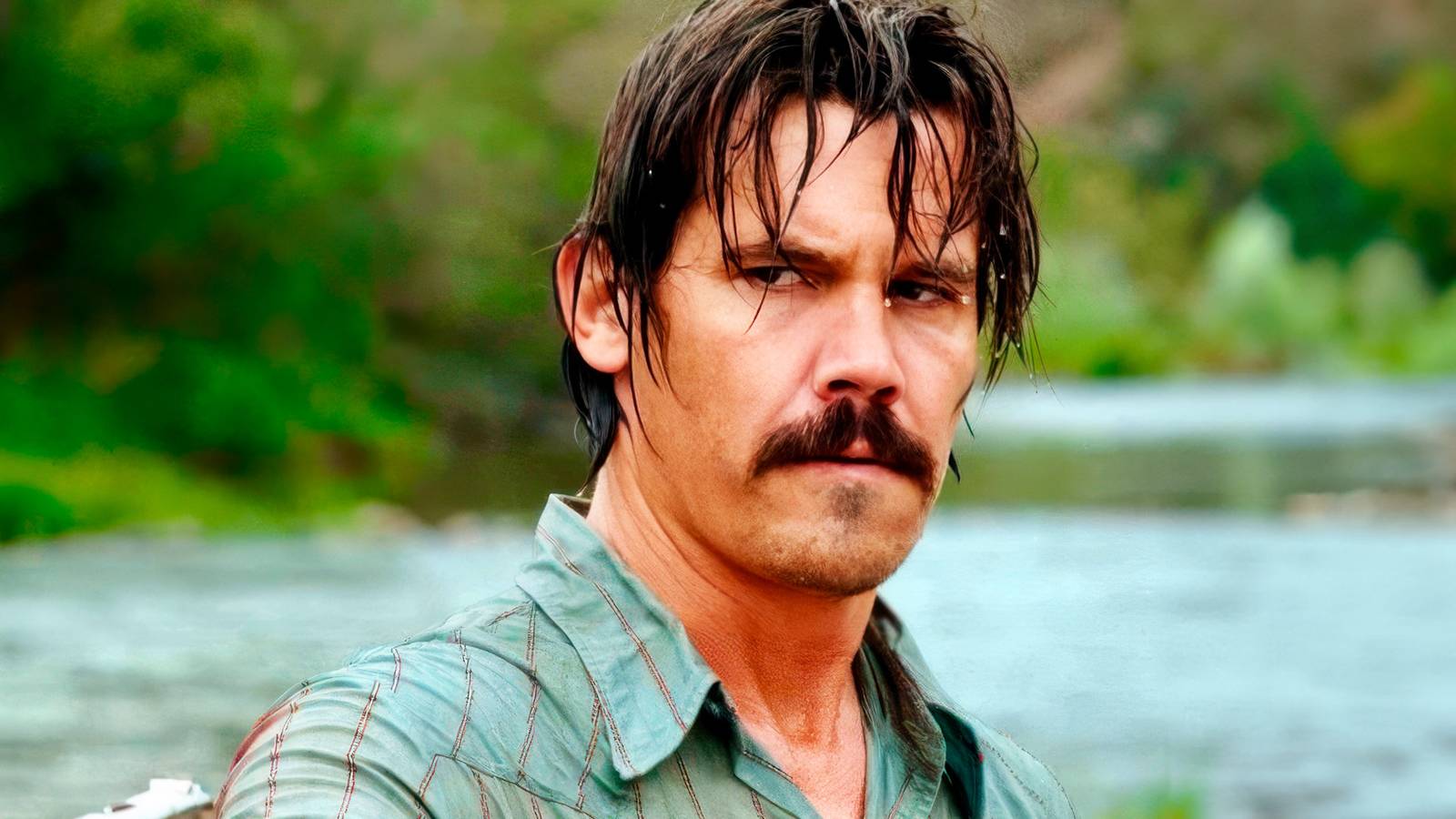
Published Sep 30, 2026, 2:30 PM EDT Sky Blanton is a Movie Contributor at ScreenRant with professional experience covering movies, television, and pop culture. Her published work spans news, interviews, features, and opinion pieces, with a focus on film, franchise storytelling, and the entertainment industry. She earned her bachelor's degree in Communications with a concentration in Professional Writing and a minor in Business Writing from Southern New Hampshire University. No Country for Old Men can make a motel hallway, a gas station counter, or a stretch of empty Texas road feel more dangerous than most movies manage with a full-blown shootout. The violence comes fast, Anton Chigurh never seems far behind, and Sheriff Ed Tom Bell spends much of the story realizing that the world he knows is changing faster than he can keep up. That is exactly what a great neo-Western can do with Western ideas. Moss is not fleeing on horseback but moving between motels and border towns with drug money in a briefcase. Bell is still the lawman, but he is trying to understand the violence he can no longer control. By the end of No Country for Old Men, it's clear Chigurh fills the gunslinger role, only stripped of any romance and made far colder and less predictable. Any movie hoping to rival No Country for Old Men has to bring that same level of purpose to the genre. The ranking comes down to how much the setting shapes the conflict, how strongly the characters are defined by their choices, how effectively the movie builds suspense or uses violence, and whether its take on the Western feels memorable in its own right. The higher entries are the ones that pull all of that together without just retracing the Coens' steps. 8 Hell or High Water (2016) Hell or High Water modernizes the outlaw story without losing the genre’s obsession with land. Chris Pine's Toby and Ben Foster's Tanner Howard rob Texas Midlands Bank branches, wash the cash through a casino, then use that same money to stop the bank from taking their ranch. What would once have been a fight over territory becomes a battle with debt, inheritance, and the oil beneath the property. By the time Jeff Bridges' Marcus reaches Toby’s porch, he understands the logic behind the robberies. Their final conversation works out because neither man can reduce what happened to a reduced question of guilt. That is where Hell or High Water can genuinely rival No Country for Old Men. Both movies follow lawmen trying to make sense of crimes shaped by a changing West, but Hell or High Water roots that change in economic pressure and the fear of losing what little a family has left. 7 Sicario (2015) Emily Blunt's Kate Macer enters Juárez in a convoy of black SUVs, passes bodies hanging from an overpass, and soon ends up trapped in traffic with armed cartel members only a few cars away. The scene immediately establishes how little protection official authority actually provides at the border. Kate believes she is part of a law-enforcement operation, but Sicario's characters are already working outside the rules she thinks still matter. What gives Sicario its own claim to the same territory as No Country for Old Men is the way it turns the institutions themselves into part of the threat. Both movies use the Southwest as a place where violence moves faster than the law, but Sicario goes a step further by showing the people meant to contain that violence deliberately using it. Kate’s real shock is not that the border is dangerous. It is realizing Alejandro and Matt Graver have already decided that becoming just as ruthless is the only way to operate there. 6 Wind River (2017) Wind River moves the neo-Western into the frozen Wyoming wilderness, with Jeremy Renner giving a stunning performance as Corey Lambert, tracking a murder through snow, distance, and a reservation community. Elizabeth Olsen's FBI agent Jane Banner arrives with federal authority, but almost immediately learns how little that means when backup is scarce and the terrain can kill just as easily as the people she is investigating. That isolation is what gives Wind River a respectable rivalry with No Country for Old Men. The Coens use West Texas to make pursuit feel exposed and inescapable, while Wind River uses Wyoming to show how easily a crime can disappear when the people responsible for solving it are spread thin across an enormous area. Jane arrives with federal authority, but the reservation’s lack of resources and the punishing cold matter more than her badge. Where No Country makes the modern West feel lawless, Wind River makes it feel abandoned. 5 The Three Burials of Melquiades Estrada (2005) Tommy Lee Jones' Pete Perkins does not trust the law to get justice after the killing of illegal immigrant Melquiades Estrada (Julio Cesar Cedillo). After Barry Peppers' Border Patrol agent Mike Norton kills Melquiades, Pete kidnaps him, digs up the body, and forces him across the border into Mexico to bury Melquiades where he wanted. Pete has already decided what justice looks like, and the rest of the movie forces Norton to live with the consequences of that decision. The Three Burials of Melquiades Estrada earns the rivalry in a different way. Both use the Texas-Mexico border to strip away any clean idea of justice, but Three Burials makes that conflict intensely personal. Pete makes Norton carry the weight of what he did, literally and morally, across the same border where Melquiades was killed. 4 Lone Star (1996) Lone Star begins with a skeleton found in the Texas desert, and Chris Cooper's Sheriff Sam Deeds quickly realizes the case could blow apart one of his town’s favorite stories. The dead man may be Charlie Wade, the corrupt sheriff everyone hated, while Sam’s father Buddy is still remembered as the man who finally stood up to him. That makes the investigation personal before Sam has even figured out exactly what happened. What makes Lone Star rival No Country for Old Men is how confidently it takes on one of the same big questions from the opposite direction. Bell looks at the present and feels the West slipping beyond his understanding. Sam looks backward and discovers that the supposedly better version people remember was already built on compromise, violence, and selective memory. Lone Star is not as in your face, but its dismantling of the Western lawman is just as sharp. 3 Logan (2017) Logan is probably the strangest pick on this list, but it earns its place. One of Fox's X-Men movies, it's a Western in which Hugh Jackman's Logan tries to get Dafne Keen's Laura north while armed men stay on their trail. That conflict already gives the movie the shape of a protection-and-pursuit Western, but Logan’s failing body pushes the desperation further. His healing is slowing down, every fight leaves damage behind, and brute force no longer guarantees he gets back up. That gives Logan a strong chance to rival No Country for Old Men. Bell has spent his life believing experience and authority should count for something, only to reach a point where neither gives him much control over what is happening. Logan runs into that same limit physically. He still knows how to fight, track, and keep Laura moving, but his body can no longer absorb the punishment the way it once did. That shared theme of an older man realizing his usual strengths are no longer enough is what gives Logan such a great place beside the Coens’ film. 2 The Rider (2017) Image by Everett Collection The Rider takes the cowboy out of the myth and leaves him with the part that hurts. Brady Jandreau's Brady Blackburn is a young rodeo rider recovering from a serious head injury, but giving up horses also means giving up the one thing that has shaped his identity. The South Dakota plains, training pens, and rodeo grounds make the Western setting unmistakable, yet the real conflict is whether Brady can imagine a life that does not devote around proving he can still ride. Brady’s problem is not that he has forgotten how to be a cowboy. His body may just no longer let him live that way. That is where The Rider starts to match up with No Country for Old Men. Bell is watching the world move past the version of himself that used to make sense there, while Brady is being forced to admit that grit and experience cannot undo a serious injury. The Rider gets to the same fear of being left behind without a chase or a shootout, which is exactly what makes it such a strong rival. 1 El Camino: A Breaking Bad Movie (2019) El Camino turns Aaron Paul's Jesse Pinkman into a very modernized Western fugitive. He is crossing New Mexico with the police after him, scraping together enough cash to disappear, and returning to the desert to dig up money that might buy him a new life. Later, the movie even gives him a quick-draw duel, but by then the connection is already clear. Jesse is the wounded outlaw trying to make it out of hostile territory before someone else decides his fate. El Camino earns the comparison because it takes the fugitive side of No Country for Old Men and gives it a completely different ending. Moss keeps moving because he thinks skill and nerve can keep him ahead of the people chasing him. Jesse is coming out of a story where that illusion has already been destroyed. By the time he reaches Alaska, the payoff is not that he has beaten everyone else. It is that, after years of being controlled, imprisoned, and hunted, he finally gets to choose where he goes next. Release Date November 21, 2007 Runtime 122 minutes Director Joel Coen, Ethan Coen Writers Ethan Coen, Joel Coen
8 Neo-Western Masterpieces That Rival No Country For Old Men, Including Hell Or High Water
Full Article
Original Source
Read the full article at Screenrant →KhanList aggregates and links to publicly available news content. We do not host full articles from third-party sources. Always verify important information with original sources.