
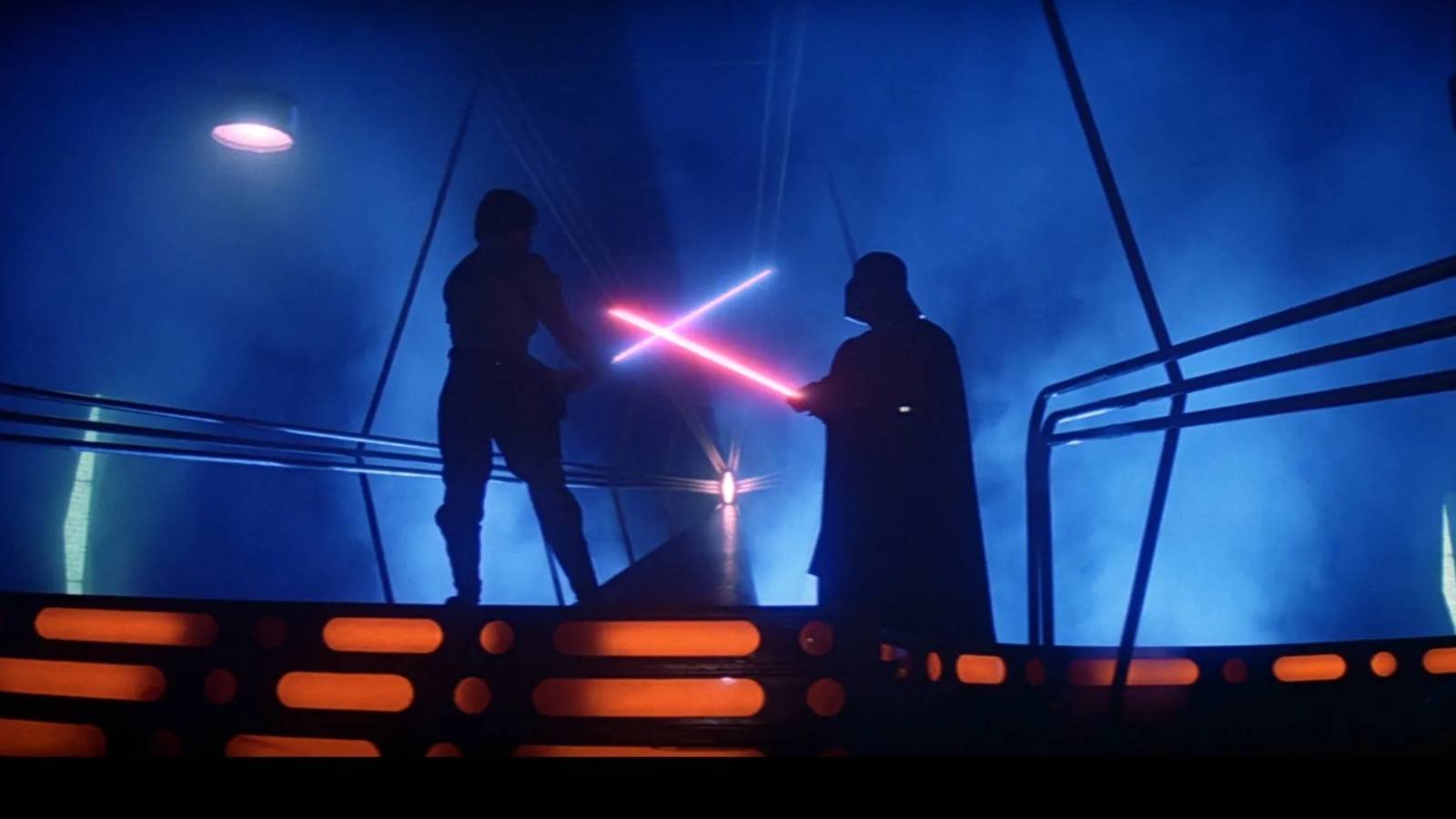
Nailing a movie trilogy from start to finish is no easy feat. In fact, there’s lots of evidence to suggest that it’s actually brutally difficult. Think of the drop-off in quality that took down The Matrix’s original trilogy, or either the Jurassic Park or Jurassic World trilogies. They all started as masterpieces and ended messily. There are other movie trilogies that stumble out of the gate or sag a little in the middle before sticking the landing with a grand finale, like The Good, the Bad and the Ugly capping off Sergio Leone’s Dollars trilogy. Consistency is key, and it’s far from guaranteed. Most rare of all are the trilogies that hold up across all three installments while peaking right in the middle. Sequels usually carry the burden of bridging an origin story to an endgame, where the fireworks really happen, but sometimes, the trend can be broken. In the case of these classic trilogies, which all have three great entries, the best came in the middle. They have to have a definitive trilogy element: while some of the included examples continued in some form, they didn't have a fourth part that immediately followed. So no Aliens here, despite its masterpiece status, and no Captain America: The Winter Soldier or Terminator 2: Judgment Day. All three were the best movies in their respective series, but you have to draw the line somewhere. 8 Mel Gibson's Mad Max Trilogy All three of George Miller’s original Mad Max movies are very different. The first is a gritty, low-budget revenge thriller that weaponized Australia’s dusty apocalypse-like landscape just as much as Mel Gibson’s charm as the iconic road warrior. Beyond Thunderdome is weirder, more theatrical, and arguably more philosophical, but the 1981 middle chapter of the Mad Max trilogy is where Miller’s vision truly clicked. Mad Max 2: The Road Warrior is a masterpiece that lives on the back of its breathless action, which Miller would later resurrect perfectly for soft reboot Fury Road. The freedom from having to build any backstory allowed the director to get right into it, dropping Max right into the middle of a chaotic wasteland riddled with grotesque scavengers. It’s all so good that you barely notice that nobody talks for much of it. 7 The Blade Trilogy Long before comic book movies became billion-dollar studio tentpoles, Wesley Snipes gave us his still-definitive take on Marvel's top vampire. 1998 stylish vampire hunter hit Blade was a great adaptation of the popular Marvel comics that kicked open the door for Guillermo del Toro to take things in a more extreme and very much bloodier direction in the sequel. Blade Trinity did have its moments of campy fun, and it's probably remembered as worse than it actually was, but it was not a shadow on the accomplished movie that came before it, and the set stories have rather overshadowed the actual achievements of the movie. Blade 2, though, was a stroke of genius. It didn't require a massively complex story, but is still a massive achievement in Gothic atmosphere building, visceral violence, and excellent martial arts choreography. Inevitably, Del Toro brought his brilliant eye for grotesque creature design to make the monsters Blade was hunting that little bit more terrifying. The sequel's stakes are raised because of Blade's forced alliance with the vampires to take down the mutated rivers, and it's just an incredibly cool movie still. 6 Fox's Original X-Men Trilogy The first X-Men movie was basically proof of concept that ensemble superhero movies could work on the big screen, even though the scale was kept relatively modest by a sensible budget. There was also a fair amount of exposition in order to establish the world that we saw through the eyes of young mutant Rogue. By the time the third movie came out, it was rather overstuffed and leaned a little too much into cheesiness for some people's tastes, but in comparison to some of the X-Men movies that have followed it, it was basically a five-star triumph. X-2 - or to give it its full (and goofy) Sunday school name - X2: X-Men United - took the training wheels off. In fact, it blew them off and was met with widespread critical acclaim. The story deepened the franchise's mutant rights allegory while expanding the scope of the action. It opens with an incredible sequence of Nightcrawler attacking the White House, and everything shines with a slightly higher level of confidence than the first film. The ending is great and sets up probably a better sequel than the last one delivered, and even now, X2 is still one of the best sequels in comic book movie history. 5 The Lord of the Rings Trilogy Image: New Line Cinema Some might say that the idea of classifying the Lord of the Rings trilogy as three separate movies is largely redundant because they form such a tight, continuous narrative. But even then, the second chapter of Peter Jackson's sprawling epic outstrips both the charm of The Fellowship of the Ring and the epic conclusion of The Return of the King. All three are towering achievements in fantasy filmmaking, but The Two Towers edges things out with some seriously stunning action and a grand emotional core that even surpasses the first movie. The Two Towers had the unenviable task of juggling three separate storylines without the clean beginning of The Fellowship, all set up for a conclusion of Return of the King. It is your typical bridge narrative, but actually turns that structure into a strength, introducing Gollum in what is still incredibly impressive digital work and centering its incredible third act on the Battle of Helm's Deep, which has more grit and tension than the massive but slightly more hollow Pelennor Fields battle of the finale. 4 The Dark Knight Trilogy It isn't the most fun comic book movie or, indeed, popcorn blockbuster of all time, but Christopher Nolan's The Dark Knight took the excellent foundation established in Batman Begins and built an absolute masterpiece on top of it. The Dark Knight Rises is sometimes criticized for sloppiness and how it brought Bruce Wayne's arc to a close, and Batman Begins is a little slower, but The Dark Knight is rightly considered the benchmark for modern comic book cinema. Sometimes, to its detriment, it's occasionally a little too easy for The Dark Knight to be swallowed under the emotional story of Heath's Oscar-winning turn as the Joker and tragic early death. But as irresistible as that performance is, if you view it as only part of The Dark Knight, its many assets, it actually becomes even more impressive. Nolan made the sequel more like a sprawling urban crime drama, like Heat or The Town, with an incredibly strong script, pretty much perfect pacing, and an escalation between Batman, Harvey Dent, and the Joker that still feels suffocating watching it back today. 3 The Original Star Wars Trilogy Credit: Courtesy of Everett Collection For good reason, The Empire Strikes Back is usually held up as the standard for great movie trilogies. After George Lucas had already changed pop culture forever with 1977's Star Wars, and before he brought the original trilogy to a close with the crowd-pleasing conclusion of Return of the Jedi, his 1980 sequel instantly became the top spot of the franchise that has never surrendered since. Unthinkably, some critics were actually annoyed at the unresolved cliffhanger ending, but The Empire Strikes Back is indisputably a masterclass in blockbuster storytelling. It split up the heroes, introduced Yoda to expand the mysticism of the Force, and boldly allowed the villains to win, injecting genuine stakes and depth to the space opera. And of course, it culminates in the most famous plot twist in movie history that has been parodied endlessly, but never lost its impact. 2 Sam Raimi's Spider-Man Trilogy Sam Raimi's 2002 Spider-Man almost perfectly captured the colourful spirit of Stan Lee and Steve Ditko's comics. Even though it's widely lambasted, the messier Spider-Man 3, which was notoriously meddled with at the studio level, still had lots of Raimi's signature charm and deserves more than its reputation. Between them sits the greatest superhero movie of the pre-MCU era. Remarkably, the sequel perfected the superhero formula before the genre even really got off the ground. Spider-Man 2 adds emotional maturity and a nimble balance of humor, heart, and spectacle that Spider-Man 3 slightly fudged. Rather than simply throwing a bigger threat at Peter Parker, Raimi focused on adding his personal conflict and the cost of being a superhero, stripping Peter of his powers as his everyday life falls apart, and a new villain emerged. Alfred Molina's tragic, surprisingly sympathetic portrayal of Doctor Octopus is still incredible, and the legendary runaway train sequence is one of the best Spider-Man movie sequences of all time. 1 The Godfather Trilogy When you think about it, Francis Ford Coppola's The Godfather Part II cheated by turning itself into two separate movies that run concurrently and which could both be considered masterpieces. The 1972 original was already incredible and is widely considered one of the greatest movies of all time. The Godfather Part Three doesn't deserve the decades it's spent as the franchise's punchbag, especially with the superior Coda cut out there now. By 1974, The Godfather Part II achieved the impossible by surpassing a near-perfect original, winning six Academy Awards, including Best Picture. It was the first sequel to claim Hollywood's most prized accolade, and achieved it by, at the same time, audaciously balancing its dual narratives. By intercutting between Vito Corleone's rise as a young immigrant in New York and Michael Corleone's paranoid consolidation of power decades later, Coppola transformed his gangster saga into something we hadn't seen before. Al Pacino's Michael was a completely different animal: where the first movie tracks his reluctant fall into family business, Part II shows the full extent of the moral rot sitting at the top of his power hierarchy does to him. Add to that Robert De Niro's excellent performances as Vito, and you have genuine magic. The sequel delivers a richer, darker, and more devastating portrait of the corrupting influence of power than either of the other two films in the already excellent series.
8 Movie Trilogies Where The Second Movie Is The Best, Ranked
Full Article
Original Source
Read the full article at Screenrant →KhanList aggregates and links to publicly available news content. We do not host full articles from third-party sources. Always verify important information with original sources.