
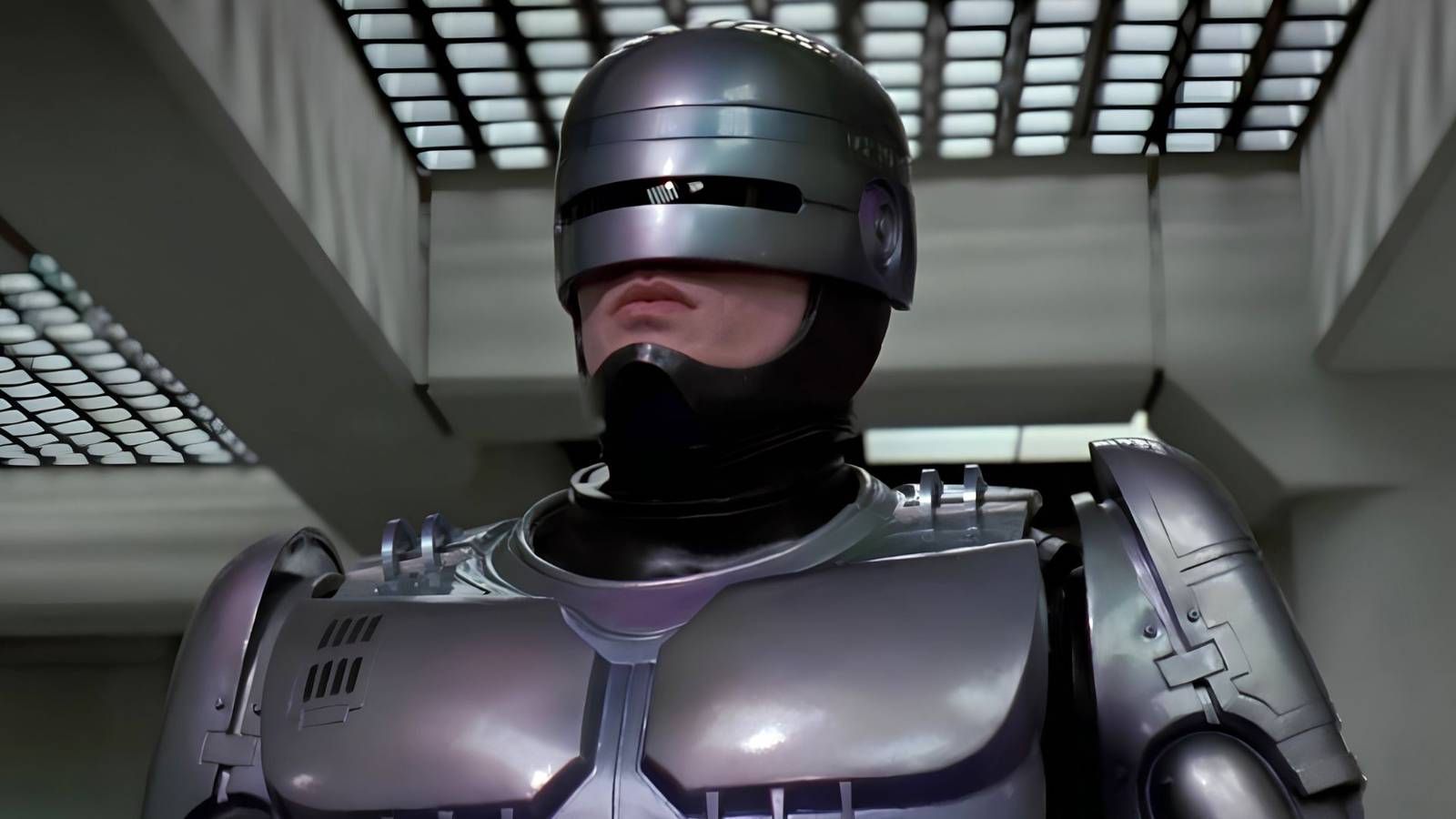
While Star Wars and 2001: A Space Odyssey had come out in the '70s, science fiction cinema was really transformed in the following decade. In the 1980s, the genre shifted away from the cerebral, slow-burning paranoia of sci-fi movies like Solaris and instead embraced the blockbuster spectacle inspired by George Lucas's grand idea. Studios chased the Star Wars gold rush by throwing massive budgets at high-concept ideas, and it was a great time to be a sci-fi fan. Obviously, not everything worked out quite as the studios intended. The executive demands to make more sci-fi blockbusters in the 1980s meant the studios created a decade of wild swings, and movies like David Lynch's Dune, while celebrated now, struggled to recoup massive budgets. Howard the Duck became an infamous critical punching bag, and rightly so. Flash Gordon flopped massively despite its cult charm. But at the same time, lots of the most defining sci-fi franchises of all time were born in the '80s. When the decade's best filmmakers got the balance right, they created some absolutely timeless sci-fi classics that remain the benchmark today. 8 Blade Runner (1982) Ridley Scott's Northern England-inspired neo-noir vision of 2019 Los Angeles is recognized as one of the most influential sci-fi films ever made, following Harrison Ford's Rick Deckard, a burnt-out cop tasked with hunting down four escaped replicants, led by Rutger Hauer's Roy Batty. Blade Runner basically invented the entire visual lexicon of modern cyberpunk. Astonishingly, when it opened in June 1982, Blade Runner was far from universally loved. Sandwiched between the massive summer hits of E.T. and Star Trek: The Wrath of Khan, it underperformed financially and divided critics. Many detractors still praised the jaw-dropping production design, which remains stunning to this day, but also dismissed the contemplative pace and rightly pointed to the studio-mandated voiceover as clunky exposition. It took until 1992's Director's Cut, and then later refinement in 2007's Final Cut, to strip away that narration and restore Scott's ambiguous ending. Even with those elements still in place, Blade Runner is a triumph of existential dread, near-unrivaled world-building, and just great, bold storytelling, and Vangelis' score remains one of the greatest in all sci-fi movie history. 7 Star Wars: The Empire Strikes Back (1980) Image via MovieStillsDB Following up the movie that rewired everybody's brains was never going to be an easy feat. In fact, it was pretty much an impossible assignment, but director Irvin Kershner teamed up with George Lucas to pull that off in style by taking Star Wars in a darker direction and as well as a more character-driven one for the sequel. The Empire Strikes Back splitting the heroes up across multiple planets allowed both for a deeper story and for an impressive expansion of Star Wars lore. Of course, the decision to take things in a darker direction meant for more emotional stakes. Interestingly, contemporary reviews in 1980 were a little more mixed than modern fans might expect, with some criticism pointing towards the movie lacking a traditional beginning or ending (thanks to its cliffhanger final). But audiences could recognize the masterpiece for what it was, flocking to theaters and making it the highest-grossing movie of the year. Over four decades later, The Empire Strikes Back isn't just the best sci-fi sequel of all time; it also basically sets the gold standard for all movie sequels, celebrated for Lawrence Kasdan's script, Kershner's tight direction, and John Williams' iconic Imperial March. And of course, that final act twist has now passed well into infamy. 6 The Thing (1982) Like Blade Runner, John Carpenter's paranoid masterpiece The Thing wasn't universally adored when it first came out. That's arguably because it's one of the best examples of a movie well ahead of its time. Adapted from John W. Campbell Jr.'s novella "Who Goes There?" the claustrophobic story traps Kurt Russell's RJ MacReady alongside a crew of isolated researchers in a frozen outpost as a terrifying shapeshifting alien stalks them. In 1982, critics savaged The Thing, labeling it nihilistic junk, and audiences simply didn't respond, perhaps because of the cultural impact of E.T.'s benevolent alien visitors from its release just two weeks earlier. But the age of VHS rentals and cable airings saved The Thing from this preposterous injustice, and the film's reputation was completely reversed. Yes, it's bleak, but that's exactly part of its Lovecraftian agenda, and Rob Bottin's groundbreaking practical creature effects are still astonishingly visceral. The performances are great, the story is nail-bitingly compelling, and one thing that doesn't seem to ever get the praise it deserves is Ennio Morricone's minimalist score that builds up the suffocating tension brilliantly. 5 Aliens (1986) You have to admire any sequel that takes one look at the winning formula of the original and throws it out, and Aliens might be the poster child for such creative bravery. Rather than attempting to replicate the claustrophobic haunted house horror of Ridley Scott's 1979 original, James Cameron turned Aliens into an adrenaline-fueled Vietnam allegory. Waking up after 57 years in hypersleep, Sigourney Weaver's iconic Ellen Ripley agrees to accompany a squad of cocksure colonial marines back to LV 426 after contact is lost with a terraforming colony. Critics and audiences alike embraced Cameron's uncompromising expansion of the universe, making it a massive box office hit and earning Weaver a rare Best Actress Oscar for a sci-fi role. Aliens works so well because Cameron spends the first hour making you genuinely care about the squad, despite how cartoonish they may seem, and manages to get the same terror out of the Xenomorphs, despite adding many more of them and moving away from the isolated dread of the original. It’s massively quotable, endlessly entertaining, and it has only got better over the years. 4 Back to the Future (1985) Image via Universal Robert Zemeckis and Bob Gale's time travel masterpiece, Back To The Future had been rejected by nearly every major studio in Hollywood before Universal decided to give it a chance. Thank goodness they did, as they gave it the opportunity to turn into a runaway juggernaut. casting Michael J. Fox as Marty McFly after the false start with Eric Stoltz, alongside Christopher Lloyd's chaotic Doc Brown, proved to be the real special stuff. Their dynamic injected warmth and comedy into a surprisingly high-concept sci-fi. Back to the Future became an instant sensation in the summer of 1985, earning ecstatic reviews, four Oscar nominations, and taking over $380 million worldwide to become the year's biggest film. That's particularly impressive given the ideas of paradoxes and time travel it introduces. Decades later, it's still a masterclass in screenwriting economy, which is particularly obvious when you see the other versions of the scripts that almost made it. Everything set up in the first 20 minutes pays off towards the end, and there's an infectious sense of Spielbergian adventure that still plays just as well no matter how many times you've seen it. The characters are all excellent, right down to minor supporting figures, but really, this was the Marty McFly and Doc Brown show. 3 The Terminator (1984) Image: MovieStillsDB Given that you expect Terminator movies these days to cost towards the $200 million mark, the fact that the first was made for only $6.4 million is all the more staggering. James Cameron's breakthrough feature turned a terrifying nightmare: an unstoppable metal skeleton emerging from fire in one of the tightest sci-fi thrillers of all time. Sending Arnold Schwarzenegger's robot assassin back from 2029 to murder Linda Hamilton's Sarah Connor before she's able to give birth to the future resistance leader, The Terminator is an impressive exercise in relentless forward momentum. Orion Pictures initially only had modest expectations for the low-budget B movie, but on the back of Schwarzenegger's terrifying but conservative performance and Linda Hamilton's emotionally fraught take on Sarah Connor, The Terminator was a surprise box office winner and also earned widespread critical acclaim. Watching it now, it's still one of the best slasher movies of all time, with excellent pacing and a clever time loop structure that obviously doesn't make full sense when you pick at it too much, but that doesn't matter. Schwarzenegger's minimal dialogue and imposing physical presence turned what could have been a gimmick into a screen icon that the franchise has struggled to replace ever since. 2 RoboCop (1987) Orion Pictures On the face of it, a movie about a murdered Detroit police officer who's resurrected as a corporate-sponsored cyborg sounds pretty schlocky. In fact, even beyond that, it sounds like outright B-movie action exploitation. But in the hands of Paul Verhoeven, RoboCop is actually a razor-sharp satire of Reagan-era privatization and unchecked corporate greed, disguised as a pioneering comic book movie. Despite the violence, critics praised RoboCop for its dark humor, which never carried over into the sadly inferior remake almost 30 years later. Rob Bottin's sleek suit design is one of the most recognizable robot concepts in the history of sci-fi, ranking right up there alongside The Terminator and Johnny 5. And frankly, Peter Weller doesn't get enough praise for the surprisingly soulful performance he puts in beneath the helmet. RoboCop performed strongly at the box office and has now revealed itself to be often terrifyingly prescient, but it's a great story about a man attempting to reclaim his humanity rather than a robot trying to understand it. For something this violent, with such conscious B-movie credentials, to be as universally loved is genuinely very impressive. Considering so much of the 1980s sci-fi landscape was dominated by bleak, dystopian visions of nightmarish futures, or killer robots, or killer aliens, or killer AIs, E.T.'s emotional propaganda is all the more impressive for standing out. It sits in a smaller bracket of excellent but not quite as culturally important family sci-fi movies like Batteries Not Included, Short Circuit, and Flight of the Navigator, using alien relationships or robotic ones to reflect something fundamental about humanity. E.T., of course, centers on a lonely 10-year-old boy called Elliott, who befriends the iconic stranded alien and tries to help him contact his home planet while evading shady government agents. Though it plays out entirely at a child's eye level, there is a very Spielbergian melancholy under the surface that we only see hints of, thanks to Elliott's broken home. As usual, Spielberg tapped directly into childhood wonder, and E.T. became an overnight cultural phenomenon in 1982, dominating the box office and briefly holding the title of the highest-grossing movie of all time. Critics called it an instant classic and it went on to earn nine Academy Award nominations, winning four, and, in John Williams' delightful theme, it gave us one of the greatest movie songs of all time. More than 40 years on, the movie has barely aged in terms of its narrative and its emotional core, and the puppetry behind the strange alien remains an impressive argument for not using CGI. Plus, Henry Thomas's remarkable performance as the awestruck but vulnerable Elliott means that the story's emotional punch is completely irresistible.
8 Most Universally Loved 1980s Sci-Fis Of All Time
Full Article
Original Source
Read the full article at Screenrant →KhanList aggregates and links to publicly available news content. We do not host full articles from third-party sources. Always verify important information with original sources.