
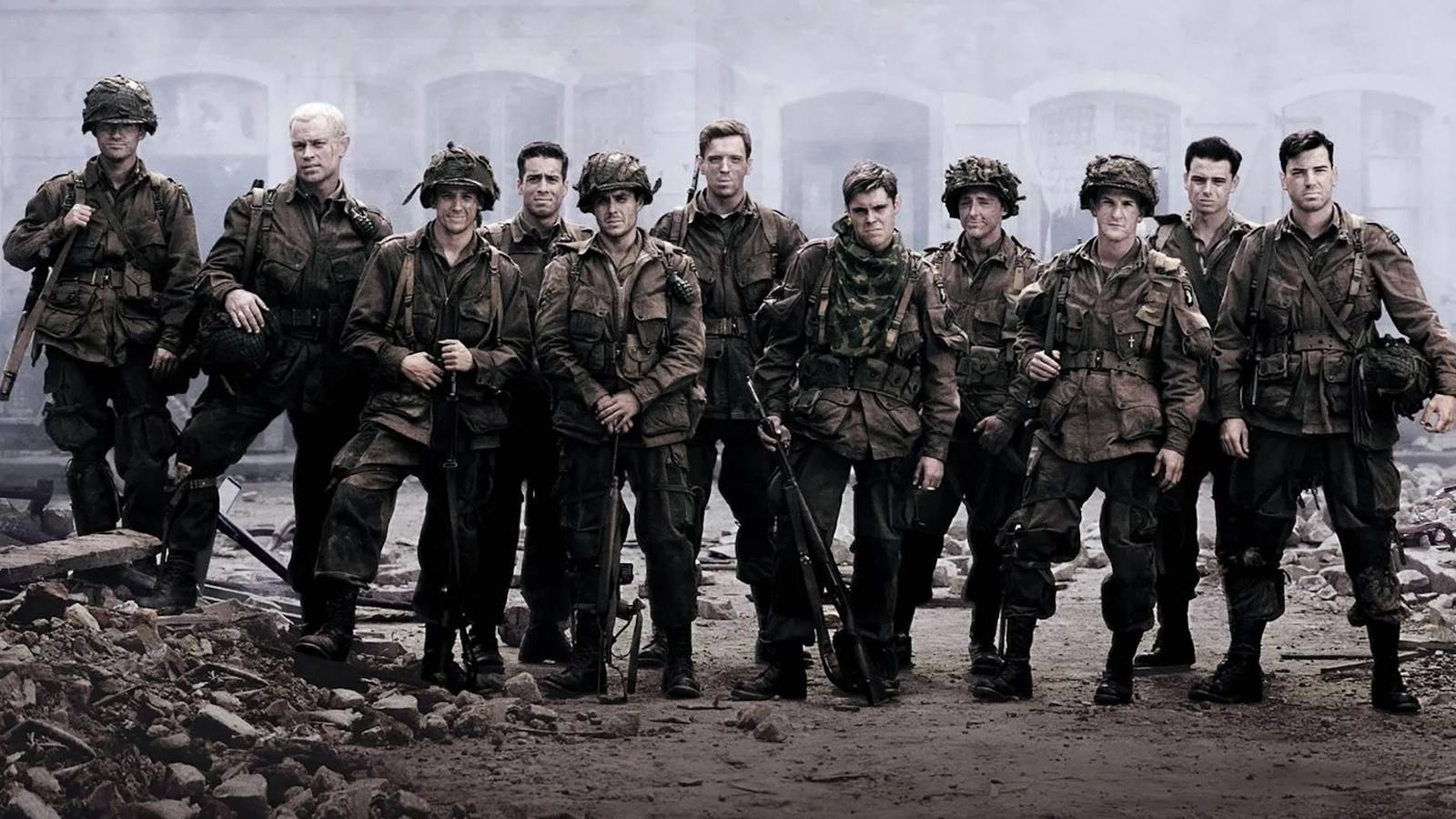
Image via HBO Published Aug 21, 2026, 1:55 PM EDT Jeremy has more than 2700 published articles on Collider to his name, and has been writing for the site since February 2022. He's an omnivore when it comes to his movie-watching diet, so will gladly watch and write about almost anything, from old Godzilla films to gangster flicks to samurai movies to classic musicals to the French New Wave to the MCU... well, maybe not the Disney+ shows. His favorite directors include Martin Scorsese, Sergio Leone, Akira Kurosawa, Quentin Tarantino, Werner Herzog, John Woo, Bob Fosse, Fritz Lang, Guillermo del Toro, and Yoji Yamada. He's also very proud of the fact that he's seen every single Nicolas Cage movie released before 2022, even though doing so often felt like a tremendous waste of time. He's plagued by the question of whether or not The Room is genuinely terrible or some kind of accidental masterpiece, and has been for more than 12 years (and a similar number of viewings). When he's not writing lists - and the occasional feature article - for Collider, he also likes to upload film reviews to his Letterboxd profile (username: Jeremy Urquhart) and Instagram account. He has achieved his 2025 goal of reading all 13,467 novels written by Stephen King, and plans to spend the next year or two getting through the author's 82,756 short stories and 105,433 novellas. Sign in to your Collider account Movies tend to get extra love when they come out, what with the cinema experience and all. They're big and flashy and digestible in one go (for the most part), so that whole medium does attract a good deal of talent, both in front of and behind the camera. Then you’ve got TV shows, and it might be easiest, as a viewer, to have an emotional attachment to them, since a good show running for a good many years makes it all the more involving. With miniseries, you need to devote a bit more time to them than movies, and you won’t usually see them on the big screen. And then they also might not prove quite as able to drive emotional investment the way a multi-season-long show might. But when done well, they can indeed be uniquely engaging and more than worthy of one’s time, as the following 10/10-worthy miniseries masterpieces all go to show. 8 'The Night Of' (2016) The Night Of is about a young man who gets arrested and put on trial for murder, though he claims he does not have any memory of committing the murder. He tries to flee when he sees the woman (who he’d been partying with) dead, and so it doesn’t help his case, with him being sent to prison – navigating life there – as he also tries to work out what to do on a legal front. His lawyer’s a prominent character too, once introduced, with The Night Of shifting to become more of a legal drama in its back half, alongside also being a bit of a prison show (scratching the same itch as Oz, to some extent). It’s very compelling, and also unapologetically dark in a bunch of ways, but undeniably great if you're after something that balances the crime, mystery, drama, and thriller genres, all within the confines of only eight episodes. 7 'Chernobyl' (2019) Image via HBO Chernobyl is probably a little low, if anything, but maybe other shows are “more” perfect, if that’s possible? It’s not really. Look, you probably know the deal with Chernobyl already, and its recency is such that it’s fairly easy to assume most people who are mostly up to date with (great) television have seen it already. It’s a historical drama (again, as you probably already know) that deals with the aftermath of the 1986 Chernobyl disaster. Other than people speaking English, Chernobyl feels quite real, with the switch-up in language and a few other changes made in the interest of streamlining things and getting it all digestible within the runtime of a miniseries. Chernobyl also stands out for how intense it gets, regardless of how much you do or don’t know the details of the whole historical event it dramatizes. 6 'Dekalog' (1989–1990) Image via Zespol Filmowy "Tor" Dekalog really blurs the line between film and TV more than even your average miniseries, since all of its 10 episodes are more like short films. Two of them were even expanded into feature-length movies, during production, though they were given names that might make you think they still weren’t feature-length (A Short Film About Killing, which expands the fifth “episode” of the miniseries, and A Short Film About Love, which expands the sixth). One of the Ten Commandments gets addressed in some kind of way in each of the 10 episodes, so it’s a thematic miniseries more than it is a narrative one. Minor things cross over a little here and there, and there is a nameless character who appears in eight of the episodes, but it’s all a bit arthouse (an art miniseries? As opposed to an art film) in that you're left to your own devices if you want to piece together parts of the whole thing. There’s also lots to be gained from just appreciating each on its own, with it being required viewing for anyone who got something out of the slightly more well-known Three Colors trilogy, which Krzysztof Kieślowski also helmed. 5 'Angels in America' (2003) Image via HBO While it was an HBO production, and it also had a historical setting in the late 20th century, Angels in America is a pretty different sort of miniseries from the previously mentioned Chernobyl. There are at least a couple of real-life people who are followed throughout Angels in America, but also some fictional characters, and then things break from reality at points, since Angels in America also has some fantasy elements. It works, and does indeed feel big and theatrical fittingly, since it was an adaptation of a play by Tony Kushner (who was also credited with writing the screenplay for the miniseries). It explores the late 1980s, with a particular focus on the AIDS epidemic, and a good deal of care and genuine emotion, all the while also proving worth a watch for all the great acting offered alone. 4 'Band of Brothers' (2001) Image via HBO Honorable mentions to both The Pacific and Masters of the Air, which are spiritual sequels or maybe companion pieces to Band of Brothers, but neither of them quite comes close. This is the best of the best, as far as shows or miniseries about World War II are concerned, with the 10 episodes here covering everything that happened with “Easy” Company, beginning with training, moving on to show D-Day, covering brutal wintertime combat, and ending in 1945, with Germany’s surrender. There are various stages of war covered, quite clearly, as a result, and there’s immaculate attention to detail for each of those different stages/areas explored. Band of Brothers gets very intense when it needs to, and also stands as one of the most emotional things in television history, thanks to how upfront and honest it’s willing to be about the Second World War, and what participation in it meant for a particular group of American soldiers. 3 'Garth Marenghi's Darkplace' (2004) Image via Channel 4 If you're fond of Stephen King adaptations that are very poorly done, especially those that appeared on TV during the 1980s or 1990s, then Garth Marenghi's Darkplace might well be right up your alley. This is despite it not being based on anything King-related, though (the titular character, an author, feels like a Stephen King parody), and also despite it being incredibly well-made, rather than poorly done. The important thing is that Garth Marenghi's Darkplace is extremely clever, so densely packed with jokes, and also completely unlike just about anything else out there. It’s expertly made to look terrible. Like, Darkplace is a show within the show, and Garth Marenghi (who also starred in Darkplace) looks back on the production of the show from the present, as do a couple of other people involved with the production. Things are hard to explain beyond that, but the important thing is that Garth Marenghi's Darkplace is extremely clever, so densely packed with jokes, and also completely unlike just about anything else out there (in a very good way). 2 'I, Claudius' (1976) Image via BBC I, Claudius (1934) and Claudius the God (1935) were a pair of books written by Robert Graves, with both being adapted into the one miniseries, just called I, Claudius. It’s certainly one of the most ambitious miniseries of all time, and might well even be up there among the most ambitious TV shows (miniseries or series) ever made, when you take into account the fact it was produced – and aired – so many decades ago. The story here concerns the history of Claudius, who was one of the earliest Roman Emperors, with his entire life, from 10 BC to AD 54, covered here, alongside all the other chaos of the Roman Empire during those years. It’s probably most interesting if you are into that era of history, but even if you're not, there’s so much that’s impressive by way of writing, acting, and directing/visuals here (the latter hampered a little by a modest budget, but still) to ensure that I, Claudius does feel like one of the most essential miniseries of the 20th century for sure. 1 'Lonesome Dove' (1989) Image via CBS Talking about Lonesome Dove like it’s genuinely forgotten might be a bit of a stretch, yet it does remain somewhat underappreciated, at least by modern-day standards, with the more recent and slightly flashier miniseries out there. And there are so many miniseries, admittedly, but it’d be a mistake to let them all drown out Lonesome Dove, which is worth watching even if you're not particularly fond of Westerns. That is primarily the genre Lonesome Dove occupies, sure, yet it goes further and has a lot to say (and explore) about various other things, through its main story, which concerns a grueling cattle drive undertaken by some aging Texas Rangers. Lonesome Dove might well boast one of the best casts in miniseries history, and it more than does the acclaimed source material (the novel of the same name, written by Larry McMurtry) justice.
8 Miniseries That Are 10/10 Masterpieces
Full Article
Original Source
Read the full article at Collider →KhanList aggregates and links to publicly available news content. We do not host full articles from third-party sources. Always verify important information with original sources.