
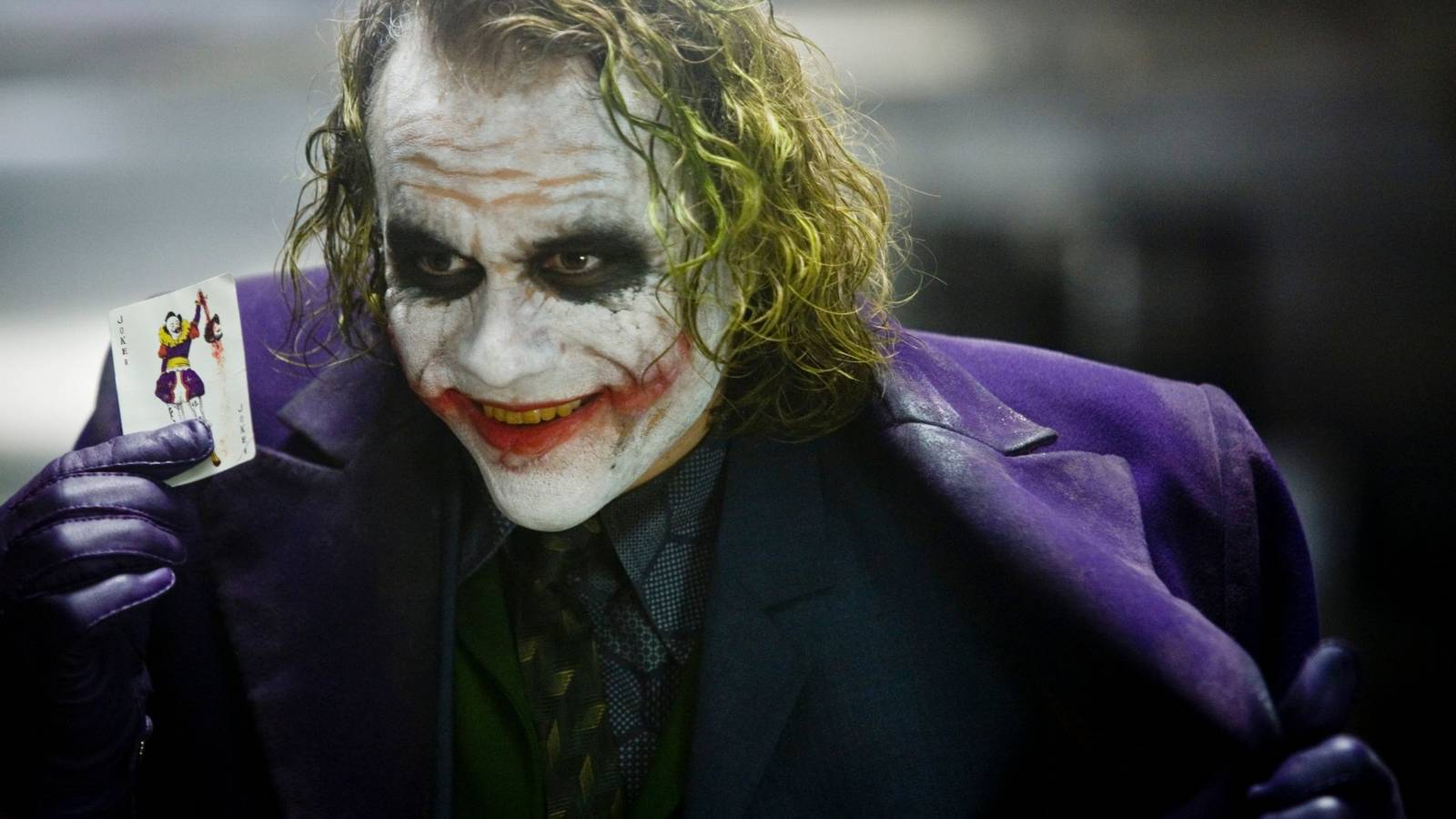
Published Oct 28, 2026, 11:33 AM EDT Senior Music Editor at Screen Rant, Sarah's love of sound and story drive the beat. A globetrotting brand whisperer and award-winning journalist, she’s built cross-cultural narratives around the world—but music has always been her true north. She launched DJ Mag North America, successfully introducing the iconic UK brand to the U.S. market. Previously, she carved a space for EDM inside the pages of VIBE, blending electronic and hip-hop culture long before it was trendy. Heath Ledger's Joker remains one of cinema's greatest villains, and Christopher Nolan's The Dark Knight has spent nearly two decades setting the standard for superhero movies. Suggesting that eight sequels are better sounds like an excellent way to start an argument. Unfortunately for Gotham City, the competition includes some of the greatest films ever made. Released in 2008, The Dark Knight elevated the comic book adaptation into an extraordinary crime thriller, with Christian Bale's Batman confronting an enemy whose greatest weapon was his ability to manipulate everyone around him. Ledger's Oscar-winning performance became legendary, while Nolan demonstrated that a superhero sequel could deliver genuine dramatic sophistication. The film remains an astonishing achievement, but cinema history offers several equally ambitious follow-ups. From Francis Ford Coppola's exploration of the Corleone family to James Cameron's groundbreaking science fiction blockbusters, the greatest movie sequels of all time frequently accomplish something their predecessors couldn't. There are also masterpieces whose achievements are considerably harder to compare. Richard Linklater created a deeply affecting romance with little more than two people talking, while Paul King made audiences fall hopelessly in love with a marmalade-loving bear. Both prove that emotional sophistication can be every bit as impressive as spectacular filmmaking. Of course, declaring any of these movies definitively superior to The Dark Knight is a matter of opinion. The greatest second installments in beloved movie trilogies tend to inspire particularly passionate arguments. Nevertheless, these eight sequels offer compelling reasons to rank them above Nolan's masterpiece, whether through their artistic ambition, technical innovation, or extraordinary storytelling. Paddington 2 Paul King's Paddington 2 might seem an unlikely challenger to Christopher Nolan's Batman sequel, but the 2017 family comedy is an extraordinary achievement in its own right. Ben Whishaw returns as the voice of Paddington, whose attempt to purchase a special birthday present for Aunt Lucy goes disastrously wrong when he's framed for stealing a valuable pop-up book. Hugh Grant is magnificent as the villainous Phoenix Buchanan, while the film's beautifully constructed visual comedy gives even its smallest moments enormous charm. As explored in why Paddington 2 deserves its extraordinary reputation, the sequel combines remarkable technical craftsmanship with genuine emotional warmth. Where The Dark Knight explores how easily society can descend into cruelty, Paddington 2 makes an equally persuasive argument for the transformative power of kindness. Before Sunset Richard Linklater's Before Sunset accomplishes something extraordinary without elaborate special effects or conventional dramatic spectacle. Released in 2004, the sequel reunites Jesse (Ethan Hawke) and Céline (Julie Delpy) nine years after their unforgettable encounter in Before Sunrise. Jesse is visiting Paris to promote his novel when the former lovers unexpectedly reconnect, spending an afternoon discussing everything that has happened since they last met. The film unfolds almost in real time, allowing the characters' conversations to reveal years of regret, romantic uncertainty, and lingering affection. Hawke and Delpy's chemistry makes the dialogue feel remarkably spontaneous, while the ending is beautifully understated. Among the achievements of Linklater's acclaimed Before trilogy, Before Sunset stands out for finding enormous emotional complexity in an ordinary encounter. Its intimacy makes an unexpectedly strong case against Nolan's far grander production. The Lord Of The Rings: The Two Towers Peter Jackson faced an enormous challenge with The Lord of the Rings: The Two Towers, released in 2002. Following the extraordinary success of The Fellowship of the Ring, the director had to expand the story while separating its principal characters across Middle-earth. Frodo and Sam continue their increasingly dangerous journey toward Mordor, while Aragorn, Legolas, and Gimli become involved in the defense of Rohan. The resulting epic features some of the most spectacular fantasy filmmaking ever accomplished, particularly during the legendary Battle of Helm's Deep. Jackson maintains emotional investment across multiple storylines, giving the film an extraordinary sense of scale without sacrificing character development. While The Dark Knight creates a compelling moral conflict within Gotham, The Two Towers expands an entire fictional world while maintaining equally formidable dramatic stakes. Aliens Via MovieStillsDB James Cameron accomplished something remarkable with Aliens in 1986, transforming Ridley Scott's claustrophobic science fiction horror movie into an explosive military action thriller. Sigourney Weaver returns as Ellen Ripley, who accompanies a group of Colonial Marines to investigate a human settlement where contact has mysteriously been lost. Unfortunately, the soldiers are spectacularly unprepared for the creatures awaiting them. Cameron preserves the terror of the original while introducing spectacular action and a surprisingly moving relationship between Ripley and young survivor Newt (Carrie Henn). Their bond gives the climactic confrontation with the Alien Queen enormous emotional significance. The film also provided Weaver with one of the most memorable moments in the Alien franchise. Few sequels have so successfully transformed their predecessors' identities while preserving everything that made them special. Mad Max: Fury Road George Miller returned to his post-apocalyptic universe with Mad Max: Fury Road in 2015, delivering one of the most extraordinary action movies of the 21st century. Tom Hardy replaces Mel Gibson as Max Rockatansky, whose reluctant alliance with Imperator Furiosa (Charlize Theron) places him against the tyrannical Immortan Joe. What follows is essentially one enormous chase across a devastated desert. The film's astonishing practical stunts, spectacular vehicle designs, and relentless momentum create an experience unlike almost anything else in modern blockbuster cinema. Miller communicates enormous amounts of information through visual storytelling, allowing the action itself to reveal the characters' motivations. As explored in why Fury Road remains such an exceptional achievement, its apparent simplicity conceals extraordinary filmmaking precision. Even Nolan's spectacular action sequences rarely achieve this level of sustained visual invention. Terminator 2: Judgment Day James Cameron returned to another of his greatest creations with 1991's Terminator 2: Judgment Day, delivering a sequel that arguably improved upon its already exceptional predecessor. Arnold Schwarzenegger reprises his role as a Terminator, although this time the seemingly unstoppable killing machine has been programmed to protect young John Connor (Edward Furlong). Meanwhile, Robert Patrick's terrifying liquid-metal T-1000 threatens humanity's future. The film's revolutionary visual effects transformed the possibilities of computer-generated imagery, but its emotional intelligence makes it truly exceptional. Linda Hamilton's Sarah Connor has evolved into a hardened survivor, while the relationship between John and his mechanical protector gives the film unexpected tenderness. As explored in the enduring brilliance of Terminator 2, Cameron balances technical innovation with a powerful story about humanity's capacity for self-destruction. Few action sequels have accomplished so much simultaneously. The Empire Strikes Back Credit: Courtesy of Everett Collection Following the enormous cultural phenomenon of Star Wars, director Irvin Kershner faced the almost impossible challenge of delivering a worthy sequel. Released in 1980, The Empire Strikes Back surpassed expectations by embracing a considerably darker story. Luke Skywalker (Mark Hamill) begins his Jedi training under Yoda, while Han Solo (Harrison Ford) and Princess Leia (Carrie Fisher) struggle to evade Darth Vader's relentless pursuit. The sequel deepens nearly every important relationship established in the original, culminating in one of cinema's most devastating revelations. Its willingness to leave the heroes defeated was an extraordinarily bold decision for such an enormously anticipated blockbuster. As explored in Mark Hamill's appreciation of The Empire Strikes Back, the film remains central to the franchise's enduring appeal. More than four decades later, its influence on serialized blockbuster storytelling is difficult to overstate. The Godfather Part II Francis Ford Coppola achieved something almost unimaginable with The Godfather Part II, expanding one of cinema's greatest crime dramas into an even more ambitious exploration of power and corruption. Released in 1974, the film follows Michael Corleone (Al Pacino) as his increasingly ruthless decisions threaten to destroy his family. Meanwhile, flashbacks explore the rise of his father, Vito (Robert De Niro), from a young immigrant into a powerful criminal figure. The contrasting narratives reveal how differently father and son understand loyalty, family, and the American Dream. Pacino's extraordinary performance captures Michael's moral deterioration, while De Niro gives Vito an entirely different kind of authority. The film won six Academy Awards, including Best Picture, becoming the first sequel to receive the honor. Even Stephen King has championed The Godfather Part II as a superior sequel. Ultimately, its tragic complexity makes it the most convincing film to rank above The Dark Knight.
8 Masterpiece Movie Sequels Better Than The Dark Knight
Full Article
Original Source
Read the full article at Screenrant →KhanList aggregates and links to publicly available news content. We do not host full articles from third-party sources. Always verify important information with original sources.