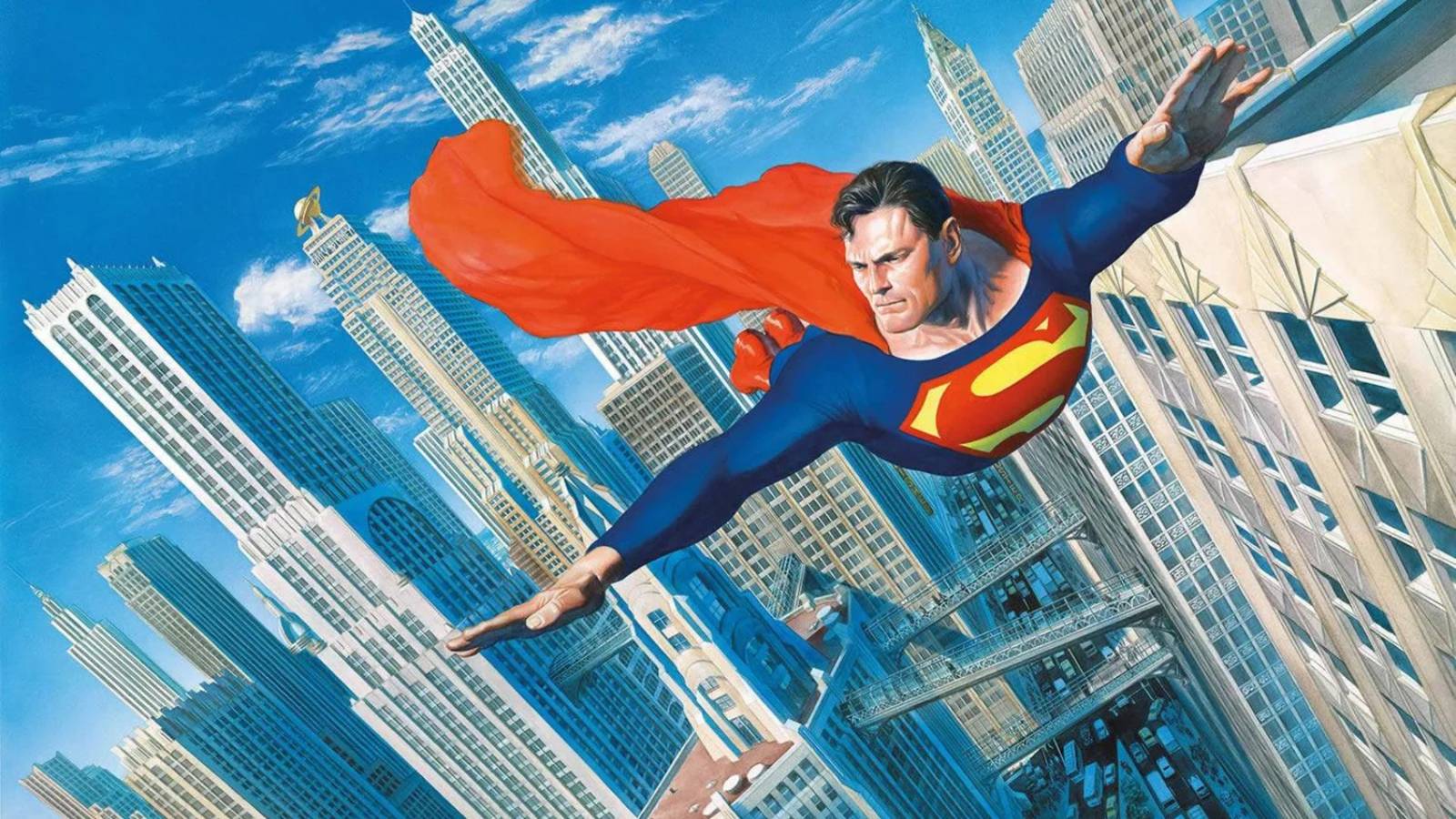
Published Jul 26, 2026, 10:00 PM EDT Derek is the Training Lead for ScreenRant. Before his current position, he spent 20 years working in games, TV, and film while also writing for several entertainment sites. Derek is also the co-host of three pop culture podcasts: Across the Omniverse, The Bad Batch, and Watch Men. As one of the most recognizable characters in the world, Superman's appearance is emblazoned in the minds of children and adults. It is almost as if, the moment Action Comics #1 hit newsstands all those decades ago, every person that ever was or will be instinctively knows what the Man of Steel looks like. Which means that any changes to Superman's look is a dangerous endeavor that can lead to disastrous results. Still, there is no arguing that since he first jumped over a tall building, the Last Son of Krypton has had a few makeovers that have kept him up to date. It is impossible to definitively say who the greatest Superman artist is. Too many talented men and women have used their skills to bring the Big Blue Boyscout to life on the pages of countless comics. But there are some artists who are most certainly in the discussion, not only for how their art captured Superman, but how their work changed the way the world sees him. More than any other superhero, everyone's vision of Superman is concrete, even if that vision is slightly different for each generation. And, at the end of the day, there are only a few truly legendary comic book artists who have left such an imprint on Superman that they will forever be linked to him. Joe Shuster Set The Stage To put it bluntly, there is no Superman without Joe Shuster. Heck, there may well be no superheroes without Joe Shuster. He, along with writer Jerry Siegel, unknowing created an entire genre of stories while sitting in their Cleveland, Ohio homes. First imagined as a bald villain, the two teens redesigned their idea to bring about the hero we all know and love today. Shuster, almost obsessed with physical strength, designed Superman to be a muscular hero, calling to the likes of Hercules while Siegel, whose father was killed by a shoplifter, dreamed of a man who could withstand any blow. Together, they invented an alien who was sent to Earth and became humanity's greatest hero. In his tight blue and red suit, with a long cape and a large 'S' on his chest, he would be endowed with otherworldly abilities allowing him to perform feats that no man could. And there, on the cover of Action Comics #1, the world first saw the dream of two high schoolers brought to life - the image of a man lifting a car over his head and smashing it into the rocks. And, faster than a speeding bullet, an icon was born. Wayne Boring Perfected Superman Wayne Boring was working with Jerry Siegel and Joe Shuster before the duo created Superman, helping them on their Slam Bradley and Doctor Occult stories by ghosting for Shuster - aka drawing comics without getting credit. When Superman became a runaway hit, Boring was brought in to help keep up with the demand, Boring was given the job of drawing the newspaper comic strip. While it started off as an uncredited job, Boring's talent was too great to ignore and his name was added to the strip. In 1942, Boring was brought in to do the actual Superman comics, and his sharp line work helped refine the character's look. Working with inker Stan Kaye, Boring gave the Man of Steel a broader chest, expressive eyes, and impossibly square jaw. Boring was also a master at dynamic poses, helping make Superman look all the more impressive as he seemed to leap off the page. Boring became the primary Superman artist from the late 1940s through the '50s. He designed the original Fortress of Solitude, the Bizarro world, and the iconic Superman flying pose with one arm out and one leg bent at the knee. Ira Schnapp Never Drew A Superman Comic But Left His Mark All The Same Ira Schnapp didn't draw a single Superman comic, but his work continues to be seen in all over Superman comics and merchandise. An architect by trade, Schnapp supposedly focused on creating the look of inscriptions that would end up in buildings, most notably the one of the ones on the exterior of the James A. Farley Post Office building in Manhattan. Schnapp used his knowledge to create title cards for movies, and reportedly created the show cards that were used for King Kong's premiere at Radio City Music Hall. In 1940, Schnapp was hired by DC Comics — then National Comics — to redesign Superman's title logo, with his work first appearing on Superman #6. That logo would be used for the next four decades on everything related to Superman. From there, Schnapp would design logos for just about every DC hero, from the Atom to the Metal Men, and even for the Justice League. He also designed the Comics Code Authority stamp. But, of all the logos Schnapp created, Superman's is undoubtedly the most iconic. Steve Muffatti Brought Superman To The Big Screen One of the most iconic renditions of Superman, the Fleischer Studios animated shorts was the first time the Man of Steel jumped off the comic page and onto the movie screen. The full-color cartoons amazed not only children, but everyone who worked in movies. Even now, these 17 shorts, each lasting just 10 minutes, are celebrated for their ingenuity and Art Deco style. And while Dave Fleischer, who directed the shorts, tends to get all the credit, it was actually Steve Muffatti who designed the way the movies looked. Muffatti was tasked with streamlining Superman's design for animation, taking the chest insignia, making it black and red and, most importantly, giving it the now iconic diamond shape. He also gave Lois Lane a more modern look (for the time) and animated the opening of each short. Muffatti was instrumental in figuring out how to make Superman look amazing in movement, and his work still influences how the Man of Steel is represented in animation and live-action to this day. Curt Swan Was The Definitive Superman Artist Of The Silver Age If you read a Superman comic that was published between 1948 and 1986, there is a good chance Curt Swan drew it. Swan's first work on the Man of Steel was Superman #51. From there, he took over art chores on Superboy with #5 while continuing to work on the main title. Superman #76 saw Superman meet Batman for the first time, and it was Curt Swan who crew that legendary moment. The artist spent 30 years working on Action Comics, Adventure Comics, World's Finest, Superman's Girlfriend, Lois Lane, and Superman's Pal, Jimmy Olsen, defining the look of the entire Superman Family for generations. And when it came time for the final Superman story to be told in 1986's "Whatever Happened to the Man of Tomorrow," it was Swan who was brought in to bring Alan Moore's script to life. Swan's Superman continues to be used in merchandise. His Superman took what Boring did with the Man of Steel and brought it to the next level, making the Last Son of Krypton into a tank of a man before slimming him down while adding muscle definition to look more like the Superman we know and love today. He also made the spit-curl more prominent and lengthened Superman's cape, bringing it to his knees where it had previously stopped halfway down the gracilis. Every Superman artist who has followed Swan is, in some way, inspired by his work. John Byrne Modernized The Man Of Steel John Byrne became a superstar at Marvel Comics. His work on X-Men, which he handled the art and co-plotted the stories with writer Chris Claremont, and on Fantastic Four, which he wrote and drew alone, was groundbreaking, and DC Comics wanted some of that. With Crisis on Infinite Earths resetting the company's continuity, they hired Byrne to come in and rebuild Superman from the ground up, which included taking away a major part of the Last Son of Krypton's story. Along with lowering Superman's power level, Byrne also modernized the character's look for the 1980s. The cape was once again lengthened, now reaching Superman's calves. The chest symbol was enlarged and itself redesigned to be sleeker, and Superman's spit-curl was, somehow, made even larger. Byrne also updated the look of Clark Kent, doing away with the meek look for the alter-ego and making Clark a yuppie. Perhaps most importantly, Byrne, along with Marv Wolfman, took mad scientist Lex Luthor and turned him into an ultrarich businessman. The new take on Superman was a smashing success, leading the way to a new golden age for the character. Dan Jurgens Killed Superman Dan Jurgens was an instrumental figure during the Superman Triangle Era. This was a time when Superman had four titles coming out every month, and a quarterly book to make sure there was never a week without a Superman book on the shelves. These titles all flowed through one another, using a secondary numbering system — shown inside a triangle on every cover — to help readers keep track of which issue to read. It was during this period that some of the most important modern Superman stories were told, and no story was more important than "Doomsday," aka The Death of Superman. The six issue arch was the brainchild of Jurgens, but writers Louise Simonson, Roger Stern, Jerry Ordway, and Karl Kesel and artists Jon Bogdanove, Tom Grummett, and Jackson Guice all played important roles in crafting the tale. It was Jurgens who designed Doomsday and told the final heartbreaking chapter where Superman dies. Jurgens' run on Superman, and his art style, recontextualized the Man of Steel as the books moved from the 1980s and into the 1990s. Alex Ross Made Superman Feel Real Seeing an Alex Ross painting of Superman is as close as we will ever get to actually seeing Superman in real life. Ross is able to somehow capture every era of the character, giving him Joe Schusters mischievous grin, Wayne Boring's barrel chest, and Curt Swan's musculature. In some cases, most notably his Kingdom Come series, Ross even manages to mix in some of the Fleischer Studios elements. Looking at Alex Ross' Superman makes the hero more real than any live-action movie could ever hope to pull off. You feel like, somehow, the actual Man of Steel showed up at Ross' studio and posed for the artist, allowing Ross - and only Ross - to truly capture who he is. There are more amazing Superman artists than anyone could ever hope to count, but Alex Ross may truly be the pinnacle.
8 Legendary Artists Who Changed Superman Forever
Full Article
Original Source
Read the full article at Screenrant →KhanList aggregates and links to publicly available news content. We do not host full articles from third-party sources. Always verify important information with original sources.