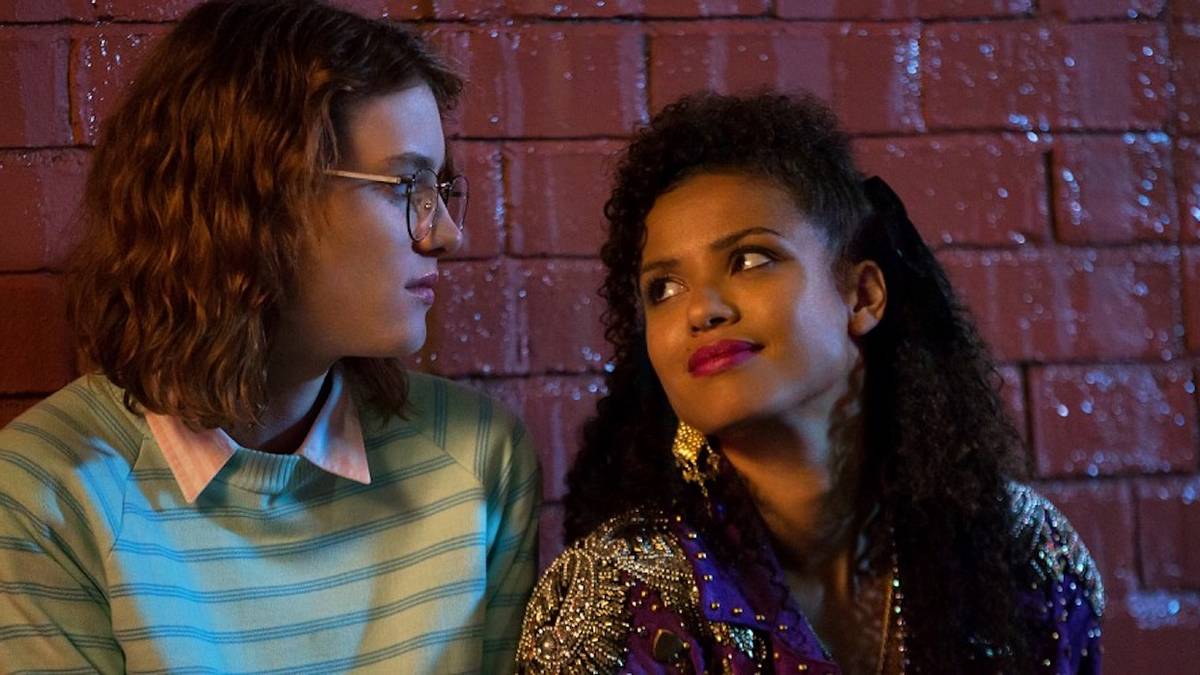
Image Via Netflix Published Aug 6, 2026, 6:54 AM EDT Remus is a writer, editor, journalist, and author with an eye for detail and an extremely active imagination. He is an enthusiast of everything to do with the graphic medium, whether it's Western comics and their adaptations or manga and anime. Remus is also the author of the sci-fantasy novel Once Upon a Time in Hyperspace and several works of short fiction in the mystery, comedy, and horror genres. Sign in to your Collider account Hard science fiction often raises questions and dilemmas that are not easy to answer. The genre has expanded and evolved over the years, from exploring fictional themes and complex, far-fetched worlds to delving deeper into real-world implications and the emotional complexities that arise from its themes. Some of these shows often feel so overwhelming and intricate that only after watching them again and again can one truly feel satisfied. From classic television landmarks like Battlestar Galactica to contemporary streaming hits like Black Mirror, we’ve been gifted with some truly meticulously made hard sci-fi shows over the years that are worth revisiting for their tightly-knit plots, elaborate world-building, and meticulous attention to scientific details and realism. Rewatching these shows can sometimes offer fresh perspectives or new resolutions, answer the deep philosophical questions that arise the first time, or reveal new angles that could have been missed. With that in mind, here’s our selection of hard sci-fi shows that are worth watching again and again. 1 ‘Dark’ (2017–2020) A German sci-fi mystery thriller created by Baran bo Odar and Jantje Friese, Dark begins with the disappearance of a child from the small town of Winden and focuses on four families seeking the truth in the aftermath of this strange event. As the story progresses, it exposes their dark shared past and secret lives, unraveling a sinister time travel conspiracy spanning generations. Louis Hofmann, Karoline Eichhorn, Lisa Vicari, Maja Schöne, Moritz Jahn, and more star as key characters. A sci-fi show that often feels like a complex puzzle, Dark delicately balances its intricate scientific topics like time travel paradoxes, the God particle, and wormholes, with deep philosophical themes of existentialism, destiny, and determinism. A massive, multi-generational non-linear story spanning several timelines, the series never reveals itself all at once, with the visual clues and verbal hints offering different interpretations when you watch it again. Intense and immersive in its visual style, concept, and performances, Dark is a modern sci-fi classic and a must-watch for genre fans. 2 ‘Battlestar Galactica’ (2003–2007) Image via SYFY Ronald D. Moore’s reimagining of the 1978 TV series, Syfy’s Battlestar Galactica is the franchise’s third television show and its most popular, acclaimed, and successful entry. The four-season military sci-fi series revolves around the human survivors on the titular battleship navigating a distant star system in the far future, searching for a mythical, long-lost colony called Earth. The star-studded ensemble cast includes Katee Sackhoff, Edward James Olmos, Mary McDonnell, Jamie Bamber, James Callis, Tricia Helfer, Grace Park, and more. A visionary sci-fi series of its time, Battlestar Galactica is a 2000s TV classic that still resonates two decades later with its timeless themes and psychological depth. The 21st-century interpretation puts a grittier, more realistic, and character-driven space adventure spin on the 1978 space opera, which set a new benchmark for the genre and inspired many subsequent sci-fi shows. It’s a sci-fi television epic full of layered mysteries and weighty themes that merits and rewards multiple viewings. 3 ‘The Expanse’ (2019–2022) Image via SYFY Created by Mark Fergus and Hawk Ostby and adapted from James S. A. Corey’s novel series of the same name, The Expanse revolves around a diverse group of humans in the far future, where humanity has colonized the Solar System, with the larger powers oppressing the smaller factions for their resources. The series focuses on the captain and crew of an interplanetary ship and a detective who all discover a conspiracy that threatens the system while also navigating an existential crisis brought on by a new alien technology. The main characters are played by Thomas Jane, Steven Strait, Cas Anvar, Dominique Tipper, Wes Chatham, Frankie Adams, and Shohreh Aghdashloo. The Expanse is a sci-fi television masterpiece of the 21st century that carefully combines hard sci-fi topics, alien tech, politics, and human drama with elements of detective noir. Its ambitious world-building and high-stakes space adventure, packed with political intrigue and complex character arcs, feel deeply rewarding on repeat viewings. A thoughtfully made sci-fi series, The Expanse has earned critical acclaim and has been widely praised for its scientific realism and technical accuracy translated through fantastic production. Collider Exclusive · Sci-Fi Survival Quiz Which Sci-Fi World Would You Survive? The Matrix · Mad Max · Blade Runner · Dune · Star Wars Five universes. Five completely different ways the future went wrong — or sideways, or up in flames. Only one of them is the world your instincts were built for. Eight questions will figure out which dystopia, galaxy, or desert wasteland you'd actually make it out of alive. 💊The Matrix 🔥Mad Max 🌧️Blade Runner 🏜️Dune 🚀Star Wars TEST YOUR SURVIVAL → 01 You sense something is deeply wrong with the world around you. What do you do? The first instinct is often the truest one. APull on every thread until I understand the system — then figure out how to break it. BStop asking questions and start stockpiling — food, fuel, weapons. Questions don't keep you alive. CKeep my head down, observe carefully, and trust no one until I know who's pulling the strings. DStudy the patterns. Every system has a rhythm — learn it, and you learn how to survive it. EFind the people fighting back and join them. You can't fix a broken galaxy alone. NEXT QUESTION → 02 In a world of scarcity, what resource do you guard most fiercely? What we protect reveals what we believe survival actually requires. AKnowledge. If you understand the system, you don't need resources — you can generate them. BFuel. Everything else — movement, power, escape — runs on it. CTrust. In a world of fakes and informants, a truly reliable ally is rarer than any commodity. DWater. And after water, information — the two things empires are truly built on. EShips and credits. The galaxy is big — you survive it by being able to move through it freely. NEXT QUESTION → 03 What kind of threat keeps you up at night? Fear is useful data — if you're honest about what you're actually afraid of. AThat reality itself is a lie — that everything I experience has been constructed to keep me compliant. BA raid. No warning, no mercy — just the roar of engines and then nothing left. CBeing identified. Once someone with power decides you're a problem, you're already out of time. DBeing outmanoeuvred — losing a political game I didn't even know I was playing. EThe Empire tightening its grip until there's nowhere left to run. NEXT QUESTION → 04 How do you deal with authority you don't trust? Every dystopia has a power structure. Your approach to it determines everything. ASubvert it from the inside — learn its rules well enough to weaponise them against it. BIgnore it and stay out of its reach. The further from any power structure, the better. CAppear to comply while doing exactly what I need to do. Visibility is the enemy. DManoeuvre within it carefully. You can't beat a system you refuse to understand. EResist openly when I have to. Some things are worth the risk of being seen. NEXT QUESTION → 05 Which environment could you actually endure long-term? Survival isn't just tactical — it's physical, psychological, and very much about where you are. AUnderground bunkers and server rooms — cramped, artificial, but with access to everything that matters. BOpen wasteland — brutal sun, no shelter, constant movement. At least the threat is honest. CA dense, rain-soaked city where you can disappear into the crowd and nobody asks questions. DMerciless desert — extreme heat, no water, and something enormous living beneath the sand. EThe fringe — backwater planets and busy spaceports where the Empire's attention rarely reaches. NEXT QUESTION → 06 Who do you want in your corner when things fall apart? The company you keep is the clearest signal of who you actually are. AA tight crew of believers who've seen behind the curtain and have nothing left to lose. BOne or two people I'd trust with my life. Any more than that and someone talks. CNobody, ideally. Alliances are liabilities. I work alone unless I have no choice. DA community bound by shared hardship and mutual survival — people who need each other to last. EA ragtag team with wildly different skills and total commitment when it counts. NEXT QUESTION → 07 Where do you draw the line — if you draw one at all? Every survivor eventually faces a moment that tests what they're actually made of. AI won't harm the innocent — even the ones who'd report me without hesitation. BI do what I have to to protect the people I've chosen. Everything else is negotiable. CThe line shifts depending on who's asking and what's at stake. DI draw a long-term line — nothing that compromises my people's future, even if it'd help now. ESome lines, once crossed, can't be uncrossed. I know which ones they are. NEXT QUESTION → 08 What would actually make survival worth it? Staying alive is one thing. Having a reason to is another. AWaking others up — dismantling the illusion so no one else has to live inside it. BFinding somewhere — or someone — worth protecting. A reason to keep moving. CAnswers. Understanding what I am, what any of this means, before time runs out. DLegacy — shaping the future in a way that outlasts me by generations. EFreedom — for myself, for others, for every world still living under someone else's boot. REVEAL MY WORLD → Your Fate Has Been Calculated You'd Survive In…Your answers point to the world your instincts were built for. This is the universe your temperament, your survival instincts, and your particular brand of stubbornness were made for. The MatrixYou took the red pill a long time ago — probably before anyone offered it to you. You're a systems thinker who can't help but notice the seams in things. You're drawn to understanding how the system works before figuring out how to break it. You'd find the Resistance, or it would find you — your instinct for spotting constructed realities is the machines' worst nightmare. You function best when you have access to information and the freedom to act on it. The Matrix built an airtight prison. You'd be the one probing the walls for the door. Mad MaxThe wasteland doesn't reward the clever or the well-connected — it rewards those who are hard to kill and harder to break. That's you. You don't need comfort, community, or a cause larger than the next horizon. You need a vehicle, a clear threat, and enough fuel to outrun it — and you're good at all three. You are unsentimental enough to survive that world, and decent enough — just barely — to be something more than another raider. In the wasteland, that distinction is everything. Blade RunnerYou'd survive here because you know how to exist in moral grey areas without losing yourself completely. You read people accurately, keep your circle small, and ask the questions others prefer not to answer. In a city where humanity is a legal designation rather than a feeling, you hold onto something that keeps you functional. You're not a hero. But you're not lost, either. In Blade Runner's world, that distinction is everything. DuneArrakis is the most hostile environment in the known universe — and you are precisely the kind of person it rewards. Patience, discipline, and political awareness are your core strengths — and on Arrakis, they're survival tools. You understand that the long game matters more than any single victory. Others come to Dune and are consumed by it. You'd learn its logic and earn its respect. In time, you wouldn't just survive Arrakis — you'd begin to reshape it. Star WarsThe galaxy far, far away is vast, loud, and in a constant state of violent political upheaval — and you wouldn't have it any other way. You find meaning in being part of something larger than yourself — a cause, a crew, a rebellion. You'd gravitate toward the Rebellion, or the fringes, or whatever pocket of the galaxy still believes the Empire's grip can be broken. You fight — not because you have to, but because standing aside isn't something you're capable of. In Star Wars, that willingness is what makes all the difference. ↻ RETAKE THE QUIZ 4 ‘Devs’ (2020) Image via FX Created, written, and directed by Alex Garland in his first and only television project, Devs revolves around a revolutionary quantum computing company called Amaya and the mysterious death of a new employee. Said employee’s girlfriend, Lily (Sonoya Mizuno), an Amaya engineer, starts searching for answers and comes across the secretive titular project and clashes with the company’s enigmatic CEO, Forest (Nick Offerman), finding herself at the center of a pathbreaking technological achievement and Forest’s personal agenda, which questions ethics, morality, and humanism as we know it. The show also stars Allison Pill, Zach Grenier, Stephen McKinley Henderson, and Carl Glusman as key characters. With Devs, Garland creates a hauntingly beautiful sci-fi world where existential philosophy, determinism, many-worlds theory, and alternate realities all come together to form a high-concept sci-fi show like no other. Deliberate and meditative, the story slowly peels away at its mystery through trance-inducing visuals and immersive storytelling that simultaneously scares, captivates, and thrills, which is an experience definitely worth revisiting. Though critically acclaimed during its run, Devs is still a niche sci-fi gem that deserves more recognition than it has received. 5 ‘Fringe’ (2008–2013) Image via FOX A 2000s sci-fi cult classic created by J. J. Abrams, Alex Kurtzman, and Roberto Orci, Fringe follows the titular division of the FBI comprising elite agent Olivia Dunham; troubled scientist Walter Bishop and his estranged son, Peter; division director Captain Philip Boyles; and agent Astrid Farnsworth. Together, they investigate uncanny criminal cases relating to fringe science, all of which somehow connect to an alternate universe. The main characters are played by Anna Torv, John Noble, Joshua Jackson, Lance Reddick, and Jasika Nicole, respectively. Fringe is high-concept hard sci-fi meets classic crime procedurals, starting as a case-of-the-week show but expanding into a deeper, more complex story about parallel universes, alternate timelines, and time travel. With cases ranging from transhumanist experiments gone wrong to the prospect of a destructive technological singularity to a possible collision of two parallel universes, genre buffs will find every season of Fringe highly engrossing. With its mind-bending mix of weird science, complex character arcs, and the epic multiverse storyline, Fringe definitely merits rewatching over and over. 6 ‘Black Mirror’ (2011–Present) Image via Netflix Often called the Twilight Zone of the 21st century, Charlie Brooker’s Black Mirror is a modern sci-fi television landmark that has redefined speculative fiction as we know it. The British anthology series follows a wide range of stories and characters, presented in a range of styles, but all sharing the common theme of how technology influences the human condition in the contemporary social and cultural landscape. Boasting a massive ensemble cast each season, the show has featured the likes of Salma Hayek, Miley Cyrus, Awkwafina, Jon Hamm, Daniel Kaluuya, and Yahya Abdul-Mateen II over the years. With almost every new episode distinct from the previous one, Black Mirror is a highly creative and inventive examination of the ever-increasing influence of technology. Though often unsettling, the series has come to serve as a predictive cultural mirror, raising pressing questions that are often not answered right away and deserve to be revisited. With influences from genre classics and a strong influence in turn on contemporary pop culture, Black Mirror has defined the sci-fi television of the last 25 years. 7 ‘Pluto’ (2023) Image via Netflix Written by Heisuke Yamashita and Tatsurou Inamoto, Pluto is an eight-episode anime series adaptation of the manga Pluto: Urasawa x Tezuka by Naoki Urasawa and Takashi Nagasaki, which in turn is based on one arc of Osamu Tezuka’s iconic manga, Astro Boy. The story is set in a neo-futuristic world where robots and humans cohabit in the same society, until a series of mysterious deaths shakes the balance. When Europol robot detective Gesicht sets out to investigate the murders of robots and humans, he finds himself in the middle of a decades-long conspiracy with puzzling outcomes. The main characters are voiced by Shinshū Fuji, Hiroki Yasumoto, Koichi Yamadera, Yoko Hikasa, and Minori Suzuki. Part crime thriller, part sci-fi mystery, Pluto is an anime masterpiece that has set new standards for the genre. Featuring complex themes of artificial intelligence, grief, prejudice, and what it truly means to be human, the eight-episode series is quite deeply layered and provokes many questions. Beautifully written, designed, and performed, Pluto is as thrilling as it is emotional, and a unique sci-fi anime that deserves to be watched again and again. 8 ‘Pantheon’ (2022–2023) Image via AMC+ An adult-animated sci-fi drama created by Craig Silverstein and inspired by a series of short stories by Ken Liu, Pantheon is set in a world with experimental mind-uploading technology and focuses on a bullied teen named Maddie and her mysterious online interaction with her deceased father, David, whose consciousness has been uploaded after an experimental brain scan. Maddie’s investigation into this fringe technology brings her into contact with a gifted teenager and brilliant engineer, putting both of them at the center of a global conspiracy and a rising existential crisis triggered by the rapidly evolving technology. The main characters are voiced by Katie Chang, Paul Dano, Daniel Dae Kim, Rosemarie DeWitt, Aaron Eckhart, and Raza Jaffrey. Simultaneously grounded and audacious, depressively familiar and excitingly unique, Pantheon renders the audience speechless with its uncannily prescient themes and striking visuals. The series is unarguably one of the most thoughtful and thought-provoking works of adult animation made in years, and it demands to be watched and rewatched to fully grasp its depth. A perfectly made hard sci-fi show with a powerful emotional core, Pantheon addresses uploaded consciousness, experimental tech, theological philosophy, and the human cost of technological progress from multiple angles, raising several important questions along the way. Pantheon Release Date 2022 - 2023-00-00 Network Prime Video, AMC+, HIDIVE Cast Arthel Neville Host (voice)
8 Hard Sci-Fi Shows Worth Watching Again and Again
Full Article
Original Source
Read the full article at Collider →KhanList aggregates and links to publicly available news content. We do not host full articles from third-party sources. Always verify important information with original sources.