
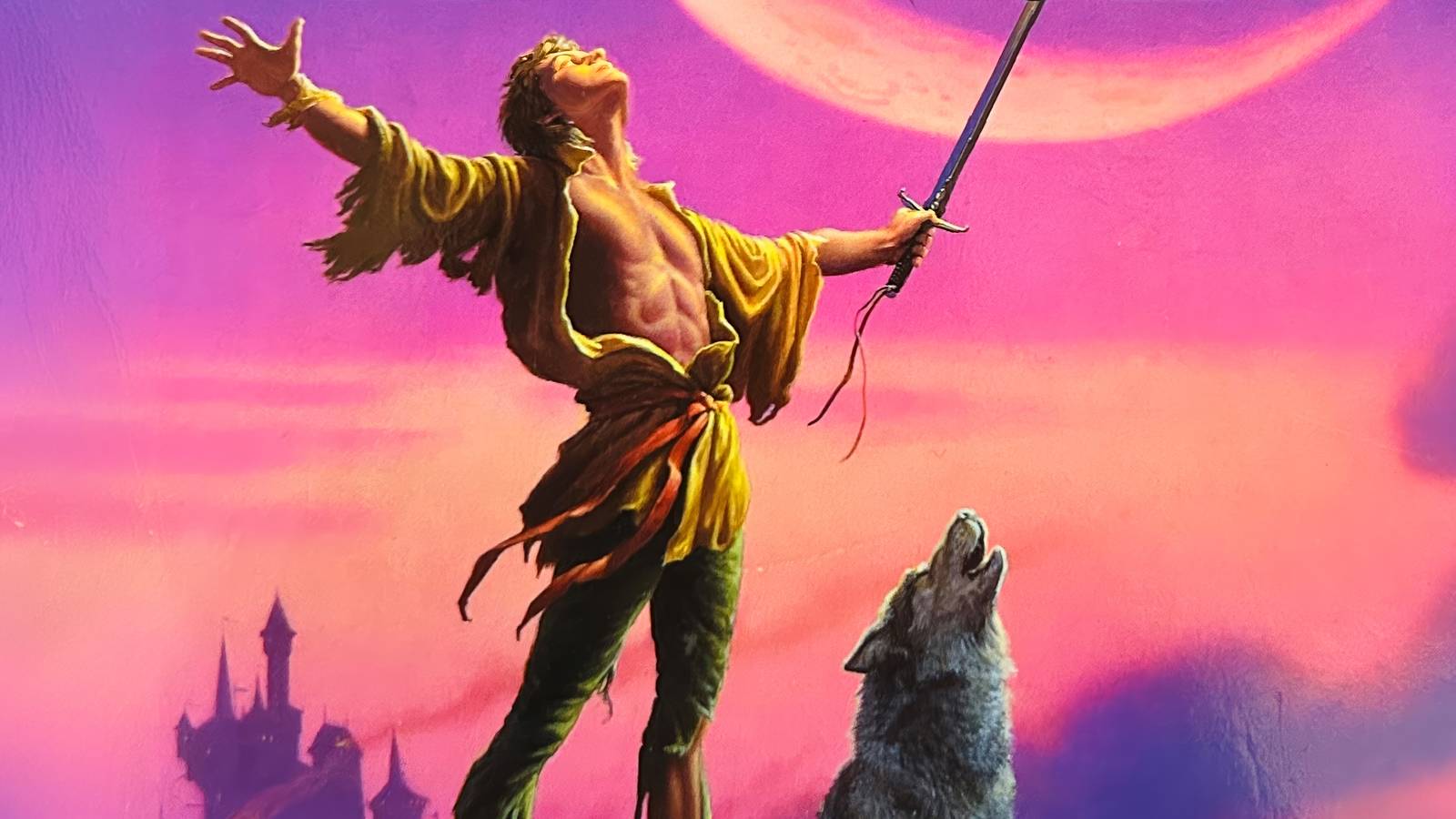
Image via Spectra/Michael Whelan Published Jul 22, 2026, 6:38 AM EDT Diego Pineda has been a devout storyteller his whole life. He has self-published a fantasy novel and a book of short stories, and is actively working on publishing his second novel. A lifelong fan of watching movies and talking about them endlessly, he writes reviews and analyses on his Instagram page dedicated to cinema, and occasionally on his blog. His favorite filmmakers are Andrei Tarkovsky and Charlie Chaplin. He loves modern Mexican cinema and thinks it's tragically underappreciated. Other interests of Diego's include reading, gaming, roller coasters, writing reviews on his Letterboxd account (username: DPP_reviews), and going down rabbit holes of whatever topic he's interested in at any given point. Sign in to your Collider account If there's one genre that lends itself perfectly to powerful, hugely imaginative, and absolutely unforgettable book trilogies, it's fantasy. After all, it's a genre all about expansive stories set in intricately complex worlds where nuanced magic systems, various mythological creatures, and decades-spanning events are the order of the day. That's why, throughout history, several of the greatest and most memorable book trilogies in history have belonged to fantasy. It can be a YA trilogy, like His Dark Materials, or a dark, mature grimdark for adults, like the Broken Empire. There is a myriad of subcategories contained within the fantasy genre, and it's delightful to explore that wide variety while reading some of the most widely celebrated fantasy trilogies ever written. Creative, groundbreaking, and told through some of the most wonderful prose that the genre has ever seen, these are all must-read trilogies for virtually anyone who loves fantasy books. In order to qualify for this list, we need to be talking about true trilogies, not a single multi-volume epic book like The Lord of the Rings or The Once and Future King. 8 'The Broken Empire' Trilogy Image via Harper Voyager/Mark Lawrence Written by American-British author Mark Lawrence, the Broken Empire trilogy consists of three of the best dark fantasy books of all time. It's the tale of the ruthless teenage prince Jorg Ancrath, who has forsaken his royal heritage to lead a bloodthirsty band of outlaws, and his quest to claim the throne as Emperor. Set in an engrossing post-apocalyptic Europe, the trilogy offers a masterful blend of medieval fantasy elements and remnants of forgotten technology. But a gripping setting is by no means the only strength that this trilogy has going for it. Prince of Thorns, King of Thorns, and Emperor of Thorns are three of the most groundbreaking grimdark fantasy novels of the 2010s. The series consists of Prince of Thorns, King of Thorns, and Emperor of Thorns, three of the most groundbreaking grimdark fantasy novels of the 2010s. It's impossible not to be deeply compelled by the tragic backstory of the anti-heroic lead, just as it is impossible to not find all of the post-apocalyptic lore irresistibly fascinating. Brilliantly weaving a non-linear story into a narrative tapestry that refuses to be a traditional Good vs. Evil tale, instead forcing the reader to sit with the narrative's moral ambiguity, the Broken Empire trilogy is essential for all those who love dark fantasy. 7 'Phèdre's Trilogy' Image via Macmillan Publishers Historically, the fantasy landscape has been overwhelmingly male-dominated. In modern times, however, those demographics have shifted, with women now representing a significant portion of both readership and authorship of fantasy literature. One such boundary-pushing author is Jacqueline Carey, whose Kushiel's Legacy series is a landmark in the history of adult, sex-positive fantasy literature. The series is composed of two trilogies, the Phèdre trilogy and the Imriel trilogy, the former of which is one of the best ever written. Far from being a traditional example of what is now commonly understood as romantasy, the Phèdre trilogy is a politically nuanced, powerfully mature, and thematically complex blend of fantasy, Medieval fantasy, and alternate-historical fiction. It proved absolutely revolutionary in its queer representation and depiction of BDSM, with moments of thrilling espionage and high-stakes battles that should prove immensely appealing for fans of the likes of George R. R. Martin. The only difference is that this series, composed of Kushiel's Dart, Kushiel's Chosen, and Kushiel's Avatar, is actually complete already, so there's no need to wait 15 years for it to end. 6 'The Warlord Chronicles' Image via St. Martin's Griffin Arthurian legend is a cornerstone of speculative fiction as a whole, but of fantasy most of all. It introduced Western fantasy to tropes that have proven essential throughout its entire history, from the Chosen One to the Wizard Mentor to the Sacred Quest. It's essential Hero's Journey stuff, and as such, many authors throughout modern history have taken all sorts of fascinating liberties with the material to deliver groundbreaking tales about King Arthur and his Round Table. Case in point: Bernard Cornwell's The Warlord Chronicles, a mixture of historical fiction and Arthurian legend that all fans of chivalric romances should check out at least once. Composed of The Winter King, Enemy of God, and Excalibur, this amazing trilogy is perfect for all those who love intricate worldbuilding on the foundation of nearly-faultless historically-plausible details. Magic is treated with fascinating ambiguity here, Cornwell grounding it in the natural world to allow the reader to either take it at face value or as a result of illusion and coincidences. Gritty, smart, and with an exquisitely intelligent and unique understanding of events and characters from Arthurian legend, this trilogy is a must-read for anyone interested in the history of fantasy. 5 'The First Law' Trilogy Image via Gollancz Written by British author of epic fantasy books Joe Abercrombie, the First Law series contains several standalone novels and two trilogies. The first one, which shares the series' name, is among the best book trilogies of all time. Blending razor-sharp dark humor with a gritty sense of realism and some of the strongest character work that 2000s fantasy ever saw, it's a tale following deeply flawed yet enthralling moral misfits through a story all about the cyclical nature of violence. With prose that's dark yet irresistibly comical and hugely accessible, Abercrombie delivers three books that would be perfect as an introduction to modern grimdark fantasy for those interested. The complex character development is pretty much unparalleled, getting readers to question their values when they begin to sympathize with these incredibly complicated people that the story follows. Blend that with a borderline-genius subversion of typical fantasy tropes that elevates the books' deconstruction of power and morality, as well as some delectably visceral action scenes, and you get a modern classic trilogy unlike any other. The Blade Itself, Before They Are Hanged, and Last Argument of Kings are all must-reads for fantasy lovers. 4 'The Broken Earth' Trilogy Image via Orbit Sometimes, science fiction and fantasy happen to coincide, and when that happens, it results in a genre known as science fantasy, which has produced some of the greatest fantasy books of all time throughout the years. The example par excellence is N. K. Jemisin's Broken Earth trilogy, a story spanning centuries set on a planet with a single supercontinent called the Stillness, whose inhabitants experience a catastrophic climate change event every few centuries. The Broken Earth series is climate fiction through and through—and one of the best trilogies ever written, at that. The first installment in the series, The Fifth Season, is arguably one of those fantasy books that are better than most movies. As for its sequels, The Obelisk Gate and The Stone Sky, they're equally exceptional literary explorations of systemic oppression, environmental trauma, and cycles of abuse. Jemisin crafts a masterclass in worldbuilding and character development by constantly offering all sorts of twists, surprises, and subversions, such as alternating between third-person perspective and groundbreaking chapters written in second person. The whole series feels grounded, thematically complex, and absolutely engrossing throughout. Collider Exclusive · Sci-Fi Survival Quiz Which Sci-Fi World Would You Survive? The Matrix · Mad Max · Blade Runner · Dune · Star Wars Five universes. Five completely different ways the future went wrong — or sideways, or up in flames. Only one of them is the world your instincts were built for. Eight questions will figure out which dystopia, galaxy, or desert wasteland you'd actually make it out of alive. 💊The Matrix 🔥Mad Max 🌧️Blade Runner 🏜️Dune 🚀Star Wars TEST YOUR SURVIVAL → 01 You sense something is deeply wrong with the world around you. What do you do? The first instinct is often the truest one. APull on every thread until I understand the system — then figure out how to break it. BStop asking questions and start stockpiling — food, fuel, weapons. Questions don't keep you alive. CKeep my head down, observe carefully, and trust no one until I know who's pulling the strings. DStudy the patterns. Every system has a rhythm — learn it, and you learn how to survive it. EFind the people fighting back and join them. You can't fix a broken galaxy alone. NEXT QUESTION → 02 In a world of scarcity, what resource do you guard most fiercely? What we protect reveals what we believe survival actually requires. AKnowledge. If you understand the system, you don't need resources — you can generate them. BFuel. Everything else — movement, power, escape — runs on it. CTrust. In a world of fakes and informants, a truly reliable ally is rarer than any commodity. DWater. And after water, information — the two things empires are truly built on. EShips and credits. The galaxy is big — you survive it by being able to move through it freely. NEXT QUESTION → 03 What kind of threat keeps you up at night? Fear is useful data — if you're honest about what you're actually afraid of. AThat reality itself is a lie — that everything I experience has been constructed to keep me compliant. BA raid. No warning, no mercy — just the roar of engines and then nothing left. CBeing identified. Once someone with power decides you're a problem, you're already out of time. DBeing outmanoeuvred — losing a political game I didn't even know I was playing. EThe Empire tightening its grip until there's nowhere left to run. NEXT QUESTION → 04 How do you deal with authority you don't trust? Every dystopia has a power structure. Your approach to it determines everything. ASubvert it from the inside — learn its rules well enough to weaponise them against it. BIgnore it and stay out of its reach. The further from any power structure, the better. CAppear to comply while doing exactly what I need to do. Visibility is the enemy. DManoeuvre within it carefully. You can't beat a system you refuse to understand. EResist openly when I have to. Some things are worth the risk of being seen. NEXT QUESTION → 05 Which environment could you actually endure long-term? Survival isn't just tactical — it's physical, psychological, and very much about where you are. AUnderground bunkers and server rooms — cramped, artificial, but with access to everything that matters. BOpen wasteland — brutal sun, no shelter, constant movement. At least the threat is honest. CA dense, rain-soaked city where you can disappear into the crowd and nobody asks questions. DMerciless desert — extreme heat, no water, and something enormous living beneath the sand. EThe fringe — backwater planets and busy spaceports where the Empire's attention rarely reaches. NEXT QUESTION → 06 Who do you want in your corner when things fall apart? The company you keep is the clearest signal of who you actually are. AA tight crew of believers who've seen behind the curtain and have nothing left to lose. BOne or two people I'd trust with my life. Any more than that and someone talks. CNobody, ideally. Alliances are liabilities. I work alone unless I have no choice. DA community bound by shared hardship and mutual survival — people who need each other to last. EA ragtag team with wildly different skills and total commitment when it counts. NEXT QUESTION → 07 Where do you draw the line — if you draw one at all? Every survivor eventually faces a moment that tests what they're actually made of. AI won't harm the innocent — even the ones who'd report me without hesitation. BI do what I have to to protect the people I've chosen. Everything else is negotiable. CThe line shifts depending on who's asking and what's at stake. DI draw a long-term line — nothing that compromises my people's future, even if it'd help now. ESome lines, once crossed, can't be uncrossed. I know which ones they are. NEXT QUESTION → 08 What would actually make survival worth it? Staying alive is one thing. Having a reason to is another. AWaking others up — dismantling the illusion so no one else has to live inside it. BFinding somewhere — or someone — worth protecting. A reason to keep moving. CAnswers. Understanding what I am, what any of this means, before time runs out. DLegacy — shaping the future in a way that outlasts me by generations. EFreedom — for myself, for others, for every world still living under someone else's boot. REVEAL MY WORLD → Your Fate Has Been Calculated You'd Survive In…Your answers point to the world your instincts were built for. This is the universe your temperament, your survival instincts, and your particular brand of stubbornness were made for. The MatrixYou took the red pill a long time ago — probably before anyone offered it to you. You're a systems thinker who can't help but notice the seams in things. You're drawn to understanding how the system works before figuring out how to break it. You'd find the Resistance, or it would find you — your instinct for spotting constructed realities is the machines' worst nightmare. You function best when you have access to information and the freedom to act on it. The Matrix built an airtight prison. You'd be the one probing the walls for the door. Mad MaxThe wasteland doesn't reward the clever or the well-connected — it rewards those who are hard to kill and harder to break. That's you. You don't need comfort, community, or a cause larger than the next horizon. You need a vehicle, a clear threat, and enough fuel to outrun it — and you're good at all three. You are unsentimental enough to survive that world, and decent enough — just barely — to be something more than another raider. In the wasteland, that distinction is everything. Blade RunnerYou'd survive here because you know how to exist in moral grey areas without losing yourself completely. You read people accurately, keep your circle small, and ask the questions others prefer not to answer. In a city where humanity is a legal designation rather than a feeling, you hold onto something that keeps you functional. You're not a hero. But you're not lost, either. In Blade Runner's world, that distinction is everything. DuneArrakis is the most hostile environment in the known universe — and you are precisely the kind of person it rewards. Patience, discipline, and political awareness are your core strengths — and on Arrakis, they're survival tools. You understand that the long game matters more than any single victory. Others come to Dune and are consumed by it. You'd learn its logic and earn its respect. In time, you wouldn't just survive Arrakis — you'd begin to reshape it. Star WarsThe galaxy far, far away is vast, loud, and in a constant state of violent political upheaval — and you wouldn't have it any other way. You find meaning in being part of something larger than yourself — a cause, a crew, a rebellion. You'd gravitate toward the Rebellion, or the fringes, or whatever pocket of the galaxy still believes the Empire's grip can be broken. You fight — not because you have to, but because standing aside isn't something you're capable of. In Star Wars, that willingness is what makes all the difference. ↻ RETAKE THE QUIZ 3 'His Dark Materials' Image via Alfred A. Knopf Though it's often categorized as young adult fantasy, Philip Pullman actually wrote the His Dark Materials trilogy without any age demographic in mind, which is a big part of what makes this such a fascinating work of fantasy literature. Controversial for being unapologetically anti-religion and openly critiquing the Catholic Church, the trilogy is dark, philosophically complex, and brilliantly subversive, offering one of the most mature tales that a teenage fantasy reader could possibly encounter. But His Dark Materials is a must-read for fantasy of any age, considering that what we're talking about is three of the best fantasy books of the last 50 years. Northern Lights (known as The Golden Compass in North America and other parts of the world) is easily the best of the bunch, but The Subtle Knife and The Amber Spyglass are both nearly-perfect sequels. Full of ingenious worldbuilding and wonderfully nuanced themes, it's one of the most compelling fantasy book trilogies in history. 2 The 'Farseer' Trilogy Image via Del Rey Written by Margaret Astrid Lindholm Ogden under the pen name of Robin Hobb, the Farseer trilogy is epic fantasy through and through, despite offering some of the most profoundly introspective prose that the genre has ever seen. It's one of those fantasy book series better than Harry Potter, an utter gem of a trilogy telling the tale of an illegitimate son of a prince who is trained as an assassin. Everything that ensues is an engrossing quest borrowing several tropes and creative elements from Arthurian legend. Assassin's Apprentice, Royal Assassin, and Assassin's Quest are all about as close to perfection as fantasy literature can possibly come. What makes the trilogy so special is that despite its vast scope, it also serves as an intimate character study narrated in first person by a protagonist grappling with severe trauma and identity crises. The emotional attachment built by that sense of intimacy makes the sharp political elements, high-stakes tension, and delectably unique magic system all the more gripping despite the lack of many traditional action scenes. People who love fantasy at its most character-driven are virtually guaranteed to add the Farseer trilogy to their list of favorite fantasy book series. 1 Era One of 'Mistborn' Image via Tor Books Brandon Sanderson is not only one of the most productive speculative fiction authors working today, but also one of the greatest. For proof, one needn't look much further than his Mistborn series, part of his interconnected Cosmere universe. The series is composed of two eras with a third one on the way, and it's Era One that may very well be the greatest fantasy book trilogy in history. It's certainly one of those book trilogies whose every novel is a masterpiece. For one, it's a masterclass in structuring a trilogy, delivering a virtually faultless story arc where pretty much every single detail ends up paying off big-time, no matter how minor in appearance. The Final Empire is a riveting heist novel, The Well of Ascension is an absorbing political thriller, and The Hero of Ages delivers enough epic, high-stakes fantasy to satisfy even the most demanding fan of the genre. Diverse, perfectly paced, complete with a perfect magic system, and full of brilliant foreshadowing, it's one of the biggest trilogy masterpieces in history.
8 Greatest Fantasy Book Trilogies of All Time
Full Article
Original Source
Read the full article at Collider →KhanList aggregates and links to publicly available news content. We do not host full articles from third-party sources. Always verify important information with original sources.