
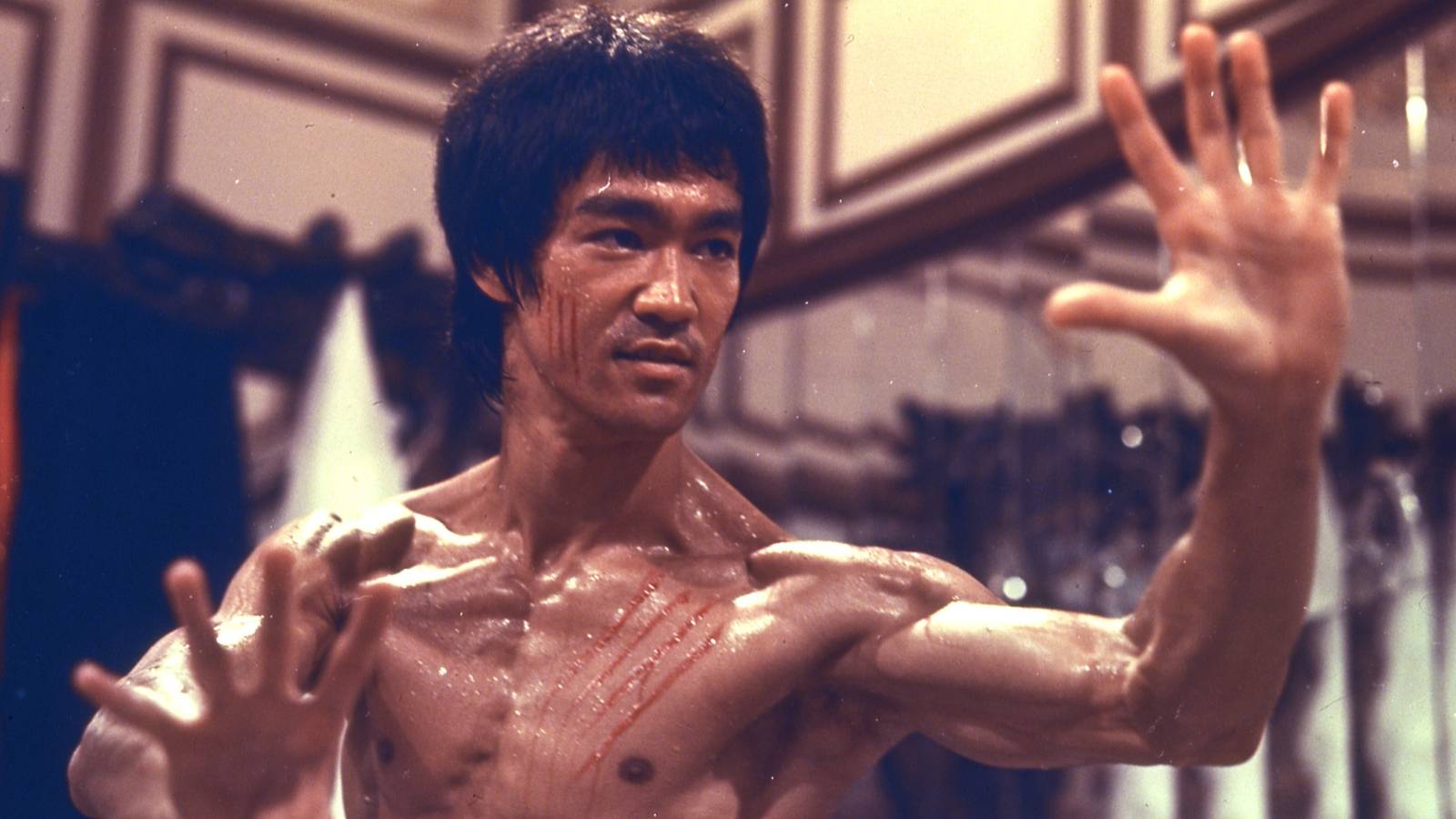
Published Nov 27, 2026, 6:32 AM EST Senior Music Editor at Screen Rant, Sarah's love of sound and story drive the beat. A globetrotting brand whisperer and award-winning journalist, she’s built cross-cultural narratives around the world—but music has always been her true north. She launched DJ Mag North America, successfully introducing the iconic UK brand to the U.S. market. Previously, she carved a space for EDM inside the pages of VIBE, blending electronic and hip-hop culture long before it was trendy. Few decades changed action cinema quite like the 1970s. Bruce Lee was becoming an international phenomenon, Hong Kong's Shaw Brothers studio was producing an extraordinary number of kung fu films, and audiences around the world were developing an appetite for martial arts movies that Hollywood couldn't ignore. The genre had already enjoyed considerable popularity throughout Asia, but the '70s brought its distinctive filmmaking techniques to a much wider audience. Elaborate fight choreography became a primary attraction, with performers demonstrating remarkable physical abilities in sequences that required exceptional timing and discipline. The results could be breathtaking, occasionally outrageous, and surprisingly funny. These films also established many of the conventions that continue to define martial arts cinema. Rival schools, demanding masters, elaborate training sequences, and seemingly impossible opponents became familiar elements, although the best filmmakers found ways to make those ideas feel exciting. Their influence can still be seen in the best American-made martial arts movies of recent decades. By the end of the decade, the genre had also begun moving beyond the intense revenge stories associated with Lee. Jackie Chan and other rising stars brought humor and increasingly inventive physical comedy into their fight sequences, introducing a style that would dominate much of the following decade. Meanwhile, the greatest Thai martial arts movies would eventually develop their own distinctive approach to action, building upon a cinematic tradition that had already captivated international audiences. These eight martial arts movies demonstrate why the 1970s remain such an important decade for the genre. Some became worldwide sensations, while others developed devoted cult followings. Their stories vary considerably, but each offers something worth discovering, whether it's an unforgettable performance, extraordinary choreography, or an influence that extends far beyond its original release. Enter The Dragon (1973) There are martial arts movies, and then there's Enter the Dragon. Robert Clouse's action classic helped introduce Bruce Lee to an enormous international audience, although its release became inseparable from the tragedy of his premature death in July 1973. Lee stars as a martial artist recruited to infiltrate a mysterious island tournament operated by the criminal mastermind Han (Shih Kien). The setup borrows heavily from espionage thrillers, but nobody is watching for the elaborate criminal investigation. Lee's physical precision is extraordinary, particularly during his confrontation with Han in a room filled with mirrors. The sequence remains a spectacular example of how choreography, editing, and visual composition can transform a fight into something genuinely cinematic. Jim Kelly and John Saxon provide memorable supporting performances, giving the film a broader international appeal. Its success inspired countless martial arts movies influenced by Bruce Lee, although few have approached his combination of speed and charisma. More than five decades later, Enter the Dragon remains essential viewing for anyone interested in action cinema's evolution. King Boxer (1972) Also released internationally as Five Fingers of Death, King Boxer helped establish the commercial viability of Hong Kong martial arts movies in Western theaters before Enter the Dragon became a global phenomenon. Directed by Jeong Chang-hwa, the Shaw Brothers production stars Lo Lieh as Chi-Hao, a young fighter preparing for a prestigious tournament while facing increasingly dangerous interference from a rival martial arts school. The story embraces familiar revenge-movie conventions, but its execution is considerably more entertaining than the basic premise suggests. The film's greatest attraction is Chi-Hao's mastery of the Iron Palm technique, which transforms his hands into formidable weapons. The exaggerated sound effects and increasingly vicious confrontations make the action wonderfully excessive, while Lo Lieh gives his otherwise straightforward hero enough determination to remain compelling. Quentin Tarantino later paid tribute to the movie in Kill Bill, borrowing its memorable use of the Ironside theme. King Boxer may lack the refinement of later kung fu productions, but its influence on the genre's international popularity is enormous. The Street Fighter (1974) Sonny Chiba was never particularly interested in making martial arts look graceful. In The Street Fighter, the Japanese action star plays Takuma Tsurugi, a ruthless mercenary whose involvement in a kidnapping scheme leads to an increasingly violent conflict with organized crime. Unlike the honorable protagonists commonly associated with kung fu cinema, Tsurugi is an unpleasant, self-serving antihero who occasionally seems almost as dangerous as the criminals he's fighting. Director Shigehiro Ozawa delivers an astonishingly brutal collection of fight scenes, including a notorious moment in which an X-ray effect reveals the damage inflicted by one of Tsurugi's blows. The violence was so extreme that The Street Fighter became the first film to receive an X rating in the United States solely for its violent content. Chiba's raw physicality gives the action a markedly different quality from Bruce Lee's controlled precision, while the film's uncompromising attitude anticipates later developments in action cinema. Its influence extended into American popular culture, particularly through Quentin Tarantino's admiration for Chiba and the film's appearance in True Romance. The Way Of The Dragon (1972) Bruce Lee's only completed directorial feature takes him somewhere unexpected: Rome. In The Way of the Dragon, Lee plays Tang Lung, a martial artist who travels to Italy to help protect a Chinese restaurant from gangsters determined to take control of the business. The setup allows Lee to demonstrate a surprisingly effective gift for physical comedy, particularly as his character struggles to navigate an unfamiliar city and repeatedly misunderstands the people around him. However, the movie's reputation rests largely on its extraordinary final confrontation between Lee and Chuck Norris inside Rome's Colosseum. The sequence is widely regarded as one of cinema's greatest martial arts fight scenes, and with good reason. Lee allows the confrontation to unfold with remarkable clarity, giving both performers space to demonstrate their techniques while building genuine dramatic tension. The fight also reveals his understanding of rhythm and character, with Tang Lung gradually adapting his approach to overcome a formidable opponent. Although Enter the Dragon became Lee's most internationally famous film, The Way of the Dragon offers perhaps the clearest demonstration of his creative ambitions behind the camera. Master Of The Flying Guillotine (1976) A blind assassin armed with a weapon capable of decapitating his opponents probably sounds like a particularly outrageous martial arts villain. Jimmy Wang Yu's Master of the Flying Guillotine takes that premise and runs with it, producing one of the decade's most entertainingly bizarre action movies. Wang Yu, who also wrote and directed the film, reprises his role as the One-Armed Boxer, a formidable fighter targeted by a vengeful martial arts master whose disciples he previously killed. The assassin's signature weapon is an ingenious piece of cinematic lunacy: a bladed basket attached to a chain that can be thrown over an opponent's head. Yet the film offers more than an unforgettable gimmick. Its lengthy martial arts tournament features fighters demonstrating wildly different techniques, allowing the choreography to become increasingly imaginative. The action occasionally stretches credibility beyond recognition, but Wang Yu understands that the audience is there to be entertained. Master of the Flying Guillotine has become a cult favorite precisely because it embraces the genre's most extravagant possibilities without losing sight of the excitement generated by a genuinely inventive fight. The Five Deadly Venoms (1978) Five mysterious fighters trained in different animal-inspired martial arts styles sounds like the beginning of an unusually entertaining superhero movie. In Chang Cheh's The Five Deadly Venoms, those techniques belong to former students of the Poison Clan, each specializing in a distinctive fighting method. The dying master sends his final pupil to locate the others and determine which have become corrupted, creating a surprisingly effective mystery beneath the elaborate action sequences. The Centipede relies on astonishing speed, while the Snake, Scorpion, Lizard, and Toad employ equally unusual techniques. Their identities and conflicting loyalties give the film an element of suspense that distinguishes it from more conventional tournament stories. Chang's choreography is imaginative, but the real pleasure comes from discovering how the different fighting styles interact when the characters finally confront one another. The film developed an enormous cult following, influencing everything from hip-hop culture to later action cinema. Quentin Tarantino's Kill Bill films are among the clearest examples of that continuing influence, with their memorable action sequences celebrating many of the traditions established by Shaw Brothers productions. The 36th Chamber Of Shaolin (1978) Plenty of martial arts films include training montages, but few have ever made the process of learning to fight as compelling as The 36th Chamber of Shaolin. Directed by Lau Kar-leung, the Shaw Brothers classic stars Gordon Liu as a young man who seeks refuge at a Shaolin monastery after suffering under oppressive Manchu authorities. Determined to acquire the skills necessary to resist injustice, he begins an extraordinarily demanding course of martial arts training. The monastery's 35 chambers each emphasize a different physical or mental discipline, transforming the hero's education into the film's central attraction. Lau finds remarkable variety in exercises designed to improve balance, strength, coordination, and concentration. What could have become repetitive instead offers a fascinating examination of how genuine skill develops through patience and persistence. Liu's performance makes every breakthrough satisfying because the audience has witnessed the effort required to achieve it. The film's final action sequences are excellent, but its greatest achievement is making the journey toward mastery every bit as exciting as the eventual confrontation. Few martial arts movies have explored the discipline behind the spectacle so effectively. Drunken Master (1978) By the late 1970s, Jackie Chan was beginning to establish a very different kind of martial arts hero. Rather than attempting to replicate Bruce Lee's intensity, Chan embraced comedy, turning his extraordinary physical abilities into a source of constant amusement. Yuen Woo-ping's Drunken Master helped establish that approach, casting Chan as a mischievous young Wong Fei-hung whose troublesome behavior leads his father to place him under the supervision of an eccentric martial arts instructor. The formidable Beggar So (Yuen Siu-tien) introduces his reluctant student to drunken boxing, a fighting style built around unpredictable movements that resemble intoxication. The resulting training sequences are frequently hilarious, but they also demonstrate Chan's remarkable control over his body. He transforms apparent clumsiness into precise choreography, combining physical comedy with increasingly sophisticated combat techniques. The film's popularity helped establish kung fu comedy as a major force in Hong Kong cinema, paving the way for Chan's international career. Drunken Master also provides a fitting conclusion to this collection, demonstrating how the martial arts genre evolved throughout the decade while preparing audiences for the extraordinary action films that would follow in the 1980s.
8 Great Martial Arts Movies From The 1970s Every Genre Fan Should Know
Full Article
Original Source
Read the full article at Screenrant →KhanList aggregates and links to publicly available news content. We do not host full articles from third-party sources. Always verify important information with original sources.