
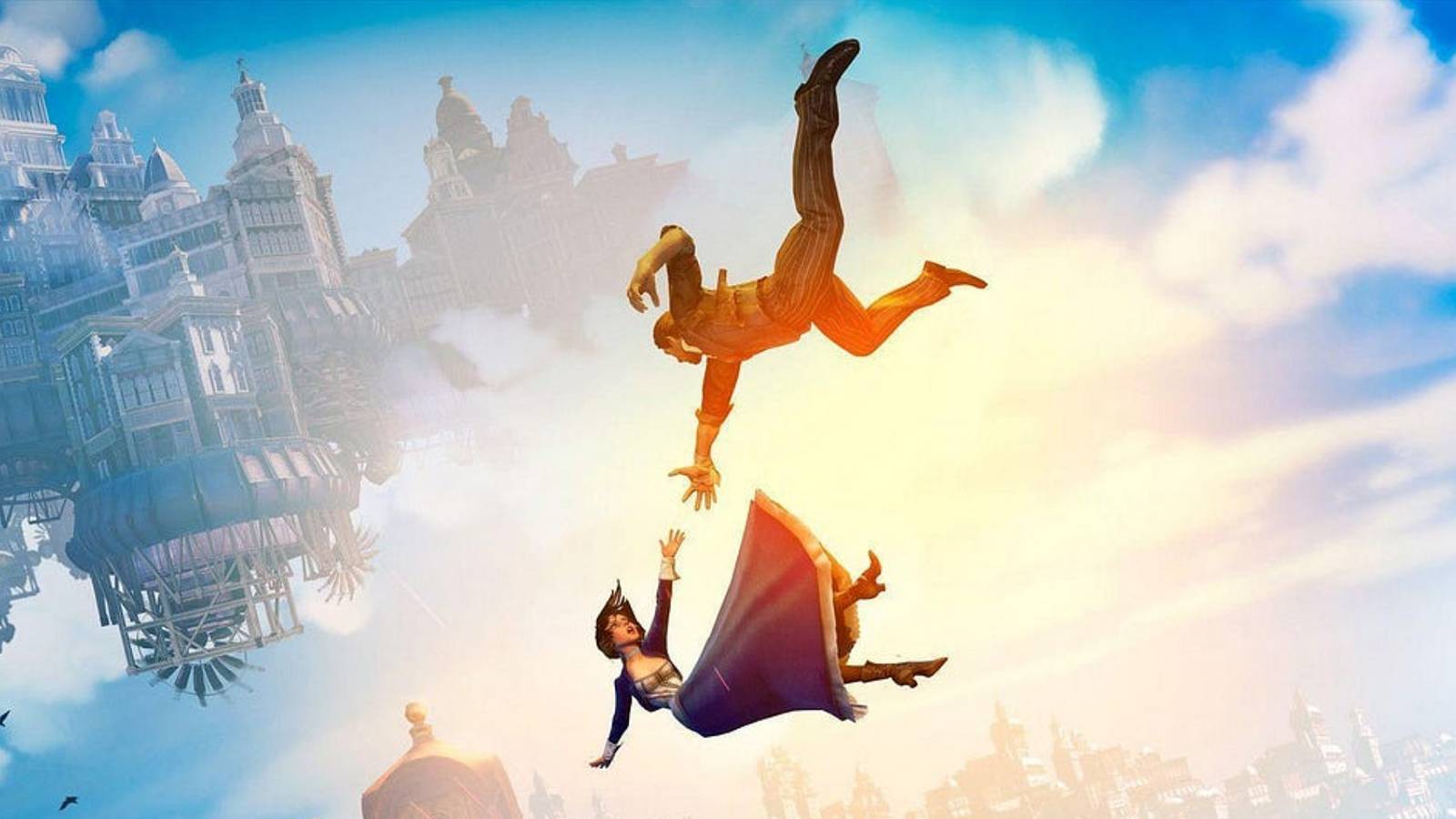
Image via Irrational Games Published Oct 27, 2026, 5:08 AM EDT Randy Rhodes' first gaming memory is Kirby's Adventure on the NES, and his love for gaming only rose from there. Playing games eventually wasn't enough for him. He began following the industry closely. In 2024, he finally started putting that to use by launching the Project Untitled Gaming Podcast and later the Dual-Wield Gaming Podcast. Covering the news week to week turned out to be something he loved, but a weekly show only has so much room in it, and writing was already something he wanted to do more of. Randy has written for Lords of Gaming since March 2025 and already has over 200 articles published to show for it. His coverage centers on Nintendo, Xbox, and indies, and runs across news, reviews, previews, and editorial. He enjoys writing about and critiquing the games that he's played, but analyzing the industry brings just as much enjoyment for him. He tends to write editorials that try to dig deeper into the news instead of just restating it. Randy reviews and previews games broadly across all genres. He has a soft spot for co-op games, 3D platformers, and the majority of Nintendo's first-party output, but he also adores cozy and niche titles that don't always get a serious look: visual novels, farming sims, life sims, etc. He's always looking for up-and-coming indie games worth writing about. Outside of games, Randy is into DnD, cooking, music and music production, which inspired one of his favorite pieces to write: 50 Songs Leveled Up By Video Game Samples. He also cares about Black representation in games and in the industry behind them, and he's always looking for opportunities to cover it. Sign in to your Collider account The Xbox 360 era was a marvelous generation and the last time publishers regularly bet on strange, original ideas. Sadly, most of those bets never made it past the seventh console generation. Some of the most beloved shooters, action games, and RPGs of the Xbox 360 era have sat untouched for over a decade while their publishers and developers chased live service games and safer sequels. A few were killed by publishers who decided there wasn't an audience, a few by developers who moved on to something new, and one is in the works but reportedly stuck in development hell with no proper reveal in sight. None of these franchises failed because of a lack of quality; they were abandoned, leaving a hole that still hasn't been properly filled. Here are eight dormant Xbox 360-era franchises that have earned a comeback, and why each one would land harder today than it ever did back then. 8. Viva Piñata Image via Rare Viva Piñata launched on Xbox 360 on November 9, 2006, a social garden simulator developed by Rare and published by Microsoft Game Studios. Players turn a scrubby patch of dirt into a garden that attracts living, candy-filled piñatas, each with its own appetite for certain plants, foods, and mates. The game arrived two days after Gears of War, and it created a contrasting Xbox 360 double feature that could match Barbenheimer in its absurdity. Viva Piñata was loved for its vivid art style, its whimsical soundtrack, and its surprisingly deep strategic gameplay. Microsoft considered it a success; however, sales started off slow due to the candy-colored art and tie-in cartoon dressing it as a kids' game on a console built for hardcore shooters. Rare followed with Viva Piñata: Trouble in Paradise in 2008, but that sequel barely evolved the formula, and it didn't seem like the team had enough fresh ideas for a third entry. Viva Piñata needs a revival because the audience for this type of game finally exists en masse. Stardew Valley and Animal Crossing: New Horizons turned cozy life and social sims into one of gaming's biggest genres, and players now seek out exactly the gentle, collect-them-all garden shtick Rare pioneered. With Xbox's cancellation of Rare's Everwild leaving the studio without a new world beyond Sea of Thieves, a Viva Piñata revival on Xbox Game Pass is a surefire hit that should already be in development at this point. 7. Kameo Image via Xbox Kameo: Elements of Power was one of the Xbox 360's launch titles in November 2005, an action-adventure from Rare and Microsoft Game Studios. Players step into the boots of Kameo, an elf princess who can shapeshift into elemental warriors, as she rescues her family from a troll army. Its development struggled and spanned four consoles, starting on the Nintendo 64, passing through the GameCube and original Xbox generation, before finally landing on the Xbox 360. Kameo: Elements of Power earned generally favorable reviews, with abundant praise for its impressive visuals and its gameplay hook: each controller face button maps to a different warrior spirit, so combat flows fluidly from one form to the next. The sales numbers were less favorable, partly due to the game clashing with the gritty and high-fidelity marketing of the Xbox 360. Rare started work on Kameo II, a darker sequel that would equip the character with daggers and introduce stealth mechanics, but Microsoft canceled it around 2009 as Rare shifted full-time to delivering Kinect games. The shapeshifting hook Kameo built its gameplay loop around has since become a blockbuster formula. Nintendo's Super Mario Odyssey turned capturing enemies and utilizing their abilities into one of the Switch's best-selling games. Kameo: Elements of Power used that same transform-to-solve loop to blend combat, puzzles, and exploration across its elemental warriors. Pair that with more fantasy elements similar to Kena: Bridge of Spirits, and a Kameo revival could give Xbox the mainstream, family-friendly exclusive its lineup lacks. 6. Prototype Image via PlayStation Prototype, an open-world superpowered action game from Radical Entertainment and Activision set in a virus-ravaged Manhattan, hit the Xbox 360 in June 2009. Players control Alex Mercer, an amnesiac shapeshifter who consumes people to steal their memories, their faces, and their bodies. Mercer was mutated by a deadly virus, giving him the power to sprint up skyscrapers, turn his arms into blades, leap over buildings, and hurl cars hundreds of yards away. Prototype was the generation's most unhinged superpower fantasy. The game launched to strong sales and was praised for its robust abilities and unbound traversal mechanics. Prototype 2 followed in April 2012 with a new protagonist, James Heller, but sales didn't keep up with the original, and Activision gutted Radical Entertainment that June. Despite a substantial investment, the Prototype IP did not perform well enough commercially for Activision, and Radical was sidelined to support status. Although Prototype didn't sell well enough in 2012, there's a sizable market for this kind of game today. Insomniac's Marvel's Spider-Man proved that traversal-heavy, open-world superhero games are in demand, and Marvel's Wolverine showed there's an appetite for a mature, visceral superhero game as well. Microsoft now owns Activision, so a Prototype revival would give Xbox a proper answer to Sony's superhero dominance. An R-rated antihero who viciously devours his enemies would be the perfect counter and fits perfectly in the era of The Boys and Invincible. 5. BioShock Image via 2K Games BioShock, an atmospheric first-person immersive sim from Ken Levine's Irrational Games (then 2K Boston) and publisher 2K Games, was released on Xbox 360 in August 2007. Players crash into the Atlantic and descend into Rapture, a fallen underwater utopia where its inhabitants have been driven to madness. Utilizing plasmids, an injectable serum that rewrites genetic code to grant superhuman abilities, you fight through Splicers and Big Daddies to escape the sunken city. BioShock was a critical landmark and a commercial hit, and its "would you kindly" twist remains one of gaming's most exalted story moments. BioShock 2 and BioShock Infinite followed in 2010 and 2013, but Irrational Games closed down in 2014, and the series has been dead silent ever since. 2K created a new studio, Cloud Chamber, specifically to work on the next BioShock since at least 2019, but the project has failed internal reviews as recently as 2025, lost roughly a third of its staff, and still has no trailer or official announcement to show for it. The narrative shooter BioShock defined is wide open. You can clearly see Atomic Heart's inspirations in its own atmospheric, retro-futuristic dystopia setting and first-person, ability-heavy immersive sim gameplay, and it found a sizable audience. Take-Two CEO Strauss Zelnick said in 2026 that he feels much better about the new BioShock, and if Cloud Chamber delivers a focused single-player experience half as good as the original trilogy, it would land because BioShock fans have been craving something to quench their thirst for over a decade. 4. Left 4 Dead Image via Valve Left 4 Dead, a four-player co-op-focused first-person shooter developed by Turtle Rock Studios and Valve, launched on Xbox 360 and PC in November 2008. A zombie apocalypse has broken out, and you, along with up to three friends, must battle sprinting hordes and special infected such as the Tank, the Hunter, and the Witch, from one safe room to the next. What made this game special was the emergent AI Director, a system that randomized enemies, items, and pacing so no two runs played the same. Left 4 Dead was a hit, and Valve rushed out Left 4 Dead 2, a sequel that improved on the first in almost every way, just one year later in November 2009. The co-op shooter sold well and still draws players to this day, so it wasn't a commercial failure that killed it. Valve simply did what Valve does: moved on to other games like Dota 2, Counter-Strike 2, Steam hardware and software, and Half-Life: Alyx. The co-op horde shooter Left 4 Dead created has grown into one of gaming's most reliable genres. Deep Rock Galactic, Warhammer: Vermintide 2, and Helldivers 2 all built huge communities on squads surviving waves of enemies, while Turtle Rock's spiritual successor Back 4 Blood proved that it wasn't as easy as it looks to recapture the original formula without Valve's polish. If Gabe Newell greenlit a new Left 4 Dead built on the Source 2 engine with a modernized AI Director at Valve, it would surely break a few Steam player records. 3. Lost Odyssey Image via Xbox Lost Odyssey, a AAA cinematic turn-based JRPG from Final Fantasy creator Hironobu Sakaguchi's Mistwalker, reached the North American audience in February 2008. This Xbox first-party exclusive follows Kaim, an immortal warrior who has lived for 1,000 years and lost the memories of nearly all of them. It spanned four discs, carried a transcendent score composed by the legendary Nobuo Uematsu, and was Microsoft's bold attempt to give the Xbox 360 its own Final Fantasy. Amazingly, it was better than any Final Fantasy that launched that generation. Lost Odyssey was lauded for its engaging, active turn-based combat and mature storytelling, especially the "A Thousand Years of Dreams" short stories written by novelist Kiyoshi Shigematsu that Kaim recovers as he travels. Microsoft said it was happy with early sales in Japan and hinted the series would continue, but a sequel never materialized. Microsoft quietly retreated from its Japanese RPG push, and Mistwalker moved on to The Last Story, exclusively on Wii and, years later, Fantasian. Although mainline Final Fantasy games never went back to their roots, turn-based JRPGs are thriving more than ever. Metaphor: ReFantazio sold strongly in 2024 and should've won game of the year, while Clair Obscur: Expedition 33 became 2025's breakout hit and the most awarded game in The Game Awards history after launching on Xbox Game Pass, proving that a cinematic, melancholy RPG with active turn-based combat can move mountains. With Final Fantasy now committed to real-time action, Microsoft owns an IP built to fill the AAA gap that the franchise left behind, and a Lost Odyssey revival would give Xbox the prestige JRPG it has been lacking. 2. Portal Image via Valve Portal, Valve's first-person physics-based puzzle game, debuted on Xbox 360 in October 2007 as part of The Orange Box alongside Half-Life 2 and Team Fortress 2. As Chell, a test subject armed with a gun that shoots color-coordinated portals that link to one another, players solve physics puzzles inside the Aperture Science labs. Guiding her through it all is GLaDOS, a passive-aggressive AI whose performance turned an obscure bonus game into a phenomenon. Portal became the breakout star of The Orange Box, and Portal 2 in 2011 expanded it into a full-length narrative-driven puzzle game with some of the most hilarious and well-written dialogue in gaming history, an equally robust co-op campaign starring robots Atlas and P-Body, and the finest physics-based puzzle mechanics ever created. Both games were critical and commercial hits, but as mentioned before: Valve does what Valve does best. They moved on to what they deemed bigger and better things, leaving Portal with no future. The first-person puzzle genre the game innovated spawned many indie games attempting to recapture that magic. The Talos Principle 2, Viewfinder, and Superliminal all found audiences chasing that same mind-bending puzzle-driven high, and the fan-made Portal: Revolution became one of Steam's best-reviewed mods, proving that fans are still fiending for more. As Valve attempts to push its pricey Steam Machine into living rooms, what better way to entice players to the hardware than an exclusive Portal 3? 1. Sleeping Dogs Image via United Front Games Sleeping Dogs, a high-octane, crime-driven open-world game from United Front Games and Square Enix, launched on Xbox 360 and PC in August 2012. You play as Wei Shen, an undercover cop infiltrating Hong Kong's Sun On Yee triad as his loyalties blur between the badge and the gang. The game began at Activision as True Crime: Hong Kong before Activision canceled it and Square Enix rescued it. Sleeping Dogs mastered something that even Grand Theft Auto VI probably won't match: hard-hitting, brutal hand-to-hand combat that makes you want to get up close and personal. Square Enix called the game a disappointment despite selling about 1.75 million copies in six months as a new IP. Square Enix ended up passing on a full sequel in favor of the online-focused spinoff Triad Wars. This game was unfortunately canceled in beta and United Front Games closed in 2016. Sleeping Dogs was ahead of its time and now many games of its ilk have gained success in its absence. Sega's Yakuza series became a global hit with its own brawler-driven take on Asian crime drama, and Sloclap's Sifu proved authentic, fast-paced martial arts combat can carry a game by itself. If Square Enix wants to take a bet on a fresher face in the wake of declining Final Fantasy sales, a Sleeping Dogs revival needs to happen yesterday. These franchises were left in the Xbox 360 generation for one reason or another, but their influence has left thriving communities awaiting their return. Cozy life sims, co-op horde shooters, and cinematic turn-based JRPGs are all thriving, often powered by studios openly borrowing from these Xbox 360-era originals. No matter the reason these games were left behind, there's too much wasted potential here to leave them forever in the seventh generation. Released March 26, 2013 ESRB M for Mature: Blood and Gore, Intense Violence, Language, Mild Sexual Themes, Use of Alcohol and Tobacco Developer(s) Irrational Games Publisher(s) 2K Engine Unreal Engine 3 Franchise BioShock
8 Forgotten Xbox 360-Era Franchises That Deserve a Comeback
Full Article
Original Source
Read the full article at Collider →KhanList aggregates and links to publicly available news content. We do not host full articles from third-party sources. Always verify important information with original sources.