
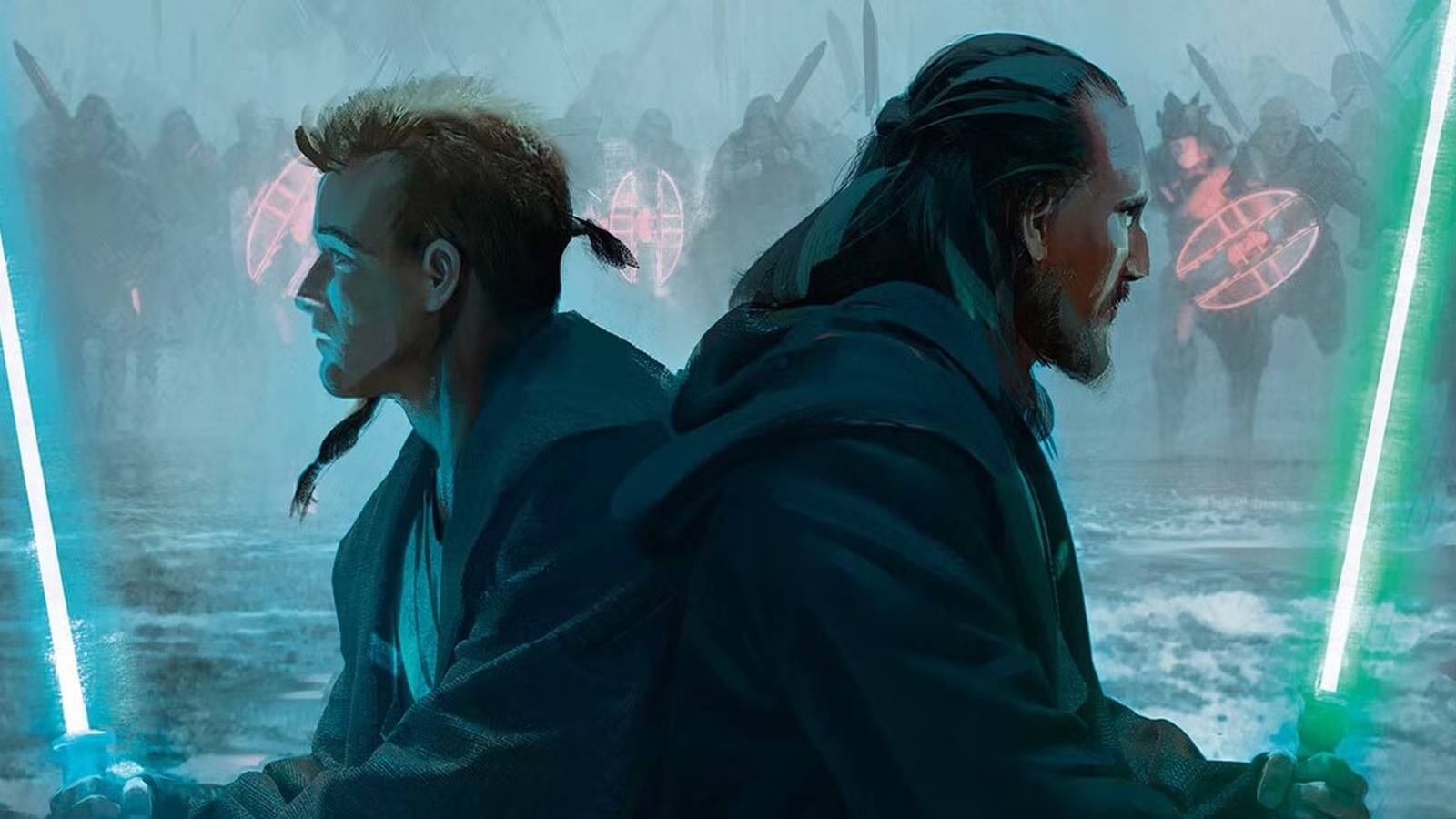
Image via Del Rey Published Sep 24, 2026, 2:09 PM EDT Diego Pineda has been a devout storyteller his whole life. He has self-published a fantasy novel and a book of short stories, and is actively working on publishing his second novel. A lifelong fan of watching movies and talking about them endlessly, he writes reviews and analyses on his Instagram page dedicated to cinema, and occasionally on his blog. His favorite filmmakers are Andrei Tarkovsky and Charlie Chaplin. He loves modern Mexican cinema and thinks it's tragically underappreciated. Other interests of Diego's include reading, gaming, roller coasters, writing reviews on his Letterboxd account (username: DPP_reviews), and going down rabbit holes of whatever topic he's interested in at any given point. Sign in to your Collider account The Star Wars franchise is one of those multimedia franchises so iconic and so foundational to modern pop culture that you'd be hard-pressed to find anyone unfamiliar with it, and just as unlikely to find someone who has never consumed any piece of Star Wars media in any capacity. However, while there are countless casual fans of the galaxy far, far away out there, only a few of them have fallen in love with the franchise deeply enough to dive into the world of Star Wars books. It's an interconnected universe, that's for certain, but one so huge that it feels like a whole universe unto itself. Thankfully, for beginners looking to get into their first Star Wars reading experience, however, there are particular books which are so exceptionally beginner-friendly that pretty much anyone who loves George Lucas' creation should read them. These are novels which don't require someone who's particularly knowledgeable about niche Star Wars lore or who has loved the franchise since their childhood. For virtually anybody who loves reading and happens to love Star Wars as well, these books should prove to be a delight that gets them to want to read more. 'Star Wars: Bloodline' (2016) Image via Del Rey Princess Leia, the role originated by Carrie Fisher back in 1977's Star Wars, has long been one of Star Wars literature's favorite characters. That should hardly come as a surprise. Time and time again, Leia has proven to be an absolutely fascinating character with plenty of fun backstories to explore, and the period between the end of Episode VI — Return of the Jedi and Episode VII — The Force Awakens is one particularly filled with interesting questions. It's that period that Stars Wars: Bloodline, part of the "Journey to Star Wars: The Force Awakens" series, explores. The novel captures Leia's voice better than virtually any other expanded universe title. This was one of Claudia Gray's first Star Wars books, and it continues to be widely regarded as one of the franchise's best. Exploring Leia's navigation of Galactic Senate troubles in the six years leading up to The Force Awakens, the novel captures Leia's voice better than virtually any other expanded universe title. Following a Leia in her late 40s, weary from years of bureaucracy and torn between her duties and her instincts, is a naturally engaging concept that Gray treats with the utmost depth and maturity. It's a grounded thriller perfect for those looking for a simple entry point to Star Wars literature with zero required pre-reading. 'Ahsoka' (2016) Image via Disney-Lucasfilm Press Ahsoka debuted in the Star Wars: The Clone Wars movie (voiced by Ashley Eckstein) all the way back in 2008, and at first became a widely disliked character. There are many reasons why the Clone Wars show is phenomenal, and one of the main ones is how masterfully written Ahsoka's character arc was. Over time, she became widely regarded as one of the best Star Wars TV show characters. So, by the time E. K. Johnston's Ahsoka came out (based on an outline by Clone Wars creator Dave Filoni), there was already widespread interest in the fandom in a book following the character. Expectations were high for Ahsoka, and it somehow ended up surpassing them. Set between the events of The Clone Wars and Star Wars Rebels, it follows Ahsoka's investigation of an emerging threat in a vulnerable galaxy after the fall of the Empire. For people who have already watched Clone Wars or Rebels (not necessarily both), Ahsoka is nothing short of a must-read. The way Johnston captures the profound poignancy and thematic depth of Ahsoka's transformation from a grieving Order 66 survivor to a wise Rebel leader is absolutely stunning. 'Rogue Squadron' (1996) Image via Random House Worlds Disney acquired Lucasfilm in late 2012, and as part of their plans to produce new content, they (quite controversially) decided to declare decades' worth of expanded universe content non-canon and rebrand it as "Legends." This, of course, included several novels, including the hugely beloved Star Wars: X-wing novel series by Michael A. Stackpole. Starfighters have inspired the creation of many a piece of incredible content over the years—including some of the most essential video games in the franchise—, but the X-wing books stand out among the best. The first installment in particular, Rogue Squadron, is arguably the best of the bunch. Casual Star Wars fans whose favorite parts of the franchise are the starfighter dogfights and the more militaristic elements of the franchise are bound to love Rogue Squadron. It's a gritty, high-octane novel led by the always-fun Wedge Antilles (played in the movies by Denis Lawson), with plenty of vividly described space dogfights and compelling galactic politics. For people who would prefer their first Star Wars book to be focused on everyday heroes rather than quasi-mythical Jedi, Rogue Squadron should prove to be a blast. 'Master & Apprentice' (2019) Image via Del Rey Back in its day, George Lucas' prequel trilogy was controversial at best, and critically panned at worst. As the years have gone by, however, fans have not only warmed up to that era of Star Wars, but have actually come to recognize it as one of their favorites ever. There are plenty of great Legends books set during those years leading up to the fall of the Republic, but also quite a few great canon ones. Case in point: Claudia Gray's Master & Apprentice, which follows Qui-Gon and Obi-Wan (played by Liam Neeson and Ewan McGregor in the prequels) traveling to the planet Pijal to help mediate a tense political conflict. Fans tend to agree that both Qui-Gon and Obi-Wan are among the most noteworthy Star Wars characters who deserve solo movies, but a phenomenal novel should be more than enough to satisfy fans of the series, both casual and veteran. The book's balancing act between fascinating Jedi lore, rich world-building, compelling political writing, and exploration of the complex dynamics between Master and Padawan is downright faultless. Even those who have never ventured past the Star Wars movies should find it richly entertaining. Collider Exclusive · 8 Questions · 2 Minutes Which Star Wars Faction Do You Belong To? Rebels · Empire · Mandalorians · Crimson Dawn Eight honest questions about how you actually are: how you feel about rules, where your loyalty goes first, what you do when somebody criticises you in front of other people. Answer them and we will tell you whose side you would really have ended up on. Four factions are recruiting: the believers, the organisation, the ones with a code, and the ones with a price. ✊Rebel Alliance(Andor) 🛰️The Empire(Original Trilogy) 🪖Mandalorians(The Mandalorian) 🌅Crimson Dawn(Solo) PICK YOUR SIDE → 01 How do you feel about rules at work? This one sorts people faster than anything else. AI break the ones that are clearly wrong. BThey exist for a reason and I follow them. CI follow my own, which are stricter. DRules are a starting position for a negotiation. NEXT QUESTION → 02 What is your relationship with money? Nobody answers this the way they think they will. AI get by, and that is genuinely fine. BA steady salary and a clear ladder. CI take exactly what the work is worth. DNever enough, and I know how to get more. NEXT QUESTION → 03 What makes you respect somebody? Whatever you pick, you apply it to yourself too. AThat they speak up when it costs them. BThat they are very good at their job. CThat they keep their word without exception. DThat they deliver, whatever it takes. NEXT QUESTION → 04 How do you behave under real pressure? Your friends would probably answer this for you. ALoud and improvised, but I get there. BCalmly, and strictly by the book. CQuietly, and one step at a time. DColdly, which people find slightly unnerving. NEXT QUESTION → 05 Where does your loyalty go first? Everybody has an order, even if they never say it out loud. ATo the thing I believe in. BTo the organisation that took me on. CTo the people I grew up with. DTo whoever I currently have a deal with. NEXT QUESTION → 06 Somebody criticises you in front of other people. What happens? Be honest about the first thing you feel. AI argue back, right there and then. BI take it, then raise it through the proper channel. CI say nothing at all, and I remember it. DI smile, and make them regret it later. NEXT QUESTION → 07 What does a good life look like in ten years? Pick the one you would actually be happy with. ASomething I helped change, still standing. BA title, a team and a decent office. CA home, a family and my people safe. DOwning the thing I used to work for. NEXT QUESTION → 08 What do you want more than anything else? Eight questions in, this is the one that picks your side. ATo be on the right side of it. BOrder, and a clear place inside it. CTo belong somewhere that would never abandon me. DPower, and nobody above me. REVEAL MY FACTION → The Transmission Is Decoded Your Faction Is…Four sides, four completely different answers to the same question about how a galaxy should work. Here is where you would have signed up, what it would ask of you, and what it would give you back. Rebel AllianceYou belong with the side that has almost nothing and keeps going anyway. The Rebellion is not a glamorous posting, and anybody who tells you otherwise has not seen what it actually costs the people inside it. You are wired to notice when something is wrong and to say so, which makes you useful here and awkward almost everywhere else. Andor is the best thing Star Wars has made in years precisely because it shows the unglamorous half, which is the meetings, the paperwork and the people who never get a medal. Your kind of courage is the ordinary kind, done repeatedly, by somebody who is fully aware of the odds. The Alliance wins because enough people decided separately that they were finished being quiet about it. The Galactic EmpireYou belong to the machine, and the uncomfortable truth is that the machine mostly runs on people who are competent, orderly and convinced they are doing their job properly. Very few of them think of themselves as villains. You want structure, clear expectations and a way to measure whether you are doing well, none of which the other three factions can offer you. The Empire is frightening because of how ordinary it is on the inside, which is the single smartest thing Star Wars has ever done with it. Your risk is the quiet one, which is looking at something wrong and deciding it is somebody else's department. You would be genuinely good at this, and that is exactly the part worth thinking about. The MandaloriansYou belong to the people who lost their planet and kept their code anyway. Mandalorian culture is not a nationality so much as a promise, and anybody who makes that promise and keeps it is one of them. You are loyal to people rather than to institutions, which is why an organisation chart has never once told you who you actually owe. A code only counts when it costs you something, and you are the sort of person who would pay rather than bend it. Mandalorians spend the whole saga arguing about what being one even means, and that argument is far more interesting than the armour. The Mandalorian and Grogu took the creed to cinemas over Memorial Day 2026, the first Star Wars film in seven years. Crimson DawnYou belong to the syndicate, where nobody wastes your time pretending the galaxy runs on ideals. Crimson Dawn deals in leverage, and it is the only faction on this list that would tell you so to your face. You read a room for who owes what, and you are usually right, which is a talent that makes people slightly wary of you. Qi'ra is the most interesting thing to come out of Solo, because she is the one character who learned the actual lesson about power. You would rather be the person setting the terms than the person being told what the terms are. The catch is simple enough. In a syndicate, everybody is leverage, including you, and the smart ones never forget that part. ↻ RETAKE THE QUIZ 'Star Wars: The High Republic: Light of the Jedi' (2021) Image via Random House Worlds Disney announced the massively ambitious Star Wars: The High Republic project back in 2020. In 2021, the franchise was treated to the first book in the series: Charles Soule's Star Wars: The High Republic: Light of the Jedi, set 200 years before Episode I — The Phantom Menace and following a Golden Age of the Galactic Republic being shattered by a cosmic catastrophe. Fan reception of The High Republic has overall been deeply divided, but one thing is hard to deny, and that's that Light of the Jedi is a great book for Star Wars beginners. Long-time fans' gripes with the Disney era of Star Wars are understandable, but casual newcomers looking to discover a fascinating new era of the galaxy far, far away should find Light of the Jedi riveting. As an opening chapter, it functions perfectly, introducing some deeply engaging world-building, politics, lore, and new characters. But even just read as a fun space opera in a vacuum, it's still awfully entertaining, with zero homework required to get into what it has to offer. Image via Random House Worlds People who are only starting to get into Star Wars who happen to love military science fiction are in luck, because the franchise contains some of what many would agree is among the best military sci-fi books of all time: Karen Traviss' Republic Commando novels, tie-in books to the video game Star Wars: Republic Commando (which is not required reading to understand the novels). The best of the bunch is easily the first: Star Wars: Hard Contact, about a squad of clone commandos on a mission to destroy a Separatist bioweapons lab. The only homework beginners should do before reading Hard Contact is watch The Phantom Menace and Episode II — Attack of the Clones. After that, one of the best military sci-fi novels in history awaits. Aside from having some of the best-written and most engrossingly complex clone characters of any Star Wars book, Hard Contact is full of deeply detailed lore and brutally realistic tactical writing. Both Star Wars lovers and military sci-fi lovers should find it equally compelling from start to finish. 'Star Wars: Episode III — Revenge of the Sith' (2005) Image via Lucas Books The practice of movie novelizations began right around the very infancy of cinema itself, somewhere around the early 20th century. However, the undisputed Golden Age of movie novelizations came between the '60s and '80s, exactly the era during which the original Star Wars trilogy came out. As a result, Star Wars movie novelizations became a thing right away. It wasn't until the practice began to go somewhat out of fashion in the early 2000s, however, that the world saw the publication of what fans tend to universally agree is the best Star Wars novelization by a decent margin: Episode III — Revenge of the Sith. Whether they have or haven't actually seen Episode III yet, people who saw Episode I and Episode II and liked them ought to give Matthew Stover's masterful sci-fi epic a chance. Indeed, the Revenge of the Sith book stands out because, on top of adding mind-twisting amounts of depth to the film, it's a genuinely phenomenal novel in and of itself. The character writing is fascinating, Stover's prose is gorgeously epic, and the emotional depth of the whole thing is striking. 'Heir to the Empire' (1991) Image via Del Rey For anyone who is even slightly interested in getting a somewhat well-rounded understanding of Star Wars literature, there's simply no way of avoiding Legends—nor should there be, because in Legends lies what many may argue is the best Star Wars book series of the bunch, Timothy Zahn's Heir to the Empire trilogy (also known as the Thrawn trilogy). The eponymous first installment in the series is arguably one of the best sci-fi epic books of all time, about Grand Admiral Thrawn (played on television by Lars Mikkelsen) taking command of the shattered Imperial fleet after Return of the Jedi, in order to wage war against the fragile New Republic. The book helped revitalize the entire Star Wars franchise during a period of relative cultural dormancy, and as such, its pop-cultural relevance cannot be understated. Sure, it may no longer be part of the official canon, but that doesn't take away its literary merits or franchise significance in the slightest. Thanks to its introduction of several instantly iconic new characters (including Thrawn himself), Zahn's perfect understanding of the original trilogy's tone and feel, and his potently cinematic prose, Heir to the Empire is a must-read. If a beginner loves the Star Wars original trilogy and wants to get into the books, not minding whether they relate to the new Disney-era canon, this is about as perfect of a place to start as any. Ahsoka Release Date August 22, 2023 Network Disney+ After the fall of the Galactic Empire, former Jedi Ahsoka Tano investigates an emerging threat to a vulnerable galaxy.
8 Essential Star Wars Books for Beginners
Full Article
Original Source
Read the full article at Collider →KhanList aggregates and links to publicly available news content. We do not host full articles from third-party sources. Always verify important information with original sources.