
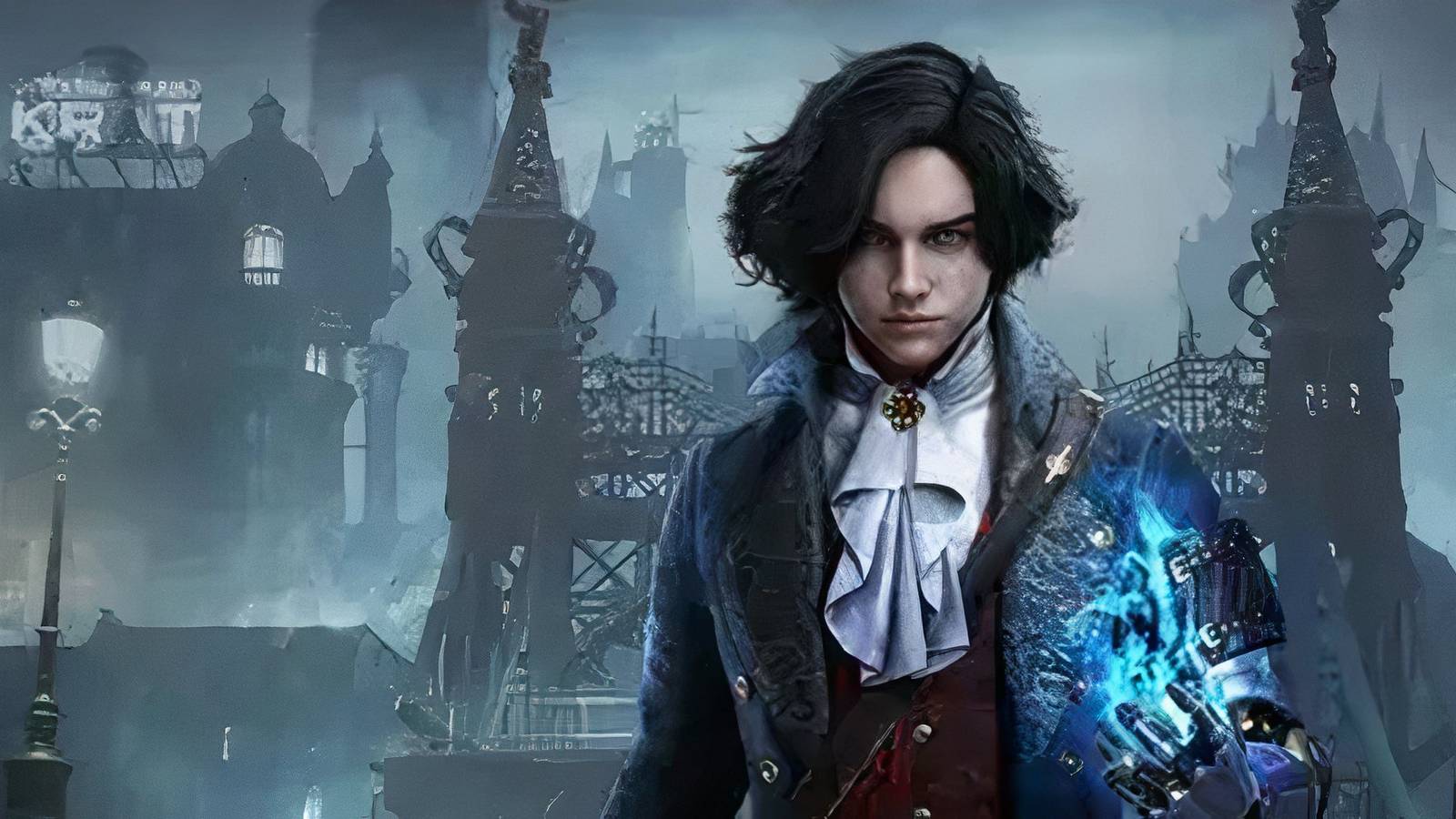
Image via Neowiz Published Aug 20, 2026, 8:17 AM EDT Sign in to your Collider account The term "Soulslike" refers to a subgenre of role-playing games inspired by FromSoftware's Dark Souls trilogy, as well as the other similar games that the studio has produced, including Bloodborne and Elden Ring. Typically, the genre involves an open world map, a heavy emphasis on environmental storytelling, action-based combat, and notoriously high difficulty. They also involve checkpoints, such as bonfires or lampposts, which players return to when they die, and which serve as resting places. As with any revolutionary video game, there are going to be imitators, with some going on to transcend their boundaries and provide interesting new takes on the genre. Many of these Soulslike games have added a lot to the subgenre, and simply need to be played by any fans of FromSoftware. Just to be clear, for the purpose of this list, FromSoftware games will not be included--only games with a similar vibe will. The list is for Soulslike games, not Soulsborne games, after all. With that said, these are the most essential Soulslike games of all time. 8 'Another Crab's Treasure' (2024) Upon looking at Another Crab's Treasrue, you might be thinking "seriously? This is a Soulslike? It looks like a kid's game!" Yes, seriously, yes it is, and yes it does. In this game, you play as Kril, an abrasive, misanthropic hermit crab who gets his shell taken away due to unpaid taxes. The game is set entirely on the ocean floor, in an open world that is surprisingly well-designed and interconnected. Customization is not the best in this game. You only get to use one weapon, though it can be upgraded. The game's gimmick is that instead of armour, Kril can find discarded trash to use as shells. Once these break though, there's no getting them back. Different bits of rubbish also offer different defence rates, so you're forced to adapt quickly. This game might be a little juvenile and cartoony, but it's hard enough that it's clearly not for kids. What's more it fits the Soulslike profile to a tee, and is living proof that not all Soulslike RPGs have to have the same dark fantasy setting. 7 'The Surge' (2017) Image via Focus Home Interactive On the topic of differing settings, The Surge is a sci-fi Soulslike that you should absolutely check out if you haven't already. Instead of being able to swap armour, players are given an upgradable exosuit that they will carry with them through the whole game. The game also features a "bullet time" mechanic similar to that of Fallout, where players can target specific body parts for dismemberment and optimal damage. It's a surprisingly long game, clocking in at between 30 and 40 hours, so there's lots of replayability involved due to how many secrets and side quests you can miss along the way. Much like Another Crab's Treasure, this game is a stunning example of how the Soulslike format can be extended into other genres, and how it doesn't have to be limited by a dark fantasy setting. In this regard, it is one of the most singular and innovative entries on this list. 6 'Bleak Faith: Forsaken' (2023) Image via Archangel Studios Bleak Faith: Forsaken is a game you probably haven't heard of. It's an indie game that is set in a massive, sprawling complex known as the Omnistructure. This megastructure seems to cover the entire world, and includes various artificial environments such as forests and deserts. The looming walls and broken systems of the Omnistructure is really intimidating, adding a certain layer of cosmic horror to things. Though the setting is decidedly more sci-fi, there is still Medieval, sword-based combat contained within. It's not a super long game, and it doesn't necessarily add any unique mechanics to the genre, but it excels in one of the key foundations of Soulslikes: environmental storytelling. Through observation and the game's lore, it gradually becomes clearer what purpose the Omnistructure served, though much of it is still shrouded in mystery. This game has an absolutely unmatched atmosphere, to the point that any dark fantasy or science fantasy fan simply has to try it. 5 'Mortal Shell' (2020) Image via Playstack Mortal Shell is a really interesting Soulslike that brings an interesting mechanic into the mix. Most Soulslike RPGs have players customize their character and build them based off of a certain class. For example, they may prefer a warrior, with lots of health and brute force, or they may prefer magic, or to be a nimble rogue, who relies on agility. Mortal Shell is not one of those games. You start off as a nameless, faceless husk, but your stats improve by jumping into the petrified bodies that litter the map. These bodies will turn you into a more human warrior, though they often vary. You have to learn how to adapt in this game. One body you leap into might be a warrior, but the next might be more about dexterity than strength. These aren't permanent, either. If you die, that body is gone forever, and you're sent back to your husk form. This is a really interesting concept that makes gameplay fun and varied, as well as more challenging. This game could have done better with its boss fights and map design, but overall, it's a great time. Collider Exclusive · Universe Personality Quiz Which Iconic Universe Do You Belong in the Most? Star Wars · Lord of the Rings · Harry Potter · Game of Thrones · Star Trek Five legendary universes. Five completely different visions of what the world could be — or already was. One of them is the world your instincts, your values, and your particular way of existing were built for. Eight questions will tell you which one. 🚀Star Wars 💍Lord of the Rings 🧙Harry Potter 👑Game of Thrones 🖖Star Trek FIND YOUR UNIVERSE → 01 What gives your life its deepest sense of meaning? Every universe is built around a different answer to this question. ABeing part of something larger than myself — a cause, a rebellion, a fight for freedom that outlasts me. BThe journey itself — the places I'll go, the companions beside me, the world I'll discover on the way. CLearning — unlocking what I'm capable of, understanding the world's hidden mechanics, growing into something more. DLegacy — the name I leave behind, the power I build, the mark I make before the world moves on without me. EUnderstanding — exploring what exists beyond the horizon and asking what it means to be alive in a universe this vast. NEXT QUESTION → 02 Which kind of world do you most want to inhabit? The environment shapes who you become. Choose carefully. AA galaxy of planets, each with its own culture — connected by conflict, trade, and the Force. BAncient lands of breathtaking beauty, deep history, and a creeping darkness at the edges. CA world hidden inside our own — full of wonder, community, and magic waiting to be learned. DA brutal, beautiful continent where power is everything and every alliance is a calculation. EA future where humanity has reached the stars — and must decide what kind of species it wants to be. NEXT QUESTION → 03 How do you prefer your conflicts resolved? The shape of a world's conflicts tells you everything about its soul. AThrough sacrifice and courage — someone has to make the impossible choice so others don't have to. BThrough fellowship — the impossible becomes possible when the right people walk the same road. CThrough growth — confronting what you fear, understanding what you lack, and becoming equal to the challenge. DThrough strategy — outthinking, outmaneuvering, positioning yourself so the outcome was never in doubt. EThrough dialogue — finding the third option, the peaceful resolution, the answer that doesn't require a body count. NEXT QUESTION → 04 Who do you want beside you when things get difficult? Your ideal companions reveal the world you were made for. AA small crew — a pilot, a rogue, a warrior — each broken in their own way, unbeatable together. BA fellowship of different kinds of people, bound by purpose and deepened by the long road. CFriends who grew up alongside me — who knew me before I knew myself, and stayed anyway. DAllies whose loyalty I've earned — and tested — and whose ambitions align with mine, for now. EA crew of brilliant, curious, principled people from every corner of known space. NEXT QUESTION → 05 What is your relationship with power? How you seek, wield, or resist power is the map of who you are. AI want to use it to protect — and I'm terrified of what I might become if I'm not careful. BI distrust it. The most important power in this story is the courage to give it up. CI want to earn it — through knowledge, through effort, through becoming someone worthy of it. DI want to wield it. Preferably before someone else decides to wield it against me. EI want to understand it — its structures, its limits, its ethical dimensions. Power without accountability is the real threat. NEXT QUESTION → 06 How does your universe treat good and evil? A world's moral architecture tells you more about it than any map. AThere is a dark side and a light side — and the choice between them is always present, always personal. BEvil is real and ancient and patient — and goodness, however small, is the only thing that can undo it. CGood and evil are real, but they live inside people — and people are complicated, always capable of both. DGood and evil are mostly a matter of perspective and proximity. Power is the only honest currency. EEvil is usually the result of ignorance, fear, or broken systems — and understanding it is the first step to solving it. NEXT QUESTION → 07 What role would you naturally fall into? Every universe has archetypes. Which one fits you without trying? AThe reluctant hero — ordinary origins, extraordinary moment, changed forever by the choice to act. BThe unlikely carrier — the one nobody expected to matter most, quietly bearing the weight of everything. CThe student — not yet who I'll become, learning through every mistake, growing into something the world needs. DThe player — sharp enough to see the game for what it is, ambitious enough to try to win it. EThe explorer — drawn to the unknown, driven by curiosity, most alive when standing somewhere no one has stood before. NEXT QUESTION → 08 What do you ultimately believe about the future? The answer to this is the clearest window into which universe already lives inside you. AThat hope is real — that even in the darkest galaxy, a new hope is always possible. CThat even the smallest person can change the course of the future, if they have the courage to try. CThat love and friendship and doing what's right will matter in the end, even when everything says otherwise. DThat the wheel keeps turning — that power shifts, winters end, and what endures is those willing to fight for it. EThat humanity — or whatever we become — is capable of extraordinary things, if we choose to be. REVEAL MY UNIVERSE → Your Universe Has Been Chosen You Belong In…Your answers point to the iconic universe your values, your instincts, and your particular way of seeing the world were built for. This is where you would find your people — and your purpose. Star WarsYou believe in the cause — in the idea that freedom is worth fighting for even when the odds are impossible and the empire is vast. You are drawn to the moral clarity of a universe where hope itself is a form of resistance. You'd find your people in the Rebellion — a ragtag coalition of true believers held together by conviction more than resources. Star Wars is fundamentally a story about ordinary people choosing to matter in an extraordinary conflict — and that is exactly your kind of story. The Force may or may not be with you. But the will to use it for something larger than yourself certainly is. Lord of the RingsYou understand, in the deepest part of yourself, that the journey matters as much as the destination — and that the world's beauty is worth protecting even at great cost. Middle-earth is a world of ancient wonder, deep friendship, and a darkness that only retreats when enough small acts of courage accumulate. You would thrive here because you value the fellowship more than the glory — the road more than the arrival. Tolkien's universe rewards patience, loyalty, and the willingness to carry something heavy across a very long distance. Those are not burdens to you. They are simply how you move through the world. Harry PotterYou believe that love, loyalty, and doing what's right are not naive sentiments — they are the most powerful forces in any world, magical or otherwise. The Wizarding World is a place of wonder hidden in plain sight, where learning is transformative and the bonds you form at school follow you into every battle. You would flourish here because you take both the magic and the friendships seriously — and you understand that one without the other is incomplete. Harry Potter's universe ultimately rewards those who choose to stand for something even when standing is terrifying. That choice — made quietly, without guarantee — is something you understand completely. Game of ThronesYou see the world clearly — its power structures, its hypocrisies, its brutal arithmetic — and you are not paralysed by that clarity. You use it. Westeros is a world that rewards intelligence, adaptability, and the willingness to understand that every alliance is also a negotiation. You would survive here — possibly thrive here — because you don't confuse the world as it is with the world as you'd like it to be. Game of Thrones is a story about what happens when the idealists and the realists collide. You are sharp enough to know which one lasts longer. Winter always comes. You are already prepared. Star TrekYou believe the future is worth building — that curiosity, cooperation, and the expansion of understanding are not just ideals but the most practical path forward for any civilisation. Star Trek is a universe where the questions matter as much as the answers, and where encountering something utterly alien is cause for wonder rather than fear. You would belong here because you are fundamentally optimistic about what intelligence and decency can achieve — while being honest about how hard that achievement is. The Federation is the universe's most ambitious thought experiment: what if we actually got better? You don't just hope that's possible. You think it's the only thing worth working toward. ↻ RETAKE THE QUIZ 4 'Wo Long: Fallen Dynasty' (2023) Image via Koei Tecmo Wo Long: Fallen Dynasty is set in Ancient China, specifically in the 2nd Century during the Yellow Turban Rebellion. Though, this is a highly fantasized version of events, where ancient Chinese spiritualism, mythology, and folklore all come to life. Like many Soulslike games, you play as a nameless protagonist, which is highly customizable. You can choose from one of five Chinese deities to protect you, which grant you different effects in battle. A few historical figures from the real Yellow Turban Rebellion appear in this game, but of course, they are magical versions of them, and are not at all realistic. The boss fights in this game are insanely difficult, especially the first one, which is a brutal and unforgiving skill check that forces you to adapt to Wo Long's unique style of gameplay. It's all about reflexes--if you're the type of player who wants to take things slow, you're going to lose. 3 'Lords of the Fallen' (2023) Image via CI Games Lords of the Fallen is a sequel to the 2014 game of the same name. The original game was short, very linear, and pretty average in all regards. This entry, however, completely overhauled the story, gameplay, and style. The world is much more open and intelligently constructed, akin to the original Dark Souls where many of the locations are connected. The map may be large, but it's also compact, with a centralized hub and more open-ended routes. The number of boss fights was increased as well as the overall quality of said fights. Better yet, the game added a really interesting mechanic in the form of the Umbral Realm. Basically, by the use of your trusty lantern, you can hop between parallel dimensions, opening up new paths and uncovering secrets. This is handy considering the game has many secret bosses and multiple endings that require elaborate steps, including accessing hidden areas. This is an absolutely excellent game that was the improvement the franchise sorely needed. 2 'Nioh' (2017) Image via Sony Made by the same developers as Wo Long, Nioh is a Soulslike at heart, though its gameplay style is fundamentally different. For starters, it's a low fantasy rather than a high fantasy, meaning it's set in the real world. Specifically, it's set during the Edo Period of Japan, where players take control of the real-life explorer William Adams, the first Englishman to set foot in Japan. Other historical figures appear too, albeit highly fictionalized versions of them. In this game, demons, known as Oni, from Japanese mythology are escaping into the real world, and Adams is the only one who can stop them. While the game maintains a rigid Souslike formula, combat is much faster and much harder. Parrying is essential, and players need to be able to adapt to various enemy types by changing stances on the fly. Conserving stamina, known as ki, is crucial, as is learning to riposte and absorb ki from enemies. You need top-tier reflexes to complete this incredible game. 1 'Lies of P' (2023) Image via Neowiz Lies of P is one of the most inventive Soulslike games ever created. It is a loose adaptation of Carlo Collodi's fairytale novel The Adventures of Pinocchio, which was also adapted into a famous Disney animated musical. In this game, you play as Pinocchio himself, shortened to P, in the run-down city of Krat, which has just undergone an apocalyptic event known as the Puppet Frenzy. As a near-perfect puppet, your goal is to rescue your maker, Geppetto, and save the city. There are a ton of mechanics in this game that other Soulslike games simply do not have. The first is that P's left arm is prosthetic, and can be crafted and upgraded to have different effects, such as a gun, a shield, a grappling hook, or a flamethrower. There's also a matter of the Gold Coin Fruit tree, which uses real time to grow its rare fruits. These can be exchanged for wishstones, which grant effects that no other consumable item in the game does. Then there's the concept of weapon customization. Each standard weapon comes with a blade and a handle, which can be mixed and matched at will to create new weapons with unique special attacks. The developers really went above and beyond with this game. It's flawless, and sorely needs more attention. Release Date February 23, 1940 Runtime 88 minutes Director Hamilton Luske, Ben Sharpsteen A living puppet, with the help of a cricket as his conscience, must prove himself worthy to become a real boy.
8 Essential Soulslike Video Games
Full Article
Original Source
Read the full article at Collider →KhanList aggregates and links to publicly available news content. We do not host full articles from third-party sources. Always verify important information with original sources.