
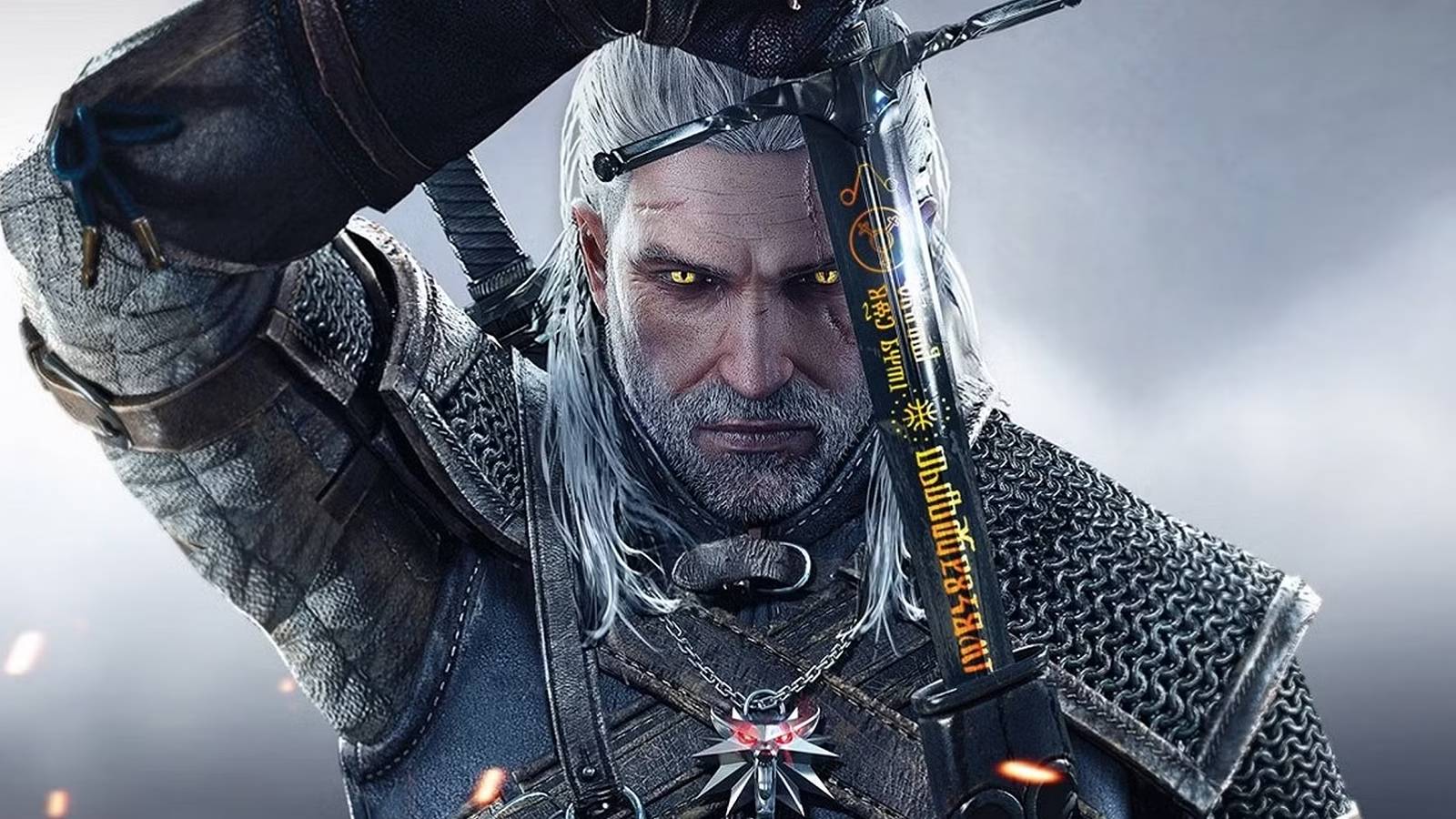
Image via CD Projekt Published Aug 24, 2026, 1:14 PM EDT Sign in to your Collider account RPGs can swallow hundreds of hours, so “essential” has to mean more than enormous maps and overflowing quest logs. The games that define the genre change how players think about character building, party dynamics, choice, exploration, storytelling, or the simple pleasure of watching a terrible plan somehow become your favorite memory. These eight games come from very different eras and traditions. Some helped establish the language of console RPGs. Others turned conversation, morality, or tabletop-style freedom into the main attraction. Every title here left something behind that newer RPGs still use, refine, or desperately try to recreate. 8 'Dragon Quest III' (1988) Image via Chunsoft/ Square Enix Dragon Quest III begins as a classic heroic quest. The player takes the role of Ortega’s child, forms a party, and sets out to defeat the archfiend Baramos. What made the game extraordinary in 1988 was the freedom packed inside that familiar structure. Party members could be created with different vocations, towns changed between day and night, and the adventure gradually opened into something far larger than its first hours suggested. For Japanese console RPGs, this was foundational material rather than another fantasy adventure. Its vocation system remains the big historical achievement. Warriors, priests, mages, merchants, and other classes could be developed and later changed, allowing players to reshape party roles without starting from scratch. That sense of ownership helped turn character progression into strategy rather than a fixed march toward predetermined abilities. The game also became a cultural phenomenon in Japan and influenced decades of party-based RPG design. Modern players have smoother options available, especially through later remakes, but understanding console RPG history without Dragon Quest III leaves a very large hole. This is where a lot of familiar ideas learned how to walk. 7 'Baldur’s Gate II: Shadows of Amn' (2000) Image via BioWare/ Black Isle Studios Baldur’s Gate II: Shadows of Amn takes the custom protagonist from the first game and throws them into a much darker conflict involving the mage Jon Irenicus, stolen power, and the legacy of Bhaal. The adventure moves through Athkatla and beyond, but the real attraction is how densely BioWare filled that world with companions, factions, side quests, romances, moral decisions, and entire storylines that could be missed depending on who joined the party. The game uses Advanced Dungeons & Dragons rules beneath a real-time-with-pause combat system, which gives battles enormous tactical depth once spell interactions, resistances, positioning, and party composition begin to matter. Its companions were equally important to the genre’s future. Characters such as Minsc, Jaheira, Viconia, and Aerie have personal goals and conflicts that continue outside the main plot, making party selection feel emotional as well as mechanical. Many modern RPGs owe something to this model of companion-driven storytelling. The interface shows its age and the rules can be intimidating, but patience pays off quickly. Once Athkatla opens, an evening can disappear before the party has even agreed on what to do next. 6 'Final Fantasy VII' (1997) Image via Square/ Square Enix For millions of players, Final Fantasy VII was the moment Japanese RPGs became impossible to ignore. Cloud Strife joins the eco-terrorist group AVALANCHE during its campaign against the Shinra Electric Power Company, whose extraction of Mako energy is draining the planet. What begins inside the industrial city of Midgar expands into a global journey involving Sephiroth, Cloud’s fractured identity, ancient history, corporate exploitation, and a threat tied directly to the life of the planet. Its importance goes well beyond nostalgia. The Materia system lets players customize magic, summons, and abilities through equipment instead of locking every character into one narrow combat role. Pre-rendered backgrounds and cinematic sequences gave the adventure a scale that felt enormous on the original PlayStation, while the move into 3D helped introduce a much wider audience to Square’s style of storytelling. Cloud, Aerith, Tifa, Barret, and Sephiroth became gaming icons because the world around them gave their conflicts genuine emotional weight. Some mechanics have aged better than the original character models, but the ambition remains obvious. Once you sit through it for a couple of days, it becomes very easy to understand why people never really stopped talking about this game. 5 'Mass Effect 2' (2010) Image via BioWare Mass Effect 2 gives Commander Shepard an almost impossible assignment. Human colonies are disappearing, the Collectors appear responsible, and stopping them requires assembling specialists from across the galaxy for a mission everyone understands may be suicidal. The larger conflict matters, but BioWare wisely makes preparation the heart of the game. Recruiting the crew is only the beginning. Shepard has to learn who these people are, what they need, and whether they can trust one another when the mission finally begins. That structure turns companion quests into the main event rather than optional decoration. Garrus, Tali, Mordin, Jack, Thane, Legion, Miranda, and the rest bring completely different histories into the Normandy, while loyalty missions reveal political, cultural, and personal conflicts across the setting. Choices made in the first Mass Effect could also carry forward, giving the trilogy a continuity few RPGs had attempted at this scale. Combat became faster and cleaner than the original without abandoning class abilities or squad tactics. The famous suicide mission then tests how seriously the player treated all that preparation. Mass Effect 2 understands something beautifully simple about RPGs. Saving the galaxy becomes far more exciting once you desperately want the people beside you to make it home. sci Collider Exclusive · Sci-Fi Survival Quiz Which Sci-Fi World Would You Survive? The Matrix · Mad Max · Blade Runner · Dune · Star Wars Five universes. Five completely different ways the future went wrong — or sideways, or up in flames. Only one of them is the world your instincts were built for. Eight questions will figure out which dystopia, galaxy, or desert wasteland you'd actually make it out of alive. 💊The Matrix 🔥Mad Max 🌧️Blade Runner 🏜️Dune 🚀Star Wars TEST YOUR SURVIVAL → 01 You sense something is deeply wrong with the world around you. What do you do? The first instinct is often the truest one. APull on every thread until I understand the system — then figure out how to break it. BStop asking questions and start stockpiling — food, fuel, weapons. Questions don't keep you alive. CKeep my head down, observe carefully, and trust no one until I know who's pulling the strings. DStudy the patterns. Every system has a rhythm — learn it, and you learn how to survive it. EFind the people fighting back and join them. You can't fix a broken galaxy alone. NEXT QUESTION → 02 In a world of scarcity, what resource do you guard most fiercely? What we protect reveals what we believe survival actually requires. AKnowledge. If you understand the system, you don't need resources — you can generate them. BFuel. Everything else — movement, power, escape — runs on it. CTrust. In a world of fakes and informants, a truly reliable ally is rarer than any commodity. DWater. And after water, information — the two things empires are truly built on. EShips and credits. The galaxy is big — you survive it by being able to move through it freely. NEXT QUESTION → 03 What kind of threat keeps you up at night? Fear is useful data — if you're honest about what you're actually afraid of. AThat reality itself is a lie — that everything I experience has been constructed to keep me compliant. BA raid. No warning, no mercy — just the roar of engines and then nothing left. CBeing identified. Once someone with power decides you're a problem, you're already out of time. DBeing outmanoeuvred — losing a political game I didn't even know I was playing. EThe Empire tightening its grip until there's nowhere left to run. NEXT QUESTION → 04 How do you deal with authority you don't trust? Every dystopia has a power structure. Your approach to it determines everything. ASubvert it from the inside — learn its rules well enough to weaponise them against it. BIgnore it and stay out of its reach. The further from any power structure, the better. CAppear to comply while doing exactly what I need to do. Visibility is the enemy. DManoeuvre within it carefully. You can't beat a system you refuse to understand. EResist openly when I have to. Some things are worth the risk of being seen. NEXT QUESTION → 05 Which environment could you actually endure long-term? Survival isn't just tactical — it's physical, psychological, and very much about where you are. AUnderground bunkers and server rooms — cramped, artificial, but with access to everything that matters. BOpen wasteland — brutal sun, no shelter, constant movement. At least the threat is honest. CA dense, rain-soaked city where you can disappear into the crowd and nobody asks questions. DMerciless desert — extreme heat, no water, and something enormous living beneath the sand. EThe fringe — backwater planets and busy spaceports where the Empire's attention rarely reaches. NEXT QUESTION → 06 Who do you want in your corner when things fall apart? The company you keep is the clearest signal of who you actually are. AA tight crew of believers who've seen behind the curtain and have nothing left to lose. BOne or two people I'd trust with my life. Any more than that and someone talks. CNobody, ideally. Alliances are liabilities. I work alone unless I have no choice. DA community bound by shared hardship and mutual survival — people who need each other to last. EA ragtag team with wildly different skills and total commitment when it counts. NEXT QUESTION → 07 Where do you draw the line — if you draw one at all? Every survivor eventually faces a moment that tests what they're actually made of. AI won't harm the innocent — even the ones who'd report me without hesitation. BI do what I have to to protect the people I've chosen. Everything else is negotiable. CThe line shifts depending on who's asking and what's at stake. DI draw a long-term line — nothing that compromises my people's future, even if it'd help now. ESome lines, once crossed, can't be uncrossed. I know which ones they are. NEXT QUESTION → 08 What would actually make survival worth it? Staying alive is one thing. Having a reason to is another. AWaking others up — dismantling the illusion so no one else has to live inside it. BFinding somewhere — or someone — worth protecting. A reason to keep moving. CAnswers. Understanding what I am, what any of this means, before time runs out. DLegacy — shaping the future in a way that outlasts me by generations. EFreedom — for myself, for others, for every world still living under someone else's boot. REVEAL MY WORLD → Your Fate Has Been Calculated You'd Survive In…Your answers point to the world your instincts were built for. This is the universe your temperament, your survival instincts, and your particular brand of stubbornness were made for. The MatrixYou took the red pill a long time ago — probably before anyone offered it to you. You're a systems thinker who can't help but notice the seams in things. You're drawn to understanding how the system works before figuring out how to break it. You'd find the Resistance, or it would find you — your instinct for spotting constructed realities is the machines' worst nightmare. You function best when you have access to information and the freedom to act on it. The Matrix built an airtight prison. You'd be the one probing the walls for the door. Mad MaxThe wasteland doesn't reward the clever or the well-connected — it rewards those who are hard to kill and harder to break. That's you. You don't need comfort, community, or a cause larger than the next horizon. You need a vehicle, a clear threat, and enough fuel to outrun it — and you're good at all three. You are unsentimental enough to survive that world, and decent enough — just barely — to be something more than another raider. In the wasteland, that distinction is everything. Blade RunnerYou'd survive here because you know how to exist in moral grey areas without losing yourself completely. You read people accurately, keep your circle small, and ask the questions others prefer not to answer. In a city where humanity is a legal designation rather than a feeling, you hold onto something that keeps you functional. You're not a hero. But you're not lost, either. In Blade Runner's world, that distinction is everything. DuneArrakis is the most hostile environment in the known universe — and you are precisely the kind of person it rewards. Patience, discipline, and political awareness are your core strengths — and on Arrakis, they're survival tools. You understand that the long game matters more than any single victory. Others come to Dune and are consumed by it. You'd learn its logic and earn its respect. In time, you wouldn't just survive Arrakis — you'd begin to reshape it. Star WarsThe galaxy far, far away is vast, loud, and in a constant state of violent political upheaval — and you wouldn't have it any other way. You find meaning in being part of something larger than yourself — a cause, a crew, a rebellion. You'd gravitate toward the Rebellion, or the fringes, or whatever pocket of the galaxy still believes the Empire's grip can be broken. You fight — not because you have to, but because standing aside isn't something you're capable of. In Star Wars, that willingness is what makes all the difference. ↻ RETAKE THE QUIZ 4 'Chrono Trigger' (1995) Image via Square Chrono Trigger turns a trip to a local fair into a journey across thousands of years. Crono and his friends move between prehistoric history, a medieval kingdom, a ruined future, and several other periods while trying to prevent the catastrophe caused by Lavos. Time travel could easily have turned the plot into a knot of explanations, but the game keeps every era distinct, readable, and connected to choices made elsewhere. The development team famously brought together major talent from Final Fantasy and Dragon Quest, with Akira Toriyama contributing character designs. That pedigree shows in how effortlessly the systems fit together. Battles occur directly on the field without separate random-encounter screens, party members combine abilities through Double and Triple Techs, and New Game Plus gives players a reason to explore multiple possible outcomes. Side quests near the end deepen individual characters instead of simply padding the runtime, while the relatively brisk length keeps the adventure moving. Many RPGs are bigger than Chrono Trigger. Few are this economical. Every era contributes something, every companion has a purpose, and almost nothing feels like busywork. 3 'Disco Elysium' (2019) Image Via ZA/UM A detective wakes in a trashed hotel room with no memory of his name, his past, or why there is a dead man hanging behind the building. Disco Elysium turns that miserable beginning into one of the strangest and most ambitious role-playing games ever made. The murder investigation matters, but rebuilding the detective’s identity becomes just as important. Players decide whether he becomes thoughtful, ideological, compassionate, arrogant, addicted, ridiculous, or some alarming combination of all six. There is no traditional combat system carrying the experience. Instead, 24 skills represent different parts of the detective’s mind, and those skills constantly interrupt conversations with observations, impulses, warnings, and terrible suggestions. Inland Empire may encourage intuition. Authority wants respect. Electrochemistry has priorities that would concern any responsible employer. The Thought Cabinet allows ideas themselves to become part of character development, while failed dice rolls often create scenes more memorable than success would have produced. Revachol is packed with political history, class resentment, grief, humor, and people whose lives continue beyond the investigation. Disco Elysium proves an RPG can make a conversation feel as dangerous as a boss fight. 2 'The Witcher 3: Wild Hunt' (2015) Image via CD Projekt The Witcher 3: Wild Hunt follows monster hunter Geralt of Rivia as he searches for Ciri, his adopted daughter and a young woman pursued by the supernatural Wild Hunt. That personal search carries Geralt through war-torn villages, the crowded city of Novigrad, the islands of Skellige, and dozens of communities dealing with their own smaller disasters. Monsters are everywhere, but humans repeatedly compete for the title. CD Projekt Red’s greatest achievement here was the density of consequence inside seemingly minor quests. A contract that begins with tracking a creature may become a story about abuse, prejudice, war, poverty, or someone making a dreadful choice for understandable reasons. Geralt investigates through Witcher Senses, prepares oils and potions for specific monsters, develops combat signs, and makes decisions whose consequences may surface hours later. Ciri also gives the main story emotional urgency without reducing the rest of the world to distractions. The two expansions, Hearts of Stone and Blood and Wine, strengthened an already enormous package, though the base game alone earns this position. The Witcher 3 makes wandering away from the objective feel productive because the next village may contain a story better than another game’s main quest. 1 'Baldur’s Gate 3' (2023) Image via Larian Studios Baldur’s Gate 3 begins with an illithid tadpole inside the player character’s head and immediately turns that problem into a huge Dungeons & Dragons campaign about survival, identity, power, and temptation. The player can create an original hero, choose a premade Origin character, or embrace the particularly dangerous history of the Dark Urge. From there, conversations, exploration, combat, alliances, romances, and seemingly minor decisions can push the adventure in dramatically different directions. Larian Studios took the logic of tabletop role-playing more seriously than almost any major video game before it. Objects can be stacked to reach places. Enemies can be shoved from cliffs. Spells interact with terrain and surfaces. Conversations change according to class, race, abilities, companions, and previous decisions. Entire characters and storylines can disappear because the player killed someone, offended someone, saved someone unexpectedly, or simply walked in another direction. Turn-based combat makes experimentation readable, while cooperative multiplayer lets several players contribute their own spectacular judgment to the same campaign. What makes Baldur’s Gate 3 essential is the confidence it places in the player. It rarely asks what the designer wants you to do first. It asks what you are going to attempt, then works remarkably hard to have an answer ready. Baldur's Gate 3 Released August 3, 2023 ESRB M Developer(s) Larian Studios Publisher(s) Larian Studios Franchise Baldur's Gate
8 Essential RPGs You Should Play in 2026
Full Article
Original Source
Read the full article at Collider →KhanList aggregates and links to publicly available news content. We do not host full articles from third-party sources. Always verify important information with original sources.