
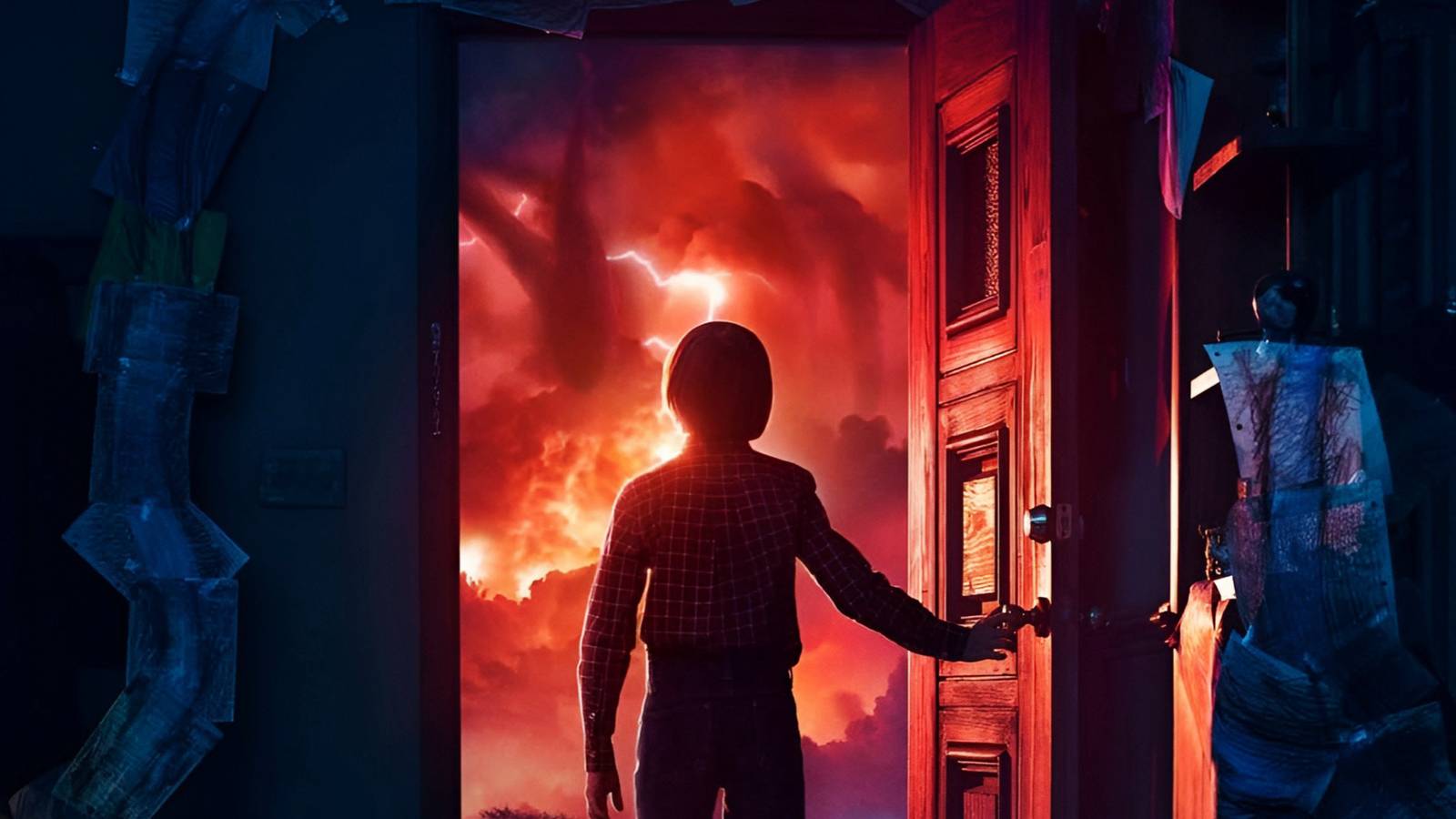
Published Nov 6, 2026, 2:00 AM EST Dhruv is a Lead Writer in Screen Rant's New TV division. He has been consistently contributing to the website for over two years and has written thousands of articles covering streaming trends, movie/TV analysis, and pop culture breakdowns. Before Screen Rant, he was a Senior Writer for The Cinemaholic, covering everything from anime to television, from reality TV to movies. After high school, he was on his way to become a Civil Engineer. However, he soon realized that writing was his true calling. As a result, he took a leap and never looked back. Sign in to your ScreenRant account Reading Lovecraftian horror feels like reading an ancient forbidden text. There is a timelessness to H.P. Lovecraft's display of the "fear of the unknown" that transcends the page and immerses one into complete existential dread. Yet, despite feeling ancient and timeless, Lovecraftian horror rarely translates well to the screen. There are not even a handful of worthy direct adaptations of H.P. Lovecraft's stories. Quite a few cosmic horror movies and shows, however, have succeeded at loosely drawing from his works. One of them is Netflix's greatest sci-fi hit, Stranger Things. To clarify, Stranger Things, as a whole, is not a Lovecraftian horror show. It is arguably not even horror. However, in its first 8 episodes, Stranger Things draws heavily from Lovecraft's chilling Eldritch lore and his ambiguous descriptions of monsters and ancient gods. Lovecraftian horror is certainly one of the many literary influences that ultimately shaped Stranger Things. However, the Netflix sci-fi show's heavy inclination towards cosmic horror in season 1 just cannot be ignored. Stranger Things Season 1 Fully Embraces Lovecraftian Cosmic Horror The origins of cosmic terrors in every Lovecraftian story stem from humanity's hubris. For instance, in H.P. Lovecraft's seminal short story From Beyond, an ambitious scientist makes an electronic device that allows humans to perceive what lies beyond our scope of accepted reality. With this, he unknowingly allows interdimensional creatures from alternate dimensions to perceive and manipulate humans. Something very similar unfolds in Stranger Things season 1. Dr. Martin Brenner and Hawkins National Laboratory open "The Gate" in an attempt to "expand" human consciousness and weaponize it to spy on the Soviets. Little do they realize that they have exposed humanity to an unknown dimension. Just like the terrifying co-existing but hidden dimensions in Lovecraftian horror, Stranger Things' "Upside Down" is not merely hell ruled by the devil. Instead, it is more of an ancient and toxic "non-Euclidean" plane that mirrors Hawkins. Just like the sunken city of R'lyeh from The Call of Cthulhu, even the "Upside Down" is cold, dark, endless, and incomprehensible. Almost throughout its run, Stranger Things season 1 also avoids revealing the true nature or form of the Demogorgon. It is packed with horrifying ambiguous imagery where Will attempts to communicate with his family from the "other side" while struggling to escape the monster's grasp. Similar to Lovecraftian protagonists, even Stranger Things characters like Joyce feel so helpless against the cosmic indifference of their world that they start losing their minds. Stranger Things Gradually Loses Its Lovecraftian Essence After Season 1 In its final arc, Stranger Things season 1 also gives viewers and its characters an illusion of control. It establishes that the power of friendship seemingly saves the day and Will and his family live happily ever after. But just before Stranger Things season 1 ends, Will realizes that control and autonomy were mere illusions. With this, Stranger Things subtly mocks human authority just like Lovecraftian stories. The Duffer Brothers have previously cited H.P. Lovecraft's stories as an influence on Stranger Things (via EW). Going into season 2, Stranger Things manages to retain some of its cosmic horror aspects. However, at the same time, it makes its terrors and scares a little too "tangible." This marks the show's departure from cosmic horror. As it progresses, Stranger Things bends genres and even covers coming-of-age themes in latter seasons. Towards the end, the Netflix sci-fi show feels more like a conventional supernatural thriller than a groundbreaking take on Lovecraftian horror tropes. Perhaps, this explains why, in hindsight, most viewers are kinder towards Stranger Things' earlier chapters and more harsh when it comes to its divisive season 5. Stranger Things Release Date 2016 - 2025-00-00 Stranger Things is a Netflix series set in the 1980s, where the mysterious disappearance of a young boy leads a small town to uncover secret experiments and supernatural forces. Network Netflix Cast Millie Bobby Brown, Finn Wolfhard, Gaten Matarazzo, Caleb McLaughlin, David Harbour, Winona Ryder, Natalia Dyer, Joe Keery, Charlie Heaton, Noah Schnapp, Sadie Sink, Priah Ferguson, Maya Hawke, Cara Buono, Brett Gelman, Matthew Modine, Paul Reiser, Dacre Montgomery, Jamie Campbell Bower, Nell Fisher, Sean Astin, Christopher Convery, Eduardo Franco, Joseph Quinn Showrunner Matt Duffer, Ross Duffer Directors Matt Duffer, Ross Duffer, Andrew Stanton, Frank Darabont, Nimród Antal, Uta Briesewitz Writers Kate Trefry, Jessie Nickson-Lopez, Jessica Mecklenburg, Alison Tatlock Main Genre Drama Creator(s) Matt Duffer, Ross Duffer Executive Producer(s) Shawn Levy, Dan Cohen, Curtis Gwinn, Cindy Holland, Karl Gajdusek, Iain Paterson, Matt Duffer, Ross Duffer Producers Rand Geiger, Justin Doble, Lampton Enochs Seasons 5 Streaming Service(s) Netflix Franchise Stranger Things
8 Episodes Of Netflix’s Greatest Sci-Fi Hit Deliver Peak Lovecraftian Horror
Full Article
Original Source
Read the full article at Screenrant →KhanList aggregates and links to publicly available news content. We do not host full articles from third-party sources. Always verify important information with original sources.