
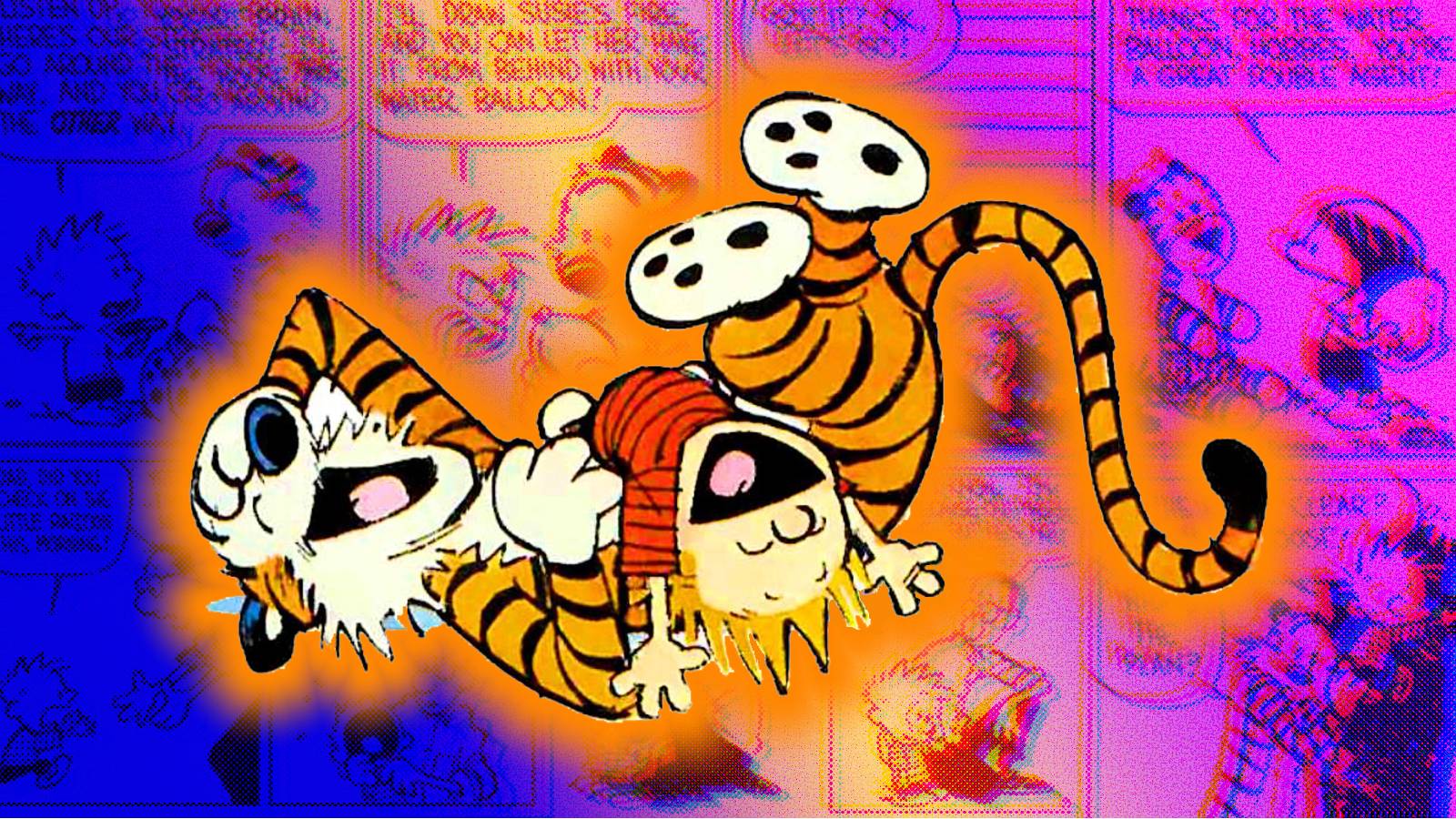
Published Sep 28, 2026, 8:00 AM EDT Derek is the Training Lead for ScreenRant. Before his current position, he spent 20 years working in games, TV, and film while also writing for several entertainment sites. Derek is also the co-host of three pop culture podcasts: Across the Omniverse, The Bad Batch, and Watch Men. Despite ending 30 years ago, Calvin and Hobbes continues to gain new fans. Even with creator Bill Watterson never allowing his characters to be licensed out for cartoons, toys, or any type of merchandise, the strip endures, thanks to the amazing work behind it. Calvin and Hobbes is truly a masterpiece, and part of what has kept the comic so popular decades since the last strip ran is Watterson's ability to capture the essence of youth on the page. The series is a love-letter to innocence and adventure, somehow connecting with children and adults at the same time without ever pandering to either one. And while Calvin and Hobbes continues to capture the imagination of millions around the world, there are some things about the classic newspaper funny that only the biggest fans know. These elements, many that never actually appeared in the comic itself, helped form what the strip is in one way or another. They are the pieces of the puzzle only the die-hard fans know, and even some of them may not be aware of every piece of history that went into Watterson's beautiful work. Bill Watterson Was Almost Forced To Include A Character He Didn't Create It is almost impossible to believe, but there was almost a world where Calvin and Hobbes were never published in newspapers around the world. When Bill Watterson was first trying to get his comic strip in papers, he pitched it to United Feature Syndicate, the home of Charles Schulz's Peanuts, but the company turned him down after a focus group didn't find the strip funny. United Features did offer Watterson a second chance, but to get it he would have to include a new character, Robotman. The character had been created by musician Peter Shelley (not Pete Shelley from the Buzzcocks, a different guy) and United Features had obtained the rights but didn't know what to do with it. Watterson refused to try and force Robotman into his strip and ended up signing with Universal Press Syndicate. Robotman did make his way to the funny pages under the pen of artist Jim Meddick. But, when Robotman didn't catch on with readers, Meddick switched his strip to be about an inventor and renamed it Monty. Monty is still running today. Robotman has been left in the scrapheap. Hobbes Is Based On A Real Cat Fans will forever argue over whether Hobbes is real or just in Calvin's imagination, even though Bill Watterson has answered this question. But one thing that is certain is that the lovable and (supposedly) ferocious tiger was based on a very real feline. Watterson used his own cat, a grey tabby named Sprite. When Sprite died, Watterson created a Sunday strip to honor her. But Hobbes was named after the philosopher Thomas Hobbes, though the two seem to have very different outlooks on life. In his book Leviathan, the real Hobbes theorized that existence is "solitary, poor, nasty, brutish, and short" and that humanity was doomed to live in a constant state of fear and war. On the other hand, the tiger Hobbes tends to see the good things in life, like tuna, TV, and spending long days out in the sun. Hobbes May Have Eaten Bill Watterson's Friend While the world loves Calvin for his amazing imagination and perspective on life, some of his classmates aren't very kind to him, with Moe being the most well-known school yard bully who picks on Calvin. One such kid is Tommy Chestnut, who made fun of Calvin when he brought Hobbes to school with him. According to Calvin, Hobbes ate little Tommy for his impudence and, according to Hobbes, the kid needed a bath, Tommy Chestnut is never actually seen in the comics, but Bill Watterson likely saw him pretty often, since the character was named after one of his college friends. There was another mention of a Tommy who laughed so hard milk shot up his nose, but it isn't clear if this is the same Tommy or not. Although, while "Tommy" is a common name, it more than likely was another reference to Watterson's pal. It could even be a true story that happened to the real Tommy Chestnut. Only One Character Had A First And Last Name Perhaps as a way to make the strip more universal, Bill Watterson avoided giving characters both first and last names. Calvin's surname is never revealed, and his parents' have no names beyond "Mom" and "Dad." His teacher is only known as Miss Wormwood, which is a reference to C.S. Lewis' The Screwtape Letters. And Tommy Chestnut was the rare moment when Watterson made a direct reference to someone in his life. But there was one recurring character who managed to have a first and last name: Susie Derkins. A bright girl who studies hard and doesn't like to goof off, Susie is Calvin's opposite in almost every way. And while Calvin and Susie's differences often lead to arguing and, on a few occasions, crying, Hobbes clearly has a bit of a crush on her, suggesting that Calvin does as well. Bill Watterson Removed Strips From Some Calvin And Hobbes Collections While Bill Watterson is surely proud of the over 3,000 strips he created over a decade, there are a few he chose to leave out of many of the collections. While they are included in the four volume collection, The Complete Calvin and Hobbes, earlier collections had left out or replaced strips where Hobbes takes a bath. The most likely reason is because Hobbes' baths happen when he is put in the washing machine, and Watterson or the publisher worried these would encourage kids to jump in the washer themselves. Also missing from earlier collections are the strips about the possibility that Calvin was adopted. Calvin sometimes wonders if his parents are his biological mom and dad because of his having blonde hair while they have dark hair, and his parents would sometimes play into those concerns, joking about it and making Calvin nervous. Concerned that these strips would be hurtful to people who were adopted, Watterson removed them from collections or changed the dialogue from things like "Was I adopted" to "Was I genetically engineered or cloned?" which is how one strip appears in the complete collection. Calvin Only Fears One Person Like any six-year-old, Calvin is afraid of plenty of things that don't exist. Monsters hiding under the bed was a regular concern that comes up. But when it comes to the real world, there is only one thing he seems to fear: the babysitter. Like most babysitters, Rosalyn is a teenager who is quite cheerful and kind around Calvin's parents, but quickly becomes a "sadistic kid hater" the moment Mom and Dad leave. Rosalyn would often use threats and intimidation to get Calvin to do what she said, which included going to bed at the wildly early 6:30 at least once. She also locked Calvin in the garage at one point, which is really uncool. But Calvin could be as tough on Rosalyn as she was on him, often leading his parents to giving the babysitter a little bit of a bonus at the end of the night. In her last appearance, Calvin and Rosalyn actually get along and play a game of Calvinball, suggesting that, from then on, the two will go easy on each other.\ Steven Spielberg Wanted To Make A Calvin And Hobbes Movie Despite the massive success of Calvin and Hobbes, Bill Watterson has forgone what would easily be millions of dollars in licensing deals, wishing to keep his creation on the page and (almost) nowhere else. In other words, if you have a Calvin and Hobbes shirt or a decal of Calvin peeing on your car, that's unlicensed and Hobbes will eat you. Watterson is so steadfast in his no-licensing rule that he even turned Steven Spielberg down when the director wanted to make a movie based on the comics. Watterson wouldn't even agree to meet with Spielberg to discuss it, which surely came as a shock to the man who made Jaws. So, if you're holding out hope for a Calvin and Hobbes cartoon, it may be best to let that dream go. Bill Watterson Did License Calvin And Hobbes Once While Bill Watterson had no problem telling Steven Spielberg to kick rocks, the Calvin and Hobbes creator did license out his creation at least once, but it was for a good cause. In 1993, Waterson agreed to let education specialists Linda Holmen and Mary Santella-Johnson use Calvin and Hobbes strips in a textbook to help teach children with learning disabilities. Teaching with Calvin and Hobbes is broken up into five chapters made out of 57 strips that were selected to help children learn vocabulary, reading comprehension, and proper behavior. The textbook had a limited print run of just 2,500 copies and has become something of a Holy Grail for collectors of all things Calvin and Hobbes, selling for as much as $34,000.
8 Calvin And Hobbes Facts Only Die Hard Fans Know
Full Article
Original Source
Read the full article at Screenrant →KhanList aggregates and links to publicly available news content. We do not host full articles from third-party sources. Always verify important information with original sources.