
Published Nov 28, 2026, 9:57 AM EST Senior Music Editor at Screen Rant, Sarah's love of sound and story drive the beat. A globetrotting brand whisperer and award-winning journalist, she’s built cross-cultural narratives around the world—but music has always been her true north. She launched DJ Mag North America, successfully introducing the iconic UK brand to the U.S. market. Previously, she carved a space for EDM inside the pages of VIBE, blending electronic and hip-hop culture long before it was trendy. British cinema has enjoyed an impressively varied 2026, with filmmakers delivering everything from post-apocalyptic horror to intimate character dramas. The year's strongest releases demonstrate how much the industry can accomplish across wildly different budgets, genres, and storytelling traditions. Some of the biggest names in British entertainment returned with particularly ambitious projects. Ralph Fiennes ventured back into an infected Britain in 28 Years Later: The Bone Temple, while Emerald Fennell offered her provocative interpretation of Emily Brontë's Wuthering Heights. Meanwhile, Andrew Scott delivered another extraordinary performance in a historical adventure drama that has emerged as a major awards contender. The year also offered plenty for audiences who prefer something less emotionally punishing. Aardman continued its remarkable tradition of stop-motion animation, while Enid Blyton's beloved children's stories received a lavish new screen adaptation. British family films have an unusual ability to make the fantastical feel reassuringly familiar, even when their characters encounter something completely ridiculous. Yet some of 2026's most impressive achievements arrived through smaller productions. The country's independent filmmakers continued exploring difficult subjects with distinctive voices, whether examining the realities of prison life or the complicated process of coping with loss. These eight movies represent the strongest British releases of 2026, ranked by overall quality rather than popularity or financial success. Performances, direction, critical response, originality, and emotional impact all inform their placements. The selection includes British productions and qualifying co-productions released theatrically during the year, including films that previously screened at festivals. From extravagant literary adaptations to an unforgettable performance on the London stage, the year's best British cinema offers plenty worth celebrating. 8 Wuthering Heights Emerald Fennell was never likely to deliver a restrained adaptation of Emily Brontë's Wuthering Heights. The filmmaker behind Promising Young Woman and Saltburn approaches the famously destructive romance with enormous visual ambition, casting Margot Robbie as Catherine Earnshaw and Jacob Elordi as Heathcliff. Their obsessive relationship unfolds against a backdrop of extravagant costumes and intensely stylized interiors, creating a version of the Yorkshire moors that owes considerably more to Fennell's imagination than conventional period-drama realism. The results are undeniably divisive, particularly when compared with earlier adaptations of Wuthering Heights. Fennell takes substantial liberties with Brontë's novel, emphasizing the central romance while reducing much of the story's wider complexity. Yet the production design is extraordinary, and Charli XCX's original music adds an intriguingly modern dimension to the material. Even when the emotional excess becomes exhausting, the film remains difficult to ignore. Its relatively low placement reflects an uneven screenplay and the occasionally overwhelming stylistic choices, but Wuthering Heights deserves recognition for attempting something far more adventurous than another respectful literary adaptation. 7 H Is For Hawk Grief can make even the most familiar surroundings feel impossible to navigate. In Philippa Lowthorpe's adaptation of Helen Macdonald's acclaimed memoir, Claire Foy plays a woman devastated by the sudden death of her father, portrayed in flashbacks by Brendan Gleeson. Rather than seeking comfort through conventional means, Helen decides to train a wild goshawk named Mabel, immersing herself in an extraordinarily demanding relationship with an animal that has little interest in human expectations. Foy gives a remarkably controlled performance, conveying Helen's emotional isolation through small gestures and increasingly obsessive behavior. The film's beautiful natural landscapes provide a striking contrast to her inner turmoil, while the falconry sequences have an authenticity that makes the relationship feel unusually immediate. Some of the memoir's psychological complexity inevitably gets lost in translation, and the film occasionally becomes too gentle for its difficult subject. Nevertheless, H Is for Hawk is a sensitive, beautifully acted examination of loss, with Foy providing much of its emotional force. 6 The Magic Faraway Tree Adapting Enid Blyton's The Faraway Tree books for contemporary audiences presented an obvious challenge: how do you preserve their wonderfully old-fashioned imagination without making the entire enterprise feel hopelessly dated? Director Ben Gregor and screenwriter Simon Farnaby find an appealing solution by introducing a modern family forced to relocate to the English countryside. Andrew Garfield and Claire Foy play parents whose children discover an extraordinary tree containing magical residents and access to fantastical lands. The production embraces the eccentricity of Blyton's creation, with characters including Moonface, Silky, and Dame Washalot brought to life by an impressive ensemble of British performers. The film's charm comes from its enthusiasm for childhood discovery, particularly the delight of encountering an imaginary world that operates according to entirely unfamiliar rules. It's more conventional than the movies ranked above it, and its family-oriented storytelling rarely ventures into especially challenging territory. Yet among the year's most comforting fantasy adventures, The Magic Faraway Tree stands out for its visual invention and infectious sense of wonder. 5 Bad Apples Image via MovieStillsDB Saoirse Ronan has built an extraordinary career playing complicated women, although her performance in Bad Apples takes that talent into considerably darker comedic territory. Directed by Jonatan Etzler, the film follows Maria, a struggling primary school teacher whose increasingly desperate attempts to manage a disruptive student lead to an outrageous decision. What begins as an uncomfortable workplace satire gradually develops into a bizarre situation that threatens to destroy almost everyone involved. Ronan is terrific at conveying Maria's mixture of exhaustion and terrible judgment, making her sympathetic even as her behavior becomes increasingly difficult to defend. The film's satire of educational expectations and institutional failures is especially pointed, although its more outrageous developments occasionally strain credibility. Nevertheless, Etzler maintains an enjoyably uncomfortable atmosphere, allowing the humor to emerge from situations that become progressively harder to escape. Bad Apples succeeds because its central character remains recognizably human beneath the absurdity, and Ronan makes every questionable decision fascinating to watch. 4 Wasteman British prison dramas have a formidable history, but Cal McMau's Wasteman finds something distinctive within familiar territory. David Jonsson plays Taylor, a prisoner hoping to secure early release after years behind bars. His prospects become increasingly uncertain when he's assigned a new cellmate, Dee (Tom Blyth), whose volatile behavior quickly threatens everything Taylor has worked toward. Jonsson is particularly impressive, portraying a man whose attempts to avoid trouble only make him more vulnerable to the surrounding violence. Blyth provides an unsettling contrast, giving Dee a dangerous charisma that makes his unpredictability particularly frightening. McMau's direction creates an almost unbearable sense of confinement, while the film's brisk pacing leaves little opportunity for relief. What makes Wasteman especially effective is its examination of the prison system itself. Taylor's behavior is shaped by an environment in which avoiding conflict can be almost as dangerous as participating in it. McMau uses the characters' increasingly desperate circumstances to expose a system that frequently undermines the rehabilitation it supposedly encourages. The film's violence is disturbing, but its most powerful moments arise from the knowledge that Taylor's freedom remains agonizingly close. It's a terrific debut, anchored by two of the year's most convincing performances. 3 Shaun The Sheep: The Beast Of Mossy Bottom Aardman Animations has spent decades demonstrating that exceptional comedy rarely requires elaborate dialogue. Shaun the Sheep: The Beast of Mossy Bottom continues that tradition with another beautifully crafted stop-motion adventure, this time borrowing inspiration from classic monster movies. When the Farmer accidentally destroys the flock's prized pumpkin patch, Shaun's efforts to repair the situation lead to increasingly outrageous consequences, including reports of a mysterious creature terrorizing the surrounding countryside. The film's visual humor is wonderfully inventive, with the animators finding endless opportunities for elaborate physical comedy. What makes Aardman's approach particularly effective is the attention paid to seemingly insignificant details: a character's expression or a perfectly timed reaction can be funnier than an entire dialogue-driven exchange. The horror references give the adventure an entertainingly mischievous personality without making it unsuitable for younger viewers. Its 99% Rotten Tomatoes critics score reflects just how consistently the film succeeds on its own terms. Despite being the third feature-length Shaun the Sheep adventure, The Beast of Mossy Bottom feels remarkably fresh. The craftsmanship is exceptional, the comedy works across generations, and the film never mistakes elaborate storytelling for better storytelling. Few animated productions released in 2026 have been quite so effortlessly entertaining. 2 28 Years Later: The Bone Temple Following Danny Boyle's return to the franchise with 28 Years Later was never going to be an easy assignment. Yet Nia DaCosta's 28 Years Later: The Bone Temple expands the series with tremendous confidence, delivering an unsettling sequel that explores the consequences of a society transformed by decades of infection. Alex Garland's screenplay continues the story of Spike (Alfie Williams), whose encounter with the terrifying Jimmy Crystal (Jack O'Connell) introduces him to a particularly disturbing group of survivors. DaCosta brings an almost operatic intensity to the violence, but the film's greatest strength lies in its interest in the people attempting to survive this devastated world. O'Connell is deeply unsettling as a charismatic figure whose cruelty is inseparable from his warped understanding of authority. Ralph Fiennes, meanwhile, gives an extraordinary performance as Dr. Ian Kelson, whose unusual relationship with the infected offers a markedly different perspective on the catastrophe. The movie's combination of brutal horror and unexpected humanity distinguishes it from many contemporary genre productions, something also explored in Screen Rant's review of The Bone Temple. DaCosta embraces grotesque imagery while remaining interested in moments of tenderness and the possibility of understanding an apparent enemy. With a Rotten Tomatoes critics score above 90%, The Bone Temple ranks among the franchise's most acclaimed installments. Its performances and unusually ambitious screenplay make it one of the year's strongest horror movies, and a reminder that even a long-running franchise can still find genuinely surprising directions. Only one British film released this year manages to combine equally accomplished filmmaking with an even more affecting central performance. 1 Elsinore Some performances are so extraordinary that the movie surrounding them almost becomes secondary. Andrew Scott's portrayal of Scottish actor Ian Charleson in Elsinore is one of those rare achievements, providing the emotional foundation for Simon Stone's deeply affecting historical drama. The film follows Charleson during the final months of his life, as he prepares to portray Hamlet at London's National Theatre while privately confronting the devastating progression of AIDS. Scott approaches the role with extraordinary sensitivity, capturing Charleson's wit and professional determination without reducing him to his illness. His work is especially powerful during the rehearsal sequences, where Shakespeare's language gradually becomes inseparable from the actor's own confrontation with mortality. Olivia Colman provides excellent support as physician Margaret Johnson, while Johnny Flynn plays director Richard Eyre, whose production offers Charleson one final opportunity to demonstrate his remarkable abilities. The film's greatest achievement is the restraint with which it explores an inherently tragic story. Rather than treating Charleson's illness as the defining feature of his existence, Stone emphasizes his artistic ambition and the relationships that sustained him. The theatrical setting also provides an unusually compelling examination of performance itself, revealing how an actor's personal experiences can transform familiar material into something extraordinary. Elsinore emerged as one of the year's leading British awards contenders, receiving 12 British Independent Film Award nominations, including Best British Independent Film and Best Lead Performance for Scott. That recognition reflects the extraordinary quality of its central performance, although the film's broader achievement is equally significant. Scott makes Charleson's determination to continue working feel heroic without sentimentalizing his circumstances. The result is an intimate, beautifully observed portrait of an artist confronting his own mortality through the work he loved. Among British movies released in 2026, Elsinore delivers the most complete combination of exceptional acting, emotional depth, and accomplished filmmaking, earning its place at the top of this ranking. Release Date November 20, 2026 Runtime 111 minutes Director Simon Stone Writers Stephen Beresford Producers Andrea Occhipinti, Andrew Scott, Carolyn Marks Blackwood, Gabrielle Tana, Mickey Liddell, Pete Shilaimon, Stefano Massenzi Cast John Hollingworth Rosencrantz
8 Best British Movies Of 2026, Ranked
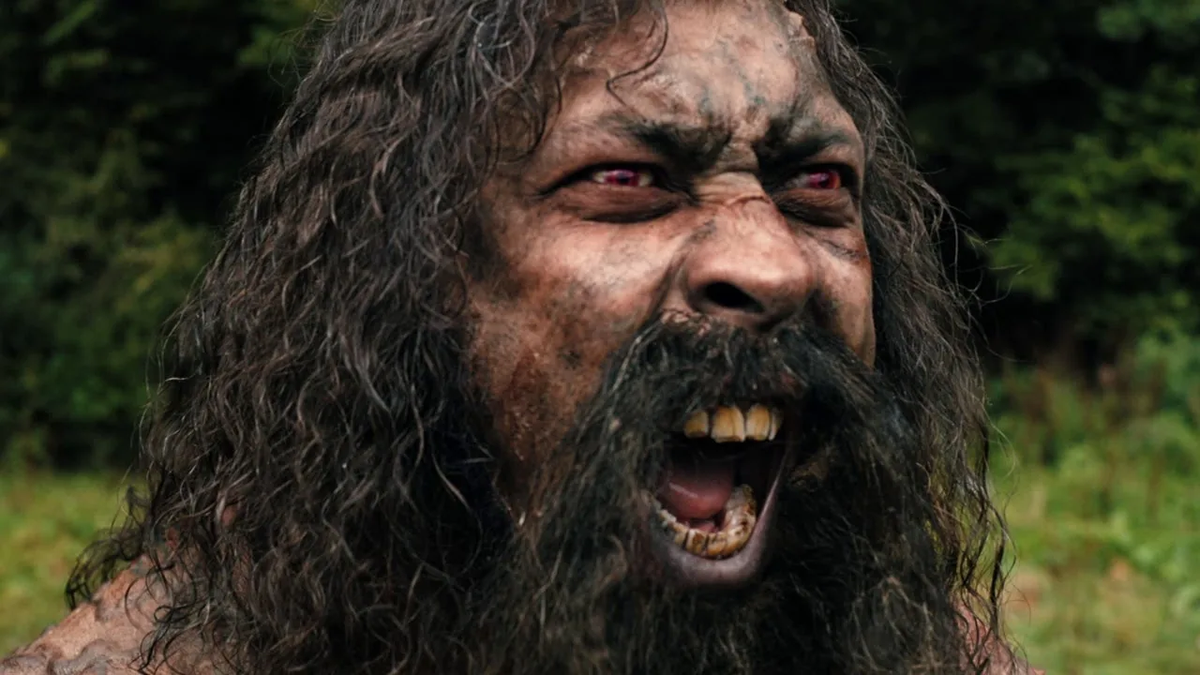
Full Article
Original Source
Read the full article at Screenrant →KhanList aggregates and links to publicly available news content. We do not host full articles from third-party sources. Always verify important information with original sources.