
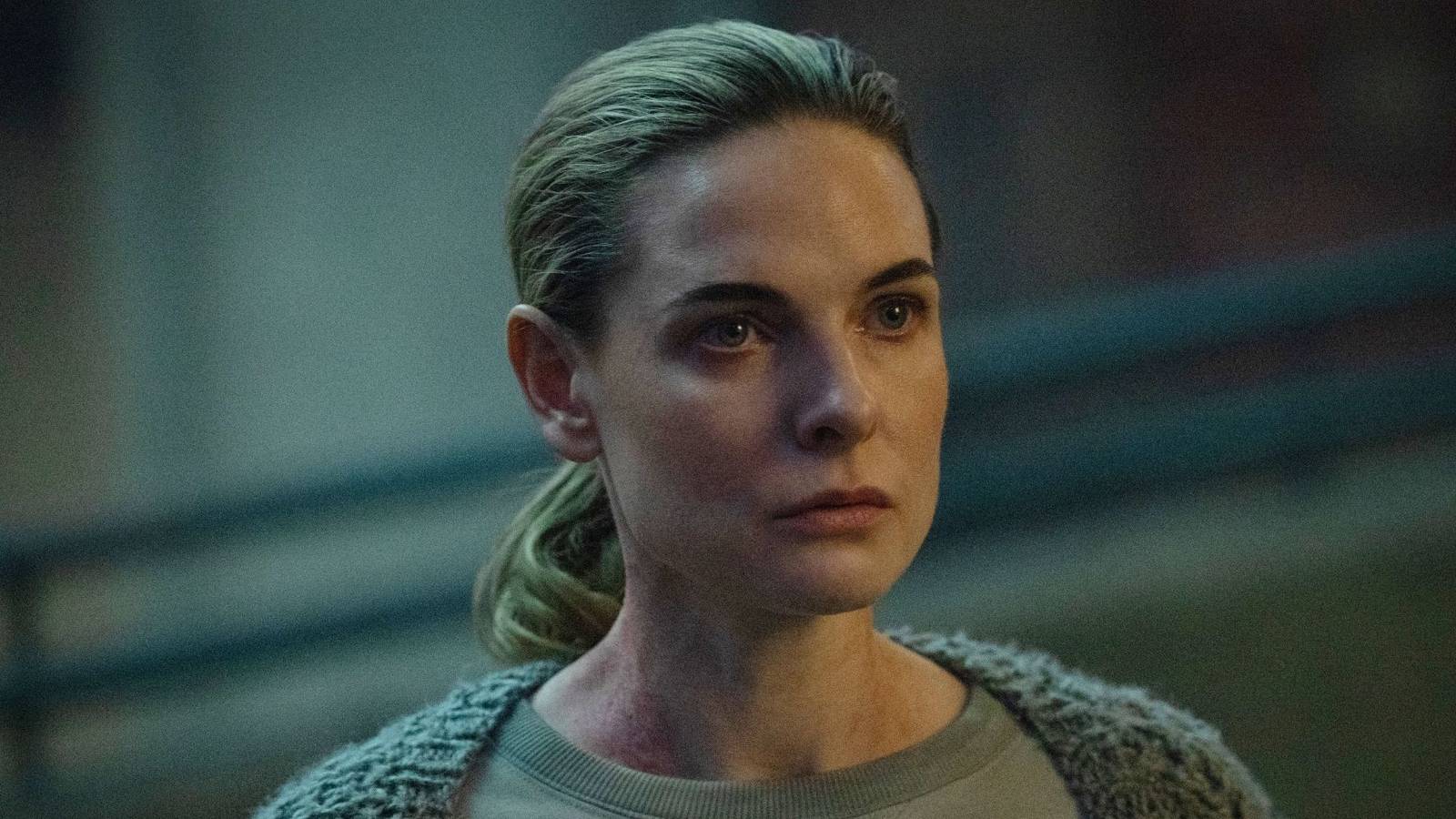
Image via Apple TV Published Sep 5, 2026, 3:19 PM EDT Sign in to your Collider account Science fiction has always been built on ambition, but a great idea can only carry a show so far. Alternate realities, dystopias, and space travel are exciting, but the real challenge is to find enough depth in the spectacle to tell a story that actually resonates with the audience. Modern sci-fi seems to be focusing on exactly that. The genre is telling stories that feel intimate, philosophical, funny, and politically charged while still delivering the escapism that draws people to science fiction. Apple TV in particular has become home to some of the strongest sci-fi titles in the last few years. The streamer has developed a reputation for not only backing unique ideas, but also doing total justice to them. The Apple TV sci-fi shows on this list are proof of the streamer's commitment to making every single episode count. 'Dark Matter' (2024–Present) Image via Apple TV Dark Matter technically centers on one of sci-fi's most overused ideas, but makes it feel a lot more personal. The Apple TV series, based on Blake Crouch's bestselling novel, follows physicist and family man Jason Dessen (Joel Edgerton), who wakes up in an alternate reality where he never married Daniela (Jennifer Connelly), never became a father, and pursued the scientific career he once gave up. Jason has wondered about this version of his life for a long time, but when he finally has it, he realizes that it's not what he wants at all. What ensues is a race against time as Jason tries to find his way back to his own reality before the version of him who stole his life settles into it permanently. The concept of the multiverse in Dark Matter isn't extremely complicated, but the show uses it to explore how humans respond to regret. The series makes Jason confront several versions of the life he might have lived if he had made different choices. Every world offers new possibilities, but none of them feel like home. Edgerton brilliantly performs radically different versions of Jason without reducing them to one-dimensional opposites. Dark Matter balances its huge science fiction ideas with a story that never stops feeling human, which is what makes every episode count. 'Severance' (2022–Present) Image via Apple TV Severance is one of the most brilliant thriller TV shows in recent times, with a premise that's unlike anything else. The series takes the idea of work-life balance to its most disturbing extent. It follows Mark Scout (Adam Scott), an employee at Lumon Industries who has undergone the Severance procedure, which surgically separates his work memories from his personal ones. The moment Mark enters the office, his Innie remembers nothing about the outside world, while his Outie has no idea of what happens during the eight hours he spends at work. It's like he is two completely different people. Initially, the idea seems pretty great, especially for Mark, who desperately needs an escape from the grief of losing his wife. However, things start taking a darker turn for the version of Mark trapped inside Lumon. Through its absurd premise, Severance takes familiar parts of corporate culture and makes them feel extremely unsettling. Lumon employees have to follow bizarre rules. In fact, they barely even understand the work they do or why it's so important. This mystery surrounding just about everything in Lumon gives every episode weight, because the audience gets to uncover something new. Every new development makes the show's central concept feel increasingly comfortable, especially when the Innies slowly develop identities and relationships despite technically only existing at work. Severance can be funny, weird, and genuinely unnerving within the same episode. Very few sci-fi shows have ever made fluorescent lights and office cubicles feel this threatening. 'Pluribus' (2025–Present) Pluribus, created by, is easily one of the strangest sci-fi shows on Apple TV, but that doesn't make it any less fascinating. The series follows novelist Carol Sturka (Rhea Seehorn), who suddenly finds herself living in a world where everything is a little too perfect. An alien virus has connected humanity into a collective consciousness and turned all of them into one extremely polite hive mind. War, hostility, and most human conflicts have practically disappeared, but the problem is that the very idea of individuality has also gone away. Now, since Carol is one of the few people immune to the phenomenon, she sets out to try and reverse it. However, the strange part is that the hive mind is more than willing to help her with anything she needs. It just insists that eventually, it will figure out a way to assimilate Carol too, which creates a constant sense of unease in the show. The concept is interesting because Carol's stubbornness and anger are a perfect contrast to the extremely patient and accommodating hive mind. Pluribus takes its time to explore this contradiction. Entire episodes of the show revolve around Carol discovering one small aspect of this new world, but everything she learns shifts the audience's understanding of how the collective consciousness operates. The show grounds its science fiction elements in surprisingly human questions and turns the idea of an alien apocalypse on its head. That unique premise alone is enough to make Pluribus worth watching. 'Silo' (2023–Present) Image via Apple TV Silo is another show that puts a spin on a pretty traditional science fiction idea. The series, based on Hugh Howey's Wool novels, is set inside a massive underground structure where roughly 10,000 people have lived for generations because they believe the outside world to be toxic. Nobody knows exactly who built the silo, why it was created, or what really exists outside of it. However, asking too many questions is a surefire way to get in trouble here. The story picks up when engineer Juliette Nichols (Rebecca Ferguson) begins investigating the suspicious death of someone close to her, and begins to realize that the world she has always known may not be as safe as she thinks. Silo makes that mystery work because the world of the show feels like a fully developed, functioning society. The people living near the top have all the power, while the mechanics and workers at the lower levels are treated very differently, even though the entire structure depends on them. The audience experiences all this through Juliette's eyes, but the fact that she approaches every mystery like an engineer is what keeps things interesting. She wants to learn how things actually work, which means that Silo spends a lot of time following her pulling at one small inconsistency until the bigger picture starts to make sense. The show is definitely a slow burn, but it rewards the audience for every bit of their attention. Collider Exclusive · Sci-Fi Personality Quiz Which Sci-Fi Hero Are You Most Like? Paul Atreides · Captain Kirk · Princess Leia · Ellen Ripley · Max Rockatansky Five iconic heroes. Five completely different ways of facing an impossible universe. One of them shares your instincts, your values, and your particular way of refusing to back down. Eight questions will tell you which one. 🏜️Paul Atreides 🖖Capt. Kirk ✊Princess Leia 🔦Ellen Ripley 🔥Max Rockatansky FIND YOUR HERO → 01 How do you lead when the stakes couldn't be higher? The way you lead under pressure is the most honest thing about you. AI absorb everything — every variable, every pattern — and move only when I know the path forward. BI read the room, make the call, and own the consequences. Hesitation costs more than mistakes. CI rally people. A cause needs a voice, and I refuse to let fear be louder than conviction. DI assess the threat, establish what needs doing, and get it done without waiting for permission. EI don't lead. I act. Others can follow or not — I'm already moving. NEXT QUESTION → 02 What is your greatest strength in a crisis? The quality that keeps you alive when everything else fails. APrescience — the ability to see further ahead than anyone else and plan accordingly. BImprovisation — I'm at my best when the plan falls apart and I have to invent a new one. CConviction — I know what I'm fighting for, and that certainty doesn't waver under fire. DComposure — I stay functional when everyone around me is falling apart. Panic is a luxury. EEndurance — I outlast things. I take the hit and keep moving long after others have stopped. NEXT QUESTION → 03 What is the thing you'd sacrifice everything else for? Your deepest motivation is your truest compass. AThe survival and dignity of my people — even if I have to become something frightening to ensure it. BThe safety of my crew — every single one of them. No one gets left behind. CFreedom — for my people, for every world still crushed under the weight of an empire. DThe truth — what actually happened, what's actually out there, whether anyone believes me or not. EThe one person — or the one memory — that still makes any of this worth surviving for. NEXT QUESTION → 04 How do you relate to the people around you? Who you are to others under pressure is who you really are. AWith intensity and distance — I care deeply, but the weight I carry makes closeness complicated. BWith warmth and irreverence — I take the mission seriously, not myself. CWith directness and trust — I say what I mean, and I expect the people I work with to rise to it. DWith professional care but clear limits — I'll protect you, but I won't pretend we're family. EWith wariness that slowly becomes loyalty — I don't trust easily, but when I do, it holds. NEXT QUESTION → 05 You're facing a threat that no one else believes is real. What do you do? How you respond when you're the only one who sees it defines everything. APrepare in silence. If they won't listen, I'll be ready when they finally have to. BKeep pushing until someone listens — and if no one does, handle it myself. CBuild the case, find the allies, and make the threat impossible to ignore. DDocument everything. The truth matters even if no one believes it yet. EStop trying to convince anyone. Survive it. That's the only argument that counts. NEXT QUESTION → 06 What has your heroism cost you personally? Every hero pays. The question is what — and whether they'd pay it again. AMy innocence — I've seen what I'm capable of, and I can't unsee it. BPeople I loved — the command chair has a view, but it's a lonely one. CA normal life — I gave up everything ordinary the moment I chose the cause. DMy sense of safety — I know exactly what's out there now, and I can't pretend otherwise. EAlmost everything — and I'm still not sure what I'm carrying it all for. But I keep going. NEXT QUESTION → 07 How do you feel about the rules of the world you're in? Every hero has a relationship with the system. What's yours? AI understand them deeply — and I know exactly which ones must be broken, and why. BI respect the spirit of them and bend the letter when the situation demands it. CThe system is the problem. I'm not here to work within it — I'm here to dismantle it. DI follow protocol until protocol stops being useful. Then I make the call myself. EThe rules collapsed a long time ago. What's left is instinct, and mine are reliable. NEXT QUESTION → 08 When everything is on the line, what keeps you going? The answer is the most honest thing about you. ADestiny — or something that feels so much like it that the difference no longer matters. BThe people on my ship — their faces, their trust, the fact that they're counting on me. CThe belief that what we're fighting for is worth every sacrifice, including this one. DSheer refusal to let it win — whatever it is. I don't stop. That's just who I am. EI'm not sure anymore. But the road is still there, and I'm still on it. REVEAL MY HERO → Your Hero Has Been Identified Your Sci-Fi Hero Is…Your answers point to the iconic sci-fi hero who shares your instincts, your values, and your particular way of facing the impossible. Paul AtreidesYou carry a weight most people would crumble under — the knowledge of what you're capable of, and the burden of what you might have to become. You see further ahead than others and you plan accordingly, even when the vision frightens you. You are driven by loyalty to your people and a sense of destiny you didn't ask for but can't escape. Paul Atreides is not simply a hero — he is someone who understands the cost of power and chooses to bear it anyway. That gravity, that willingness to carry what others won't, is exactly you. Captain KirkYou lead with instinct, warmth, and an absolute refusal to accept a no-win scenario — because you've always believed there's a third option nobody else has thought of yet. You take the mission seriously without ever taking yourself too seriously. Your crew would follow you anywhere, not because you demand it, but because you've earned it. Kirk's genius isn't tactical — it's human. He reads people, bends rules with purpose, and wills outcomes into existence through sheer conviction. That combination of warmth, audacity, and relentless optimism is unmistakably yours. Princess LeiaYou are the kind of person who holds the line when everyone else is losing faith — not because you're fearless, but because giving up simply isn't something you're capable of. You lead through conviction. Your voice carries because your belief is unshakeable. You gave up everything ordinary the moment you chose the cause, and you've never looked back. Leia is not a supporting character in her own story — she is the moral centre of the entire rebellion. That same fierce, principled, unbreakable core is what defines you. Ellen RipleyYou are not reckless, not grandiose, and not particularly interested in being anyone's hero — you just refuse to stop when it matters. You see threats clearly, you document the truth even when no one listens, and when the time comes you handle it yourself. Ripley's heroism is earned, not performed. She doesn't have a speech — she has a flamethrower and a plan. You share her composure under the worst possible pressure, and her refusal to pretend the monster isn't there. When it counts, you don't flinch. That's everything. Max RockatanskyYou have been through fire that would break most people — and what came out the other side is something the world underestimates at its peril. You don't ask for help, don't need validation, and don't wait for anyone to tell you the rules no longer apply. Your loyalty, when it finally arrives, is absolute — but it's earned in silence and tested in action, not in words. Max is not a nihilist. He is someone who lost everything and found, against his will, that he still has something worth protecting. That bruised, stubborn, ultimately human core is exactly yours. ↻ RETAKE THE QUIZ 'Star City' (2026–Present) Image via Apple TV Star City takes the alternate-history world of For All Mankind and flips the entire perspective. Instead of following NASA, the series follows the Soviet side of the Space Race. The story begins around the moment the USSR becomes the first nation to put a man on the Moon and follows the cosmonauts, engineers, and intelligence officers responsible for keeping that advantage alive. Some of Star City's most compelling characters include Anastasia Belikova (Alice Englert), who is pushed into becoming the first woman on the Moon, and Irina Morozova (Agnes O'Casey), a junior surveillance officer tasked with listening in on the private lives of people inside the space program. The biggest difference, however, is how Star City constantly examines the cost of progress instead of treating it as something hopeful like For All Mankind did. In fact, the series plays out like a Cold War spy thriller more than a science fiction drama. The rockets and Moon missions are great, but some of the show's most tense moments happen in ordinary rooms where one careless sentence can completely change someone’s life. That angle is exactly what makes the spin-off worthwhile. 'Foundation' (2021–Present) Image via Apple TV Foundation is the kind of complex, expansive science fiction that TV has been missing. The series is loosely based on Isaac Asimov's legendary novels and begins with mathematician Hari Seldon (Jared Harris), who has developed a science called psychohistory that can predict the behavior of entire civilizations. His calculations reveal that the Galactic Empire, which has ruled humanity for thousands of years, is inevitably going to collapse. Now, Hari can't prevent this, but he believes he can shorten the dark age that follows from 30,000 years to just 1,000 by creating the Foundation, a civilization designed to preserve humanity's knowledge and guide whatever comes next. This premise allows Foundation to tell an ambitious story that stretches across planets, generations, and time itself. Hari's biggest challenge is the Genetic Dynasty. Instead of passing power from one emperor to the next, the Empire keeps cloning the same man and ruling through three versions of him at different ages. Brother Dawn (Cassian Bilton), Brother Day (Lee Pace), and Brother Dusk (Terrence Mann) serve as proof of the Empire's desperation to maintain the illusion of their permanence. Foundation might be too on-the-nose with its themes, but that is also what gives the series its political weight. 'Calls' (2021) Image via Apple TV Calls is an underrated Apple TV show because it doesn't feature traditional visuals, elaborate sets, or even actors appearing on the screen. The entire nine-episode series actually unfolds through phone conversations accompanied by abstract graphics, waveforms, and fragments of text. It sounds like something that should work better as a podcast than a television show, but after a few minutes, this strange creative direction starts to make sense. The show, helmed by Fede Álvarez, follows seemingly unrelated people whose ordinary phone calls start becoming increasingly impossible. One woman sees someone identical to herself outside her house, another caller begins describing disturbing changes happening to his own body, and other conversations start bending time in ways neither the characters nor the audience initially understand. Slowly, those isolated incidents begin connecting into one much larger story about an approaching catastrophe. Call trusts the audience's imagination to create dread and horror without ever showing anything. The voice cast — including Lily Collins, Pedro Pascal, Aubrey Plaza, Aaron Taylor-Johnson, and Rosario Dawson — perform these conversations with such panic and desperation that the lack of conventional visuals starts feeling like an advantage rather than a limitation. The episodes are extremely short with no room for filler, which makes every call feel more urgent than the one before. Calls proves that great science fiction doesn't need spectacle to make an impact. All it needs is a great story. 'Shining Girls' (2022) Image via Apple TV Shining Girls, based on Lauren Beukes' novel, the series follows Chicago newspaper archivist Kirby Mazrachi (Elisabeth Moss), who survived a brutal attack years earlier and has struggled to regain control of her life ever since. When another woman is found with injuries resembling Kirby's, she teams up with reporter Dan Velazquez (Wagner Moura) to investigate the case. Their search eventually leads them to Harper Curtis (Jamie Bell), a man who appears to have been targeting women across different decades without aging himself. However, finding Harper is only half the problem because, all of a sudden, Kirby's entire reality starts shifting. Her pet cat is suddenly a dog, her desk at work was never hers, she remembers conversations differently, and even discovers that she is apparently married to a man she only remembers as a coworker. The catch is that nobody else notices any of this. The show doesn't make a big deal of these shifts either, which is what makes watching it so much fun. A scene can suddenly contain one detail that feels completely wrong, and for a moment, the audience is just as disoriented as Kirby. The setup never feels gimmicky though, because this fragmented experience directly ties in with Kirby's trauma. By the time the mystery starts coming together, the audience is completely invested and constantly scanning scenes for anything that might have changed, which says a lot about how effectively Shining Girls pulls viewers into Kirby's unstable reality. Shining Girls Release Date 2022 - 2022-00-00 Network Apple TV Cast Gary Houston Meatpacking Brother Directors Daina Reid, Elisabeth Moss, Michelle MacLaren Writers Katrina Albright, Alan Page Arriaga, Kirsa Rein, Naledi Jackson, Silka Luisa Creator Silka Luisa Main Genre Drama Seasons 1 Producers Joshua Levey, Kirsa Rein Characters By Lauren Beukes Cinematographer Robert McLachlan, Bonnie Elliott Creator(s) Silka Luisa Distributor Apple TV+ Main Characters Joshua Levey Production Company MRC Television, Michelle MacLaren Entertainment, Appian Way Productions, Love & Squalor Pictures Number of Episodes 8 Executive Producer(s) Alan Page Arriaga, Daina Reid, Elisabeth Moss, Jennifer Davidson, Lauren Beukes, Leonardo DiCaprio, Lindsey McManus, Michael Hampton, Michelle MacLaren, Rebecca Hobbs, Silka Luisa
8 Apple TV Sci-Fi Shows Where Every Episode Is a Masterpiece
Full Article
Original Source
Read the full article at Collider →KhanList aggregates and links to publicly available news content. We do not host full articles from third-party sources. Always verify important information with original sources.