
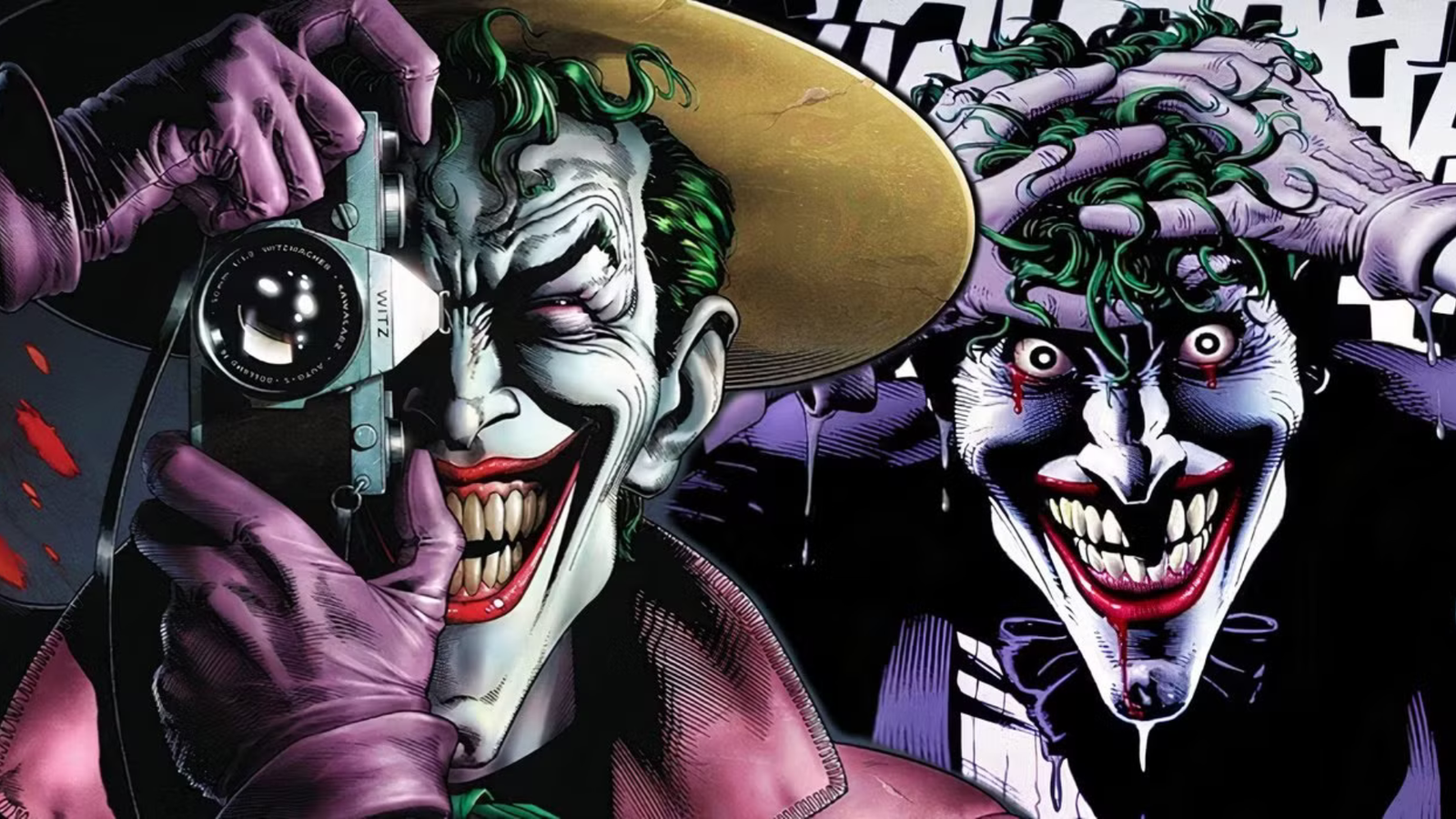
Published Oct 18, 2026, 4:27 PM EDT Emedo Ashibeze is a tenured journalist and critic specializing in the entertainment industry. Before joining ScreenRant in 2025. he wrote for several major publications, including GameRant. Watchmen is widely regarded as one of the greatest works in comic book history. Alan Moore’s groundbreaking 1986 deconstruction of the superhero genre fundamentally changed the medium, setting a new standard for literary ambition, narrative complexity, and adult storytelling in sequential art. Its impact is so immense that it often overshadows Moore’s other great works. Reducing Moore’s rich bibliography to a single acclaimed masterpiece does a disservice to one of literature’s most prolific and visionary creators. Beyond Watchmen, Moore has crafted a magna opera of worlds that have shifted the boundaries of visual storytelling, weaving intricate narratives that blend historical fiction, occult philosophy, psychological horror, and meta-fiction. Personally, Moore’s lifetime output is simply outstanding, and it would be a shame for fans to be engrossed in just one of his masterpieces. For this reason, this article highlights 8 Alan Moore comics that prove his legend is not tied only to the Watchmen series and extends beyond into other works of equal creative masterstrokes. 8 The Ballad of Halo Jones Proves Moore Could Build Epic Science Fiction Beyond Superheroes Moore’s unfinished sci-fi masterpiece, The Ballad of Halo Jones, features the first female protagonist in British magazine 2000 AD. Halo Jones isn’t a chosen-one archetype; she’s an ordinary girl trying to escape home and her dead-end life. What begins as a simple trip away from home spirals into an intergalactic adventure filled with conflict, spaceships, and new worlds. The masterful mix of comedy, adventure, and tragedy elevates the narrative into a once-in-a-lifetime experience. The story itself is a masterclass in storytelling, which Moore uses to explore society’s impact on people. The reluctant protagonist changes from an ordinary working-class woman burdened by poverty into an intergalactic hero, all while enduring untold tragedies along the way. 7 Whatever Happened to the Man of Tomorrow? Gives the Silver Age Superman a Perfect Farewell Whatever Happened to the Man of Tomorrow? Is a poignant farewell to Silver Age Superman before DC rebooted its universe on Crisis on Infinite Earths. Framed as an interview years after the hero’s mysterious disappearance, the narrative details the final, desperate siege on the Fortress of Solitude as Superman’s deadliest foes launch a coordinated assault against everything he holds dear. Moore balances profound tragedy with deep reverence for the character’s legacy. Cornered by a barrage of enemies, Superman is forced to confront the limits of his rigid moral code, leading to a shocking, quiet climax that ends his career as a caped protector. 6 For the Man Who Has Everything Gives Superman His Most Tempting Fantasy Alan Moore’s For the Man Who Has Everything strips away Superman’s usual invincibility to reveal his deepest, most heartbreaking vulnerability. After arriving at the Fortress of Solitude to celebrate Superman’s birthday, Batman, Robin, and Wonder Woman find him incapacitated by the Black Mercy, an alien plant Mongul planted that traps Superman in a hallucination tailored to his heart’s desire. What the Man of Steel most desired was a world where Krypton had never been destroyed so that he could live a peaceful, quiet family life on his home planet. The tale becomes a masterpiece of character exploration through Superman’s agonizing choice: while Batman, Robin, and Wonder Woman fight Mongul, he realizes the fantasy is false and tries to break free. However, to escape the hallucination, he has to bid a heartbreaking farewell to the parents he never knew, and the wife and son he loves. Moore uses the story to show that Superman’s greatest strength is his willingness to sacrifice his own happiness for humanity’s sake. 5 The Killing Joke Gives the Joker One of Comics’ Darkest Origin Stories In Batman: The Killing Joke, Alan Moore and artist Brian Bolland delivered one of the most psychological, unsettling, and enduring tales in the Dark Knight’s mythology. Moore adds depth to the Joker’s character, framing him as more than a force of nature by giving him a fitting backstory. The story spans two timelines: the present, where the Joker has escaped Arkham Asylum and committed a heinous crime, and the past, which follows a desperate comedian who is accidentally plunged into a vat of chemicals, creating the Joker. However, the Joker is an unreliable narrator, as he remembers his origin in several different ways. The Killing Joke explores the thin, terrifying line between the Joker and Batman himself. The idea that one bad day is all it takes to become the Joker runs throughout the story. Through the villain’s brutal psychological assault on Commissioner Gordon, he tries to prove that everyone, given the right push, can snap under the weight of existence. 4 Miracleman Asks What Happens When a Superhero Actually Becomes a God Miracleman began in the UK as Marvelman, and it deconstructs the golden-age superhero archetype years before Watchmen, asking a fundamentally unsettling question: what happens when a human being attains truly divine, unchecked power? The narrative follows Michael Moran, an ordinary reporter in his 30s, who discovers he has superpowers when he says the word “ Kimota!” Across its three arcs, the series explores his rediscovery of his powers and the truth behind them, alongside looming threats and evil forces on the horizon. As the story unfolds, Moore and artists including Garry Leach, Alan Davis, and John Totleben craft a mesmerizing superhero deconstruction that has stood the test of time, despite being Moore’s first major attempt at the form. 3 From Hell Turns Jack the Ripper Into a Nightmare About Victorian Society From Hell turns the world’s most notorious unsolved murder mystery into a sprawling, terrifying autopsy of Victorian civilization. Moore uses the Jack the Ripper killings to build a masterclass crime drama. In the story, it is revealed that William Gull, a surgeon, orchestrated the killings to cover up evidence of a royal scandal. The story does not treat the Whitechapel killings as the work of a lone madman. Instead, it presents them as ritual, a Masonic operation meant to protect male supremacy. It offers a psychogeographic view of power, class warfare, misogyny, and the British Empire’s sinister underbelly. Gull embodies the result of harmful conspiracies, misogyny, and unchecked power. 2 V for Vendetta Is Still One of Comics’ Most Chilling Warnings About Fascism Set against the bleak backdrop of a totalitarian, post-apocalyptic Britain, Alan Moore and David Lloyd’s V for Vendetta remains one of the comic medium’s most potent and political critiques. The series chillingly depicts how easily a society can surrender its freedoms to fascism under the guise of security, order, and national pride. The story follows V, a masked vigilante and anarchist who aims to dismantle the fascist regime and spark anarchy among the masses. In V for Vendetta, Alan Moore explores anarchism’s political philosophy in depth; the main character, V, wears a Guy Fawkes mask and uses questionable methods, especially when recruiting his protégé. 1 Saga of the Swamp Thing Turned a Forgotten Monster Into One of DC’s Greatest Characters Saga of the Swamp Thing introduced Alan Moore to the American comics scene. With this comic, Moore transformed Swamp Thing from a B-list monster into one of DC’s greatest characters, inadvertently helping shape DC’s entire line of “mature” horror and supernatural comics, including Vertigo Comics. In the comic, the character lay on an operating table and was dissected, revealing that Swamp Thing was not once a human named Alec Holland, but a plant that had absorbed the consciousness of the dead scientist who used that name. This change told a genuinely terrifying horror story centered on the true meaning of humanity. This change also permanently defined Swamp Thing’s character, adding elements that made him more interesting and compelling. The comic also introduced the now fan-favorite character John Constantine to the DC universe. Moore didn’t hold back on the supernatural horror, bringing werewolves, vampires, and zombies into the story while also addressing issues such as environmental pollution and domestic abuse.
8 Alan Moore Comics That Prove Watchmen Isn’t His Only Magnum Opus
Full Article
Original Source
Read the full article at Screenrant →KhanList aggregates and links to publicly available news content. We do not host full articles from third-party sources. Always verify important information with original sources.