
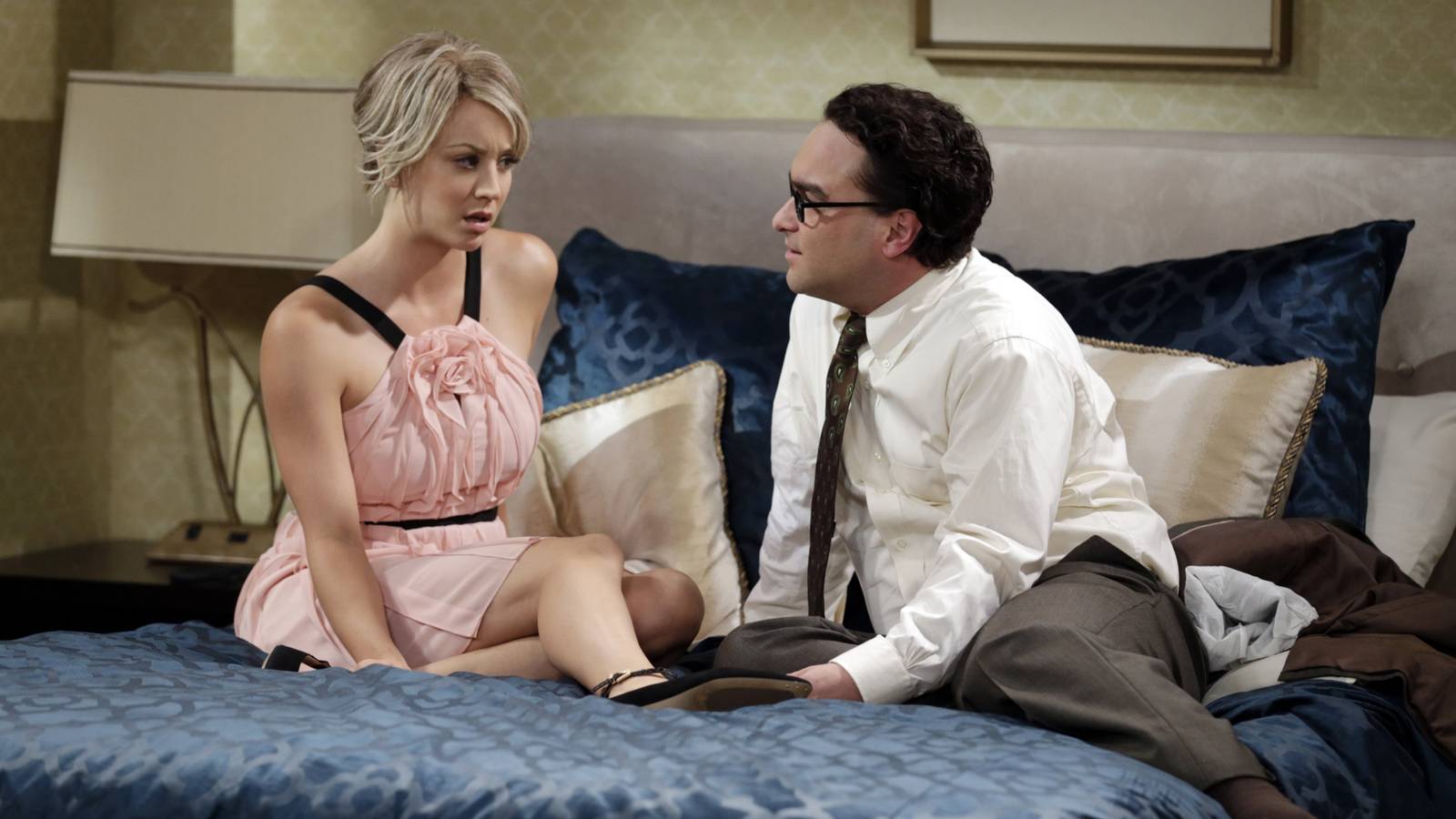
The best sitcoms of the 2000s are still some of the most beloved and rewatched shows today, with Friends and The Office finding new life in the streaming era. Sitcoms are interesting sociological windows into the eras in which they were produced, using humor to both reinforce and challenge prevailing social norms. That’s why sitcoms often age poorly—as culture changes, so too does the line between what's funny and what's offensive. Of course, there's an important distinction between a sitcom character and the show itself being problematic. Sometimes sitcoms use a character’s outdated views to make a point, like Archie Bunker in the eternally relevant All in the Family. However, some of the most poorly aged sitcom lines aren't uttered by deliberately offensive characters, but by ostensibly nice guys audiences were encouraged to root for, like Leonard over Howard in The Big Bang Theory. It's unreasonable to expect sitcoms that premiered upwards of two decades ago to adhere to contemporary social sensibilities. Even some of the best sitcoms of all time have their shortcomings in that regard. But what's particularly interesting about revisiting 2000s sitcoms that haven't aged well is that it's not always the most provocative jokes that have aged the worst. Sometimes, it's the seemingly innocuous lines that are the most jarring. Hank Hill: “Oh, My God. My Boy Is A Girl.” King Of The Hill, Season 13, Episode 19, “The Boy Can't Help It” Part of the enduring humor of King of the Hill is the disconnect between Hank Hill's conservative sensibilities and his son's more unconventional interests. The animated sitcom frequently acknowledges that Hank is a little behind the times, but his attitude toward gender roles in "The Boy Can't Help It" feels particularly antiquated. Hank is horrified to learn that his son Bobby is letting a girl take the initiative in their relationship, from planning their dates to picking him up. His immediate conclusion that Bobby is a girl reinforces the idea that masculinity is intrinsically tied to assuming a dominant role in romantic relationships, while femininity is synonymous with passivity. While Hank's discomfort is itself a source of comedy, the episode's central conflict feels like something that could just as easily have been featured in an '80s sitcom, despite airing in 2009. There's something especially dated about the implication that a boy should feel emasculated rather than flattered by a girl who actively pursues him. Ray Barone: “Well, Maybe I Don't Wanna Be Called [A Parent.]” Everybody Loves Raymond, Season 7, Episode 3, “Homework” Image via MovieStillsDB Sitcoms have always offered a fascinating anthropological window into evolving social norms, particularly around fatherhood. The transition from the traditional conception of fathers as breadwinners to more active and equal parenting partners is especially apparent when revisiting family sitcoms from the 2000s — look at Phil compared to Jay in Modern Family. Everybody Loves Raymond has many parts that aged poorly; even though Ray Barone is hardly a portrait of traditional masculinity, he subscribes to the notion that parenting is primarily a woman's responsibility. When Debra presses Ray to help their kid with homework, explaining that it's part of being a parent, Ray suggests that perhaps he doesn't want to be called one — that is, a parent. Ray isn't simply trying to shirk an unpleasant household chore; he's essentially rejecting the responsibilities of fatherhood while enjoying its privileges. What was once played as an exaggerated version of a relatable marital squabble leaves a particularly sour taste today, when audiences are increasingly critical of the unequal distribution of emotional and domestic labor. Charlie Harper: “If You Forgot, It Wasn't Important.” Two And A Half Men, Season 2, Episode 16, "Can You Eat Human Flesh With Wooden Teeth?” Image via MovieStillsDB Charlie Harper was unapologetically hedonistic in Two and a Half Men, and both the character and the sitcom were acutely aware of it. Alan, despite being considerably more neurotic than his brother, was often just as selfish. He simply made selfishness look a lot less fun. Alan's shortcomings as a father are perfectly encapsulated in a moment that has since become a meme. When Judith needs Alan to take Jake for an entire week rather than just the weekend, the additional parenting responsibilities prove too much for him. Midweek, Alan can't shake the feeling that he's forgotten something, prompting Charlie to reassure him that it couldn't have been important. The episode cuts to Jake waiting to be picked up from soccer in the dark and pouring rain. It's a well-executed visual gag, but the underlying joke takes Alan from an occasionally inept father to an outright negligent one. As cultural attitudes toward co-parenting have evolved, the sitcom trope of fathers being comically incapable of managing responsibilities that mothers are expected to handle without complaint has lost much of its comedic appeal. Ross Geller: “I'm Sorry, Is There A Problem? You're A Guy!” Friends, Season 9, Episode 6, “The One With The Male Nanny” Image via MovieStillsDB Almost everything about Ross Geller gives contemporary audiences the ick, from his relationship with one of his students to his ill-advised attempt to kiss his cousin. While Ross's general sexism has been extensively scrutinized in the years since Friends ended, his casual homophobia is often overlooked. In season 9, Ross and Rachel are struggling to find a suitable nanny for Emma when they meet a seemingly perfect candidate, Sandy (Freddie Prinze Jr.), who happens to be a man. However, Ross is fundamentally incapable of processing why a heterosexual man would want to be a nanny, assuming that Sandy must be gay or “at least” bisexual, one of many infamous Friends moments that aged poorly. There's something particularly frustrating about watching a father take issue with another man's aptitude for childcare. Ross's attitude perpetuates two equally reductive stereotypes: that nurturing is an inherently feminine quality and that men who exhibit traditionally feminine qualities must be attracted to other men. It's an even worse look for Ross than his excessively whitened teeth. Leonard Hofstadter: “In Any Case, There's No Way It Could Lower The Odds.” The Big Bang Theory, Season 1, Episode 2, “The Big Bran Hypothesis” CBS Howard Wolowitz's behavior toward women is one of the more overtly problematic aspects of The Big Bang Theory, but the sitcom is generally self-aware about his sleaziness. Similarly, Sheldon's frequently offensive remarks are largely attributed to his lack of social awareness. Leonard, meanwhile, is positioned as the group's comparatively well-adjusted nice guy, whom audiences are supposed to root for in his pursuit of Penny. However, a telling line buried in the sitcom's second episode exposes an uncomfortable similarity between Leonard and Howard. Leonard essentially admits that being nice to Penny is advantageous because it doesn't diminish his chances of sleeping with her. So, while the character may possess more social grace than Howard, his attitude toward women is arguably just as transactional. The line also retroactively colors much of Leonard and Penny's relationship differently. Rather than presenting a compelling alternative to the stereotypical alpha male, Leonard inadvertently embodies another problematic archetype: the self-proclaimed nice guy who views basic decency toward women as an investment with an anticipated romantic or sexual payoff. Michael Scott: “You Cannot Say ‘I Was Raped’ And Expect All Of Your Problems To Go Away, Kelly.” The Office, Season 5, Episode 6, “Customer Survey” Image via MovieStillsDB Throughout The Office's nine-season run, the show took some big comedic swings — not all of which have aged particularly well, such as Michael Scott's racially insensitive "Ping" character. However, one of the sitcom's most distasteful jokes comes from Kelly Kapoor instead. When Kelly is confronted about falsifying Jim and Dwight's customer survey results, she attempts to evade accountability by falsely claiming that she was raped. Michael's response implies that Kelly has used this tactic so often that it's become a trademark for her. What's particularly uncomfortable about the exchange is how inconsequential the situation is that Kelly is trying to extricate herself from. The joke isn't simply that Kelly is willing to lie to get herself out of trouble, but that she considers an allegation of sexual assault a convenient excuse for even the most trivial workplace transgressions. Douglas Reynholm: “It's Not You, It's Me. No, Actually It's Not Me, It Is You.” The IT Crowd, Season 3, Episode 4, “The Speech” It's not reasonable to expect sitcoms from nearly a quarter of a century ago to approach sensitive subjects with the same nuance that audiences expect in 2026. However, the British workplace sitcom The IT Crowd took transphobia beyond a punchline and into an actual punch in its third-season episode, "The Speech.” Douglas Reynholm finds a seemingly perfect romantic partner in April, with whom he shares numerous interests. However, when he realizes that April is transgender, having previously misunderstood her disclosure, their breakup escalates into a physical altercation. What makes the sequence particularly egregious is that the violence itself is played for laughs. The episode of The IT Crowd was eventually removed from Channel 4's streaming service following complaints about its transphobic content. Even by the standards of its era, the episode's treatment of its transgender character is remarkably cruel, making Friends' notoriously insensitive treatment of Chandler's father look comparatively respectful. The comedy could have been derived entirely from Douglas's ignorance without turning violence against a transgender woman into physical comedy. Ted Mosby: “When You Love Someone, You Don’t Stop. Ever!” How I Met Your Mother, Season 9, Episode 17, “Sunrise” Image via MovieStillsDB.com Barney Stinson’s playbook is cartoonishly problematic, but How I Met Your Mother is largely cognizant of Barney’s reprehensible behavior. Ted Mosby, conversely, is positioned as the romantic hero and audience surrogate even more explicitly than Leonard in The Big Bang Theory, literally narrating his romantic exploits to both his children and the audience. However, there's something arguably more insidious about Ted's behavior because, unlike Barney, he's unwilling to acknowledge his own manipulative tendencies. For someone so preoccupied with finding love, Ted is remarkably adept at finding petty reasons to discard women who don't conform to his romantic ideals. Ted's declaration that loving someone means never stopping is framed as a profound romantic sentiment, but it also encapsulates everything wrong with his approach to relationships. It leaves little room for respecting another person's boundaries or accepting that a relationship has run its course. Ironically, Ted's romanticism is often the biggest impediment to his finding love. He’s perpetually chasing a fantasy rather than appreciating the actual women in his life.
8 2000s Sitcom Lines That Have Aged Terribly
Full Article
Original Source
Read the full article at Screenrant →KhanList aggregates and links to publicly available news content. We do not host full articles from third-party sources. Always verify important information with original sources.