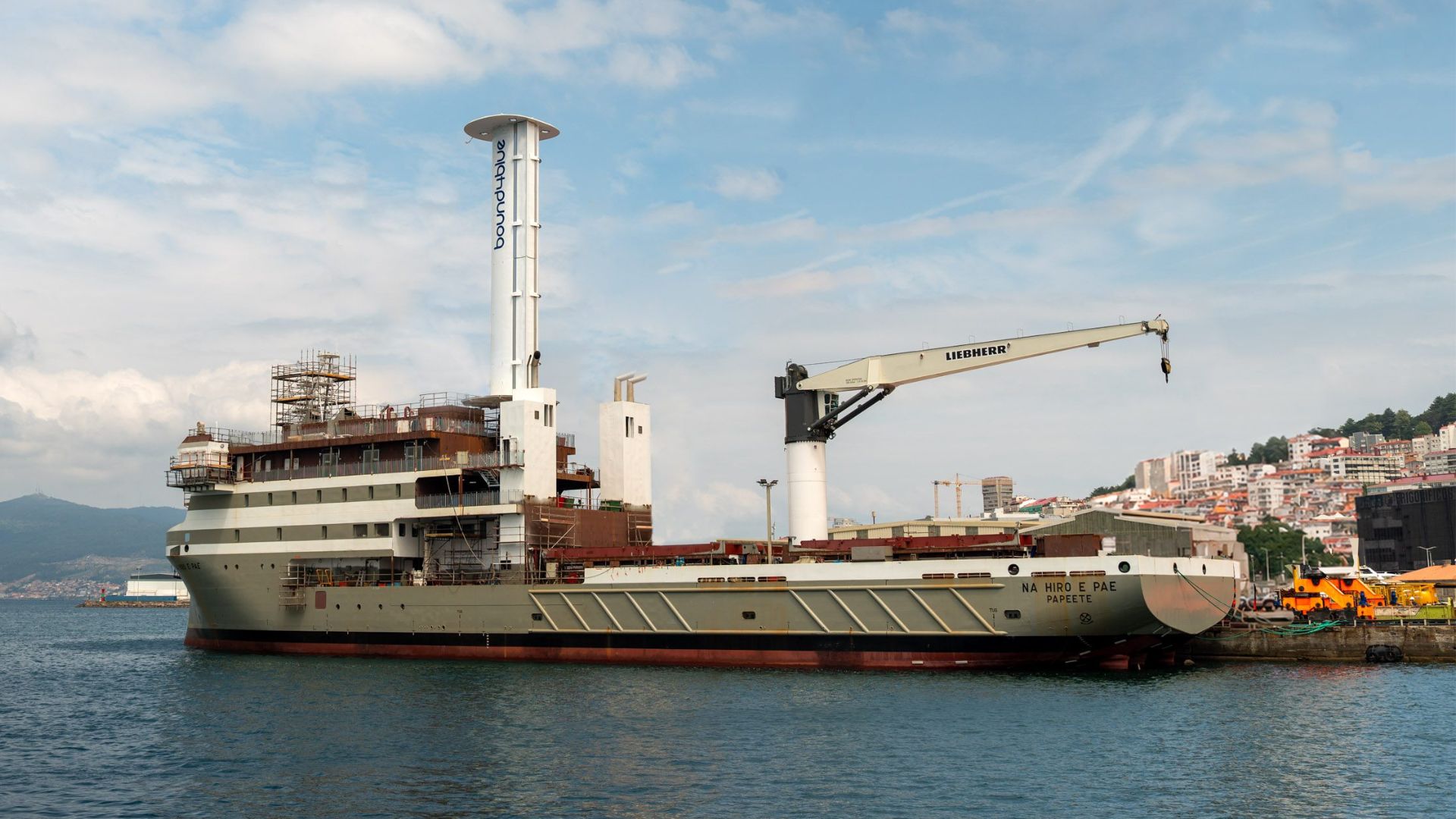
Wind propulsion company bound4blue has completed the installation of a 22-metre (72-foot) tall suction sail on the 292-foot (89-metre) cargo ship Na Hiro E Pae. This makes it the “first multipurpose vessel” worldwide to adopt a wind propulsion system. The unit was fitted at the Astilleros Armon Vigo yard in Spain for Greek shipping firm Société de Navigation des Australes SNA Tuha’a Pae. “We hope Na Hiro E Pae leads the way for other ambitious shipping companies keen to unlock sustainable advantages,” said José Miguel Bermúdez. Capable of carrying 200 passengers and 1,500 tonnes of supplies between Tahiti and the Austral Islands, the ship is expected to cut its energy consumption by 10 percent using the autonomous system alongside existing service from the Tuhaa Pae IV, which has operated on the route since 2012. Delivering significant fuel savings The installed technology, known as the eSail, yields sevenfold the thrust generated by an equally sized conventional rigid sail. This high efficiency allows a relatively small unit to deliver significant fuel savings without interfering with the fast loading and unloading operations required on multipurpose ships. “bound4blue’s mechanically simple suction sail, producing up to seven times the propulsive force of a standard rigid sail of the same size, slots into a ‘green technology mix’ that includes engines capable of running on biofuel or e-fuel, electric POD propulsion, efficient waste management, and autonomy in fresh water supply,” highlighted the company in a press release. The system functions by pulling airflow across a wide aerodynamic contour to assist the main engines. An autonomous vertical sail uses suction technology to draw air over this shape, creating propulsive thrust that decreases the mechanical burden on the vessel’s primary engines. By pulling the air over its surface, the system prevents airflow separation that normally limits conventional sails. This aerodynamic effect allows the unit to generate far higher propulsive force relative to its physical surface area, directly lowering fuel usage and engine emissions. “Multipurpose vessels have traditionally been seen as a challenging segment for wind power, due to the required flexibility of operations and related integration demands,” added Bermúdez. Utilizing other green technologies The compact nature of the eSail provides high force efficiency, allowing the vessel to maintain open deck space for cargo handling while utilizing wind energy. The Na Hiro E Pae combines the suction sail with several other onboard green technologies. The ship features engines configured to burn biofuel or e-fuel as soon as local regional markets can supply them. It also incorporates electric POD propulsion, efficient waste management systems, and autonomous fresh water supply capabilities to support its passenger and freight services. “Sustainability was a key objective throughout the design process, and the eSAIL forms an important part of a wider package of technologies that will help us reduce energy consumption and environmental impact, while maintaining the reliable transport services our communities depend upon,” concluded Boris PIEL technical Director, SNA Tuha’a Pae Shipping Company. Recommended ArticlesGet the latest in engineering, tech, space & science - delivered daily to your inbox.An active and versatile journalist and news editor. He has covered regular and breaking news for several leading publications and news media, including The Hindu, Economic Times, Tomorrow Makers, and many more. Aman holds expertise in politics, travel, and tech news, especially in AI, advanced algorithms, and blockchain, with a strong curiosity about all things that fall under science and tech.
‘7x more’ thrust: 72-foot sail powers world’s first wind-assisted multipurpose cargo ship
Full Article
Original Source
Read the full article at Interestingengineering →KhanList aggregates and links to publicly available news content. We do not host full articles from third-party sources. Always verify important information with original sources.