
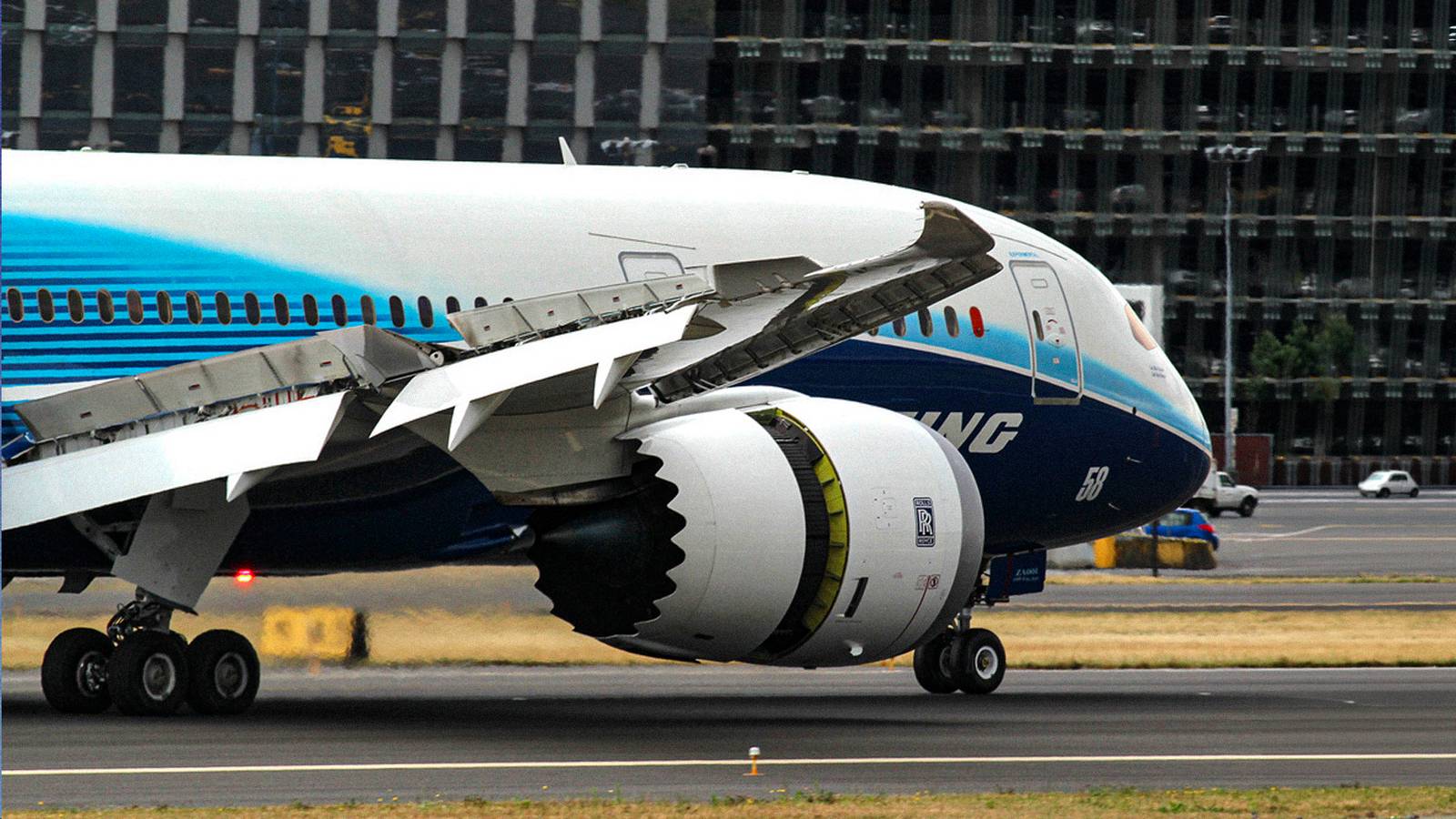
Published Aug 30, 2026, 7:00 AM EDT Based in the UK, Josh is a keen writer with a degree in Military History. Having worked previously as a financial journalist, he has covered the aviation industry extensively, reporting on airlines' results and monthly passenger statistics in the aftermath of the pandemic, alongside the likes of regulation around sustainable fuels, and the prospects for hydrogen-powered commercial flight. He joins Simple Flying with a lifelong love of all things aviation. Sign in to your Simple Flying account Rolls-Royce is in a far healthier state today than it was 10 years ago. In July, the aircraft engine manufacturer reported yet another surge in interim operating profit, said it expected to make more than originally anticipated over the full year, and claimed airline customers were no longer facing groundings to await new engines, replacement parts or maintenance. That last point was key. 10 years ago, issues in its Trent 1000 program were about to force widespread groundings among airlines in what would become a multi-year saga. Not only would this cost Rolls-Royce billions upon billions of dollars, but it would also cause reputational damage and erode investor trust. Such was the seriousness of what ensued that Boeing diverted none other than a vice president to the engine maker’s factories in an attempt to help steady the ship. Rolls-Royce Trent 1000 & The Boeing 787 Dreamliner Credit: Shutterstock To understand what happened, you have to go back to the early 2000s. To drastically improve efficiency and cut long-haul flight costs, Boeing set about designing a clean-slate, next-generation widebody. For this, engines were commissioned from both GE Aerospace and Rolls-Royce. Given the project's ambitious nature, each firm was tasked with meeting fuel-burn and weight targets, but Boeing also specifically told them not to “oversize” their power units. The final result was the 787, with which airlines could choose either Rolls-Royce’s Trent 1000 or GE’s GEnx-1B. Rolls-Royce ultimately prevailed when the first order came in from Japan’s All Nippon Airways (ANA) in 2004, at which point the 787 program officially launched. Certification didn't arrive until 2011, and the aircraft made its commercial debut with the Rolls-Royce option. GE-powered 787s then received approval the following year. 787-8 Dreamliner 787-9 Dreamliner 787-10 Dreamliner Seats (two-class) 200-275 250-325 300-375 MTOW 502,500 lbs (227,930 kg) 571,500 lbs (259,220 kg) 574,000 lbs (260,360 kg) Max range 8,000 nautical miles (14,820 km) 8,300 nautical miles (15,370 km) 7,500 nautical miles (13,890 km) Length 186 feet, 1 inch (56.7 meters) 206 feet, 1 inch (62.8 meters) 224 feet, 1 inch (68.3 meters) Wingspan 197 feet, 3 inches (60.1 meters) 197 feet, 3 inches (60.1 meters) 197 feet, 3 inches (60.1 meters) Height 55 feet, 6 inches (16.9 meters) 55 feet, 10 inches (17.0 meters) 55 feet, 10 inches (17.0 meters) Engine GEnx-1B by GE Aerospace Trent 1000 by Rolls-Royce GEnx-1B by GE Aerospace Trent 1000 by Rolls-Royce GEnx-1B by GE Aerospace Trent 1000 by Rolls-Royce Overarching issues had already been set in stone long before, though. Rolls-Royce and GE originally designed their technology on the premise that the first 787 variants, the -8 and -9, would weigh 452,000 lb (205,000 kg) and 485,000 lb (220,000 kg), respectively, and would require thrust accordingly. The lack of over-sizing usually employed by engine manufacturers to account for changes during airframe development meant that when the two variants came in closer to 503,000 lb (228,000 kg) and 558,000 lb (253,000 kg) apiece, they mismatched. The result was a considerably more demanding environment for the powerplants and, as it turned out, something the GEnx-1B weathered better than the Trent 1000. Trent 1000 Durability Issues & Subsequent 787 Groundings Credit: Shutterstock All told, the 787s first entered service with Trent 1000 engines that had little margin for error, as durability problems became increasingly apparent. All Nippon Airways, in 2016 and just five years after getting its hands on the first 787, found cracking on intermediate pressure turbine blades in the jets’ power units. Caused by corrosion-related fatigue, the discovery meant these had to be removed, and it marked the first of a host of forced 787 groundings over the coming years. The following year, Rolls-Royce flagged that durability issues may have affected up to 500 of its engines. Several upgrade packages were offered in the meantime to try to rectify problems, including a new Trent 1000 TEN that incorporated elements of its newer Trent XWB for the Airbus A350. Each fell short of ultimately addressing component weakness and premature wear, however, and come 2018 things went from bad to worse. In April that year, the Federal Aviation Administration (FAA) restricted extended Trent 1000 Package C-powered 787 operations through an airworthiness directive. In June, Rolls-Royce identified similar intermediate pressure compressor durability problems on a number of Package B powerplants. Around this point, Boeing deemed it necessary to take drastic action. Boeing Plants Executive In Rolls-Royce Factories Credit: Shutterstock Typically, a manufacturer deploying expertise to a struggling supplier isn't worth shouting about. As is well publicized, the aviation industry is built on a fragile — and nowadays strained — supply network, so partnership is often necessary. In the case of Boeing aiding Rolls-Royce with the Trent 1000, though, something was different. The big guns were brought out. Boeing’s propulsion systems vice president at the time, Keith Leverkuhn, was himself placed inside Rolls-Royce’s Trent 1000 facilities in Derby and Singapore. If that was not stark enough, his involvement meant he was diverted from a prominent role in the Boeing 737 MAX program. It was Leverkuhn who had steered the MAX through development ahead of schedule beforehand, and so his assignment away from what would become Boeing’s bestselling series clearly carried weight. But the situation appeared to justify a heavy-handed response from Boeing. While Leverkuhn was the most high-profile of a wider team deployed globally and tasked with mitigating disruption, dozens of 787s were already sat out of action awaiting fixes. As of February 2019, Rolls-Royce placed this number at 35. Fixing The Trent 1000 Credit: Shutterstock The challenge was essentially two-fold. First, those aircraft already affected had to be connected with spare parts and repaired so airlines could reactivate them. This itself had to be done against the backdrop of an already-stressed aftermarket, where Rolls-Royce favored handling maintenance in-house or via a limited number of partners far more than its peers. At the same time, they needed a solution to the underlying durability issues so jets wouldn't keep being grounded prematurely. Leverkuhn and Boeing primarily stepped in to tackle the immediate crisis by addressing the repair backlog of grounded aircraft. For this, Rolls-Royce upended its usual process, according to a 2019 update. Requiring airlines to “remove the engine, pack it up, fill out the paperwork, then ship it off to an available overhaul location, wait for it to be fixed, then have it shipped back to reattach the engine to the aircraft,” this was time-consuming at best. Instead, a “near-wing” technique was developed that let modules be removed and replaced horizontally rather than from above, without the need for specialist equipment in specialized facilities. Importantly, airlines could do it from their home bases, so the time engines had to spend off wings was slashed — albeit given appropriate parts were available. Longer term, and in no small part impacted by the pandemic, Rolls-Royce worked on an underlying fix. This eventually came in late 2025 in the form of the Trent 1000 XE. Key to this durability enhancement package, in the company’s own words, was a “re-engineered high-pressure turbine blade”. Alongside a reworked cooling system, this “enables the blade to survive significantly longer in the high-temperature environment within which it operates”. In practice, that meant a time on wing of up to three times that of its predecessor, the Trent 1000 TEN. With this now the standard on newly delivered Rolls-Royce-powered 787s, work has also been underway to upgrade older models. Half Of Trent 1000 TEN Fleet Now Upgraded Credit: Shutterstock Come July’s interim results, Rolls-Royce said almost half of the legacy Trent 1000 TEN fleet had been fitted with the fresh high-pressure turbine blades. This brought them up to standard with the latest Trent 1000 XE, it added. So, after grappling with durability problems for a decade, Rolls-Royce looked to be nearing a point where it could close the door on the whole saga. That said, only after billions in costs and market share losses. While the remaining £35 million ($48 million) provisioned for so-called “Trent 1000 wastage costs,” covering the likes of remediation for airlines, was spent in 2025, billions had gone towards the crisis prior. For instance, a £1.4 billion ($1.9 billion) exceptional charge was recognized in 2019, pushing operating losses for the year alone to £852 million ($1.2 billion). Longer-term, total costs in excess of £2 billion ($2.7 billion) were anticipated. All this was happening while GE’s alternative grew in popularity against the Trent 1000. Of the more than 1,000 787s in active service today, two-thirds are powered by GEnx-1B. Needless to say, Rolls-Royce’s own mishaps have played into GE’s hands over the years. But it is far from all doom and gloom for the former. Aircraft On Ground Now Effectively Eliminated — Rolls-Royce Credit: Shutterstock As chief executive Tufan Erginbilgic flagged in July, “we have [...] effectively eliminated aircraft on ground, providing a significant operational benefit to our customers”. In other words, airlines were no longer being kept from operating their planes due to waiting on Rolls-Royce. Behind the claim was news that maintenance output and refurbishments jumped during the first six months of the year, while underlying operating profit from its civil aerospace wing grew almost a third to £1.6 billion ($2.2 billion). There was also good news around the Trent 1000 XE. Orders had been placed for the engine to power eight 787s, including from LATAM Airlines, per the interim results. This meant three airlines in total had now opted for the Rolls-Royce option. Alongside this, “further active campaigns" were said to be underway in what realistically remains a ripe market. Indeed, as of June, around 100 of the 787s on Boeing's order book had yet to have their engines selected.
787 Problems: Why Boeing Sent A Senior Executive Inside A Rolls-Royce Factory
Full Article
Original Source
Read the full article at Simpleflying →KhanList aggregates and links to publicly available news content. We do not host full articles from third-party sources. Always verify important information with original sources.