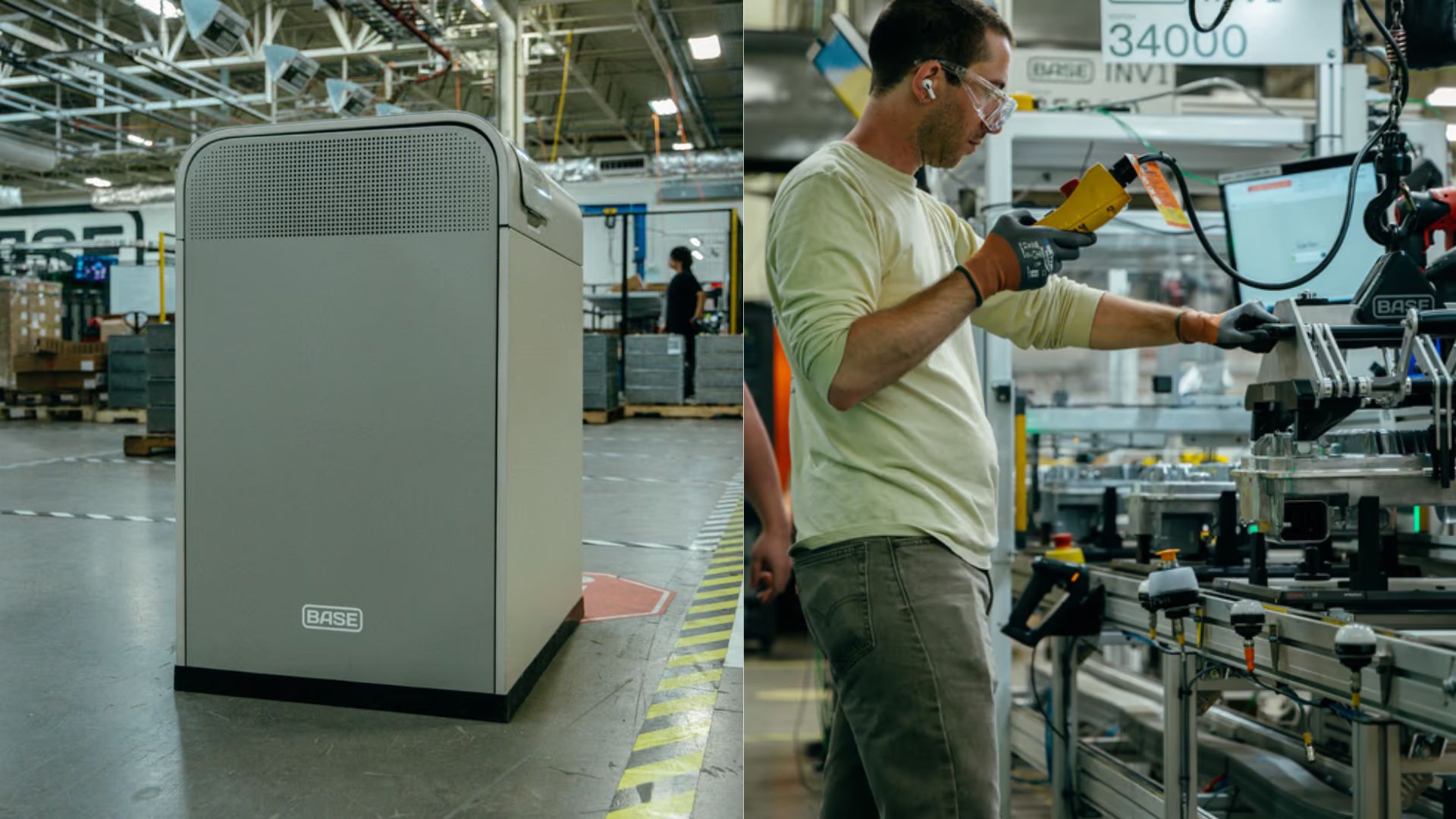
Base Power has raised $1 billion to scale a large home battery designed to do more than keep houses running during outages. Its new Base Core is built to store electricity at homes and feed power back to the grid when needed. The Austin-based energy company said the Series D financing values it at $13 billion after the investment. Alongside the funding, Base has started production of Core at its first factory in Austin, where the company says it is already making thousands of battery systems each month. Core comes in 39.2 kWh and 78.4 kWh versions, putting it among the larger home battery systems available. Base designed the system to be installed quickly, switch to backup power automatically, and operate through extreme weather. The bigger idea is to turn thousands of home batteries into a distributed power resource. Instead of relying only on large power plants to add generation, Base can place storage capacity close to where electricity is consumed and use it to support the grid. Home batteries become grid assets Core is designed to work as both household backup and grid infrastructure. When the grid needs additional capacity, connected batteries can provide stored electricity, while homeowners can use the same systems for backup during outages. “We brought together the best hardware and software engineers in the world to build Core – a battery designed to protect American homes while supporting the grid,” said Zach Dell, CEO and co-founder of Base Power. “It installs in under an hour, switches over seamlessly, is built to handle extreme weather, and delivers extended outage protection at a price Americans can afford.” Base says its battery fleet has grown to more than 500 MWh over the past year. The company has also expanded from Texas into Illinois and signed utility partnerships with El Paso Electric, Austin Energy and CoServ covering more than 200 MW of capacity. That gives the company a growing network of batteries that can potentially operate as a distributed energy resource rather than as isolated backup systems. The technology is aimed at a power system facing rapidly increasing electricity demand. Large generation projects can take years to build, while batteries can be deployed at individual homes and connected to the existing grid. Factory-scale battery deployment Base is manufacturing Core in the US at its Factory 1 in Austin. The company says the facility is producing thousands of systems a month, while its deployment teams install them at homes across Texas and other markets. “It is so important to bring manufacturing back to the US, especially for critical infrastructure,” said Justin Lopas, COO & Co-Founder. “Base’s Factory 1 is now producing thousands of systems a month, while our deployment team enables the safe, efficient installation of them on homes throughout Texas and beyond.” The $1 billion financing will help Base bring Core to more homes, expand nationally and hire additional employees. The company has raised more than $2.5 billion in capital to date. For the grid, the significance of Core is less about the size of a single household battery and more about what happens when thousands of them are connected. A large fleet of distributed batteries can provide backup power locally while adding flexible storage capacity to the wider electricity system. Recommended ArticlesGet the latest in engineering, tech, space & science - delivered daily to your inbox.With over a decade-long career in journalism, Neetika Walter has worked with The Economic Times, ANI, and Hindustan Times, covering politics, business, technology, and the clean energy sector. Passionate about contemporary culture, books, poetry, and storytelling, she brings depth and insight to her writing. When she isn’t chasing stories, she’s likely lost in a book or enjoying the company of her dogs.
78.4 kWh battery supports homes and wider power grid, installs in under an hour
Full Article
Original Source
Read the full article at Interestingengineering →KhanList aggregates and links to publicly available news content. We do not host full articles from third-party sources. Always verify important information with original sources.