
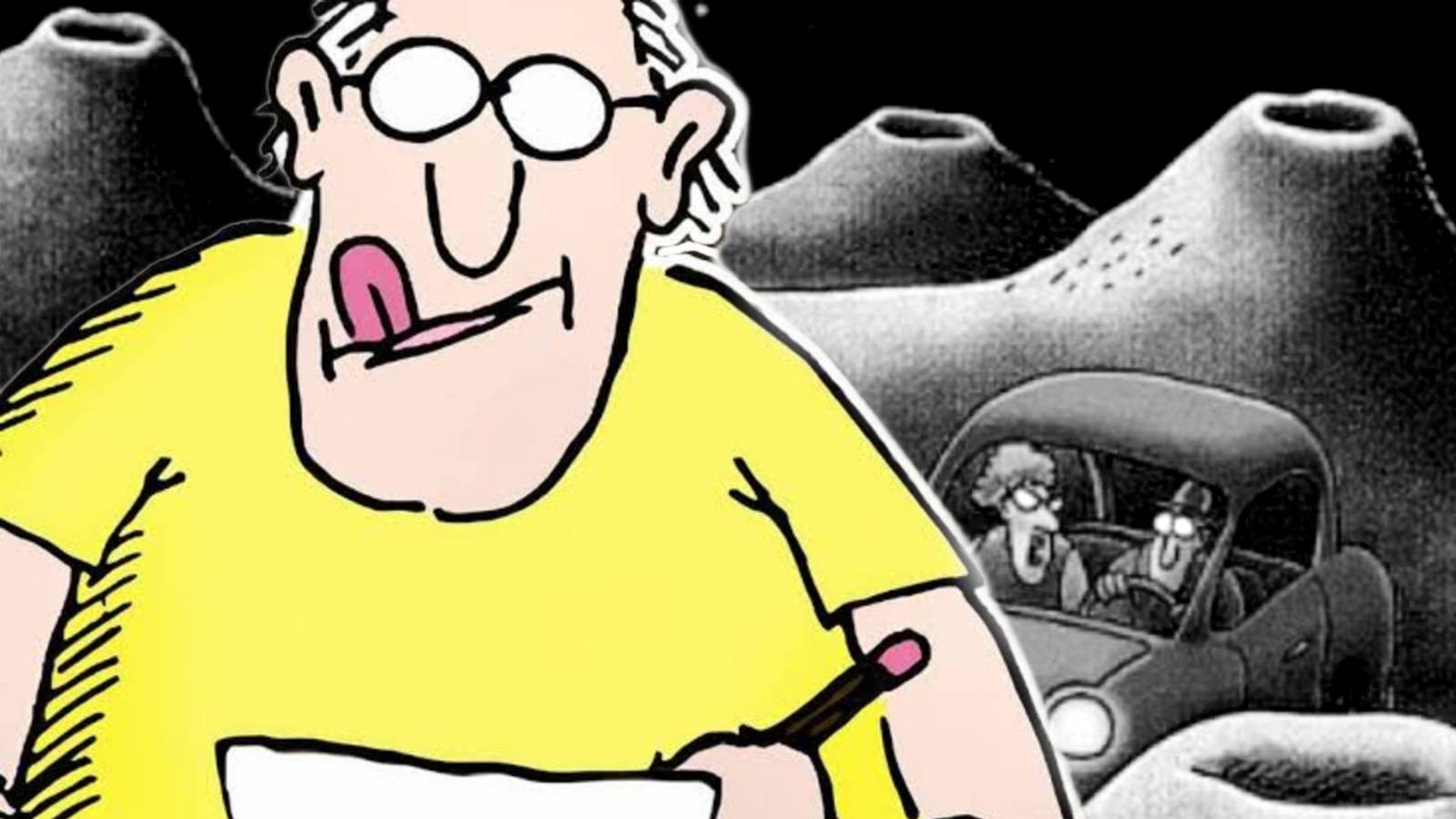
Published Sep 6, 2026, 8:30 PM EDT Emedo Ashibeze is a tenured journalist and critic specializing in the entertainment industry. Before joining ScreenRant in 2025. he wrote for several major publications, including GameRant. When The Far Side debuted in 1980, the newspaper comics section consisted only of predictable punchlines, safe jokes, and cute animal antics. Gary Larson, however, revolutionized comic strips by creating a surreal universe in which animals and humans serve as vehicles for laughter and thoughtful commentary. A bizarre world where cave dwellers philosophize, and animals try to overthrow humanity. Furthermore, by embracing absurdism and dark humor, Larson pushed the boundaries of what a single-panel comic could achieve. The strange, the scientific, and the taboo were tools Larson used to refine his style. He relied on dense visual detail, deadpan captions, and trust in the reader’s intelligence to create timeless comics and remain the height of hilarity. Though Larson retired the strip in 1995, his influence still reverberates across pop culture, inspiring contemporaries. By pushing the boundaries of comedy and censorship, The Far Side showed that mainstream audiences were ready for cerebral, subversive art tucked between the morning news and the crossword, breaking the mold and permanently altering sequential art. 7 Larson Told Complete Surrealist Stories In A Single Panel Gary Larson mastered single-panel storytelling, abandoning the multi-panel comic strips common at the time to tell complex, surreal narratives in one frame. A Far Side panel did more than deliver a quick joke; it dropped readers into the middle of an ongoing story, prompting them to imagine what led up to the moment and what might happen next. Moreover, Larson relied heavily on meticulous details, visual cues, and masterfully understated deadpan captions to ensure that a single panel could carry the weight of an entire narrative. The humor was derived from masterfully curated captions and artworks that provided all the narrative fuel required. He refused to spell everything out, trusting readers to piece together the surreal joke themselves. Consequently, by compressing the narratives of a complete, bizarre world into a single form, Gary Larson turned The Far Side into a masterclass in visual minimalism. With the philosophy of ‘doing more with less,’ Larson pushed the boundaries of what was thought to be feasible, proving that multiple scenes and excessive dialogue were not necessary to tell a compelling narrative. 6 The Animals Were The Stars of a Human World Before The Far Side, animals in comic strips were usually limited to secondary roles as sidekicks, mischievous pets, or cute mascots serving as accessories to their human owners. Gary Larson completely flipped the script by elevating animals from background props to the center of the narrative. They are the primary observers, critics, and victims of a distinctly human world. Larson turned dogs, bears, and, notably, cows into articulate beings who viewed human behavior with pity, confusion, and existential dread. His genius lay in his ability to blend biology with absurd anthropomorphism: the animals were not merely fluffy humans. Instead, he placed them in absurdly domestic or professional situations while preserving their animal instincts. By filtering human behaviors and habits through the lens of the animal kingdom, Larson forced readers to confront how bizarre those habits really were. Ultimately, by making animals the stars, The Far Side satirized human behavior and changed how animals were portrayed in comic strips. This radical shift in perspective turned the strip into a masterclass in irony. 5 Under Larson, Far Side Humor Was Never Too Strange During an era when newspaper syndicates prioritized broad, safe, universal appeal, Gary Larson was uncompromisingly fearless in making bizarre jokes. The philosophy of The Far Side is that humor doesn’t need to be accessible to everyone at first glance to be brilliant. The Far Side was littered with obscure references and avant-garde logic. Larson wasn’t afraid to get strange with The Far Side because of his unwavering trust in his readers. Larson refused to talk down to his audience. He left panels intentionally ambiguous, trusting readers to piece together the joke. Most notably, he published the “Cow tools” panel that left fans bewildered and in need of an explanation. Ultimately, nothing was “too strange” for The Far Side; every panel was an opportunity to push the boundary and give readers an active part in the joke. The success of The Far Side is definitive proof that audiences crave highbrow humor and absurdity and love being held in high regard. 4 Gary’s Dark Humor Trended Newspaper-Worthy Headlines In the 20th century, when comic strips were filled with safe, family-friendly jokes, Gary Larson went against the grain by perfecting the use of dark humor. Where traditional strips avoided morbid themes, The Far Side embraced them and used them to tell compelling social commentary. Moreover, by treating mortality and grim absurdity with deadpan lightness, he continually pushed the boundaries of what was acceptable in print media. This fearless approach sparked controversy and bewildered readers. When “Bobbing for Poodles” was published in 1986, it was met with widespread condemnation for depicting 5 alligators attempting to eat poodles out of a barrel, a very dark concept. Nonetheless, the controversy only strengthened The Far Side’s reputation as an indispensable, boundary-pushing work of modern art. It showed that pushing boundaries can cost universal appeal while also helping shape the subversiveness, anti-humor, and surrealist satire that define modern comedy today. 3 Gary Larson Thought Nothing of The Traditional Cast The recurring cast of characters in traditional newspaper comics is the lifeblood of the medium. Readers tune in to follow the stories of familiar faces like Garfield, who obsesses over lasagna, or Charlie Brown. These recurring character arcs build instant recognition and long-term brand loyalty; however, Gary Larson reinvented the wheel by building a universe with no permanent leads. Gary Larson abandoned the notion of a fixed set of characters, unlocking an unprecedented level of creative freedom that set The Far Side apart from its contemporaries. He didn’t maintain ongoing storylines; instead, he filled his single-panel frames with an endlessly rotating ensemble of characters, including nameless suburbanites, housewives, scientists, cows, aliens, and many more. Moreover, his human characters were intentionally generic, serving as perfect blank slates for the absurd scenarios he imagined. This total disregard for the traditional cast completely changed how comic strips created comedy and tension. Without having to worry about continuity, Larson could drop readers anywhere from a prehistoric cave to the depths of Hell with no setup. Consequently, the animals became fully realized characters driving the narrative, not just pets. With no fixed cast, no one was safe from death, raising the stakes as anyone could be eaten by a bear or crushed by a piano in a single frame. Ultimately, Larson showed that a comic strip did not need a recognizable mascot to thrive. 2 With The Far Side, The Fourth Wall Stayed Broken Gary Larson was no stranger to breaking the fourth wall; he frequently winked at the audience, reminding them that they were reading a comic strip. Larson’s characters often acknowledge the artist drawing them, responding in real time to the comic strip’s physical layout and constraints and commenting on their own cartoonish traits. This meta approach turned reading the comic into a two-way conversation. Taking full advantage of the nature of cartoons, Larson used the boundaries of the comic frame to satirize cartoonish behavior and tell hilarious jokes based on absurdity. Conclusively, by keeping the fourth wall broken, The Far Side popularized and perfected a style of meta-humor that redefined modern comedy. 1 The Far Side Sunday Page Broke the Standard Comic-Strip Format For a long time, Sunday comics followed a strict, inflexible grid system. Newspapers used multi-panel layouts with “throwaway panels” in the top row, allowing local editors to easily cut or resize the strip to fit different page layouts. Larson radically disrupted the layout rather than stretching his standard single-panel gag across a multi-frame sequence. Gary Larson pushed back against these rigid formatting constraints because The Far Side was never a multi-panel strip to begin with. Instead of stretching the single-panel format he did not need, he kept the single panel and used the extra space to go deeper into it. He took advantage of the Sunday page’s color, scale, and room. Naturally, He filled the canvas with detailed environmental gags, complex background art, and surreal visual motifs that standard weekday black-and-white strips simply couldn’t support. The Far Side turned its Sunday space into the pinnacle of artistic expression, moving away from the norm to deliver genuinely inventive visual art. Writer Gary Larson Colorist Gary Larson
7 Ways Gary Larson’s The Far Side Pushed Boundaries
Full Article
Original Source
Read the full article at Screenrant →KhanList aggregates and links to publicly available news content. We do not host full articles from third-party sources. Always verify important information with original sources.