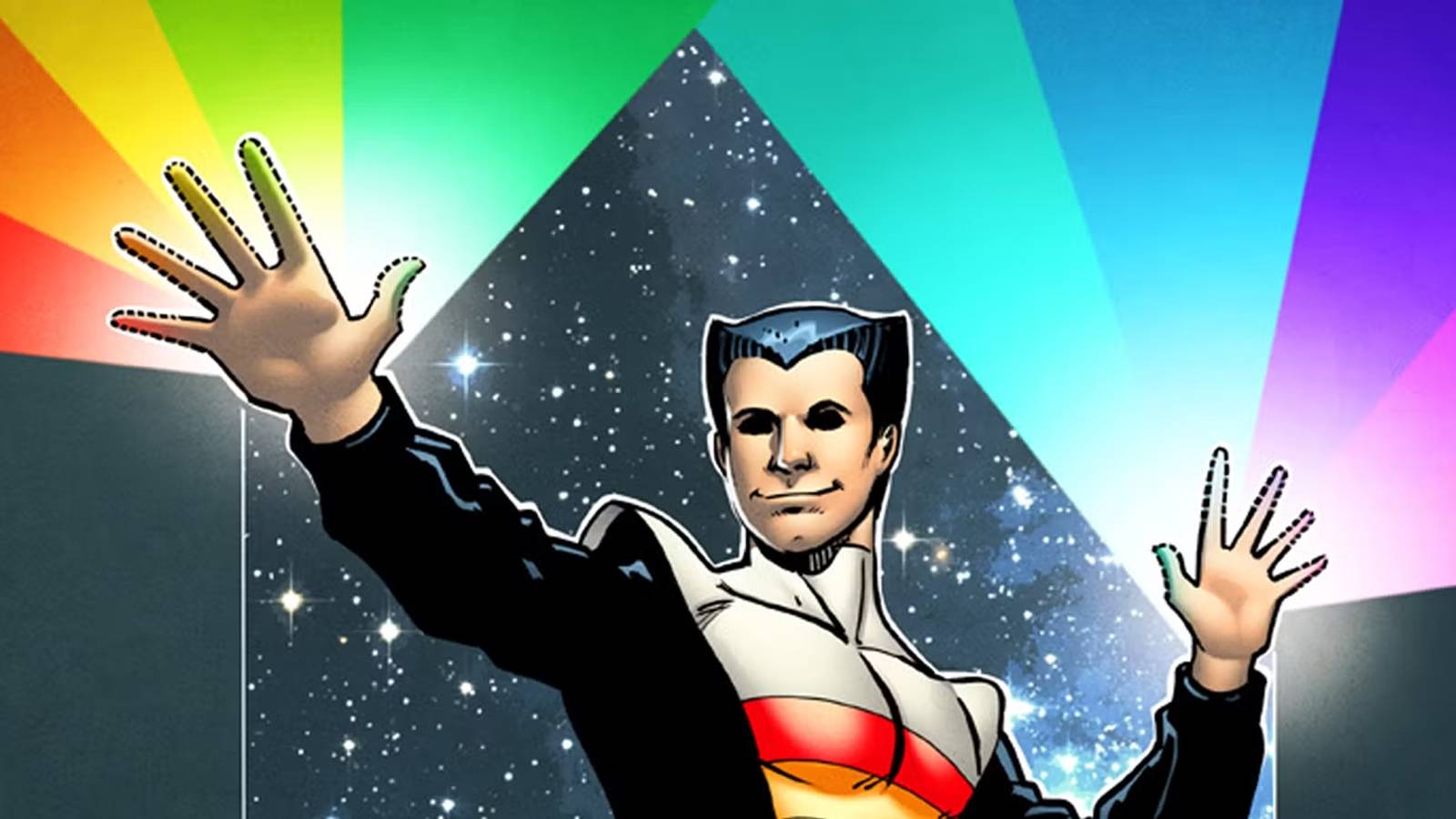
Published Jul 24, 2026, 10:00 PM EDT Emedo Ashibeze is a tenured journalist and critic specializing in the entertainment industry. Before joining ScreenRant in 2025. he wrote for several major publications, including GameRant. DC heroes and villains are sometimes referred to as “gods amongst men” because some tend to be overpowered. For every Superman, however, there is a Color Kid; in other words, for every overpowered superhero, there is an overlooked one, or a powered superhero with an underappreciated ability that helps balance things out. Underrated doesn't mean useless. As has been shown in various instances in the comics, the most unassuming superpower can turn out to be a diamond in the rough. Some of the most underrated powers have proven themselves. Others are yet to be vindicated in the comics or live-action, and are still — sadly — the subject of ridicule. 7 Aquaman's Marine Telepathy The King of Atlantis is often treated as a character whose impressive suite of powers includes one ability that is seen as insignificant. This, of course, refers to his marine telepathy: the ability to command and communicate with virtually every aquatic creature. Discounting this ability does it no justice. About 70 percent of the Earth is water, so Aquaman’s surveillance and combat system is as large as any human or Atlantean engineer could ever build. It's one of the most awesome superpowers if it could play out in real life. Aquaman's telepathic powers have been reinforced in the animated series such as Justice League: Unlimited, which shows Aquaman summoning sea creatures to disable an invading fleet in a single command. Thankfully, Geoff Johns’ New 52 Aquaman run treats this ability as key to Atlantean warfare. Perhaps the most popular display of this power was on the silver screen, in Jason Momoa's 2018 film, Aquaman. There, he uses low, resonant whale calls and coordinated sea-life assaults to crush enemy submarines. Thanks to director James Wan, this once-mocked ability became one of the film's most memorable and visually striking sequences. 6 Ratcatcher’s Rat Control Originally Otis Flannegan in the comics, Ratcatcher is a former Gotham sanitation worker who trained rats to kidnap and torture officials after his imprisonment. Using cyanide gas and his rodent army, he battled Batman from the sewers. In 2021, James Gunn’s The Suicide Squad introduced Ratcatcher to mainstream audiences, but this time as Ratcatcher II (played by Daniel Melchoir). Many viewers found the power implausible in a story already populated by sharks and living weapons of mass destruction. At first glance, controlling rats in a fight to save an entire island seems questionable. On second thought, however, a swarm of rodents can infiltrate spaces no human or large creature could reach, gather intelligence, disable electronics, or overwhelm opponents through sheer numbers. That is exactly how it plays out in The Suicide Squad. Gunn leans fully into the concept, showing the loyal critters used in clever ways: most famously to swarm and overwhelm the giant starfish Starro. Depending on the opponent, she may even employ her rats in scare tactics. Even a single rat is the last thing a foe with rat phobia wants to see. Metamorpho's power lets him transform his body into any element or chemical compound, yet it is often sidelined in favor of flashier shapeshifters. This is in spite of his feats in the comics that should ordinarily rank high in combat power rankings. This more-than-unique body composition means it’s virtually impossible for the environment to negatively affect the character. In other words, things like poison, drowning, suffocation, or extreme temperatures are off the table on the list of things that can kill Metamorpho. It doubles as an offensive weapon too, capable of producing acid, ammonia, or diamond-hard limbs, as needed. In Justice League: The New Frontier and subsequent animated appearances like Batman: The Brave and the Bold, Metamorpho neutralizes toxic gas attacks and creates diamond restraints mid-battle, where power or speed would provide no equivalent solution at all. Most famously, in James Gunn’s Superman (2025), he creates kryptonite from his hand to subdue Superman and forms a mini-sun to revive him. Lex Luthor’s goons also discovered the hard way why vexing a man who can spill acid from his body isn’t a good idea. 4 Mister Bloom’s Bio-Morphing Mr. Bloom's seed-based bio-technology can seem like a gimmick rather than a strategic threat to Gotham's crowded rogues gallery. But it can effectively convert an entire population into a deployable army, with sleeper agents dotted throughout a city who can be activated remotely. In Scott Snyder and Greg Capullo's Batman (Vol. 2), Mr. Bloom infects Gotham's youth through drug-laced seed pods, then blows them up into monstrous soldiers, turning an entire city into an arsenal and a minefield for Batman. Similarly, in the Gotham (2014) television series, the character's floral toxins were potent enough to turn ordinary citizens into unwitting combatants. 3 Calendar Man's Seasonal Powers Calendar Man's power ties his physical and mental state to the calendar itself. Thanks to Scott Snyder and Tom King's recent Batman Rebirth Special, this grants him shifting strength, endurance, or cunning, since he now ages with the seasonal weather of Gotham City. A power that cycles with a predictable calendar offers something few abilities can: complete knowledge of one's own peak-performance windows. Any antagonist or protagonist who can schedule confrontations around guaranteed strength gains has a planning advantage that most metahumans never consider. Psychology is an area where Calendar man proves his deadly worth. In comic runs such as Batman: Dark Victory, Calendar Man uses his knowledge of significant dates to manipulate Gotham’s criminals and torment his enemies psychologically — so much so that it nearly drives Alberto Falcone to suicide. 2 Ragman’s Ragsuit Ragman's suit is a patchwork of cloth with the trapped souls of sinners woven into it. From there, he draws his victims abilities and knowledge at will. Dubbed the "Suit of Souls," the aesthetic alone works against the character. Next to Gotham's more polished vigilantes, Ragman’s scarecrow-like appearance seems to be a disturbing joke. But a suit that can capture souls is genuinely to be feared. It can destroy dangerous supernatural threats. Plus, more use equals added experiences in the wearer’s favor. The animated series Justice League Action and Young Justice used this function directly, where Ragman absorbs demonic entities into his suit to remove them from play entirely. 1 Color Kid’s Chromatic Manipulation Color Kid, a Legion of Substitute Heroes member, can alter the color of any object or person at will. This ability was so ridiculed that fans frequently cited the character as one of the team’s most disposable additions. Even his own team failed to take the ability seriously. In the Adventure Comics #342, the Legion of Superheroes treat the power as a punchline and openly question his place on a roster filled with combat specialists. In practice, however, the ability proved far more useful than it sounded. Changing color functions as camouflage and communication. It also finds use in sabotage, blending teammates into surroundings to slip past enemies, marking targets invisibly, or overwhelming a villain's vision with a single indistinguishable shade. The comic eventually caught up to the idea. During Legion infiltration missions, Color Kid's powers became a quiet advantage, helping the team move unseen or disorienting opponents through sudden color shifts and revealing a joke power to be considerably more tactical than expected.
7 Underrated Superhero Powers in DC Lore
Full Article
Original Source
Read the full article at Screenrant →KhanList aggregates and links to publicly available news content. We do not host full articles from third-party sources. Always verify important information with original sources.