
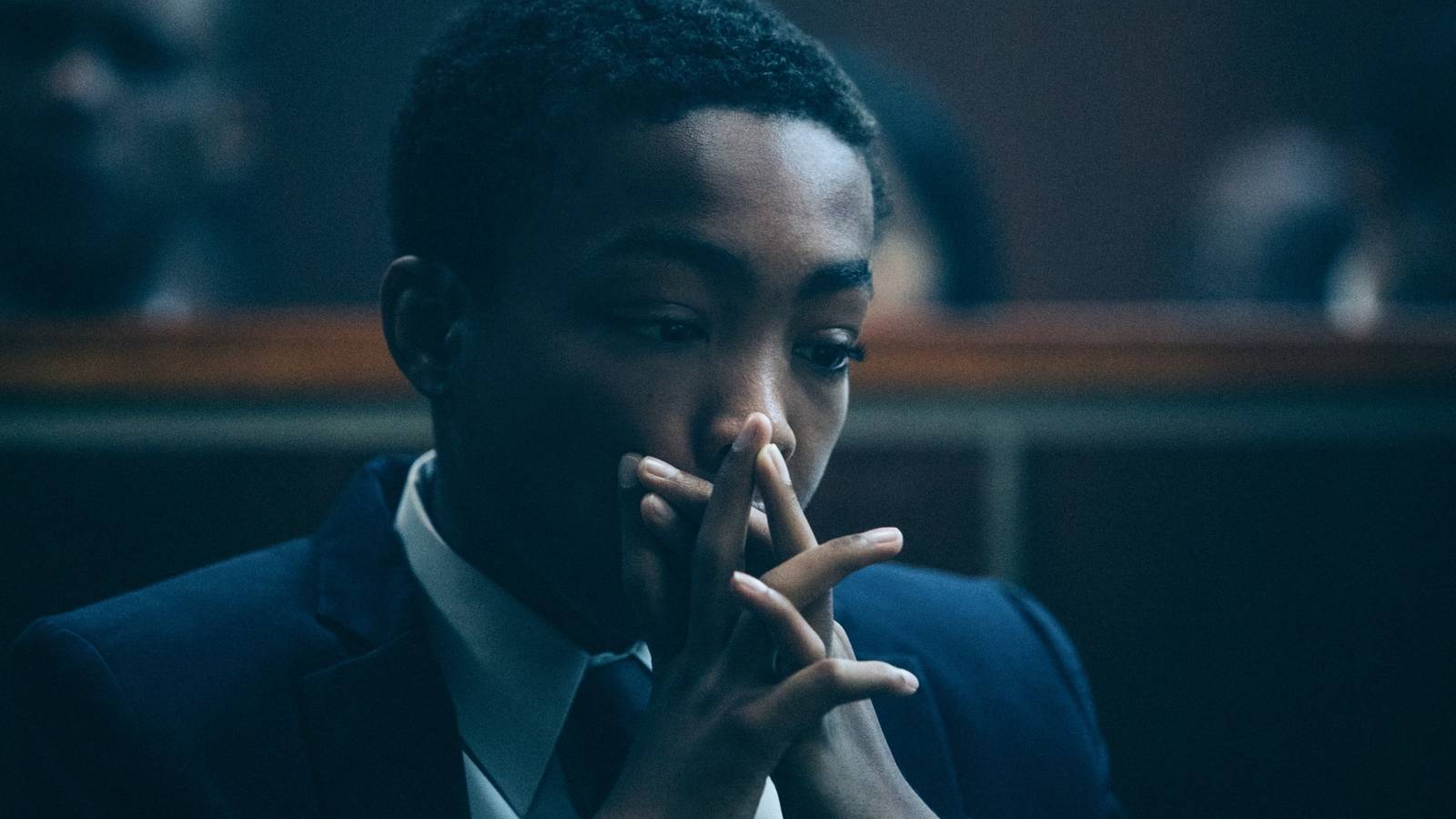
Published Sep 20, 2026, 3:10 PM EDT Mads Misasi is a part-time entertainment journalist and full-time marketing content creator. Before joining the ScreenRant team they wrote for TellTaleTV for 9 years working their way up from contributor to Associate Editor. TV has been a passion of theirs since a very young age. Mads typically watches all of the things, especially dramas and sitcoms. This article contains mentions of death, kidnapping, and sexual assault. True crime is now one of the busiest genres on TV, with almost every well-known case turning into a documentary, a scripted show, or both. But a shocking story isn’t enough to make great television. The best true crime miniseries know that the way a story is told is just as important as the events themselves. That can mean refusing to sensationalize a notorious killer, putting the victims and their families back at the center of the narrative, or examining the institutional failures that allowed a crime to happen in the first place. Other series succeed by transforming familiar cases into tense character studies without losing sight of the real people behind them. The limited series format works well for true crime because it gives these stories enough space without dragging them out. When done right, every episode feels important, and the ending feels deserved rather than expected. These true-crime miniseries manage exactly that. From their opening moments through their final episodes, each tells a complete, carefully constructed story that never loses sight of why the real events behind it mattered. Black Bird (2022) At first glance, Apple TV's Black Bird appears to be a typical tale about a serial killer. Jimmy Keene is given the chance to reduce his prison sentence by befriending the suspected killer, Larry Hall, and discovering information about his victims. The six-episode miniseries is so compelling because the situation quickly becomes a dangerous psychological game. Taron Egerton gives Jimmy enough confidence to make his mission believable, but Paul Walter Hauser completely transforms the series as Hall. His performance is unsettling without becoming theatrical, which makes every conversation between the two men increasingly difficult to watch. The tension comes from never knowing whether Jimmy is getting closer to the truth or simply giving Hall another audience. Black Bird also understands that six episodes are more than enough. It never involves unnecessary detours or late-season slowdowns, and every conversation pushes Jimmy closer to a breaking point. By the finale, the series has turned what could have been a straightforward prison drama into something far more intimate and unnerving. Unbelievable (2019) Netflix's Unbelievable begins with Marie Adler reporting that she was raped, only for investigators and people she trusts to question her account until she retracts it. That alone makes the opening episode difficult to watch. However, the series becomes even more effective once it introduces detectives Karen Duvall and Grace Rasmussen, who begin investigating similar attacks in a neighboring state. The resulting eight episodes are both an absorbing investigation and an indictment of how easily the system fails the people it's meant to protect. Kaitlyn Dever, Toni Collette, and Merritt Wever are excellent throughout, but Unbelievable never lets its performances overshadow the real pain behind the story. What makes the miniseries work so well is the contrast between Marie's treatment and the care Duvall and Rasmussen bring to their investigation. Every breakthrough matters because the series spends just as much time showing what happens when someone isn't believed. Its eventual sense of resolution feels earned without undoing the damage already done. A Friend Of The Family (2022) MovieStillsDB The true story behind A Friend of the Family is so bizarre that a dramatization could have easily tipped into sensationalism. Jan Broberg was kidnapped twice by family friend Robert Berchtold, whose manipulation extended far beyond Jan herself. The nine-episode Peacock miniseries succeeds because it takes the time to show how thoroughly Berchtold inserted himself into the Broberg family's lives. What is so frightening about Jake Lacy's performance is that his portrayal of Berchtold doesn't have to be openly threatening. The series illustrates how charm, trust, shame, and manipulation can lead to control, making it terribly believable that he'd have such influence over Jan and her parents rather than unbelievable. A Friend of the Family also refuses to reduce Jan's parents to easy punchlines for their decisions. Their mistakes are impossible to ignore, but the series is more interested in examining how Berchtold exploited them rather than judging them from a distance. That empathy gives the story far more depth and keeps all nine episodes compelling. FX and Hulu's Under the Banner of Heaven takes the 1984 murders of Brenda Lafferty and her infant daughter and builds a much larger story around faith, extremism, and the history surrounding the Lafferty family. Andrew Garfield stars as the fictional Detective Jeb Pyre, whose investigation forces him to confront uncomfortable questions about the religion that has shaped his entire life. The seven-episode miniseries is deliberately slower than many true crime dramas, but that pacing works in its favor. Rather than treating Brenda's murder as a puzzle that simply needs to be solved, the series examines the beliefs, resentments, and family dynamics that eventually led to violence. The investigation evolves, becoming more disturbing as the pieces begin to fit together. Garfield gives the story an emotional center, particularly as Pyre's certainty starts to unravel. Just as importantly, Daisy Edgar-Jones gives Brenda enough warmth and personality that she never feels like a victim created only to launch someone else's story. That balance keeps the series thoughtful even at its darkest. Des (2020) David Tennant has portrayed many complex characters, but his performance as Dennis Nilsen in Des is among his most disturbing. ITV's three-part British miniseries starts after Nilsen has been arrested and made his confession, so the normal question of who committed the crimes is eliminated. The focus then shifts to establishing what actually happened and understanding a man who appears strangely at ease when talking about it. This structure ensures the story doesn't become another typical serial killer mystery. Tennant portrays Nilsen in a most unsettlingly ordinary way, never presenting him as a monster on a grand scale. Both Daniel Mays and Jason Watkins give equally significant viewpoints as Detective Peter Jay and biographer Brian Masters, as both characters attempt to come to terms with what Nilsen has done for very different reasons. With only three episodes (available to watch via Prime Video), Des never has room to lose momentum. More importantly, it understands that Nilsen's willingness to talk does not make him worthy of admiration. The series gets in, tells a deeply disturbing story with remarkable restraint, and ends before fascination with its killer can overwhelm the people he harmed. When They See Us (2019) Image via MovieStillsDB Netflix's When They See Us is easily one of the most difficult miniseries on this list to watch, but that discomfort is exactly what makes it so effective. Ava DuVernay's four-part series follows Antron McCray, Kevin Richardson, Yusef Salaam, Raymond Santana, and Korey Wise after they are falsely accused and convicted in the 1989 Central Park jogger case. Each episode advances to a new stage, moving from interrogations to trials, to incarceration, release, and finally, exoneration. This structure keeps the miniseries focused while showing how one injustice can alter someone's life over decades. The narrative never feels artificially inflated, stretched just because an additional episode is required. The performances are uniformly powerful, with Jharrel Jerome's portrayal of Korey becoming especially devastating in the final episode. However, the real strength of When They See Us is its refusal to treat the case as an abstract miscarriage of justice. It remains centered on the five people forced to live with its consequences, making every episode feel necessary. Devil In Disguise: John Wayne Gacy (2025) Image via MovieStillDB John Wayne Gacy has been the subject of so many documentaries, films, and television specials that another dramatization could easily feel unnecessary. Devil in Disguise: John Wayne Gacy avoids that problem by refusing to make Gacy the most important person in the story. The Peacock series repeatedly shifts its attention toward his victims, survivors, and the people left behind. Michael Chernus is appropriately disturbing as Gacy, but the series is strongest when he isn't dominating the screen. Entire stretches are devoted to giving young men, so often reduced to names or numbers, a sense of personality, relationships, and futures that were stolen from them. That choice changes how familiar parts of the case land. The true crime series also spends meaningful time examining the systemic failures, missed opportunities, and prejudices that allowed Gacy to remain undetected. As a result, Devil in Disguise: John Wayne Gacy finds something worthwhile to say about an infamous case television has revisited countless times. Its greatest achievement is making the victims feel more important than the man responsible for killing them.
7 True Crime Miniseries That Are Perfect From Start To Finish
Full Article
Original Source
Read the full article at Screenrant →KhanList aggregates and links to publicly available news content. We do not host full articles from third-party sources. Always verify important information with original sources.