
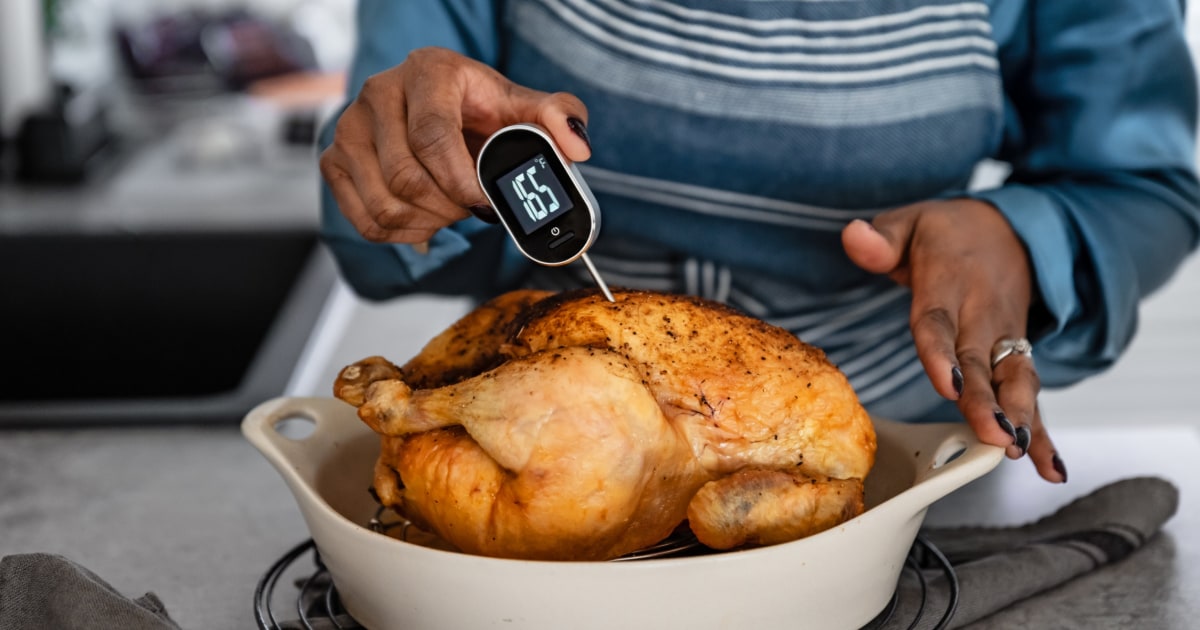
This scenario might sound familiar. You’ve spent time in the kitchen cooking a wonderful meal. You plate everything up, but when you sit down and cut into your piece of meat, it’s totally overcooked — or, worse, raw. A meat thermometer may just be the answer to this culinary conundrum. “[Meat thermometers] let you know the internal temperature without cutting your protein open, which can dry your food out,” says Lauren Allen, chef and owner of Lauren Allen Dinners, which offers private chef experiences, virtual cooking classes and more. “That means your meat will be juicier and cooked to exactly your liking.”Adding this kitchen gadget to your repertoire doesn’t even have to cost you much — a good one can be found for under $20, says Allen. To help you shop for one of these handy tools, I spoke with two chefs to get their advice on what to look for when choosing a meat thermometer, and then I sourced top-rated options from popular retailers like Amazon, Walmart and Target. Selected.Our top picksWant more from NBC Selected? Sign up for our newsletter, The Selection, and shop smarterTop-rated meat thermometersUsing expert advice, I selected digital meat thermometers from top retailers that have at least a 4-star average from at least 1,000 ratings.This thermometer has a two to three second read, according to the brand. This means it registers the internal temperature of meat that quickly. The LCD screen is backlit, which Alpha Grillers says makes it easy to read even in dim lighting. When not in use, the probe can be folded in to keep it clean and protected. Features of this thermometer include a three-to-five-second read time and the ability to read temperatures in Celsius or Fahrenheit. The rotating probe can be tucked in when not in use, and the back of the thermometer has a magnet on it so it can be hung on the side of your fridge. You can read temperatures in either Celsius or Fahrenheit with this digital thermometer, and the LCD screen displays the temperature in large numbers making it easier to read, according to the brand. The storage sleeve for the thermometer includes recommended internal temperatures for various proteins printed on it for reference. BETAWhen folded, this thermometer fits in the palm of your hand. It comes in multiple colors, and only reads temperatures in Fahrenheit. The battery (LR44) is included, and it also has a carrying hole so you can hang it from a hook in your kitchen. This thermometer has a three to four second response, according to the brand, and you can switch between Celsius and Fahrenheit. Not only can you use it on meat, but you can also use it on liquids (for example, if you want to check the temperature of oil for frying). The back of the thermometer is magnetic so you can hang it on your fridge, and it comes in a variety of colors. This instant read thermometer has a three-second response and an LCD screen that lights up so you can read it even if the lighting is dim, according to the brand. This may be particularly helpful if you are grilling outdoors at dusk or sticking it in a dark oven. A reference guide of recommended internal temps for beef, poultry, pork and fish is printed right on the thermometer, and you can alternate between Celsius and Fareneheit. This thermometer has a read time of two to four seconds, according to the brand. The sides are textured to provide an anti-slip grip, and it has a magnetic back as well as a hanging loop. The backlit display allows you to read the temperature in the dark, and you can see the temperature in both Celsius and Farenheit. How to shop for a meat thermometerThere are two common types of meat thermometers intended for in-home use. Probe thermometers stay in the meat the entire time it cooks. With instant read thermometers, you stick it into the meat to take the temperature and then remove it. Experts I spoke to prefer the instant read thermometers because they are easier to use and give fast, accurate temperatures. Here are some other features they suggest you consider: Digital read: There are both analog or digital meat thermometers on the market. “Digital is absolutely the way to go. They are faultless, assuming you don’t forget the batteries, and extremely quick to read,” says Kevin Gillespie, a chef with multiple James Beard nominations and culinary contributor at MeatEater, a site dedicated to cooking meat. Probe size: Allen and Gillespie both recommend paying close attention to the size of the probe (aka the prong you stick into the meat). “The larger the probe the more juices will flow out after you [test the temp],” says Allen. “You want the smallest hole possible, so look for a skinny probe.” Heat: You know what they say, if you can’t take the heat, get out of the kitchen — and that holds true for meat thermometers. Your oven, stovetop and grill can get hot, so you want to pick a thermometer that can handle high heat. “It should be able to withstand up to 250 degrees Fahrenheit,” says Allen.How to use a meat thermometer To get the right reading, follow these tips from Allen and Gillespie: Place your thermometer in the middle and thickest part of the protein and be sure to avoid hitting bone, says Allen. If you go to the thinnest area, it may tell you if that part is cooked but not the whole piece. Going for the center of the thickest part will ensure every part of whatever protein you are making is safe to eat. Take the thermometer out once you get your reading. Unlike probe thermometers, instant read thermometers are not intended to be left in a piece of meat. If you leave it in, you may melt the plastic it is encased in. Wash your thermometer after each use. To do this, just wipe down the probe with a little soap and water. Just take care not to immerse the entire thermometer in water. Though many thermometer’s claim to be waterproof, the digital display may not hold up to being submerged. What temperature should your meat be? Before you start cooking, it’s helpful to know the ideal temperature for whatever you are making. To help you out, the experts I spoke to recommend the following: Chicken: Poultry needs to be cooked to at least 165 degrees Fahrenheit, both Allen and Gillepsie say. Anything lower and you risk ingesting bacteria that can make you sick.Pork: “This is a bit of a hot topic. Some say it should be cooked to 165 degrees Fahrenheit. But if you buy good organic pork, 140 should be fine,” says Allen. Gillespie suggests 150 degrees Fahrenheit.Beef: If you’re cooking steak, it comes down to preference. For medium rare, cook your steak to 125 degrees Fahrenheit, says Allen. Prefer well done? You’ll want to bring it to 165 degrees Fahrenheit. Fish: The kind of fish will determine the right internal temperature. The general guideline for salmon is 145 degrees Fahrenheit, while snapper is done around 130 degrees Fahrenheit. Do your research on the type of fish you are cooking in advance, says Gillepsie.Meet our cooking expertsAt NBC Selected, we work with experts who have specialized knowledge and authority based on relevant training and/or experience. We also take steps to ensure all expert advice and recommendations are made independently and without undisclosed financial conflicts of interest.Lauren Allen is a chef and owner of Lauren Allen Dinners, which offers private chef experiences, virtual cooking classes and moreKevin Gillespie is a chef with multiple James Beard nominations and a culinary contributor at MeatEater, a site dedicated to cooking meat. Why trust NBC Selected?I am a commerce editor at NBC Selected and a journalist who regularly covers topics like beauty, home and lifestyle. For this story, I interviewed chefs to gather their guidance on what to look for when shopping for meat thermometers.Catch up on NBC Selected’s in-depth coverage of tech and tools, wellness and more, and follow us on Facebook, Instagram, X and TikTok to stay up to date.
7 top-rated meat thermometers to end overcooked dinners
Full Article
Original Source
Read the full article at Nbcnews →KhanList aggregates and links to publicly available news content. We do not host full articles from third-party sources. Always verify important information with original sources.