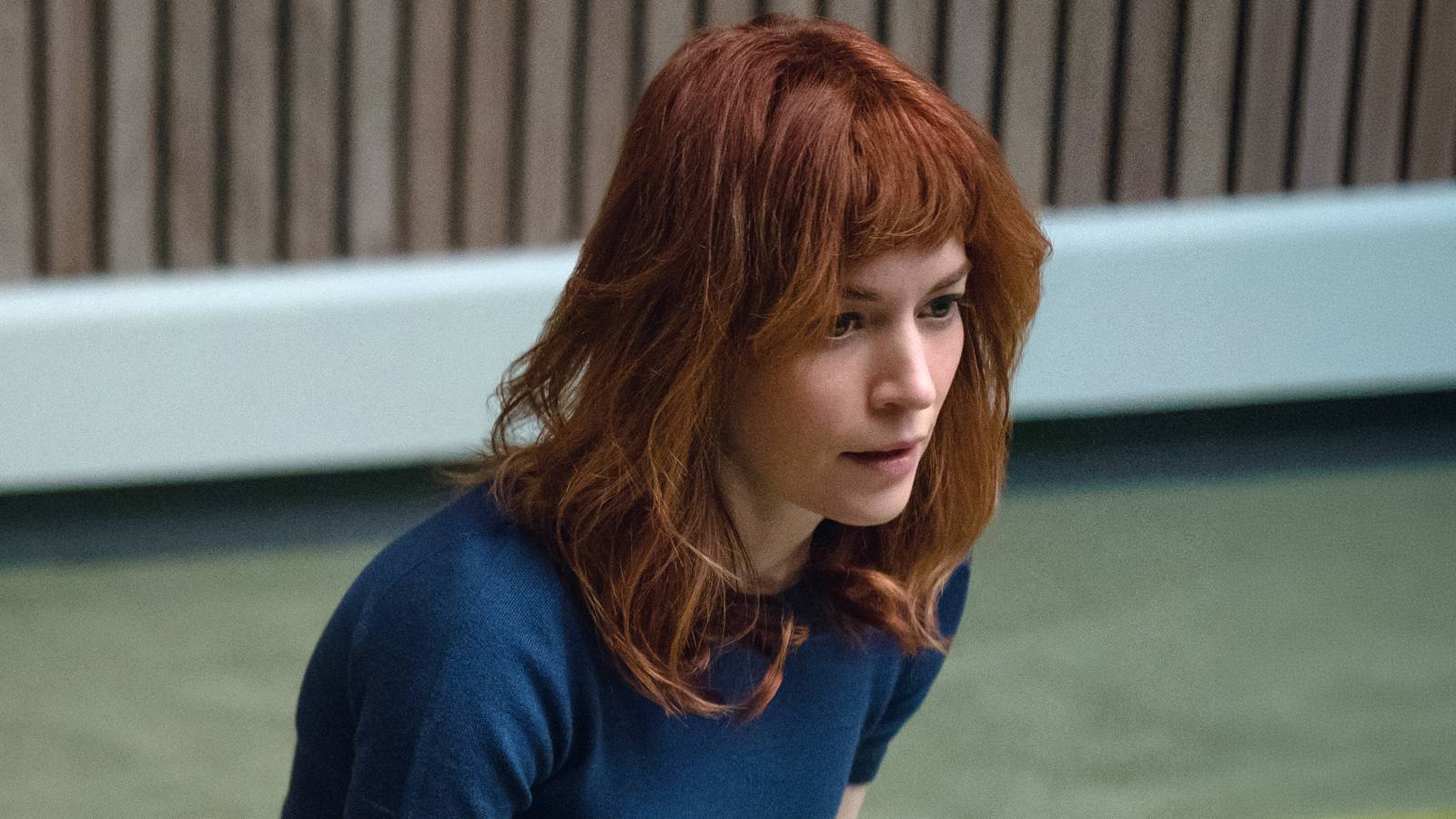
Image via Apple TV Published Jul 23, 2026, 5:52 PM EDT Dyah (pronounced Dee-yah) is a Senior Author at Collider, responsible for both writing and transcription duties. She joined the website in 2022 as a Resource Writer before stepping into her current role in April 2023. As a Senior Author, she writes Features and Lists covering TV, music, and movies, making her a true Jill of all trades. In addition to her writing, Dyah also serves as an interview transcriber, primarily for events such as San Diego Comic-Con, the Toronto International Film Festival, and the Sundance Film Festival. Dyah graduated from Satya Wacana Christian University in October 2019 with a Bachelor's degree in English Literature, concentrating on Creative Writing. She is currently completing her Master's degree in English Literature Studies, with a thesis on intersectionality in postcolonial-feminist studies in Asian literary works, and is expected to graduate in 2026. Born and raised between Indonesia and Singapore, Dyah is no stranger to different cultures. She now resides in the small town of Kendal with her husband and four cats, where she spends her free time cooking or cycling. Sign in to your Collider account First impressions matter, especially when a show is competing with hundreds of others for your attention. In the age of streaming, audiences are spoiled for choice, with an endless list of shows to watch. That's why the first 10 minutes can make or break a series. If it doesn't give viewers a reason to stick around, there's always something else to click on. Thrillers have a bit of an advantage. Murder, violence, and mystery are already built into the genre, so hooking viewers isn't usually the hard part. The real challenge is making that adrenaline rush feel different from everything else out there. Whether it's the stylish yet deeply unsettling world of a cult-like corporation or the eerie aftermath of a plane wreck in the middle of the South Pacific, these are the thriller shows I knew would be masterpieces after the first ten minutes. 'Breaking Bad' (2008–2013) Image via AMC Breaking Bad mastered the art of the debut episode by establishing, in just 10 minutes, that Walter White (Bryan Cranston) has two very different sides to his personality. The opening scene hooks viewers with an unforgettable image: a bespectacled man wearing nothing but his underwear, recklessly driving an RV through the barren Albuquerque desert before crashing. Believing his life is over, he records a video confession for his family and stands in the middle of the road with a gun in hand. Then, Breaking Bad rewinds three weeks earlier, presenting a stark contrast to that chaotic opening. Instead of the half-naked, desperate criminal, audiences meet the same man — this time, a meek high school chemistry teacher with an overbearing wife and a loving son. At school, Walter is clearly brilliant, yet he has little authority as his students openly undermine him. Without relying on lengthy exposition, this sharp juxtaposition immediately reveals the conflict at the heart of Walter's character and leaves audiences wondering how he transforms into the man from the opening scene. 'Lost' (2004–2010) Image via ABC Nothing about a bloodied man in a sharply tailored suit wandering through a lush rainforest makes any sense. It becomes even stranger when a fluffy dog casually runs through the tropical foliage. Lost wastes no time piling on the mystery as the man — later introduced as Jack Shephard (Matthew Fox) — follows the dog. At first, he emerges onto a pristine white-sand beach with crystal-blue water, but the illusion of paradise lasts only moments before the series plunges into chaos. Audiences are thrown headfirst into the carnage of Oceanic Flight 815's wreckage. Surviving a plane crash is terrifying enough, but Lost also captures the danger that comes after the impact. The survivors are scattered across the beach, many clinging to life. One woman is in the middle of labor, while another passenger is gruesomely pulled into an active propeller. Wings collapse, explosions erupt, and debris continues to fall from the sky. Far from the idyllic tropical getaway it first appears to be, the beach is a living nightmare. 'Ozark' (2017–2022) Image via Netflix Ozark hooks audiences from the very beginning with the calm beauty of the Lake of the Ozarks, where a man quietly transfers stacks of cash against its peaceful backdrop. But while the imagery is striking, it's the opening monologue that really sells the show. Marty Byrde (Jason Bateman) lays out the series' central thesis by offering a third definition of money: "Money is the measure of a man's choices." He argues that money isn't inherently good or bad. Instead, it's proof of the choices you've made over time. That idea quickly becomes ironic when Marty discovers that his so-called best friend and fellow financial advisor, Bruce (Josh Randall), has been laundering money for the cartel. Marty isn't exactly innocent either. If the monologue isn't enough to hook audiences with Ozark's cynical take on money, then Marty secretly watching surveillance footage of his wife sleeping with another man — while still tending to clients — will certainly make audiences want to know more about the man behind the suit. 'True Detective' (2014–Present) Image via HBO "Well, you don't pick your parents, and you don't pick your partner." True Detective opens in a way that's true to its title. While the first season centers on a ritualistic murder that stretches across a 17-year investigation, the real driving force is the partnership between detectives Rust Cohle (Matthew McConaughey) and Marty Hart (Woody Harrelson). The first 10 minutes don't just introduce the crime scene — they also jump back and forth between the two men's interviews, revealing what each thinks of the other. No matter how shocking the crime, it's the detectives who become the emotional anchor of a thriller. It's fascinating hearing Rust and Marty describe one another. Even though they respect each other's skills, their personalities couldn't be more different. Rust is a brilliant but obsessive investigator, while Marty sees himself as a devoted family man despite the demands of his job. As the season unfolds, those differences eventually collide, and True Detective makes it clear what defines a true detective: despite their flaws, they never stop searching for the truth. Collider Exclusive · Horror Survival Quiz Which Horror Villain Do You Have the Best Chance of Surviving? Jason Voorhees · Michael Myers · Freddy Krueger · Pennywise · Chucky Five killers. Five completely different ways to die — if you're not smart enough, fast enough, or self-aware enough to avoid it. Only one of them is the villain your particular set of instincts gives you a fighting chance against. Eight questions will figure out which one. 🏕️Jason 🔪Michael 💤Freddy 🎈Pennywise 🪆Chucky TEST YOUR SURVIVAL → 01 Something feels wrong. You can't explain it — you just know. What do you do? First instincts are the difference between the survivor and the first act casualty. ALeave immediately. I don't need to understand a threat to respect it. BStay quiet and observe. If I can see it, I can understand it. If I can understand it, I can avoid it. CStay awake. Whatever this is, I am not going to sleep until I feel safe again. DConfront it directly. Fear grows in the dark — I'd rather know what I'm dealing with. ECheck everything, trust nothing. The threat might be closer than I think — and smaller. NEXT QUESTION → 02 Where are you most likely to find yourself when things go wrong? Setting is everything in horror. Where you are determines which rules apply. ASomewhere remote — a cabin, a campsite, off the grid and away from people. BA quiet suburban neighbourhood where nothing ever happens. Except tonight. CIn my own head — the most dangerous place of all, depending on what's already in there. DWherever children are — because something about this place attracts the worst things. ESomewhere ordinary — a house, a toy store, a place where the last thing you'd expect is a threat. NEXT QUESTION → 03 What is your most reliable survival asset? Every survivor has a quality the villain didn't account for. What's yours? APhysical fitness — I can run, I can swim, I can outlast something that relies on brute persistence. BSpatial awareness — I always know the exits, the hiding spots, the fastest route out. CPsychological resilience — I've faced my worst fears before. They don't have the same power over me. DEmotional steadiness — I don't panic. Panic is what gets you caught. EScepticism — I don't underestimate threats because of how they look. Size is irrelevant. NEXT QUESTION → 04 What kind of fear is hardest for you to fight through? Knowing your weakness is the first step to not dying because of it. AThe unstoppable — something that will not stop, cannot be reasoned with, and is always getting closer. BThe invisible — a threat I can feel but can't locate, watching from somewhere I can't see. CThe psychological — something that uses my own mind and memories against me. DThe unknowable — something ancient, shapeless, that feeds on the fear itself. EThe mundane — a threat so ordinary-looking that no one will believe me until it's too late. NEXT QUESTION → 05 You're with a group when things start going wrong. What's your role? Horror movies are brutally clear about who survives group situations and who doesn't. AThe one who says "we need to leave" first — and means it, even when no one listens. BThe one who stays quiet, watches the others, and figures out the pattern before anyone else does. CThe one who holds the group together when panic sets in — because someone has to. DThe one who asks the questions nobody wants to ask — because ignoring them gets people killed. EThe one who takes the threat seriously when everyone else is laughing it off. NEXT QUESTION → 06 What's the horror movie mistake you're most likely to make? Honest self-assessment is a survival skill. Denial is not. AGoing back for someone — I know I shouldn't, but I can't leave them behind. BAssuming I'm safe once I've found a hiding spot. That's when it finds me. CFalling asleep when I absolutely cannot afford to. Exhaustion is its own enemy. DLetting my curiosity override my instincts — I always need to understand what I'm dealing with. EDismissing the threat because of how it looks. That's exactly what it wants. NEXT QUESTION → 07 What's your best weapon against something that can't be stopped by conventional means? Every horror villain has a weakness. The survivors are always the ones who find it. AThe environment itself — I use the terrain, the water, the geography against it. BPatience — I wait, I watch, and I strike at the one moment it doesn't expect. CLucidity — if I can stay in control of my own mind, it loses its primary weapon. DCourage — facing it directly, refusing to run, taking away the fear it feeds on. EImprovisation — I use whatever's at hand, however unconventional. Creativity over brute force. NEXT QUESTION → 08 It's the final scene. You're the last one standing. How did you make it? The final survivor always has a reason. What's yours? AI kept moving. I never stopped, never hid for too long, never let it corner me. BI figured out the pattern before anyone else did — and I used it against the thing following it. CI stayed awake, stayed lucid, and refused to give it the one thing it needed most. DI stopped being afraid of it. And the moment I did, everything changed. EI took it seriously from the start — and I never once made the mistake of underestimating it. REVEAL MY VILLAIN → Your Survival Odds Have Been Calculated Your Best Chance Is Against…Your instincts, your strengths, and your particular way of thinking under pressure point to one villain you actually have a fighting chance against. Everyone else — good luck. Jason VoorheesJason is relentless, but he is also predictable — and that is the gap you would exploit. He moves in straight lines toward his target. He doesn't strategise, doesn't adapt, doesn't outsmart. He simply pursues. Your ability to keep moving, use the environment, and resist the panic that freezes most victims gives you a genuine edge. The Crystal Lake survivors were always the ones who stopped running in circles and started thinking about terrain, water, and distance. You think like that. Which means Jason, for all his indestructibility, would face someone who simply refused to be where he expected. Michael MyersMichael watches before he moves. He is patient, methodical, and almost impossible to detect — until it's too late for anyone who isn't paying close enough attention. But you are paying attention. You notice the shape in the window, the car parked slightly wrong, the silence where there should be sound. Michael's power lies in the invisibility of ordinary suburbia — the fact that nothing ever looks wrong until it already is. Your spatial awareness and instinct to map every room, every exit, and every shadow before you need them is precisely the quality Laurie Strode had. You are not a victim waiting to happen. You are someone who already suspects something is wrong — and acts on it. Freddy KruegerFreddy wins by getting inside your head — using your own fears, your own memories, your own subconscious as weapons against you. That strategy requires a target who can be destabilised. You are harder to destabilise than most. You've faced uncomfortable truths about yourself and you haven't looked away. The survivors on Elm Street were always the ones who understood what was happening and chose to face it rather than flee from it. Freddy's greatest weakness is that his power evaporates in the presence of someone who refuses to give him the fear he feeds on. Your psychological resilience — the ability to stay grounded when reality itself becomes unreliable — is exactly the quality that keeps you alive here. PennywisePennywise is ancient, shapeshifting, and feeds on terror — but it has one critical vulnerability: it cannot function against someone who genuinely stops being afraid of it. The Losers Club didn't survive because they were braver than everyone else. They survived because they faced their fears together, and faced them honestly. You ask the questions others avoid. You look directly at what frightens you rather than turning away. That directness — the refusal to let fear fester in the dark — is Pennywise's worst nightmare. It chose the wrong target when it chose you. You are exactly the kind of person whose fear tastes like nothing at all. ChuckyChucky's greatest advantage is that nobody takes him seriously until it's already too late. He exploits the gap between how something looks and what it actually is. You don't have that gap. You take threats seriously regardless of how they present — and you never make the mistake of underestimating something because of its size or appearance. Chucky relies on surprise, on the delay between recognition and response. You close that delay faster than almost anyone. Your instinct to treat every unfamiliar thing with appropriate scepticism — rather than dismissing it because it seems absurd — is the exact quality that keeps you breathing. Against Chucky, not laughing is already winning. You are very good at not laughing. ↻ RETAKE THE QUIZ 'Severance' (2022–Present) Image via Apple TV Severance proves that a show can say so much while revealing so little, and it's an even bolder risk when it does so within the first 10 minutes of its debut episode. Right from the start, audiences learn that there's a mysterious facility capable of erasing people's memories. But instead of explaining how it works, Severance reveals its mechanics through the effects on its victims. Nothing captures that horror better than realizing you've forgotten something as personal as the color of your mother's eyes — though it's darkly funny that the only U.S. state she remembers is Delaware. The opening 10 minutes also establish Severance's trademark aesthetic: a strange romanticization of bleak corporate life. Accompanied by obnoxiously upbeat office music designed to make employees feel "productive," the series finds style within its cold concrete walls while lingering on the mundane routine of Mark Scout (Adam Scott). There's an intentional monotony to it, but when contrasted with the earlier scenes, every repetitive task carries an unsettling tension. 'Bosch' (2014–2021) Image via Prime Video Bosch's opening scenes are a love letter to neo-noir detective thrillers, brought with a 21st-century flair. And when it comes to neo-noir, few cities do it better than Los Angeles, the so-called City of Angels. As Harry Bosch (Titus Welliver) tails his target, the show leans into the city's atmosphere: the glowing downtown skyline, the gritty streets far away from the tourist hotspots, the grimy Metro, and the dark alleyways that would become recurring backdrops for many of its future crimes. But instead of introducing Bosch as the typical heroic detective, the show opens with something much closer to reality: a police officer shooting a suspect. The most conflicting part is that it's never entirely clear whether the suspect was actually reaching for a gun. With Bosch standing trial for alleged police brutality, the premiere besmears a complicated picture of its lead. Whether he's a cop who relies too much on violence or simply an antihero willing to break the rules for the greater good remains unclear, and that moral gray area is the driving momentum of Bosch. 'Reacher' (2022–Present) Image via Prime Video Not many shows get the book-to-television adaptation right, but Reacher wastes no time proving it's one of the exceptions. The first 10 minutes introduce Jack Reacher (Alan Ritchson) exactly as readers imagined him, especially with his towering 6'5" frame. His arrival raises an immediate question: what is a big, burly man like him doing in the middle of nowhere, Georgia? The intriguing part is how little he says. Beneath all that muscle, though, it's quickly clear there's more than just brawn — he's got the brains to match. The opening also subverts almost every expectation of a character like Reacher. There's barely any action to kick things off, and that's exactly the point. Instead, he quietly diffuses a confrontation between an abusive boyfriend and his girlfriend without saying a word, relying solely on an intimidating stare. Later, after he's falsely arrested, he turns the tables with razor-sharp observations that leave the detective baffled by just how perceptive he is. Reacher Release Date February 3, 2022 Network Prime Video Cast Maria Sten Frances Neagley When retired Military Police Officer Jack Reacher is arrested for a murder he did not commit, he finds himself in the middle of a deadly conspiracy full of dirty cops, shady businessmen and scheming politicians. With nothing but his wits, he must figure out what is happening in Margrave, Georgia. The first season of Reacher is based on the international bestseller The Killing Floor by Lee Child. Showrunner Nick Santora Directors Omar Madha, Carol Banker, Julian Holmes, Lin Oeding, M.J. Bassett, Norberto Barba, Stephen Surjik, Thomas Vincent Writers Cait Duffy Franchise(s) Jack Reacher Main Genre Action Seasons 3 Producers Agatha Barnes, Don Granger, Marcy Ross, Scott Sullivan, Nick Santora, Lee Child, David Ellison, Dana Goldberg, Paula Wagner, Sam Hill, Derek Rappaport, Sean Ryerson, Adam Higgs, Aadrita Mukerji, Penny Cox, Bill Bost Creator(s) Nick Santora Story By nick santora Streaming Service(s) Prime Video Where To Watch Prime Video
7 Thriller Shows I Knew Would Be Masterpieces After the First 10 Minutes
Full Article
Original Source
Read the full article at Collider →KhanList aggregates and links to publicly available news content. We do not host full articles from third-party sources. Always verify important information with original sources.