
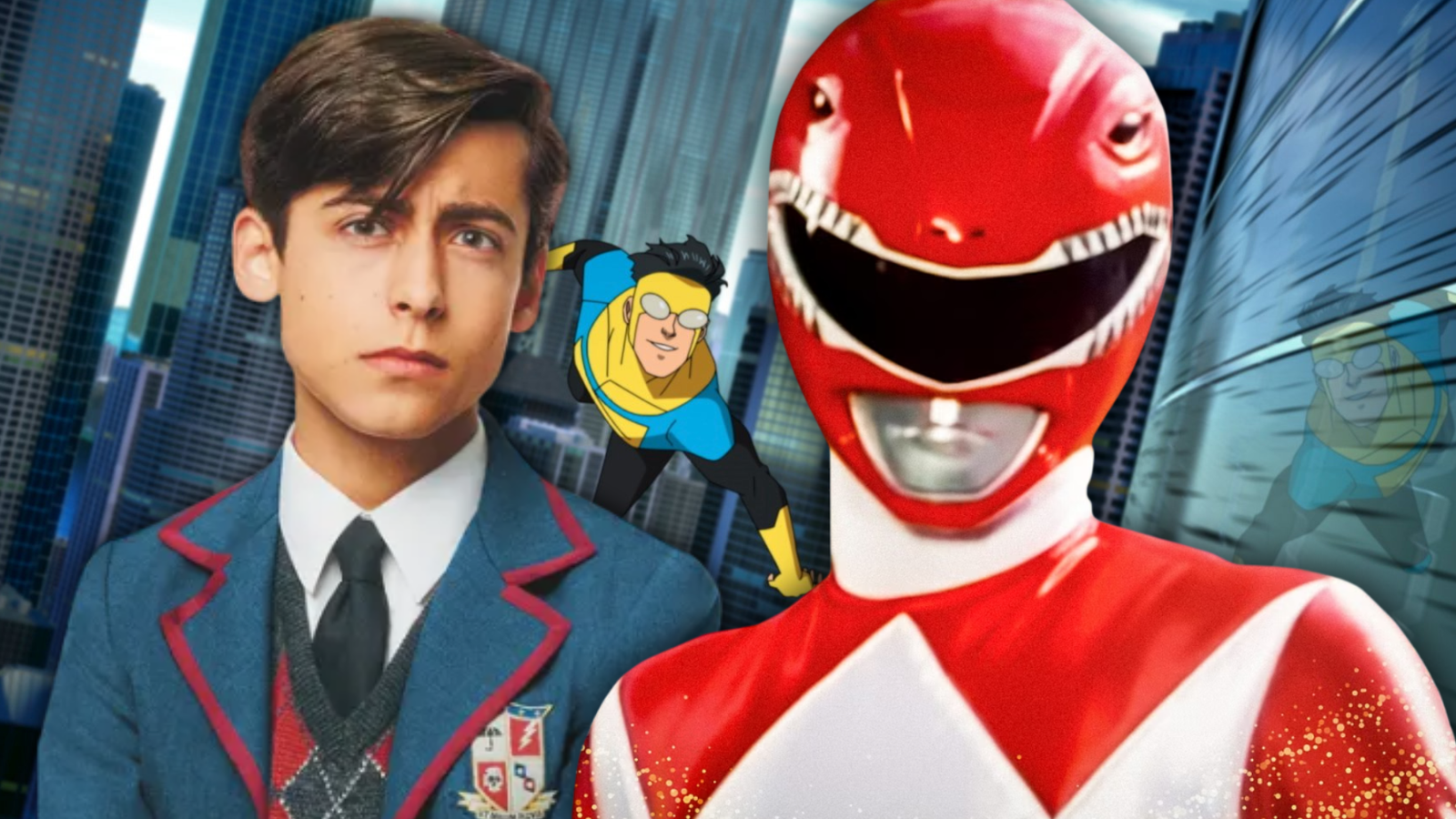
Custom Image by Hannah Diffey Published Aug 16, 2026, 7:00 PM EDT Hannah is a senior writer and self-publisher at ScreenRant. There, she focuses on writing news, features, and list-style articles about all things comics, books, anime, and manga. She works as a freelance writer in the entertainment industry, focusing on video games, anime, and literature. Her published works can be found on Screen Rant, FinanceBuzz, She Reads, and She Writes. Sign in to your ScreenRant account Marvel and DC have spent decades defining what superhero fiction looks like, but they hardly have a monopoly on the genre. Some of the most inventive superhero universes have emerged from independent comics, manga, television, and tokusatsu, often taking familiar ideas in stranger, darker, or more emotionally ambitious directions. These universes stand out because they do something different with superhuman characters. Rather than simply recreating formulas established by Superman, Batman, Spider-Man, and the Avengers, they explore how ordinary people, governments, families, celebrities, and entire societies might function in worlds filled with extraordinary individuals. 7 Astro City Kurt Busiek's Astro City is one of the strongest arguments that a superhero universe does not need endless crossover events to feel enormous. Debuting in 1995, the series uses a fictional American metropolis as its centerpiece, following heroes, villains, civilians, journalists, police officers, and criminals rather than relying on one permanent protagonist. That perspective makes Astro City feel unusually complete. Stories such as "The Nearness of You" and "The Tarnished Angel" prove how superhero events affect people who are not necessarily wearing costumes. Its anthology structure also allows the setting to jump between wildly different genres while remaining coherent, giving seemingly minor characters room to become the emotional center. The series also succeeds because it understands superhero mythology without becoming trapped by it. Characters such as Samaritan, the Confessor, and Winged Victory give off recognizable comic-book archetypes while remaining distinct creations. Astro City therefore feels like a celebration of superhero history rather than another attempt to duplicate Marvel or DC's most famous characters. 6 Invincible Image via MovieStillsDB Robert Kirkman's Invincible began at Image Comics in January 2003 and ultimately ran for 144 issues before concluding in February 2018. That contained run gives the universe something Marvel and DC frequently struggle to provide: a beginning, middle, and definitive ending for its central character, Mark Grayson. Mark's world also refuses to keep superhero consequences conveniently reversible. The Viltrumite Empire, Omni-Man's betrayal, the conflicts involving Thragg, and Mark's increasingly complicated responsibilities steadily reshape the universe. Relationships change, characters age, and victories often create new problems, giving the story a sense of progression that extends beyond simply defeating the next supervillain. The universe is particularly effective when it contrasts enormous cosmic stakes with ordinary family problems. Mark still has to deal with school, romance, parenthood, and friendships while carrying responsibilities that eventually affect entire civilizations. That combination of intimate drama and spectacular violence makes Invincible feel like a superhero epic with genuine momentum rather than an endless status quo. 5 My Hero Academia Kōhei Horikoshi's My Hero Academia builds its superhero society around one deceptively simple idea about what happens when superhuman abilities become ordinary? Quirks are possessed by most of the population, creating schools, professional heroes, villains, regulations, celebrity culture, and an entire economy surrounding superpowers. Izuku Midoriya's journey is only one part of the appeal. Characters including Katsuki Bakugo, Shoto Todoroki, Ochaco Uraraka, Endeavor, and Tomura Shigaraki represent different consequences of a society built around heroism. The manga ran from 2014 through 2024, concluding after 430 chapters across 42 collected volumes. From the Slime Villain to the Final War · Eight Questions How Well Do You Know My Hero Academia? “Plus Ultra!” 🏫U.A. HighClass 1-A 🧡All MightSymbol of Peace 💥BakugoDIE!!! (affectionately) ❄️Half-Cold Half-HotTodoroki Shoto 👻League of VillainsDecay incarnate GO BEYOND → 01 My Hero Academia’s protagonist is a Quirkless boy in a Quirk-saturated world who dreams of becoming a hero. Bakugo derisively nicknames him “Deku” (a play on the kanji for “useless”) before he eventually reclaims it as a hero name. What’s his actual name? AIzuku Midoriya BEijiro Kirishima CTenya Iida DDenki Kaminari ✓ Correct! Izuku Midoriya. The series opens with him as a 14-year-old Quirkless middle schooler obsessively cataloguing pro heroes in his battered notebooks. The kanji for his nickname Deku (弟卜) reads as “useless” in Bakugo’s mocking context, but Uraraka points out it can also be read as “dekiru” (“you can do it”) — which is the framing he eventually adopts as his hero name. ✗ Wrong. The answer is Izuku Midoriya. Eijiro Kirishima is the red-haired Hardening Quirk user who’s Bakugo’s best friend. Tenya Iida is the engine-legged class president. Denki Kaminari is the Electrification Quirk user who short-circuits into “wheyyy” mode at his limit. Deku is Izuku Midoriya. NEXT → 02 In the show’s opening arc, All Might passes his unique stockpile-and-transfer Quirk to Deku, making him the ninth holder of a power that has been refined across generations. Each previous holder leaves behind their own ability inside it. Name the Quirk. AAll For One BOne For All CPlus Ultra DSymbol Quirk ✓ Correct! One For All — a Quirk created when the original Quirkless holder was given a power-stockpiling ability by his villainous brother, who would later become All For One. Each holder strengthens it before passing it on. By the time Deku inherits it, six previous wielders’ Quirks (Float, Blackwhip, Smokescreen, Fa Jin, Danger Sense and Gearshift) are also accessible from within. He’s the ninth and (initially) final user. ✗ Wrong. The answer is One For All. All For One is the antagonist Quirk — the one that steals and gives Quirks — and is also the name of the original villain who founded it. “Plus Ultra” is U.A.’s school motto. Deku’s inherited power is One For All. NEXT → 03 Class 1-A’s perpetually-exhausted homeroom teacher is also the underground hero Eraser Head, whose Quirk lets him cancel another person’s Quirk simply by looking at them. He sleeps in a yellow caterpillar-style sleeping bag, drinks jelly pouches and is fiercely protective of his students. What’s his name? AHizashi Yamada BShota Aizawa CToshinori Yagi DSekijiro Kan ✓ Correct! Shota Aizawa — hero name Eraser Head, civilian name perpetually-rumpled Class 1-A homeroom teacher. His capture-weapon scarf and Erasure Quirk make him one of U.A.’s most dangerous combatants in close quarters — though the Quirk only works while his eyes are open, which he uses dramatically to prep dramatic stares before unleashing. Voiced by Junichi Suwabe in Japanese and Christopher Sabat in English. ✗ Wrong. The answer is Shota Aizawa. Hizashi Yamada is Aizawa’s loud blonde best friend — the hero Present Mic. Toshinori Yagi is the civilian name of All Might. Sekijiro Kan is Class 1-B’s homeroom teacher Vlad King. Eraser Head is Aizawa. NEXT → 04 Deku’s childhood frenemy Katsuki Bakugo is one of the franchise’s most popular characters — explosive in temperament and in Quirk. His sweat is nitroglycerine-like, ignited at his palms to produce concussive blasts. Name his Quirk (which is also the official Quirk name). ADetonation BHellflame CExplosion DCombustion ✓ Correct! Explosion. Bakugo can secrete a nitroglycerine-like sweat from his palms and ignite it — the harder he’s sweating, the bigger the boom. His U.A. Sports Festival hero costume includes the iconic grenade-shaped gauntlets that store and release the sweat for his “Howitzer Impact” ultimate move. After much fan voting and his own multiple rejections of cute hero-name suggestions, his final hero name is Dynamight, the God of Explosive Destruction. ✗ Wrong. The answer is Explosion. Hellflame is Endeavor’s Quirk — the #1 hero post-All Might. “Detonation” and “Combustion” aren’t official Quirks. Bakugo’s sweat-into-nitroglycerine palm-ignition power is officially named Explosion. NEXT → 05 The League of Villains is led by an unstable, severed-hand-wearing young man with a Quirk called Decay — touch with all five fingers, and matter crumbles to dust. Trained by All For One as the heir to his throne, he eventually inherits the original villain’s Quirk-stealing power. Name him. ADabi BTomura Shigaraki CStain DKurogiri ✓ Correct! Tomura Shigaraki — born Tenko Shimura, grandson of the seventh One For All wielder Nana Shimura, raised after a tragedy by All For One himself. Decay is one of the franchise’s most terrifying Quirks (it spreads on contact and has no upper limit). After the Paranormal Liberation War arc he absorbs All For One’s power and becomes the series’ final-arc primary antagonist. ✗ Wrong. The answer is Tomura Shigaraki. Dabi is the League’s blue-flame user (and a Todoroki family secret). Stain is the “Hero Killer” ideologue who inspires the League. Kurogiri is the misty warp-gate butler. Shigaraki is the League’s leader, identifiable by the array of severed hands he wears as a self-soothing fashion choice. NEXT → 06 All Might is the world’s top hero and the eighth holder of One For All before passing it to Deku. In his weakened civilian form — the result of a brutal injury inflicted by All For One years before the series begins — he’s a hollow-cheeked, blood-coughing teacher at U.A. What’s All Might’s civilian name? AToshinori Yagi BEnji Todoroki CKeigo Takami DDaigoro Banjo ✓ Correct! Toshinori Yagi. The injury that left him with a perpetually-bleeding stomach wound came in his climactic fight against All For One five years before the series begins — the same fight that killed his predecessor and mentor Nana Shimura’s legacy. Toshinori’s gaunt civilian form vs. his bulked-out hero form is among anime’s most distinctive transformation gags. Voiced by Kenta Miyake in Japanese, Christopher Sabat in English. ✗ Wrong. The answer is Toshinori Yagi. Enji Todoroki is Endeavor (Shoto’s father, the new #1 hero after All Might retires). Keigo Takami is the Wing Hero Hawks. Daigoro Banjo is the fifth wielder of One For All. All Might’s civilian self is Toshinori Yagi. NEXT → 07 My Hero Academia began serialisation in Weekly Shonen Jump in July 2014, ran for over 10 years and over 430 chapters before concluding in August 2024 — one of the defining shonen titles of the 2010s and 2020s. Name its mangaka, who has openly cited Naruto and Western superhero comics as primary influences. ATatsuki Fujimoto BGege Akutami CKohei Horikoshi DEiichiro Oda ✓ Correct! Kohei Horikoshi. He’d previously had two short-lived Jump series (Oumagadoki Doubutsuen, Barrage) before pitching MHA, with All Might consciously designed as an Americanised Superman/Bruce Timm pastiche. The series accumulated over 100 million copies in print and ran from July 2014 to August 2024. Horikoshi is also a fervent ghibli/Western-superhero fan; he’s done illustrated tributes to Spider-Man and Batman. ✗ Wrong. The answer is Kohei Horikoshi. Tatsuki Fujimoto created Chainsaw Man and Fire Punch. Gege Akutami created Jujutsu Kaisen. Eiichiro Oda created One Piece. Horikoshi is MHA’s mangaka and was one of Weekly Shonen Jump’s headline creators throughout the 2010s. NEXT → 08 The MHA anime adaptation has been a flagship of its production studio since the first season aired in 2016, with seven seasons, four films and a regular slot in the global streaming spotlight. The same studio is behind Fullmetal Alchemist: Brotherhood, Mob Psycho 100 and Bungo Stray Dogs. Name it. AMAPPA BStudio Bones CWit Studio DMadhouse ✓ Correct! Studio Bones (officially BONES Inc.) — the Suginami-based studio founded by ex-Sunrise producers in 1998. Bones is one of the most respected action-anime houses, with credits including Fullmetal Alchemist: Brotherhood, Soul Eater, Eureka Seven, Mob Psycho 100, Cowboy Bebop: Knockin’ on Heaven’s Door and Bungo Stray Dogs. MHA has been their flagship contemporary IP since 2016. ✗ Wrong. The answer is Studio Bones. MAPPA does Jujutsu Kaisen, Chainsaw Man and the final Attack on Titan seasons. Wit Studio did the early Attack on Titan seasons (1–3) before MAPPA took over, plus Vinland Saga and Spy x Family. Madhouse did One Punch Man season 1, Death Note and Hunter x Hunter (2011). MHA’s anime is Bones. REVEAL MY RATING → U.A. Provisional License · Final Score Your Hero Standing 🧡 / 8 Symbol of Peace — or still Quirkless? ⤴ PLUS ULTRA AGAIN The world-building becomes especially interesting when the series questions the assumption that being powerful automatically makes someone heroic. The treatment of characters such as Endeavor and the League of Villains demonstrates how family trauma, social expectations, and institutional failures influence people. Instead of presenting heroes as naturally virtuous, My Hero Academia repeatedly asks what society should expect from them. 4 One-Punch Man One-Punch Man turns the conventional superhero power fantasy upside down. Saitama has already reached the pinnacle of physical strength before the story really begins, defeating virtually every opponent with a single punch. The original webcomic appeared in 2009, while Yusuke Murata's manga adaptation began publication in 2012. The joke, however, is only the surface. The Hero Association creates rankings, licenses, classes, and bureaucratic obstacles that frequently matter more than raw strength. Heroes such as Genos, Tatsumaki, Mumen Rider, and King demonstrate completely different relationships with fame and responsibility, creating a world where reputation is often nearly as important as ability. The series also has an impressive understanding of escalation. Battles involving Boros, the Monster Association, Garou, and increasingly powerful threats gradually expand the scale of the setting without completely abandoning its comedic foundation. Saitama's boredom remains central to the premise, but the surrounding cast provides enough emotional and dramatic weight to make the universe work beyond the main gag. 3 Power Rangers/Super Sentai ©20th Century Fox. All rights reserved/Courtesy Everett Collection The Power Rangers and Super Sentai universe is unusual because it effectively operates as a multigenerational superhero machine. Super Sentai began with Himitsu Sentai Gorenger in 1975, while Mighty Morphin Power Rangers introduced the American franchise in 1993. Since then, changing Ranger teams, costumes, villains, and giant robots have created decades of mythology. Its greatest advantage is variety. One team might be built around dinosaurs, another around space travel, another around magic, and another around futuristic technology. The Power Rangers/Super Sentai concept also makes teamwork fundamental rather than optional, with individual abilities combining into a larger fighting force. The franchise's longevity is another major strength. Rather than requiring one permanent cast to carry the entire universe, new teams repeatedly refresh the formula. Crossovers such as Forever Red, Power Rangers Beast Morphers, and Power Rangers Cosmic Fury prove how previous generations can return without completely overwhelming newer characters, making the setting unusually accessible to multiple generations. 2 The Boys Garth Ennis and Darick Robertson's The Boys takes the familiar superhero celebrity machine and pushes it toward its ugliest possible conclusion. The original comic ran for 72 issues, concluding in 2012, and followed Billy Butcher, Hughie Campbell, and their associates as they confronted superpowered individuals protected by corporate and political influence. What makes the universe compelling is its focus on power without accountability. The Seven are not simply villains pretending to be heroes; they operate inside an ecosystem involving Vought, advertising, government interests, media manipulation, and public perception. The comic is deliberately extreme, but underneath its graphic violence is a pointed question about extraordinary power becoming a profitable business. The television adaptation expanded that premise while developing its own continuity and characters. Homelander, Starlight, Queen Maeve, A-Train, and Butcher became recognizable figures in their own right, while Vought remained central to the story's corporate satire. Few superhero settings are as committed to examining what happens when heroism becomes a carefully managed brand as The Boys. 1 The Umbrella Academy Gerard Way and Gabriel Bá's The Umbrella Academy offers a superhero universe that feels almost completely detached from conventional comic-book architecture. The original series began with Apocalypse Suite in 2007, followed by Dallas and Hotel Oblivion. Its main characters are adopted siblings raised by the eccentric Sir Reginald Hargreeves. The Hargreeves family is what makes the universe so memorable. Spaceboy, the Kraken, the Rumor, the Séance, Number Five, and Vanya/Viktor are less interested in behaving like a conventional superhero team than dealing with trauma, resentment, identity, and family dysfunction. Their bizarre adventures make the team feel fundamentally different from traditional comic-book groups. Time travel and apocalyptic scenarios also give The Umbrella Academy a wonderfully unpredictable identity. Number Five's ability to move through time, the family's repeated encounters with catastrophic events, and the strange organizations surrounding them allow stories to move beyond ordinary superhero conflicts. The result is a universe where saving the world is important, but surviving one another may be just as difficult.
7 Superhero Universes Better Than Marvel And DC
Full Article
Original Source
Read the full article at Screenrant →KhanList aggregates and links to publicly available news content. We do not host full articles from third-party sources. Always verify important information with original sources.