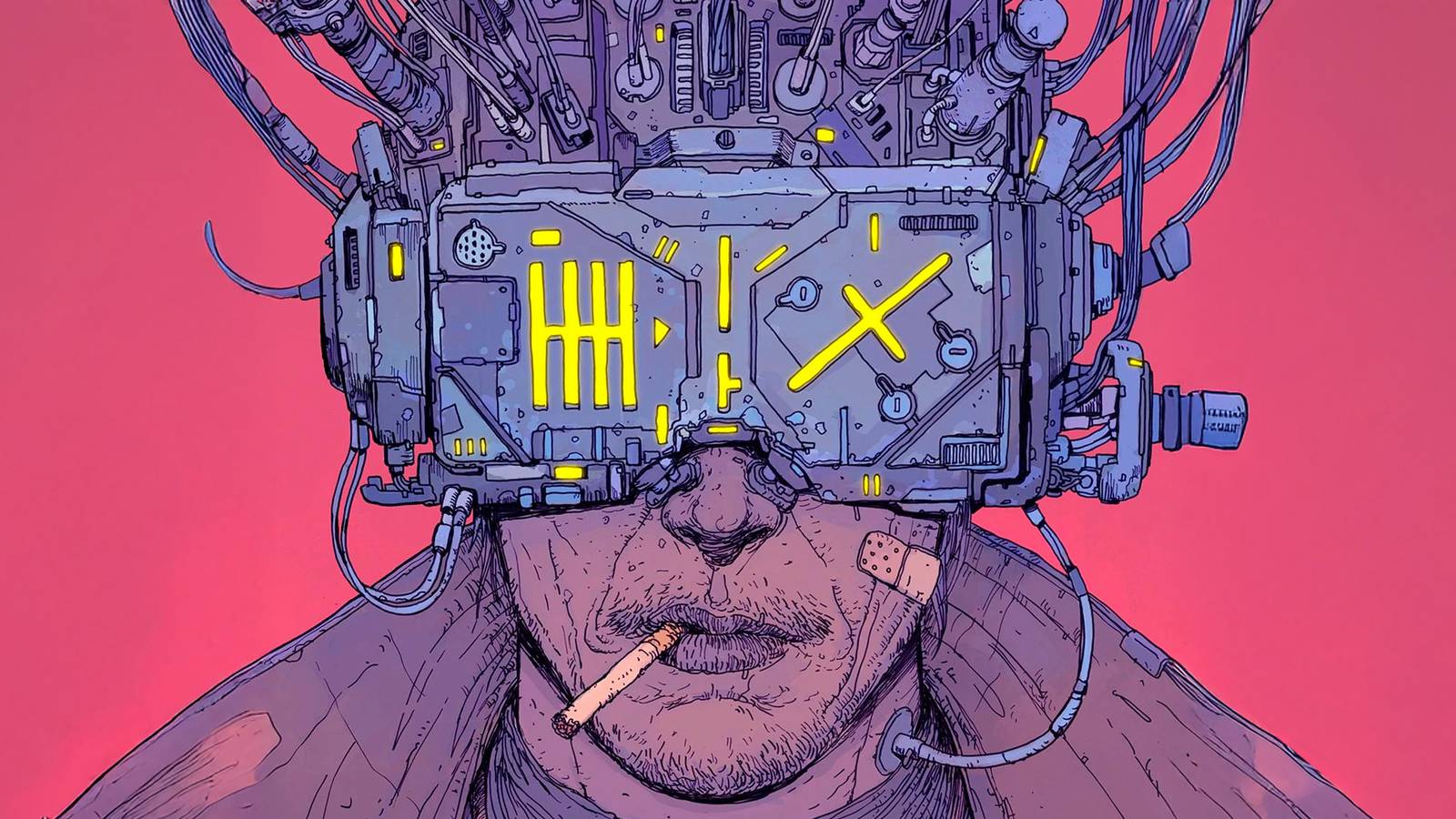
Image via Editora Aleph Published Aug 4, 2026, 8:11 PM EDT Jessica is a journalist, editor, TCA critic, and multimedia storyteller with a decade of experience covering pop culture, film, TV, women's sports, lifestyle, and more. She earned her degree in journalism from the University of North Carolina-Wilmington with a focus in creative writing before moving to N.Y.C. and getting her start at The Huffington Post. (She still misses those nap pods.) She's covered multiple film festivals, recapped some of your favorite series, worked too many red carpets to count, and even yapped on a podcast or two. When she’s not interviewing your favorite showrunner or ranking Ryan Gosling's best roles for places like UPROXX, Teen Vogue, Marie Claire, The Daily Beast, and Cosmopolitan, she’s busy being a full-time hype woman to her cat, Finn. You can find her on Bluesky and, sadly, Twitter. Sign in to your Collider account The publishing-to-prestige TV pipeline is churning right now, and science fiction has claimed the front of the queue. From Apple's long-awaited crack at William Gibson to Amazon building out its post-Expanse empire, the next wave of sci-fi adaptations spans cyberpunk heists, galactic civilizations, Latin American dystopias, and at least one catastrophic lunar explosion. Some of these shows already have trailers and premiere dates; others are still deep in development, which means you've got time to read the book and become the most insufferable person in your group chat about it. Here are the sci-fi books worth picking up now. 'The World Jones Made' (1956) Image via Ace Books Philip K. Dick's 1956 novel follows Floyd Jones, a carnival fortune-teller whose precognitive abilities are horrifyingly, actually. Imagine being able to see exactly one year into the future, all the time, and never having the power to turn it off? Set in a post-nuclear world governed by Relativism (a political philosophy that forbids anyone from claiming any opinion is more valid than another), the book watches Jones exploit his gift to rise from sideshow act to populist demagogue. It's Dick doing what he does best: using a pulpy, paranoid premise to ask genuinely unsettling questions about free will and whether knowing the future makes you a prisoner. Netflix is adapting it as an eight-episode limited series titled The Future Is Ours, expected late 2026, with Enzo Vogrincic and Emiliano Zurita leading a pan-Latin American cast that also includes Delfina Chaves and Marleyda Soto. The adaptation transplants the story to South America in 2047, where ecological collapse has spawned a coalition of nations enforcing brutal environmental protections, making it the first Spanish-language adaptation of Dick's work for the screen. His novels have been filtered through Ridley Scott, Steven Spielberg, and Amazon's revolving door of Electric Dreams directors, but never through Latin American filmmaking. Showrunner Mateo Gil and directors Vicente Amorim, Daniel Rezende, and Jesús Braceras are building something that looks deliberately distinct from the usual Dick adaptation playbook. 'Green Lantern: Rebirth' (2004–2005) Image via DC Comics This one pulls from decades of DC Comics rather than a single novel, but our reading recommendations are specific. Start with Geoff Johns' Green Lantern run (2004–2013), which reintroduced Hal Jordan and built the mythology that this show is clearly drawing from, then pick up the Dennis O'Neil and Neal Adams Hard-Traveling Heroes arc from the early '70s, which paired Green Lantern with Green Arrow for socially conscious, ground-level storytelling. Creators Chris Mundy, Damon Lindelof, and comic writer Tom King have cited both as influences, and their eight-episode HBO series, premiering August 16, reflects that blend: two Lanterns investigating a murder in the American heartland that spirals into something cosmic. Kyle Chandler plays the aging, weary version of Hal Jordan while Aaron Pierre inhabits the idealistic John Stewart, giving their partnership a tension that should fuel a full season’s worth of vigilantism. Laura Linney and Kelly Macdonald round out a supporting cast that skews prestige-drama heavy for a superhero show, and HBO is leaning into that, positioning Lanterns as a detective procedural that happens to involve intergalactic police officers. The SDCC trailer introduced Sinestro, revealed a Guy Gardner cameo (Nathan Fillion), and showed off the Manhunters, so the scope is clearly wider than the small-town setup implies. Read the comics because they're good, but also because the show could be headed anywhere at this point. 'Do Androids Dream of Electric Sheep?' (1968) Image via Doubleday Dick's 1968 novel is the seed from which the entire Blade Runner universe grew, even though Ridley Scott's 1982 film diverged from it in fundamental ways. The book's bounty hunter Rick Deckard lives in a post-apocalyptic San Francisco blanketed in radioactive dust, where owning a real animal is a status symbol and empathy is the only reliable metric for distinguishing humans from androids. Where the films leaned into noir, the novel is weirder, sadder, and funnier. (See: Deckard's subplot about desperately wanting to replace his electric sheep with a real one.) The book's exploration of Mercerism, a shared-hallucination religion, also goes places neither film touched. Prime Video's eight-episode Blade Runner 2099, premiering November 25, isn't a direct adaptation of the novel. Instead, it's set fifty years after 2049, in a Los Angeles that has been rebuilt by replicants rather than humans. Michelle Yeoh plays Olwen, a replicant approaching the end of her lifespan, and Hunter Schafer plays Cora, a fugitive who takes on the identity of a Blade Runner. You don't need to read the book to follow the show, but reading it is a good reminder of what this universe is actually about. The films made Blade Runner a monument to aesthetics and atmosphere; the book digs deeper, questioning what counts as real when everything around you might be synthetic. 'Seveneves' (2015) Image via William Morrow In Neal Stephenson's novel, the moon explodes on page one, and he doesn't really waste time explaining why. An unknown agent shatters it into seven pieces, and the world's scientists quickly calculate that within two years, those fragments will collide and break apart into a "hard rain" of debris that will render Earth's surface uninhabitable for thousands of years. The first two-thirds of the novel follow humanity's scramble to get as many people as possible into orbit aboard a hastily expanded International Space Station, and it is relentlessly, almost oppressively detailed. Then the book jumps forward five thousand years, and the seven surviving women (the "seven Eves") have given rise to genetically distinct races repopulating a terraformed Earth. Legendary Television acquired the TV rights in August 2024, and the project is still in early development, which means there’s no writer, network, or cast attached yet. That gives you plenty of time, which you'll need; this is an 880-page book, and Stephenson is not interested in getting you through the end of the world quickly. The adaptation will likely have to make hard structural choices about that five-millennia time jump, but the first section alone — a ticking-clock survival story where politics and physics are equally lethal — could sustain multiple seasons of television. Read it for the scope and the science. Collider Exclusive · Sci-Fi Survival Quiz Which Sci-Fi World Would You Survive? The Matrix · Mad Max · Blade Runner · Dune · Star Wars Five universes. Five completely different ways the future went wrong — or sideways, or up in flames. Only one of them is the world your instincts were built for. Eight questions will figure out which dystopia, galaxy, or desert wasteland you'd actually make it out of alive. 💊The Matrix 🔥Mad Max 🌧️Blade Runner 🏜️Dune 🚀Star Wars TEST YOUR SURVIVAL → 01 You sense something is deeply wrong with the world around you. What do you do? The first instinct is often the truest one. APull on every thread until I understand the system — then figure out how to break it. BStop asking questions and start stockpiling — food, fuel, weapons. Questions don't keep you alive. CKeep my head down, observe carefully, and trust no one until I know who's pulling the strings. DStudy the patterns. Every system has a rhythm — learn it, and you learn how to survive it. EFind the people fighting back and join them. You can't fix a broken galaxy alone. NEXT QUESTION → 02 In a world of scarcity, what resource do you guard most fiercely? What we protect reveals what we believe survival actually requires. AKnowledge. If you understand the system, you don't need resources — you can generate them. BFuel. Everything else — movement, power, escape — runs on it. CTrust. In a world of fakes and informants, a truly reliable ally is rarer than any commodity. DWater. And after water, information — the two things empires are truly built on. EShips and credits. The galaxy is big — you survive it by being able to move through it freely. NEXT QUESTION → 03 What kind of threat keeps you up at night? Fear is useful data — if you're honest about what you're actually afraid of. AThat reality itself is a lie — that everything I experience has been constructed to keep me compliant. BA raid. No warning, no mercy — just the roar of engines and then nothing left. CBeing identified. Once someone with power decides you're a problem, you're already out of time. DBeing outmanoeuvred — losing a political game I didn't even know I was playing. EThe Empire tightening its grip until there's nowhere left to run. NEXT QUESTION → 04 How do you deal with authority you don't trust? Every dystopia has a power structure. Your approach to it determines everything. ASubvert it from the inside — learn its rules well enough to weaponise them against it. BIgnore it and stay out of its reach. The further from any power structure, the better. CAppear to comply while doing exactly what I need to do. Visibility is the enemy. DManoeuvre within it carefully. You can't beat a system you refuse to understand. EResist openly when I have to. Some things are worth the risk of being seen. NEXT QUESTION → 05 Which environment could you actually endure long-term? Survival isn't just tactical — it's physical, psychological, and very much about where you are. AUnderground bunkers and server rooms — cramped, artificial, but with access to everything that matters. BOpen wasteland — brutal sun, no shelter, constant movement. At least the threat is honest. CA dense, rain-soaked city where you can disappear into the crowd and nobody asks questions. DMerciless desert — extreme heat, no water, and something enormous living beneath the sand. EThe fringe — backwater planets and busy spaceports where the Empire's attention rarely reaches. NEXT QUESTION → 06 Who do you want in your corner when things fall apart? The company you keep is the clearest signal of who you actually are. AA tight crew of believers who've seen behind the curtain and have nothing left to lose. BOne or two people I'd trust with my life. Any more than that and someone talks. CNobody, ideally. Alliances are liabilities. I work alone unless I have no choice. DA community bound by shared hardship and mutual survival — people who need each other to last. EA ragtag team with wildly different skills and total commitment when it counts. NEXT QUESTION → 07 Where do you draw the line — if you draw one at all? Every survivor eventually faces a moment that tests what they're actually made of. AI won't harm the innocent — even the ones who'd report me without hesitation. BI do what I have to to protect the people I've chosen. Everything else is negotiable. CThe line shifts depending on who's asking and what's at stake. DI draw a long-term line — nothing that compromises my people's future, even if it'd help now. ESome lines, once crossed, can't be uncrossed. I know which ones they are. NEXT QUESTION → 08 What would actually make survival worth it? Staying alive is one thing. Having a reason to is another. AWaking others up — dismantling the illusion so no one else has to live inside it. BFinding somewhere — or someone — worth protecting. A reason to keep moving. CAnswers. Understanding what I am, what any of this means, before time runs out. DLegacy — shaping the future in a way that outlasts me by generations. EFreedom — for myself, for others, for every world still living under someone else's boot. REVEAL MY WORLD → Your Fate Has Been Calculated You'd Survive In…Your answers point to the world your instincts were built for. This is the universe your temperament, your survival instincts, and your particular brand of stubbornness were made for. The MatrixYou took the red pill a long time ago — probably before anyone offered it to you. You're a systems thinker who can't help but notice the seams in things. You're drawn to understanding how the system works before figuring out how to break it. You'd find the Resistance, or it would find you — your instinct for spotting constructed realities is the machines' worst nightmare. You function best when you have access to information and the freedom to act on it. The Matrix built an airtight prison. You'd be the one probing the walls for the door. Mad MaxThe wasteland doesn't reward the clever or the well-connected — it rewards those who are hard to kill and harder to break. That's you. You don't need comfort, community, or a cause larger than the next horizon. You need a vehicle, a clear threat, and enough fuel to outrun it — and you're good at all three. You are unsentimental enough to survive that world, and decent enough — just barely — to be something more than another raider. In the wasteland, that distinction is everything. Blade RunnerYou'd survive here because you know how to exist in moral grey areas without losing yourself completely. You read people accurately, keep your circle small, and ask the questions others prefer not to answer. In a city where humanity is a legal designation rather than a feeling, you hold onto something that keeps you functional. You're not a hero. But you're not lost, either. In Blade Runner's world, that distinction is everything. DuneArrakis is the most hostile environment in the known universe — and you are precisely the kind of person it rewards. Patience, discipline, and political awareness are your core strengths — and on Arrakis, they're survival tools. You understand that the long game matters more than any single victory. Others come to Dune and are consumed by it. You'd learn its logic and earn its respect. In time, you wouldn't just survive Arrakis — you'd begin to reshape it. Star WarsThe galaxy far, far away is vast, loud, and in a constant state of violent political upheaval — and you wouldn't have it any other way. You find meaning in being part of something larger than yourself — a cause, a crew, a rebellion. You'd gravitate toward the Rebellion, or the fringes, or whatever pocket of the galaxy still believes the Empire's grip can be broken. You fight — not because you have to, but because standing aside isn't something you're capable of. In Star Wars, that willingness is what makes all the difference. ↻ RETAKE THE QUIZ 'Consider Phlebas' (1987) Image via Macmillan Ian M. Banks' first entry in the Culture series is one of the most ambitious fictional universes in science fiction. In it, a galactic civilization is run by hyper-intelligent AIs called Minds, where humans live in near-utopian conditions and have essentially solved every material problem. The catch is that the book's protagonist, Horza, hates the Culture. He's a shapeshifter fighting on behalf of the Idirans, a deeply religious warrior species locked in a war, and he's been sent to retrieve a Mind that has hidden itself on a dead planet. The novel is a chase story at its core, but Banks uses it to poke at the system from the outside, asking whether a civilization that's eliminated suffering has also eliminated meaning. Amazon originally developed an adaptation that stalled out in 2020, but the project was revived in February 2025 with Interior Chinatown creator Charles Yu writing and Oscar winner Chloé Zhao executive producing alongside Plan B Entertainment. That's a promising combination. Yu has already demonstrated he can translate inventive source material into prestige TV, and Zhao's visual instincts could do something genuinely interesting with the Culture's scale. No cast or timeline has been announced, so this is a long-run read. Which you'll need, because the Culture series spans ten novels. Consider Phlebas is a solid entry point, though the books work as standalones, too. Start here because the show will. 'The Mercy of Gods' (2024) Image via Orbit Daniel Abraham and Ty Franck, the duo behind the pen name James S.A. Corey, launched their post-Expanse series with The Mercy of Gods in August 2024, and it hit the New York Times bestseller list immediately. The novel follows Dafyd Alkhor, a researcher on a human-colonized planet called Anjiin, where life is comfortable. Then an alien species called the Carryx arrives, conquers the planet in a matter of hours, and selects a group of human scientists to serve in their empire. Essentially, humanity auditions for survival here. The second book, The Faith of Beasts, arrived in April 2026 to expand the scope. Amazon announced the adaptation in November 2024 with the Expanse brain trust intact: Naren Shankar showrunning, Abraham and Franck writing, and director Breck Eisner producing through their newly formed Expanding Universe production company. But the authors have been open about the fact that they wrote something deliberately hard to adapt. The book runs on characters processing impossible situations through internal monologue rather than action, which makes the creative team's familiarity with this kind of material essential. No cast has been announced, and the project appears to be in early development, so the timeline is unclear. Read The Mercy of Gods now because it's one of the strongest sci-fi novels in recent years, and read The Faith of Beasts because by the time this show materializes, the trilogy will probably be complete. 'Neuromancer' (1984) Image via Ace Books William Gibson's 1984 novel basically invented cyberpunk as a genre, and Hollywood has been trying to adapt it for roughly as long as the internet has existed. Case is a washed-up hacker whose nervous system has been deliberately damaged to lock him out of cyberspace — a punishment for skimming from his employers. When a mysterious benefactor offers to fix him in exchange for one last job, he's paired with Molly, a street samurai with retractable blade implants under her fingernails, and sent to crack the most dangerous AI in existence. The novel popularized the word "cyberspace" (Gibson first used it in his 1982 short story "Burning Chrome") and predicted a world of corporate megastructures, digital consciousness, and hackers-for-hire that feels less speculative every year. Apple TV is finally bringing it to the screen as a 10-episode series premiering January 22, 2027, and the cast alone suggests they're swinging hard. Callum Turner brings a raw intensity that fits Case's desperation, Briana Middleton as Molly could be a breakout role on the level of a franchise-defining action heroine, and the supporting bench — Mark Strong, Peter Sarsgaard, Dane DeHaan — is stacked deep enough to fill out Gibson's world of fixers and corporate mercenaries. Apple dropped its first teaser at SDCC, and with ten episodes, there's room to actually build out the Sprawl rather than compress it. Read the book now, partly because it's a masterpiece and partly because you’ll need a guide to Gibson's world before streaming plugs you in. Neuromancer Network Apple TV+ Showrunner Graham Roland Directors J.D. Dillard Writers Graham Roland, JD Dillard Main Genre Sci-Fi Seasons 1 Producers Karl Caffrey, Satch Watanabe Creator(s) J.D. Dillard, Graham Roland Streaming Service(s) AppleTV+ Executive Producer(s) Drake, Dana Goldberg, David Ellison, William Gibson, Adel 'Future' Nur, Jason Shrier, Graham Roland, J.D. Dillard, Matt Thunell, Zack Hayden
7 Sci-Fi Books You Need To Read Before Their TV Adaptations Premiere
Full Article
Original Source
Read the full article at Collider →KhanList aggregates and links to publicly available news content. We do not host full articles from third-party sources. Always verify important information with original sources.