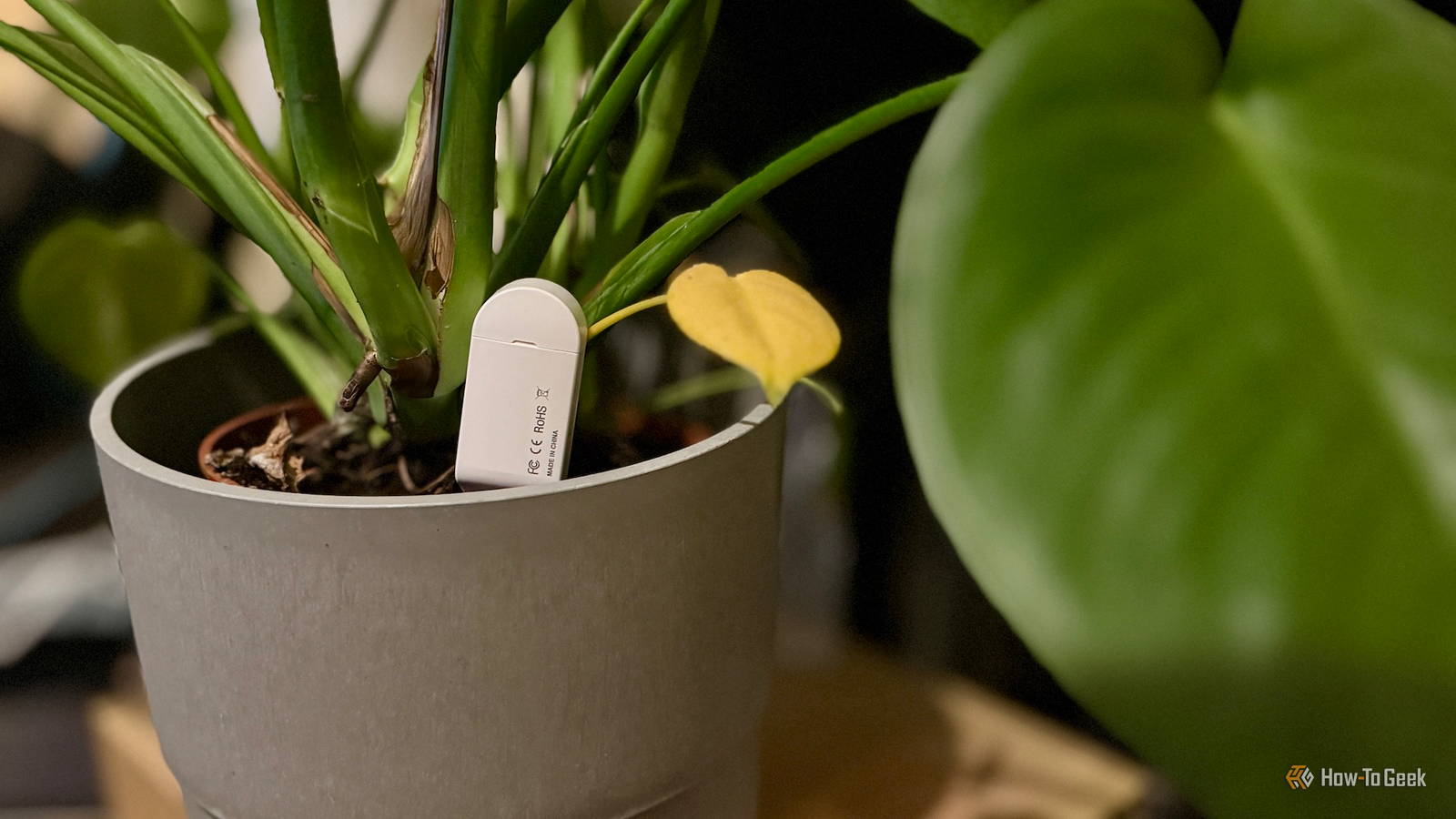
Published Aug 12, 2026, 9:30 AM EDT Tim has been covering technology for almost 20 years, in that time spanning a broad range of topics from security to product reviews. He is especially focused on the Apple ecosystem, productivity, and consumer advice. Over the years Tim has written thousands of articles, reviews, and round-ups in addition to producing video content and original photography. A graduate of journalism, he found his footing as a freelancer with a laptop and loves how he is able to work from practically anywhere. Now a Senior Editor for iPhone, Mac, and Smart Home at How-To Geek, Tim still loves to write. He can also be found crafting round-ups and productivity posts for the Zapier blog. Earlier in his career Tim spent nearly a decade as a writer and eventually Apple section editor for MakeUseOf. Tim currently lives in Brisbane, Australia. Outside of work he loves to hike and work out, play video games, and spend quality time with his wonderful partner and two cats Inka and Roger. The ESP32 is a tiny and versatile microcontroller that sips power. This means it can perform a variety of tasks and fit almost anywhere. Even so, I’m frequently amazed by the weird and wonderful things people are using it for. Here are seven places you might not expect to find an ESP32. Your car’s OBD-II port Read diagnostics like a mechanic Credit: Gargantiopa/Shutterstock.com OBD stands for on-board diagnostics, and if your car is newer than the mid-90s, then there’s a good chance it’s fitted with a standardized OBD-II port. This allows anyone with a compatible device to read diagnostic data that isn’t normally shared on your car’s dashboard. Combine an ESP32 development board with a CAN transceiver like the MCP2551 and the ESP32 OBD2 project, and you can build your own tool for gathering diagnostic data about your vehicle. Alternatively, you can buy an ESP32-C3-based open source wireless adapter like the WiCAN from $42 and send the data to Home Assistant via MQTT. In a water storage tank Work out how much water you have left Credit: Patrick Campanale / How-To Geek Whether you live in a rural area away from municipal water or have an off-grid property somewhere that you use at weekends, you might find yourself in a situation where you need to rely on tank water. Knowing how much water you have left without having to peer in and estimate is one job you can outsource to an ESP32. There are all manner of DIY water level monitor projects out there that use a variety of techniques. One Reddit user repurposed a (clean) fuel level sensor for this, while other projects use an ultrasonic distance sensor to work out the distance between the sensor and the water’s surface to calculate how full the tank is. Under the soil Stop over- and under-watering your plants Soil moisture sensors can alert you when it’s time to water your plants. You can buy ready-made ESP32-powered soil moisture sensors for around $11 from Seeed Studio. Note that these do not work outside; they’re designed for indoor house plants since they are not truly weather-proof. If you want a truly weather-tight version, there’s an Instructables guide you can follow that uses heat-shrink tubing, signal wire, and nail polish to convert an existing moisture sensor into a waterproof one. Your cat’s litter box Because your cat can’t tell you the tray is full Credit: Tim Brookes / How-To Geek Ever wanted a smart litter box that could report things like your cat’s weight, how often they’d visited, and when it’s time to top up the litter? I don’t blame you for saying no, but this is still an interesting little pet-focused smart home project. The ESPHome Litterbox Monitor uses load cells, a load cell amplifier, an ESP32, a litter box, and a cat. Since cats require multiple litter boxes, you might want to double, triple, or quadruple the project to cover all of the toilets in your house. When you’re done, the project will talk to Home Assistant, record your data, and give you triggers to sound notifications or other automations. Inside a game controller Make an old controller wireless Credit: Andrew Heinzman / How-To Geek It might seem like sacrilege to cut up a retro controller, but that’s exactly what one Adafruit tutorial has you doing to an original PlayStation pad. This is a fairly involved project that asks you to drill holes, flex your desoldering and soldering skills, wire things up, and add a lithium-ion battery (plus the necessary USB-C power extension to charge it). The finished product is a retro controller that’s truly wireless, for use with emulators and anything that can accept a Bluetooth accessory. If you feel bad about destroying a piece of gaming history, then consider a controller that’s on its last legs and also requires new potentiometers to fix stick drift. In an aquarium Monitor your fish or run the show Credit: Bilanol/Shutterstock.com One Reddit user vibe-coded an ESPHome project to make a total dissolved solids (TDS) sensor for their aquarium. All this does is read the TDS value of the water and report it back to Home Assistant, with only YAML required to make the project work. The AquaPi project shows just how far this concept can be taken when you want a more holistic view of the aquarium’s health. Paired with the right sensors, the project can monitor pH, salinity, dissolved oxygen, carbon dioxide, and more. Hanging out the back of a retro computer Commodore 64, Amiga, and Atari Credit: Tim Brookes / How-To Geek The Raspberry Pi is a single-board computer that feels inseparable from the world of retro computing, but the ESP32 can play a role too. If you want to use modern peripherals with one of these computers, you’ll need to turn to a project like USBtoC64. With an ESP32, the right D-SUB 9 connector, and a few additional components, you can fashion a device that connects directly to Commodore 64, Amiga, or Atari retro home computers and allows you to use USB mice and joysticks. Alternatively, a similar project called Uniijoysticle 2 adds Bluetooth gamepad support to these models (or you can order ready-made boards from Retro Moe on Tindie). Seeed Studio XIAO ESP32C3 The Seeed Studio XIAO ESP32-C3 is the perfect budget-friendly microcontroller for smart home projects. With Wi-Fi and Bluetooth built-in, it also features a super deep sleep mode for low power usage when it isn't doing anything. The compact size makes this ideal for building smart home projects, and ESPHome allows it to easily integrate into Home Assistant. Did you know that you can install full operating systems on an ESP32, too?
7 places you never thought to put an ESP32
Full Article
Original Source
Read the full article at Howtogeek →KhanList aggregates and links to publicly available news content. We do not host full articles from third-party sources. Always verify important information with original sources.