
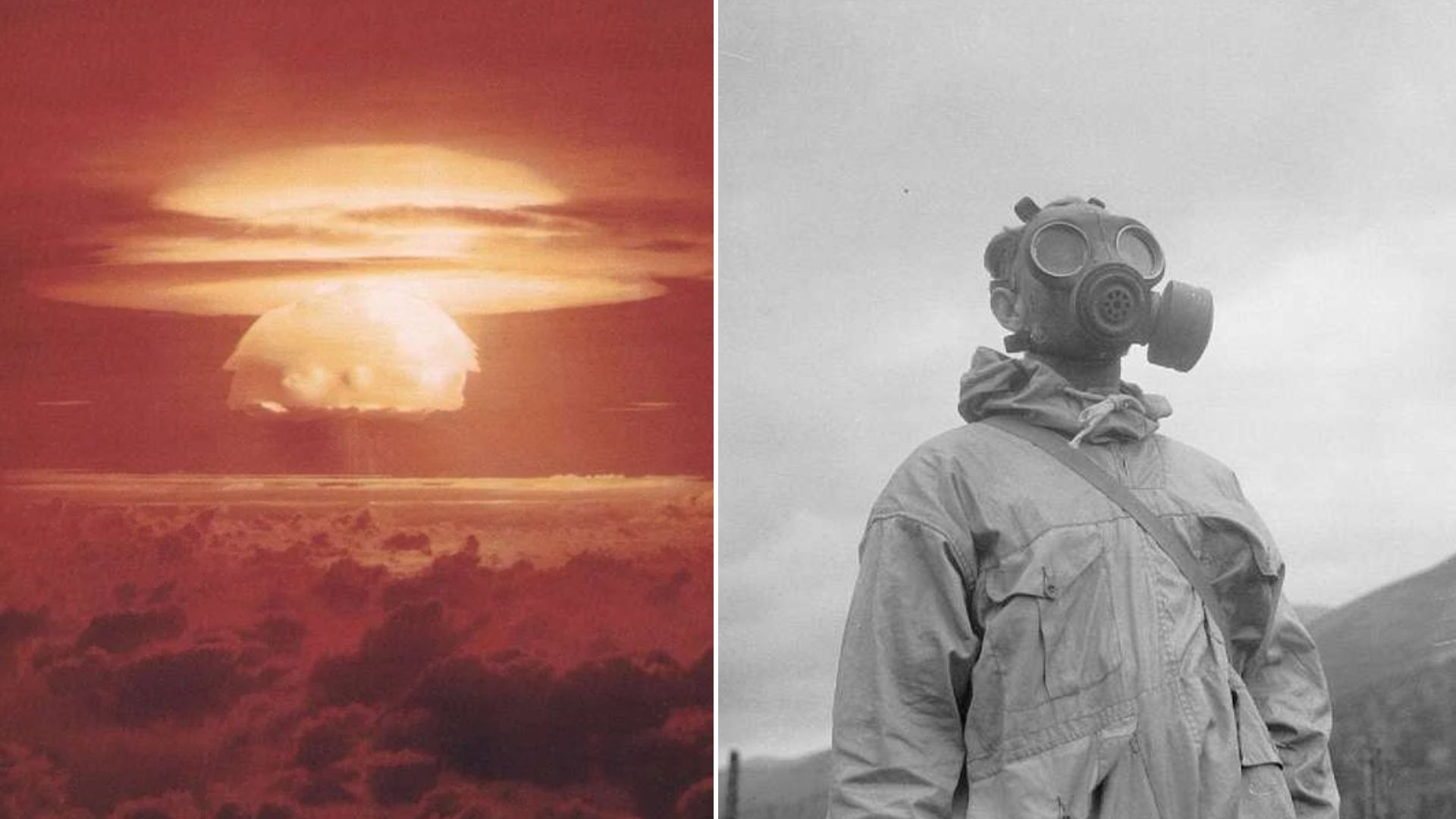
In an ideal world, there would be no wars, and humanity would have little reason to develop weapons designed to destroy lives on such an enormous scale. Unfortunately, conflict has been a recurring part of human history, driving the development of increasingly destructive technologies. From nuclear bombs capable of devastating entire cities to chemical agents and explosives that can threaten civilians long after fighting ends, some weapons have consequences that extend far beyond the battlefield. Their impact is measured not just in immediate casualties, but also in lasting environmental damage, displacement, illness, and generations of human suffering. There is no universally accepted ranking of the world’s deadliest weapons. But these seven stand out for their destructive potential and the devastating consequences they can have when used. 1. Nuclear weapons Few weapons come close to the destructive power of a nuclear bomb. A single detonation can produce an enormous blast, intense heat, and dangerous radiation, destroying buildings and overwhelming emergency services. The consequences can persist for generations. The most powerful nuclear device ever detonated was the Soviet Union’s Tsar Bomba, tested over Novaya Zemlya on October 30, 1961. Its estimated yield was 50 megatons of TNT, around 3,300 times the explosive yield of the Hiroshima bomb. That was a test device, not an operational weapon. But the threat today comes from the thousands of nuclear warheads held by countries around the world. The Stockholm International Peace Research Institute estimated that nine nuclear-armed states possessed approximately 12,241 warheads at the beginning of 2025. 2. Intercontinental ballistic missiles An intercontinental ballistic missile (ICBM) is a delivery system rather than a warhead, but it makes nuclear weapons particularly dangerous by allowing them to travel across continents. ICBMs can carry nuclear warheads over thousands of miles, with some designed to release multiple independently targetable reentry vehicles (MIRVs). These allow one missile to carry several warheads aimed at different targets. The combination of long range, high speed, and multiple warheads makes strategic missile systems among the most consequential weapons ever developed. Their existence also creates the risk of rapid escalation during a crisis, particularly when warning times are short. 3. Biological weapons Biological weapons turn microorganisms or toxins into instruments of warfare. They can involve bacteria, viruses, or substances produced by living organisms, deliberately released to cause disease or death. Anthrax, plague, and botulinum toxin are among the biological agents of serious public-health concern. Some biological threats are particularly difficult to contain because an infectious disease can spread beyond the initial exposure and potentially trigger an epidemic. Unlike a conventional explosion, a biological attack may not be immediately recognizable. Its effects could emerge over time, placing enormous pressure on healthcare systems and public-health authorities. The Biological Weapons Convention, which entered into force in 1975, prohibits the development, production, acquisition, transfer, stockpiling, and use of biological and toxin weapons. 4. Chemical nerve agents Chemical weapons use toxic substances to injure or kill. Among the most dangerous are nerve agents such as sarin and VX, which interfere with the nervous system’s ability to regulate vital bodily functions. These substances can cause severe symptoms, including seizures, paralysis, and respiratory failure. VX is particularly concerning because it can remain dangerous on surfaces for extended periods, depending on environmental conditions. Chemical weapons have been used in modern conflicts, including the Iran-Iraq War and the Syrian civil war. Their effects can extend beyond immediate casualties, leaving survivors with lasting health problems and communities struggling with contamination. The Chemical Weapons Convention prohibits the development, production, stockpiling, and use of chemical weapons. 5. Thermobaric weapons Often called fuel-air or vacuum bombs, thermobaric weapons are designed to produce intense heat and prolonged blast pressure. They use oxygen from the surrounding air as part of their explosive process, creating a powerful pressure wave. Their effects can be particularly destructive in enclosed spaces such as tunnels, bunkers, and buildings, where blast waves can reflect off surrounding surfaces. The resulting injuries can include severe burns, internal trauma, and respiratory damage. Russia’s TOS-1A heavy flamethrower system is one well-known platform associated with thermobaric ammunition. Despite the nickname, these systems are not conventional flamethrowers; they launch rockets carrying specialized warheads. 6. The GBU-43/B MOAB The US military’s GBU-43/B Massive Ordnance Air Blast, better known as the Mother of All Bombs, is among the largest conventional bombs ever developed. Weighing approximately 21,000 pounds (9,525 kg), the GPS-guided weapon is designed to produce a massive blast overpressure against large-area targets and structures such as tunnels and cave complexes. The MOAB was used in combat for the first time on April 13, 2017, when the United States dropped it on an ISIS-occupied cave complex in Afghanistan. Despite its enormous size, it is not a nuclear weapon. Its destructive power is considerably smaller than even a relatively low-yield nuclear device, but it remains one of the most powerful conventional weapons in the US arsenal. 7. Cluster munitions Cluster munitions are designed to scatter numerous smaller explosive devices, known as submunitions, across a wide area. They can be delivered by aircraft, rockets, or artillery systems. Their danger does not end when the initial attack is over. Some submunitions fail to explode on impact, effectively turning fields, roads, and residential areas into minefields that can remain dangerous for years. Children and civilians returning to damaged communities are particularly vulnerable to unexploded devices. According to the International Committee of the Red Cross, at least 1,063 people were killed or injured by cluster munitions in 2025, with civilians accounting for 87% of recorded casualties. The 2008 Convention on Cluster Munitions prohibits their use, production, stockpiling, and transfer for states that are party to it. The destructive legacy of modern warfare The true cost of these weapons cannot be measured by their explosive power or technological sophistication alone. Nuclear weapons can threaten entire populations, biological and chemical agents can leave lasting health consequences, and unexploded munitions can continue claiming civilian lives long after a war has ended.Ideally, technological progress would be directed toward improving lives rather than finding new ways to destroy them. Until then, understanding the destructive potential of these weapons is also a reminder of why preventing their use, limiting their proliferation, and protecting civilians must remain priorities.Get the latest in engineering, tech, space & science - delivered daily to your inbox.Kaif Shaikh is a journalist and writer passionate about turning complex information into clear, impactful stories. His writing covers technology, sustainability, geopolitics, and occasionally fiction. A graduate in Journalism and Mass Communication, his work has appeared in the Times of India and beyond. After a near-fatal experience, Kaif began seeing both stories and silences differently. Outside work, he juggles far too many projects and passions, but always makes time to read, reflect, and hold onto the thread of wonder.
7 of the world’s deadliest weapons that have changed the scale of destruction in modern warfare
Full Article
Original Source
Read the full article at Interestingengineering →KhanList aggregates and links to publicly available news content. We do not host full articles from third-party sources. Always verify important information with original sources.