
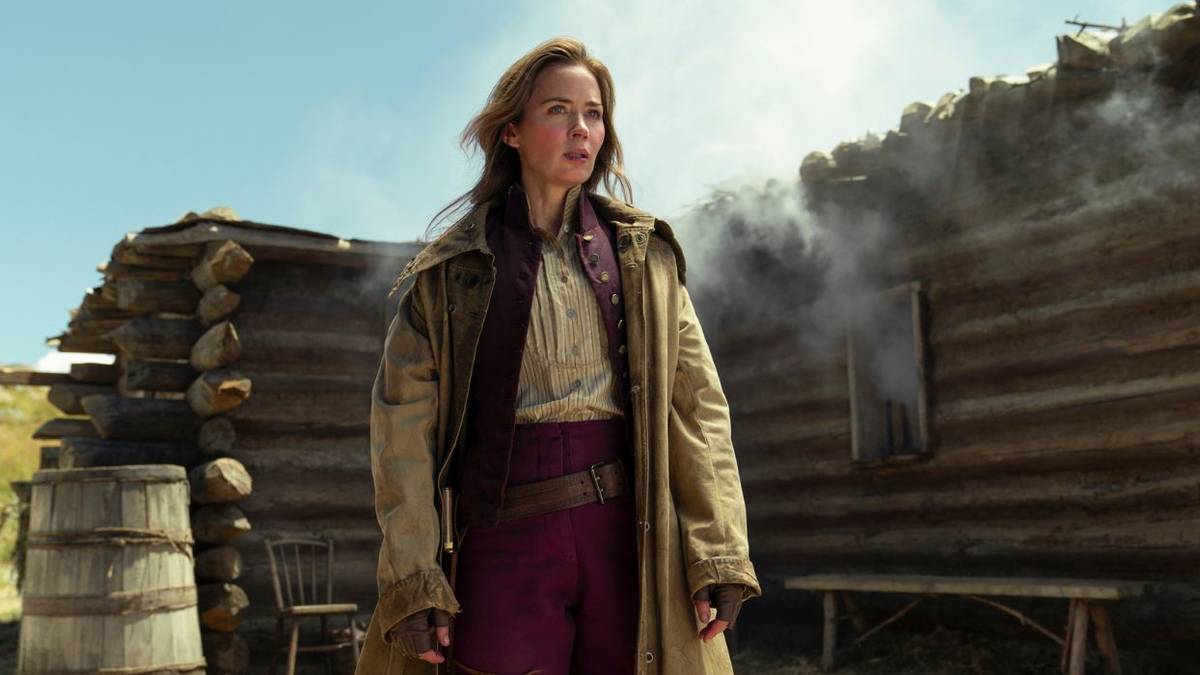
Image via Prime Video Published Aug 12, 2026, 4:28 PM EDT Remus is a writer, editor, journalist, and author with an eye for detail and an extremely active imagination. He is an enthusiast of everything to do with the graphic medium, whether it's Western comics and their adaptations or manga and anime. Remus is also the author of the sci-fantasy novel Once Upon a Time in Hyperspace and several works of short fiction in the mystery, comedy, and horror genres. Sign in to your Collider account Prime Video has been home to some of the best shows and series on streaming for quite some time now. Between long-time favorites like The Boys and critically acclaimed limited series like Daisy Jones & The Six, the streamer has launched several brilliant titles over the years. While some of them have grown to become mainstream pop culture icons, others have sadly been buried under their more popular and successful counterparts, becoming little more than blink-and-miss cult hits. Luckily, even the most obscure shows can stage a comeback if they impact the right audience, like these seven miniseries. Though faded and forgotten, these shows are perfect for their genre, packing depth and quality in their limited runtimes. Some of these are shows that enjoy a niche but dedicated following, while others are rarely heard of, but what they all have in common is a high bar for quality that is not often seen in the world of streaming. So, without further ado, here’s our handpicked selection of near-perfect Prime Video miniseries that practically nobody remembers anymore. 1 ‘Tales from the Loop’ (2020) Image via Prime Video Whenever there is mention of extraordinary sci-fi shows, Tales from the Loop is often on the list, and yet, the Prime Video drama has never found mainstream recognition. Developed by Nathaniel Halpern and based on the neo-futuristic art book by Swedish artist Simon Stålenhag, the series revolves around the interconnected lives of people living around an enigmatic machine called The Loop, exploring the uncanny events that take place in their lives. Jonathan Pryce, Rebecca Hall, Paul Schneider, Duncan Joiner, Daniel Zolghadri, and more appear as notable characters. Surreal and eerily calming, Tales from the Loop is a completely distinct masterpiece of sci-fi art and abstract storytelling. The show addresses thought-provoking themes like the future of humanity and the human perception of time with a hopeful narrative and unique visual tone and style that successfully captures the mood of the original artworks. Released in 2020, the series was positively received by critics and nominated for an Emmy, but since then, Tales from the Loop has largely faded from public memory. Nevertheless, this enigmatic and brilliantly conceived sci-fi series remains a forgotten gem of the early pandemic era that’s always worth revisiting. 2 ‘Solos’ (2021) Image via Prime Video Created by David Weil in his second television project, Solos is a sci-fi anthology drama that follows seven individual stories about shared human experiences and connection. The stories are connected via an overarching plot of memory theft and existential themes, but each individual story deals with separate subjects like time travel, memory tech, artificial intelligence, deep space exploration, robot replicas, and more. The ensemble cast features Anne Hathaway, Morgan Freeman, Helen Mirren, Anthony Mackie, Uzo Aduba, and Dan Stevens in main roles. A thoughtful exploration of the human condition, Solos explores dark, emotional, and psychological themes through the lens of future technology and hard sci-fi, similar to Black Mirror. Unfortunately, Solos was nowhere near as successful as the British sci-fi anthology and has only remained a forgotten but highly experimental Prime Video original that doesn’t often get the credit it deserves for its dramatic narrative. However, with its deeply character-driven story, ambitious production, and compelling performances, Solos might just resonate with fans of niche sci-fi dramas. 3 ‘The Kettering Incident’ (2016) Image via Showcase An Australian sci-fi mystery drama created by Victoria Madden and Vincent Sheehan, The Kettering Incident revolves around a young woman named Anna, who left her titular hometown in Tasmania as a teenager after the mysterious disappearance of her best friend. Years later, when Anna returns to a dilapidated Kettering and simultaneously another teenager goes missing, her return causes a stir, prompting Anna to seek the truth. The main cast stars Elizabeth Debicki, Matthew Le Nevez, Henry Nixon, Damon Gameau, Damien Garvey, and Sacha Horler. Moody, atmospheric, and haunting, The Kettering Incident is heavily reminiscent of Nordic sci-fi noir gems like Katla or Equinox, where creepy supernatural motifs meet small-town sci-fi mysteries and psychological complexities. During its run, the miniseries met with mixed reviews but was praised for the standout performance by Debicki and for the intense mystery at its heart. However, the show was untimely canceled after just the one season and has since faded almost entirely from popular memory, making it one of the most obscure gems you could stream on Prime Video. Collider Exclusive · Sci-Fi Survival Quiz Which Sci-Fi World Would You Survive? The Matrix · Mad Max · Blade Runner · Dune · Star Wars Five universes. Five completely different ways the future went wrong — or sideways, or up in flames. Only one of them is the world your instincts were built for. Eight questions will figure out which dystopia, galaxy, or desert wasteland you'd actually make it out of alive. 💊The Matrix 🔥Mad Max 🌧️Blade Runner 🏜️Dune 🚀Star Wars TEST YOUR SURVIVAL → 01 You sense something is deeply wrong with the world around you. What do you do? The first instinct is often the truest one. APull on every thread until I understand the system — then figure out how to break it. BStop asking questions and start stockpiling — food, fuel, weapons. Questions don't keep you alive. CKeep my head down, observe carefully, and trust no one until I know who's pulling the strings. DStudy the patterns. Every system has a rhythm — learn it, and you learn how to survive it. EFind the people fighting back and join them. You can't fix a broken galaxy alone. NEXT QUESTION → 02 In a world of scarcity, what resource do you guard most fiercely? What we protect reveals what we believe survival actually requires. AKnowledge. If you understand the system, you don't need resources — you can generate them. BFuel. Everything else — movement, power, escape — runs on it. CTrust. In a world of fakes and informants, a truly reliable ally is rarer than any commodity. DWater. And after water, information — the two things empires are truly built on. EShips and credits. The galaxy is big — you survive it by being able to move through it freely. NEXT QUESTION → 03 What kind of threat keeps you up at night? Fear is useful data — if you're honest about what you're actually afraid of. AThat reality itself is a lie — that everything I experience has been constructed to keep me compliant. BA raid. No warning, no mercy — just the roar of engines and then nothing left. CBeing identified. Once someone with power decides you're a problem, you're already out of time. DBeing outmanoeuvred — losing a political game I didn't even know I was playing. EThe Empire tightening its grip until there's nowhere left to run. NEXT QUESTION → 04 How do you deal with authority you don't trust? Every dystopia has a power structure. Your approach to it determines everything. ASubvert it from the inside — learn its rules well enough to weaponise them against it. BIgnore it and stay out of its reach. The further from any power structure, the better. CAppear to comply while doing exactly what I need to do. Visibility is the enemy. DManoeuvre within it carefully. You can't beat a system you refuse to understand. EResist openly when I have to. Some things are worth the risk of being seen. NEXT QUESTION → 05 Which environment could you actually endure long-term? Survival isn't just tactical — it's physical, psychological, and very much about where you are. AUnderground bunkers and server rooms — cramped, artificial, but with access to everything that matters. BOpen wasteland — brutal sun, no shelter, constant movement. At least the threat is honest. CA dense, rain-soaked city where you can disappear into the crowd and nobody asks questions. DMerciless desert — extreme heat, no water, and something enormous living beneath the sand. EThe fringe — backwater planets and busy spaceports where the Empire's attention rarely reaches. NEXT QUESTION → 06 Who do you want in your corner when things fall apart? The company you keep is the clearest signal of who you actually are. AA tight crew of believers who've seen behind the curtain and have nothing left to lose. BOne or two people I'd trust with my life. Any more than that and someone talks. CNobody, ideally. Alliances are liabilities. I work alone unless I have no choice. DA community bound by shared hardship and mutual survival — people who need each other to last. EA ragtag team with wildly different skills and total commitment when it counts. NEXT QUESTION → 07 Where do you draw the line — if you draw one at all? Every survivor eventually faces a moment that tests what they're actually made of. AI won't harm the innocent — even the ones who'd report me without hesitation. BI do what I have to to protect the people I've chosen. Everything else is negotiable. CThe line shifts depending on who's asking and what's at stake. DI draw a long-term line — nothing that compromises my people's future, even if it'd help now. ESome lines, once crossed, can't be uncrossed. I know which ones they are. NEXT QUESTION → 08 What would actually make survival worth it? Staying alive is one thing. Having a reason to is another. AWaking others up — dismantling the illusion so no one else has to live inside it. BFinding somewhere — or someone — worth protecting. A reason to keep moving. CAnswers. Understanding what I am, what any of this means, before time runs out. DLegacy — shaping the future in a way that outlasts me by generations. EFreedom — for myself, for others, for every world still living under someone else's boot. REVEAL MY WORLD → Your Fate Has Been Calculated You'd Survive In…Your answers point to the world your instincts were built for. This is the universe your temperament, your survival instincts, and your particular brand of stubbornness were made for. The MatrixYou took the red pill a long time ago — probably before anyone offered it to you. You're a systems thinker who can't help but notice the seams in things. You're drawn to understanding how the system works before figuring out how to break it. You'd find the Resistance, or it would find you — your instinct for spotting constructed realities is the machines' worst nightmare. You function best when you have access to information and the freedom to act on it. The Matrix built an airtight prison. You'd be the one probing the walls for the door. Mad MaxThe wasteland doesn't reward the clever or the well-connected — it rewards those who are hard to kill and harder to break. That's you. You don't need comfort, community, or a cause larger than the next horizon. You need a vehicle, a clear threat, and enough fuel to outrun it — and you're good at all three. You are unsentimental enough to survive that world, and decent enough — just barely — to be something more than another raider. In the wasteland, that distinction is everything. Blade RunnerYou'd survive here because you know how to exist in moral grey areas without losing yourself completely. You read people accurately, keep your circle small, and ask the questions others prefer not to answer. In a city where humanity is a legal designation rather than a feeling, you hold onto something that keeps you functional. You're not a hero. But you're not lost, either. In Blade Runner's world, that distinction is everything. DuneArrakis is the most hostile environment in the known universe — and you are precisely the kind of person it rewards. Patience, discipline, and political awareness are your core strengths — and on Arrakis, they're survival tools. You understand that the long game matters more than any single victory. Others come to Dune and are consumed by it. You'd learn its logic and earn its respect. In time, you wouldn't just survive Arrakis — you'd begin to reshape it. Star WarsThe galaxy far, far away is vast, loud, and in a constant state of violent political upheaval — and you wouldn't have it any other way. You find meaning in being part of something larger than yourself — a cause, a crew, a rebellion. You'd gravitate toward the Rebellion, or the fringes, or whatever pocket of the galaxy still believes the Empire's grip can be broken. You fight — not because you have to, but because standing aside isn't something you're capable of. In Star Wars, that willingness is what makes all the difference. ↻ RETAKE THE QUIZ 4 ‘War & Peace’ (2016) Image via BBC A British series adaptation of Leo Tolstoy’s 1869 novel directed by Tom Harper and written by Andrew Davies, War & Peace revolves around two Russian aristocratic families as they navigate life during the Napoleonic Wars. The series focuses on the lives and ambitions of Pierre, Andrei, and Natasha, played by Paul Dano, James Norton, and Lily James, respectively, who must overcome personal struggles and societal expectations during a tumultuous and unstable time. The show also features Tuppence Middleton, Jessie Buckley, Callum Turner, and Jack Lowden as other principal characters. The second-ever BBC production of the 19th-century literary classic, 2016’s War & Peace may not exactly be a match for the 1972 adaptation starring Anthony Hopkins, and in all fairness, it cannot fully capture the depth and intensity of the original in just six episodes. However, the miniseries is still a masterful production in its own right, and it’s arguably a better watch for modern audiences, with its compact storytelling and a balance of heart and humor. Despite the critical acclaim it received upon its release for its sweeping visuals and strong performances, War & Peace has since become a heavily underrated historical TV show that’s forgotten by all but the most dedicated genre fans. 5 ‘Three Pines’ (2022) Image via Prime Video Created by Emilia di Girolamo, Three Pines is an adaptation of Canadian author Louise Penny’s mystery novels featuring Chief Inspector Armand Gamache of the Quebec Police Force. Starring Alfred Molina as Armand Gamache, the eight-episode series follows the inspector as he solves seemingly unsolvable cases with his lateral perspectives on seemingly ordinary things, while navigating his own complicated history. Rossif Sutherland, Elle-Máijá Tailfeathers, Tantoo Cardinal, Clare Coulter, and Sarah Booth play other main roles. Introspective and thoughtful, Three Pines is unique in its storytelling, themes, and atmosphere, and often heavier than the original novels. The series stands out with its tender tone and poetic setting and an inspector who is kind and wise, contrary to what is most expected of detectives and cops in TV shows. When it was first released, Three Pines received positive reviews and praise for its intelligent and melancholic mysteries, favorably compared to shows like Broadchurch, but it was canceled shortly after, which may have played a part in its relatively obscure status. 6 ‘The Girlfriend’ (2025) Image via Prime Video Directed by Robin Wright and Andrea Harkin, with Wright also starring in a lead role, The Girlfriend is a twisted psychological thriller created by Naomi Sheldon and Gabbie Asher that’s adapted from Michelle Frances’ 2017 novel of the same name. The series follows Wright’s Laura Sanderson, an affluent art gallery owner in London, whose seemingly perfect life begins to unravel when she meets her son’s new girlfriend, Cherry, and suspects her motivations. Olivia Cooke stars as the titular character, with Laurie Davidson, Waleed Zuaiter, Tanya Moodie, and Leo Suter in other key roles. While it's not unique in its themes of mother-versus-girlfriend power struggles and obsessive control, The Girlfriend stands out in its execution of those motifs. Projected through alternative perspectives of the central characters, the narrative shuffles between protectiveness and toxicity, each delivered through chilling performances by Wright and Cooke. Despite its critical acclaim for Wright’s direction and the cast’s chemistry, The Girlfriend almost instantly faded from popular discourse, though a planned follow-up miniseries, The Boyfriend, could reignite its fortunes. 7 ‘The English’ (2022) Image via Prime Video Written and directed by Hugo Blick, The English is an easily overlooked Prime Video production that flew under the mainstream radar, despite its stellar cast and strong story. Set in the 1890s, the series tells the story of the titular Englishwoman, Lady Cornelia Locke, who travels to the Old American West seeking revenge for her son’s death and discovers a shared history with Sgt. Eli Whipp, a member of the Pawnee Nation, whom she meets along the way. Emily Blunt and Chaske Spencer star as the two central characters, with Ciarán Hinds and Toby Jones in other key roles. Artistic and slow-burning, The English is a very well-made revisionist Western drama that unfolds in a way that would perhaps appeal to a very specific kind of audience. The striking cinematography and compelling performances by Emily Blunt and Chaske Spencer, however, are pretty universally appealing. Critically acclaimed for its cast and production, The English may not be as widely known as it ought to be, but it remains a hidden gem of the genre that is worth discovering by new fans. Release Date 2022 - 2022 Network BBC Two Directors Hugo Blick Creator(s) Hugo Blick Seasons 1
7 Near-Perfect Prime Video Miniseries Nobody Remembers
Full Article
Original Source
Read the full article at Collider →KhanList aggregates and links to publicly available news content. We do not host full articles from third-party sources. Always verify important information with original sources.