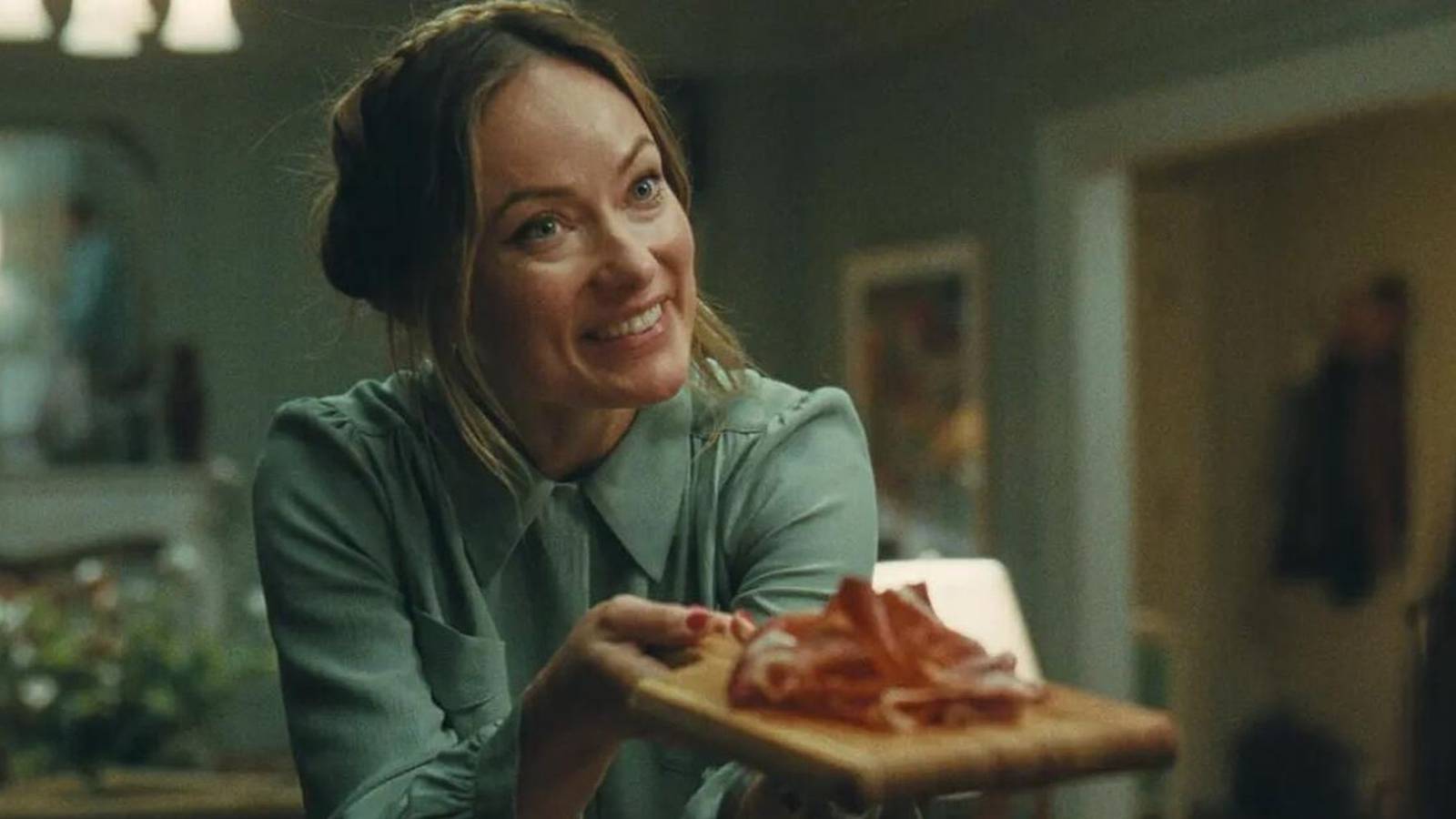
Image via A24 Published Jul 18, 2026, 9:41 AM EDT William likes taking edibles, watching movies with his dogs, and then writing about those movies. He doesn't have social media so if you want more of his unhinged opinions or another place to comment hurtful things, you can check out his Letterboxd. Sign in to your Collider account The Invite, the relationship comedy directed by Olivia Wilde and starring herself alongside Seth Rogen, Edward Norton and Penélope Cruz, has quickly become one of the most critically acclaimed films of the year, and is likely to be in the conversation come awards season. It's an incredibly well-acted, strikingly staged and sometimes painfully funny window into marriage, love and sex that has reasserted Wilde's position as a fascinating filmmaker to watch. It's also a film that has brought many other films back into the cultural conversation. Aside from the obvious The People Upstairs, the Spanish-language film which The Invite is a remake of, there are a number of other films that served as clear inspirations for Wilde, who has been quite vocal about many of them as well. In this late era of filmmaking and constant consumption, there's no way a film could be made in a vacuum away from outside influence, and these are the films which clearly influenced The Invite. '12 Angry Men' (1957) Image via United Artists Sidney Lumet was a director of expansive talent. He worked without genre borders on films as varied as the Agatha Christie mystery Murder on the Orient Express and the cult musical The Wiz. Despite the breadth of his talent, he's best known for his crime dramas, of which there are many certified classics, not least of which is the courtroom drama 12 Angry Men. Though its content couldn't be more different from The Invite, Lumet's use of a claustrophobic set and confined staging to build tension were major influences on Wilde. Based on a screenplay by Reginald Rose that was originally made as an episode of an anthology television series, the film tells the story of the jury of a murder trial. The twelve men, only known by their juror numbers, seem to be in unanimous agreement of the guilt of the accused, except for Juror 8 (Henry Fonda). His doubts are what drive the sweaty drama of this unimpeachable legal drama that serves as a stark rebuke of mob mentality and McCarthyism. 12 Angry Men is one of Lumet's masterpieces, and one of the most effective uses of a single set of any film ever made. 'Who's Afraid of Virginia Woolf?' (1966) Image via Warner Bros. Just about any film that traps two couples together for a night of revelations owes a debt to Who's Afraid of Virginia Woolf? Based on the Edward Albee play and directed by Mike Nichols, it's a searing black comedy featuring a quarter of perfect performances by Richard Burton, Elizabeth Taylor, George Segal and Sandy Dennis. It's a film that Wilde has openly praised and cited as a major influence on The Invite, and even though it may be decades old, it still packs a cynical punch. College professor George (Burton) and his wife Martha (Taylor) have invited younger couple Nick (Segal) and Honey (Dennis) to their home for a nightcap. The late night gathering barely begins when George and Martha begin trading barbs, peeling back the layers of their dysfunctional marriage. It's when they turn their toxic gaze onto their younger counterparts that things get even more uncomfortable and startling truths are revealed. Who's Afraid of Virginia Woolf? never feels confined by its stage-bound origins, but instead feels liberated by the increased intimacy of film. 'The Graduate' (1967) Nichols' follow-up to Virginia Woolf is another film Wilde has name-checked as inspiration. The Graduate is a satirical coming-of-age comedy filled with dysfunctional notions of romance. It's inspired many more films than just The Invite, from the iconic seduction scene to its ending that subverted a romantic comedy trope that hadn't been invented yet. It's sharply written, poignantly acted and has a strong visual style that accentuates the isolation of the lead character that is clearly echoed in The Invite. Benjamin Braddock (Dustin Hoffman) is a recent college graduate who's faced with a future of uncertainty. His uncertainty leads him into the arms of the older, and married, Mrs. Robinson (Anne Bancroft), whose daughter Elaine (Katharine Ross) he later attempts to court. It all culminates with an ending that undercuts its romantic joy with an ambiguous silence that only a select few comedies have been able to measure up to, The Invite included. The Graduate is a precise and perceptive comedy that captures an era of filmmaking and American culture with an enhanced ennui. 'Bob & Carol & Ted & Alice' (1969) Image via Columbia Pictures Along with Virginia Woolf, the film most often compared to The Invite is the sexual satire Bob & Carol & Ted & Alice. As much a time capsule as The Graduate, it's a snapshot of the '60s sexual revolution taken from the perspective of two California couples. Though it might seem tame in comparison to the far more sexually liberated films and television series made today, the film was one of many made during a cultural shift in Hollywood as newer talents began to rise, and more taboo subjects could be explored. Directed by Paul Mazursky, the film follows Bob (Robert Culp) and Carol (Natalie Wood), who come home from a free-spirited retreat with new open attitudes toward life. Those include sexual attitudes as well, which comes as a culture shock for straight-laced couple Ted (Elliot Gould) and Alice (Dyan Cannon). The film's climax, or more appropriately anti-climax, involves a sexual suggestion that would seem very familiar to anyone who's seen the final act of The Invite. Collider Exclusive · Oscar Best Picture Quiz Which Oscar Best PictureIs Your Perfect Movie? Parasite · Everything Everywhere · Oppenheimer · Birdman · No Country Five Oscar Best Picture winners. Five completely different visions of what cinema can be — and what it can do to you. One of them is the film that was made for the way your mind works. Ten questions will figure out which one. 🪜Parasite 🌀Everything Everywhere ☢️Oppenheimer 🐦Birdman 🪙No Country for Old Men FIND YOUR FILM → 01 What kind of film experience do you actually want? The best movies don't just entertain — they leave something behind. ASomething that pulls the rug out — that makes me think I'm watching one kind of film and then reveals I'm watching another entirely. BSomething overwhelming — funny, sad, absurd, and genuinely moving, all at once. CSomething grand and weighty — a film that makes me feel the full scale of what I'm watching. DSomething formally daring — a film that pushes what cinema can even do. ESomething lean and relentless — pure tension with no wasted frame. NEXT QUESTION → 02 Which idea grabs you most in a film? Great films are driven by a central obsession. What's yours? AClass, inequality, and what people are willing to do when desperation meets opportunity. BIdentity, family, and the chaos of trying to hold your life together when everything is falling apart. CGenius, moral responsibility, and the catastrophic weight of a decision you can never take back. DEgo, legacy, and the terror of becoming irrelevant while you're still alive to watch it happen. EEvil, chance, and whether moral order actually exists or if we just tell ourselves it does. NEXT QUESTION → 03 How do you like your story told? Form is content. The way a story is shaped changes what it means. AGenre-twisting — I want it to start in one lane and migrate into something completely different. BMaximalist and genre-blending — comedy, action, drama, sci-fi, all in one ride. CEpic and non-linear — cutting between timelines, building a mosaic of cause and consequence. DA single unbroken flow — I want to feel like I'm living it in real time, no cuts to safety. ESpare and precise — every scene doing exactly what it needs to do and nothing more. NEXT QUESTION → 04 What makes a truly great antagonist? The opposition defines the protagonist. What kind of opposition fascinates you? AA system — invisible, structural, and almost impossible to fight because it has no single face. BThe self — the ways we sabotage, abandon, and fail the people we love most. CHistory — the unstoppable momentum of events that no single person can stop or redirect. DThe industry — the machinery of culture that chews up talent and spits out irrelevance. EPure, implacable evil — a force so certain of itself it becomes almost philosophical. NEXT QUESTION → 05 What do you want from a film's ending? The final note is the one that lingers. What do you want it to sound like? AShock and inevitability — a conclusion that recontextualises everything that came before it. BEarned emotion — I want to cry, laugh, and feel genuinely hopeful, even if the world is a mess. CDevastation and grandeur — an ending that makes me sit in silence for a few minutes after. DAmbiguity — something that leaves enough open that I'm still thinking about it days later. EBleakness — an honest refusal to pretend the world is tidier than it actually is. NEXT QUESTION → 06 Which setting pulls you in most? Where a film takes place shapes everything — mood, stakes, what's even possible. AA gleaming modern city with a hidden underside — beauty masking rot, wealth masking desperation. BA collapsing suburban life that opens onto something infinite — the multiverse of a single ordinary person. CThe corridors of power and science at a world-historical turning point — where decisions echo for decades. DThe grimy, alive chaos of New York and Hollywood — fame as both destination and trap. EVast, indifferent landscape — desert and highway where violence arrives without warning or reason. NEXT QUESTION → 07 What cinematic craft impresses you most? Every great film has a signature — a technical or artistic element that makes it unmistakable. AProduction design and mise-en-scène — every frame composed to carry meaning beneath the surface. BEditing and tonal control — the ability to move between registers without losing the audience. CScore and sound design — music that becomes inseparable from the dread and awe of what you're watching. DCinematography as performance — the camera not recording events but participating in them. ESilence and restraint — what's left unsaid and unshown doing more work than any dialogue could. NEXT QUESTION → 08 What kind of main character do you root for? The protagonist is the lens. Who you choose to follow says something about you. ASomeone smart and resourceful who makes increasingly dangerous decisions under pressure. BSomeone overwhelmed and ordinary who turns out to be capable of something extraordinary. CA brilliant, tortured figure whose gifts and flaws are inseparable from each other. DA self-destructive artist whose ego is both their superpower and their undoing. EA quiet, principled person trying to make sense of a world that has stopped making sense. NEXT QUESTION → 09 How do you feel about a film that takes its time? Pace is a choice. Some films sprint; others let tension accumulate slowly, deliberately. AI love a slow build when I know the payoff is going to be seismic — patience for a devastating reveal. BGive me relentless momentum — I want to feel breathless and emotionally spent by the end. CEpic runtime doesn't scare me — if the material demands three hours, give me three hours. DI want it to feel propulsive even when nothing is technically happening — restless energy throughout. EDeliberate and unhurried — I want dread to accumulate in the spaces between the action. NEXT QUESTION → 10 What do you want to feel walking out of the cinema? The best films leave a mark. What kind of mark do you want? AUnsettled — like I've just seen something I can't fully explain but can't stop thinking about. BMoved and energised — like the film reminded me what actually matters and gave me something to hold onto. CHumbled — like I've been in the presence of something genuinely important and overwhelming. DExhilarated — like I've just seen cinema doing something it's never quite done before. EHaunted — like a cold, quiet dread that stays with me for days. REVEAL MY FILM → The Academy Has Decided Your Perfect Film Is…Your answers have pointed to one Oscar Best Picture winner above all others. This is the film that was made for the way your mind works. ParasiteYou are drawn to films that operate on multiple levels simultaneously — that begin in one genre and quietly, brilliantly migrate into another. Bong Joon-ho's Parasite is a film about class, desire, and the architecture of inequality that manages to be darkly funny, deeply suspenseful, and genuinely shocking across a single extraordinary running time. Your instinct is for cinema that hides its true intentions until the moment it's ready to reveal them. Parasite is exactly that — a film that rewards close attention and punishes assumptions, right up to its devastating final image. Everything Everywhere All at OnceYou want it all — and this film gives you all of it. The Daniels' Everything Everywhere All at Once is one of the most maximalist films ever made: action comedy, multiverse sci-fi, family drama, existential crisis, and a genuinely earned emotional core that sneaks up on you amid the chaos. You are someone who responds to ambition, who doesn't want cinema to choose between being entertaining and being meaningful. This film refuses that choice entirely. It is overwhelming by design, and its overwhelming nature is precisely the point — because the feeling of being crushed by infinite possibility is exactly what it's about. OppenheimerYou are drawn to cinema on a grand scale — films that understand history not as a backdrop but as a force, and that place their characters inside that force and watch what happens. Christopher Nolan's Oppenheimer is a film about the terrifying gap between what we can do and what we should do, told with the full weight of one of the most consequential moments in human history behind it. You want your films to feel important without feeling self-important — to earn their ambition through sheer craft and the gravity of their subject. Oppenheimer does exactly that. It is enormous, complicated, and refuses easy comfort. BirdmanYou are drawn to films that foreground their own construction — that make the how of the filmmaking part of the what it's about. Alejandro González Iñárritu's Birdman, shot to appear as a single continuous take, is cinema examining itself through the cracked mirror of a fading actor's ego. You respond to formal daring, to the feeling that a film is doing something that probably shouldn't be possible. Michael Keaton's performance and Emmanuel Lubezki's restless camera create something genuinely unlike anything else — a film that is simultaneously about creativity, relevance, self-destruction, and the impossibility of ever truly knowing if your work means anything at all. No Country for Old MenYou are drawn to cinema that trusts silence, that refuses to explain itself, and that treats dread as a form of meaning. The Coen Brothers' No Country for Old Men is a film about the arrival of a new kind of evil — implacable, arbitrary, and utterly indifferent to the moral frameworks we use to make sense of the world. It is one of the most formally controlled films ever made, and its controlled restraint is what makes it so terrifying. You want your films to haunt you, not comfort you. You are not interested in resolution if resolution would be dishonest. No Country for Old Men is honest in a way that most cinema never dares to be. ↻ RETAKE THE QUIZ 'Scenes from a Marriage' (1974) Image via Cinema 5 Distribution On the more dramatic end of the scale of marital drama is Ingmar Bergman's influential Scenes from a Marriage, which was initially broadcast as a nearly five-hour miniseries in Sweden before being cut to under three for an international theatrical release. It's an excruciatingly intimate drama that has influenced some of the best relationship movies of all time, including Marriage Story and the Before Trilogy. It also had a clear impact on Wilde, who approaches some of the same intimacy in The Invite, but from the other, more comedic end of the scale. Episodically chronicling the dissolution of the marriage between Johan (Erlan Josephson) and Marianne (Liv Ullmann), the film is a very raw depiction of imperfect people and their deep-seated issues that form the fissures in their relationship. The cinematography by Sven Nykvist draws the audience in as a participant in the proceedings, giving the film a palpable unease. Scenes from a Marriage is one of the most honest, and honestly uncomfortable, depictions of married life to ever be made. 'Interiors' (1978) Image via United Artists Director (and social pariah) Woody Allen was inspired by Scenes from a Marriage and Bergman in general when he made his more dramatic film Interiors. Wilde has broadly mentioned the intentionality of Allen's sets and filmmaking style as influencing The Invite, without specifically mentioning Interiors, but it's not hard to draw a comparison between the two, or any number of other Allen films. It was the follow-up to Annie Hall and also starred Diane Keaton, his oft-muse who also holds a special place in the heart of Wilde, who dedicated The Invite to her. In the film, Keaton plays one of the three daughters whose lives are upended by their parent's divorce and the subsequent suicide attempt. There's a lot of very dark dramatic content in the film, including an attempted sexual assault, which makes it nigh impossible to watch in the current context Allen occupies, but the performances are all perfect, including Keaton, Geraldine Page, Mary Beth Hurt, Kristin Griffith and Maureen Stapleton. 'The Birdcage' (1996) Image via MGM Not wanting to end this on a dreary Woody Allen movie, let's focus instead on another Mike Nichols classic. The Birdcage has specifically been called out by Wilde as a perfect comedy of errors with some of the best performances of all time. She's not wrong. The American remake of the French farce La Cage Aux Folles has achieved its own acclaimed status as a landmark queer comedy. It also features two of the most comedically precise performances by Robin Williams and Nathan Lane as a Miami couple who are faced with the prospect of playing it straight for the conservative parents of their son's fiancée. In addition to the performances of Williams and Lane as Armand and Albert, the film also benefits from having two of the stiffest straight white people ever portrayed on film for the comedic madmen to bounce off. In the film's climactic third act, the fateful dinner occurs between the two families, with Gene Hackman and Dianne Wiest playing an ultraconservative Republican husband and wife that look downright moderate by today's standards. The entire dinner party is comedic gold, from Hackman getting major laughs in complete silence to Lane pretending to be a modest housewife. The Birdcage is a classic comedy, and The Invite carries on its awkward tension. The Birdcage Release Date March 8, 1996 Runtime 119 minutes Director Mike Nichols Writers Elaine May Producers Mike Nichols Main Genre Comedy Budget 31000000.0 Studio(s) United Artists IMDb ID tt0115685 TMDB User Rating 7 .028 Executive Producer(s) Marcello Danon, Neil A. Machlis
7 Movies That Clearly Influenced 'The Invite'
Full Article
Original Source
Read the full article at Collider →KhanList aggregates and links to publicly available news content. We do not host full articles from third-party sources. Always verify important information with original sources.