More than 6,000 exoplanets have now been confirmed beyond our Solar System, but only a handful truly redefine what astronomers thought was possible. Over the past few years, observatories such as the James Webb Space Telescope (JWST), ESO’s Very Large Telescope (VLT), and NASA’s TESS mission have uncovered alien worlds that are evaporating into space, forming before our eyes, or hiding in plain sight for more than a decade. Here are seven of the most fascinating exoplanets discovered or dramatically redefined in recent years. 1. Beta Pictoris d: The planet that hid for more than a decade Astronomers using the European Southern Observatory’s Very Large Telescope recently announced the discovery of Beta Pictoris d, a giant planet that had remained hidden in archival observations for over ten years. The world is about 100 times fainter than its famous sibling, Beta Pictoris b, making it one of the faintest exoplanets ever directly imaged from Earth. Its discovery also makes Beta Pictoris only the second known planetary system with three directly imaged planets, providing astronomers with an exceptional laboratory for studying planetary formation. 2. BD+05 4868 Ab: A planet literally evaporating away Few exoplanets are as dramatic as BD+05 4868 Ab. Located about 140 light-years away, this rocky world orbits so close to its host star that its surface is believed to be molten. Intense heat strips away rock from the planet, creating spectacular comet-like mineral tails stretching millions of kilometers into space. Astronomers believe they are witnessing the slow destruction of an entire planet in real time, making it one of the most unusual planetary systems ever observed. 3. WISPIT-2 b: Watching a planet being born Most exoplanets are discovered long after they have formed. WISPIT-2 b is different. It was directly imaged while still embedded within the gas-and-dust disk surrounding its young star. The planet appears to have carved a visible gap inside the protoplanetary disk, giving astronomers one of the clearest views yet of planetary formation in progress. Systems like WISPIT-2 are exceptionally rare and provide valuable insights into how giant planets emerge from stellar nurseries. 4. TOI-561 b: A lava world that challenged expectations The rocky exoplanet TOI-561 b circles its star in less than half an Earth day, making its surface hot enough to sustain vast oceans of molten rock. Recent observations have suggested that this extreme world may retain an atmosphere despite temperatures that should have stripped lighter gases away long ago. Understanding how such planets survive under these conditions could improve scientists’ understanding of rocky planets orbiting close to their stars. 5. 2M1510 (AB) b: A real-life Tatooine Science fiction imagined planets orbiting two suns decades before astronomers found one. 2M1510 (AB) b goes a step further by orbiting two brown dwarfs instead of ordinary stars. Brown dwarfs are often described as “failed stars” because they never became massive enough to sustain hydrogen fusion. The discovery has challenged existing theories of planet formation, suggesting planets can emerge in environments previously considered unlikely. 6. K2-18 b: The exoplanet that keeps scientists debating life Few planets have generated as much discussion as K2-18 b. Located within its star’s habitable zone, the super-Earth has been studied extensively by the James Webb Space Telescope for signs of atmospheric chemistry that could hint at biological activity. While recent observations sparked excitement over possible biosignature gases, subsequent analyses have emphasized that no evidence of extraterrestrial life has been confirmed. Even so, K2-18 b remains one of the most important targets in the search for potentially habitable worlds. 7. L 98-59 d: A volcanic world unlike anything in our Solar System Among the newest additions to this growing list is L 98-59 d, an exoplanet about 35 light-years away that appears to host a global molten magma ocean beneath an atmosphere rich in sulfur compounds. The discovery offers astronomers an unprecedented opportunity to study how rocky planets evolve under extreme conditions. Unlike Earth, where volcanic activity is largely localized, L 98-59 d may represent an entire planet shaped by continuous volcanism, making it one of the most hostile—and scientifically valuable—worlds ever identified. The golden age of exoplanet discovery Every year, astronomers uncover hundreds of new worlds, but the most exciting discoveries are no longer just about adding another dot to the catalog. Today’s observatories are beginning to reveal how planets form, how they die, what their atmospheres contain, and whether any could potentially support life. With the James Webb Space Telescope, next-generation ground observatories, and future missions on the horizon, these seven worlds are unlikely to remain the most astonishing for long. The next truly extraordinary exoplanet could already be waiting in the data. Recommended ArticlesGet the latest in engineering, tech, space & science - delivered daily to your inbox.Kaif Shaikh is a journalist and writer passionate about turning complex information into clear, impactful stories. His writing covers technology, sustainability, geopolitics, and occasionally fiction. A graduate in Journalism and Mass Communication, his work has appeared in the Times of India and beyond. After a near-fatal experience, Kaif began seeing both stories and silences differently. Outside work, he juggles far too many projects and passions, but always makes time to read, reflect, and hold onto the thread of wonder.
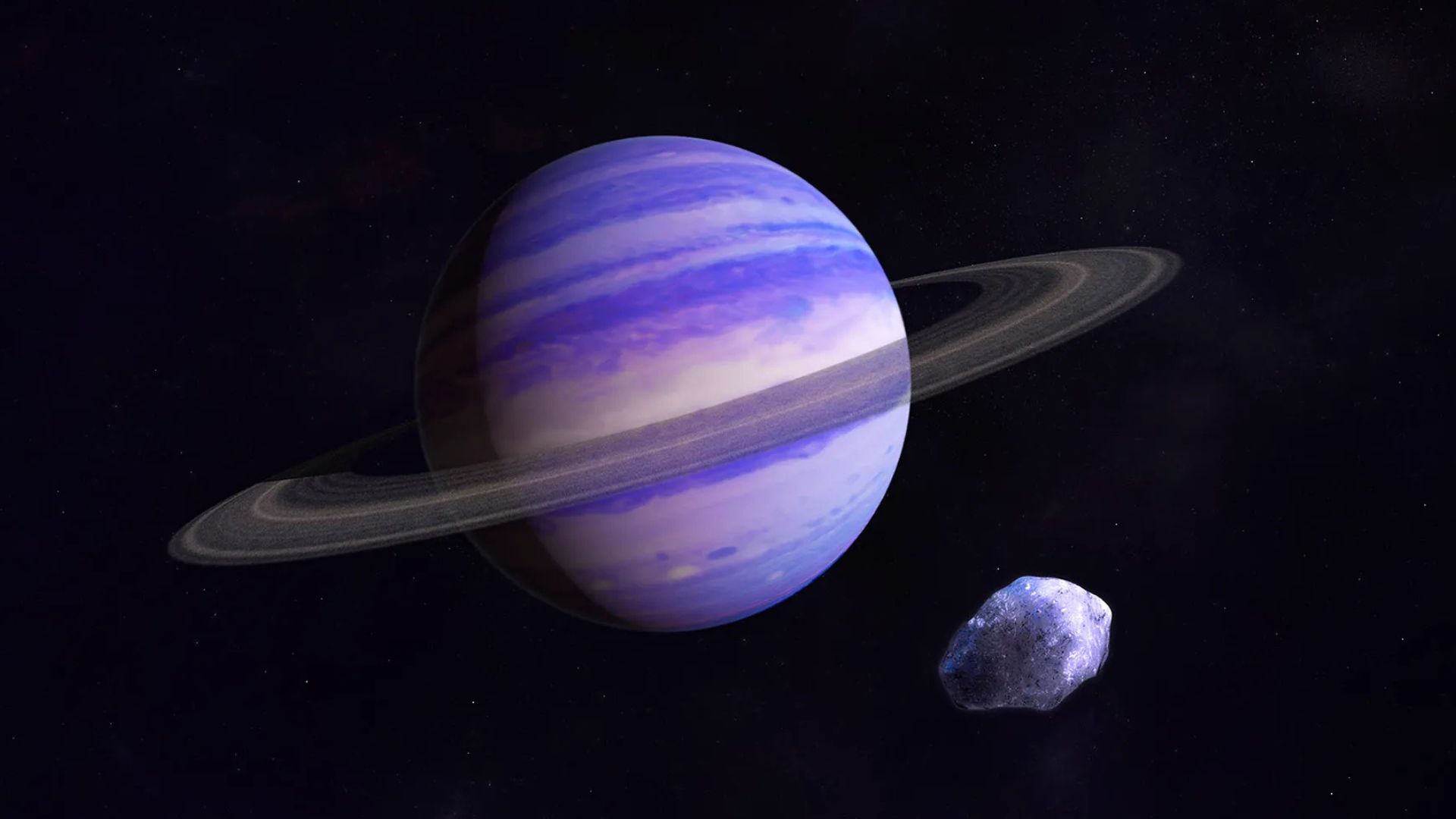
7 most stunning exoplanets discovered in recent years
Full Article
Original Source
Read the full article at Interestingengineering →KhanList aggregates and links to publicly available news content. We do not host full articles from third-party sources. Always verify important information with original sources.