
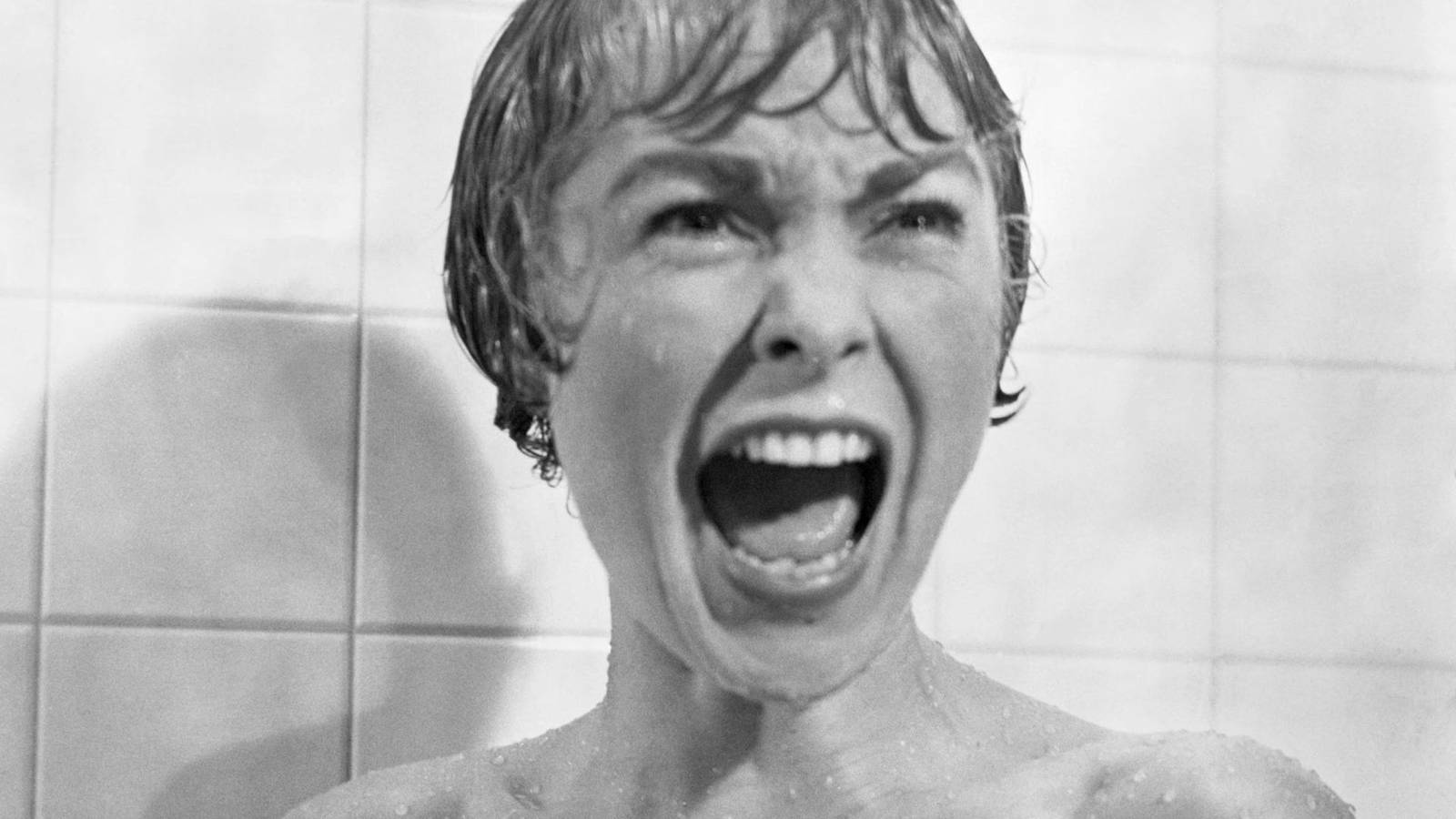
Published Nov 14, 2026, 7:04 AM EST Senior Music Editor at Screen Rant, Sarah's love of sound and story drive the beat. A globetrotting brand whisperer and award-winning journalist, she’s built cross-cultural narratives around the world—but music has always been her true north. She launched DJ Mag North America, successfully introducing the iconic UK brand to the U.S. market. Previously, she carved a space for EDM inside the pages of VIBE, blending electronic and hip-hop culture long before it was trendy. Major spoilers ahead for all seven movies. Most movies save their biggest surprise for the end. The audience suspects the wrong person until a final-act revelation upends everything. It's a tried-and-tested arrangement, and the best plot twists in crime movies demonstrate how satisfying a properly timed disclosure can be. But there's something especially audacious about dropping the bombshell while most of the story is still ahead. Alfred Hitchcock knew that better than almost anyone. In Psycho, he spent nearly half a movie encouraging viewers to follow Janet Leigh's troubled heroine before disposing of her in the shower. The scene was horrifying, but the real trick was what happened afterward: a story that appeared to be about stolen money suddenly had no thief to follow. An early twist creates a problem for the filmmaker. Once the surprise is out, there has to be enough compelling material left to justify the decision. Killing someone in the opening minutes doesn't automatically qualify, either. Plenty of horror movies do that. The more interesting question is whether the reveal forces viewers to reconsider the kind of film they're watching. That's the principle behind this ranking. Timing matters, but the entries aren't ordered by a stopwatch. What counts most is how radically the reveal changes the story and how convincingly the film follows through. A clever genre switch can be tremendous fun without being as consequential as losing the character we've been encouraged to treat as the lead. Some of these surprises were practically advertised in advance, which complicates matters. Others remained closely guarded secrets. Either way, the best early twists don't finish the puzzle. They make audiences realize they've been trying to solve the wrong one. 7 Fresh (2022) Release Date March 4, 2022 Runtime 114 minutes Director Mimi Cave Fresh starts like a romantic comedy. Noa (Daisy Edgar-Jones), defeated by dating apps, meets a charming doctor named Steve (Sebastian Stan) at the grocery store. Then, about half an hour into the film, he drugs her and reveals that he sells women's flesh to wealthy cannibals. Well, that explains why the first date went so smoothly. Director Mimi Cave makes the transformation part of the film's design. The opening credits don't appear until around the 30-minute mark, as though the seemingly agreeable romance has been a feature-length practical joke on Noa. Suddenly, Steve's earlier charm looks less like flirtation and more like the sales technique of a man who knows exactly how to gain someone's trust. The turn is brilliantly staged, and the rest becomes a nasty exercise in survival horror. Yet the marketing and growing unease have hinted that something dreadful is coming. Fresh conceals the nature of its horror without making audiences rethink whose story they're watching. That's a terrific trick, but the movies above take bigger structural risks. 6 Scream (1996) Release Date December 20, 1996 Runtime 112 minutes Director Wes Craven Cast Neve Campbell Sidney Prescott Wes Craven put Scream's biggest star in the opening scene, then killed her before the story had properly begun. Drew Barrymore's Casey Becker is murdered by Ghostface roughly 12 minutes in, despite the actress's prominence in the marketing. Anyone assuming her celebrity came with plot armor was in for a very unpleasant surprise. Craven builds the sequence around a phone call that stops being playful. Casey's horror-movie knowledge offers no protection, and Barrymore makes the ordeal frightening. The opening established the tone that helped make Scream one of the essential '90s horror movies. It also made a promise the franchise still works to keep: knowing the rules won't necessarily save anybody. The distinction from Psycho matters. Scream dispatches its supposed star before viewers have settled into the main narrative; Casey's murder effectively launches Sidney Prescott's story. Hitchcock waits long enough to establish another movie before taking its protagonist away. Barrymore's exit is an ingenious opening ambush, but it doesn't overturn an entire story already in progress. 5 Knives Out (2019) Release Date November 27, 2019 Runtime 131 minutes Director Rian Johnson Imagine paying for a whodunit and being told who did it before you've formed a theory. Rian Johnson comes close in Knives Out. After novelist Harlan Thrombey (Christopher Plummer) is found dead, a flashback reveals that his nurse, Marta Cabrera (Ana de Armas), apparently gave him a lethal dose of morphine by mistake. Harlan takes his own life to protect her. That supposed solution turns the mystery inside out. Detective Benoit Blanc (Daniel Craig) is still investigating, but the audience knows more than he does. Johnson persuades viewers to side with Marta, turning a delightful detective into the person they desperately hope will fail. Every innocent question Blanc asks carries the threat of ruining her life. Johnson's sleight of hand is more sophisticated than a simple early reveal, because the film later complicates what we thought we witnessed. He uses the apparent answer to make us emotionally invested in a possible culprit. The twist powers much of the movie rather than simply launching the plot. It's cleverer than an opening ambush, but the revelation ultimately becomes another layer of misdirection. The remaining films leave their characters with consequences that cannot be undone. 4 Terminator 2: Judgment Day (1991) Release Date July 3, 1991 Runtime 137 minutes Director James Cameron Arnold Schwarzenegger spent The Terminator trying to murder Sarah Connor. When he returns as another T-800 in James Cameron's sequel, her son John (Edward Furlong) seems equally endangered. Cameron encourages that assumption by introducing a second time traveler who looks like a police officer. Then the two machines converge on John in a shopping mall. The T-800 protects the boy. The officer, played by Robert Patrick, is the real killer: an advanced T-1000. In a moment, the monster from the original becomes the sequel's unlikely hero. The reversal creates room for the relationship that gives Terminator 2 its emotional force. John begins teaching a machine why humans matter. There's a fair argument against placing the twist higher. Cameron deliberately showed Schwarzenegger as the protector in the trailers, deciding that the reversal was a selling point rather than a secret to preserve. Plenty of 1991 moviegoers knew the truth before entering the theater. Even with that disadvantage, the first-act reveal rewrites the franchise's central relationship. The boy who would have fled from Arnold in the original now refuses to abandon him. Few sequels have repurposed an iconic villain so successfully. 3 The Place Beyond The Pines (2012) Release Date April 18, 2013 Runtime 140minutes Director Derek Cianfrance Ryan Gosling is the face of The Place Beyond the Pines, and for nearly its first hour the movie belongs to him. Luke Glanton is a motorcycle stunt rider who begins robbing banks to support his infant son. Derek Cianfrance suggests a crime drama about a flawed man trying to become a father. Then rookie police officer Avery Cross (Bradley Cooper) shoots Luke dead. The film doesn't invent a way to bring Gosling back or hurry toward a conclusion. It follows Avery, then jumps ahead to the lives of both men's sons. Luke's death transforms a familiar rise-and-fall narrative into something much more unsettling about inheritance. Cianfrance has explicitly credited Psycho with inspiring this approach. Hitchcock's ability to pass the story from one apparent protagonist to another stayed with him, and he adapted the idea to a film about the effects of choices across generations. There's an unusual confidence in asking an audience to keep investing after the marquee star disappears. Gosling's removal is genuinely irreversible, and the movie becomes richer because he's gone. Luke never knows the harm his decisions will cause, but every subsequent chapter bears their imprint. The twist supplies the film's underlying argument rather than simply jolting the audience. Few early revelations reshape a story so completely. 2 Hereditary (2018) Release Date June 8, 2018 Runtime 128 minutes Director Ari Aster Cast Toni Collette Annie Graham Writers Ari Aster Producers Buddy Patrick, Kevin Scott Frakes, Lars Knudsen The most frightening moment in Hereditary arrives long before the full nature of its supernatural threat emerges. Ari Aster directs the audience's attention toward Charlie (Milly Shapiro), the withdrawn daughter of Annie Graham (Toni Collette). Her behavior seems central to the family's mystery. Then, roughly 30 minutes in, Charlie suffers an allergic reaction at a party. Her brother Peter (Alex Wolff) races toward a hospital, but Charlie leans out of the car for air and is killed when her head strikes a roadside pole. Peter drives home in shock and leaves his sister's body for his mother to discover. The silence is almost unbearable. Charlie's death doesn't merely remove a character who appeared important. It changes the film's emotional temperature. Annie's grief becomes a destructive force within the family, and Peter's guilt turns ordinary encounters into acts of psychological torture. By the time the occult elements become clearer, viewers have already been living inside an intimate domestic catastrophe. That sustained aftermath is what places Hereditary above the other modern films here. Among cinema's bleakest movies, it's particularly ruthless about making grief feel inescapable. The shock arrives early, but that grief poisons nearly every scene that follows. Only Hitchcock's earlier, genre-changing act of narrative betrayal edges it out. 1 Psycho (1960) Release Date June 16, 1960 Runtime 109 minutes Director Alfred Hitchcock Cast Anthony Perkins Norman Bates Alfred Hitchcock spends nearly 45 minutes making Psycho seem like Janet Leigh's movie. Marion Crane steals $40,000 from her employer and flees, fearing arrest. Her arrival at the Bates Motel seems like another complication for a woman who has made a terrible decision. Even her conversation with Norman Bates (Anthony Perkins) appears to belong to Marion's journey. Then she steps into the shower, and the entire film changes. Hitchcock kills the apparent heroine before the halfway point, discarding the stolen-money plot along with her. Viewers who identified with Marion suddenly find themselves watching Norman clean up the crime scene. They may even catch themselves hoping he won't be caught. That was an extraordinary gamble in 1960, when Leigh's star status would ordinarily have guaranteed her survival until the final act. Hitchcock even required theaters to refuse late arrivals, protecting the carefully timed experience. The shower murder is now one of cinema's most recognizable sequences, but familiarity can obscure how radically it disrupted storytelling conventions. Other movies have killed prominent characters earlier. Some have delivered bloodier surprises. Psycho remains the standard because the revelation changes whom audiences follow and what they want to happen next. Its influence runs directly through Scream and The Place Beyond the Pines, yet the original still feels audacious. Hitchcock doesn't wait to pull the rug out from under his viewers. He takes away the floor while they're still getting comfortable.
7 Major Movie Twists That Happen Shockingly Early, Ranked
Full Article
Original Source
Read the full article at Screenrant →KhanList aggregates and links to publicly available news content. We do not host full articles from third-party sources. Always verify important information with original sources.