
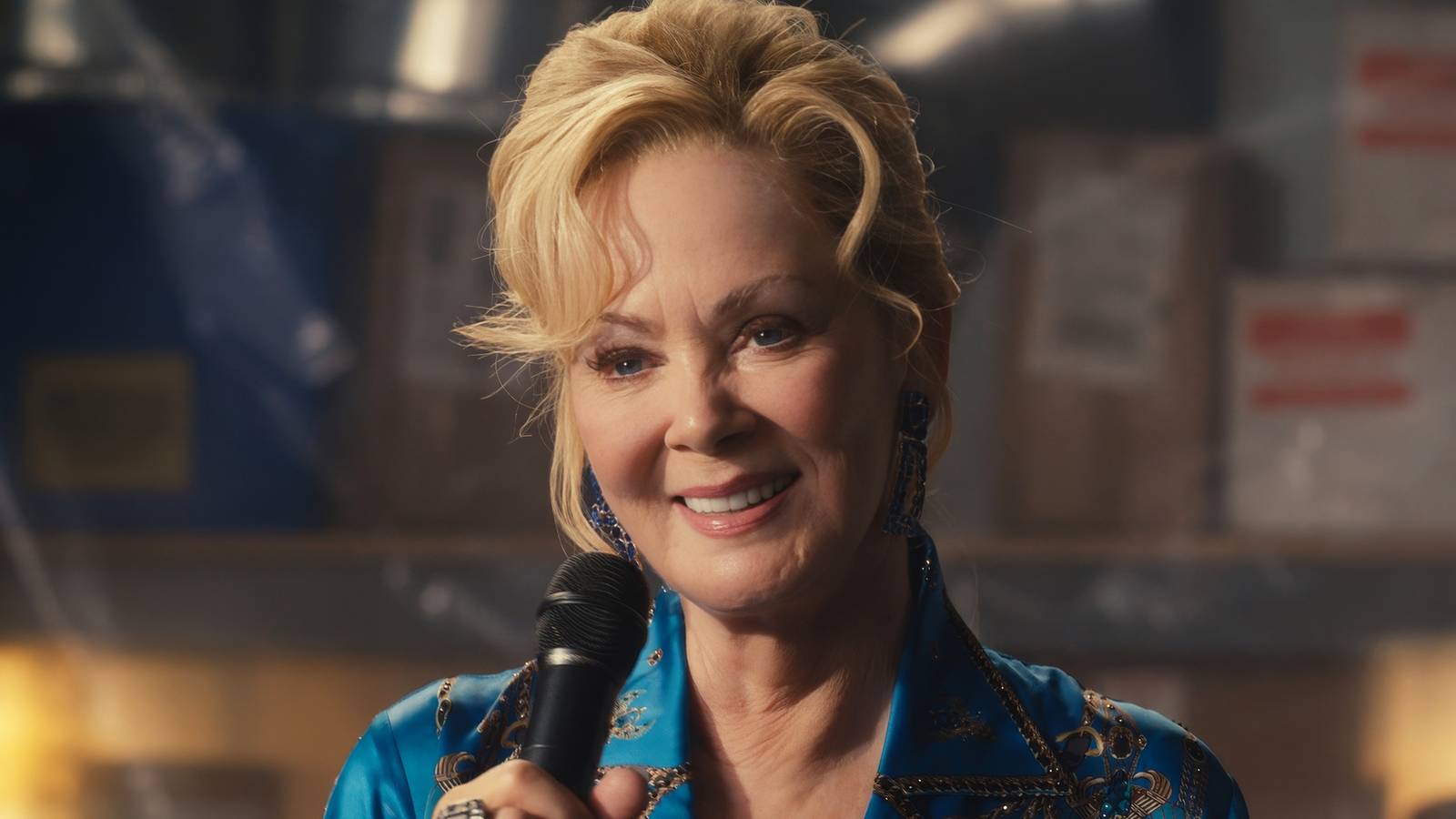
Image via HBO Max Published Aug 31, 2026, 7:14 PM EDT Dyah (pronounced Dee-yah) is a Senior Author at Collider, responsible for both writing and transcription duties. She joined the website in 2022 as a Resource Writer before stepping into her current role in April 2023. As a Senior Author, she writes Features and Lists covering TV, music, and movies, making her a true Jill of all trades. In addition to her writing, Dyah also serves as an interview transcriber, primarily for events such as San Diego Comic-Con, the Toronto International Film Festival, and the Sundance Film Festival. Dyah graduated from Satya Wacana Christian University in October 2019 with a Bachelor's degree in English Literature, concentrating on Creative Writing. She is currently completing her Master's degree in English Literature Studies, with a thesis on intersectionality in postcolonial-feminist studies in Asian literary works, and is expected to graduate in 2026. Born and raised between Indonesia and Singapore, Dyah is no stranger to different cultures. She now resides in the small town of Kendal with her husband and four cats, where she spends her free time cooking or cycling. Sign in to your Collider account Spoiler Alert: This list contains spoilers for multiple TV shows.They don't call HBO "the great entertainment alternative" for nothing. Since its first original narrative series in 1997, Oz, HBO has dedicated its team and resources to producing some of the most prestigious television of the modern era. In numbers alone, the network has received more than 1,500 Primetime Emmy nominations and won over 220 awards. In 2025 alone, HBO and HBO Max took home a combined 30 awards at the 77th Primetime Emmy Awards. But whether it's HBO or another streamer, every television series bears the burden of delivering an impressionable final episode. Just like the pilot, the finale is a make-or-break moment that can determine whether a series becomes a fleeting hit or leaves behind a legacy that audiences talk about for years. From heartfelt surprises to agonizing realizations about the state of the world, here are the HBO show endings that are genuine masterpieces. 'Hacks' (2021–2026) Image via HBO Max Just as Deborah Vance (Jean Smart) and Ava Daniels (Hannah Einbinder) find common ground in Hacks, the series finale mercilessly pulls the rug out from under viewers. From the shocking revelation that Deborah is terminally ill and plans to end her life, to a farewell trip to Paris where Deborah rents out the Louvre, and Ava’s tearful confession — "Please don't leave me" — after a night of clubbing, it's devastating to think this might be it for the troubled duo. Only, it isn't. In a full-circle moment, minutes before their farewell, the two women cope with their pain by doing what they know best: swapping jokes, albeit morbid ones about Deborah's cancer. It's an almost Eureka-esque moment when Deborah realizes she isn't finished creating, connecting directly to the pilot, where she first discovers how electrifying it feels to create comedy with Ava. There's no grand speech to change Deborah's mind, just a small reminder that she still wants to live. And it's all thanks to Ava, who brings that excitement back into her life. 'Chernobyl' (2019) Image via HBO Chernobyl begins by pointing out the cause of the 1989 nuclear disaster: human error. But as the story digs deeper, that explanation falls apart. The real horror lies in the Soviet system itself, which had known for years that the RBMK reactor was fundamentally unsafe and chose to keep those flaws hidden. One person's so-called mistake is exposed as the consequence of a much larger failure—one built on negligence and a government determined to protect its image. By the finale, the cover-up becomes impossible for Valery Legasov (Jared Harris) to ignore. In a dramatic trial that encapsulates what Chernobyl is all about, the scientist is called to court to give his account of what happened and is expected to repeat the official story and place the blame entirely on the plant workers. Instead, he uses his testimony to expose the truth about the reactor. The decision destroys his career and isolates him, but Legasov leaves behind recordings intended to protect the real victims of the disaster. 'The Sopranos' (1999–2007) Image via HBO Few television endings have inspired as much debate as The Sopranos finale, but its infamous cut to black was always more deliberate than frustrating. The series follows Tony Soprano (James Gandolfini), a mob boss whose violent career clashes with the ordinary family life he desperately wants to protect. By the final episode, Tony has helped end the war with New York, but an impending indictment and the possibility of an informant leave him with nowhere to hide. That makes the final dinner at Holsten's so unsettling. Tony sits with his family, repeatedly watching the door as strangers enter, while Journey's bittersweet "Don't Stop Believin'" plays in the background. Then Meadow (Jamie-Lynn Sigler) arrives, Tony looks up, and everything suddenly disappears into darkness. The finale never shows what happens, forcing viewers to experience Tony's uncertainty rather than simply observe his death. It's definitely a blasphemous ending, but it will have fans thinking about it for decades to come. 'Succession' (2018–2023) Succession has always been ruthless, but audiences could still hope that someone would eventually get what they wanted. Instead, the finale cruelly gives none of the Roys their dream. Logan Roy's (Brian Cox) death forces the three Roy children to fight without their father's final say, leaving them to prove whether they can actually run Waystar Royco. Their rivalry, insecurity, and desperate need for validation only drive them closer to losing everything. The twist is that Tom Wambsgans (Matthew Macfadyen), the outsider the Roys underestimated, becomes CEO. Tom's victory is hardly triumphant, but that makes it work. The Roys lose because they cannot surrender their pride, while Tom survives by playing the long game. Kendall's final image, staring blankly over the Hudson River, completes the tragedy. After spending his life chasing his father's approval, he loses the company and the identity built around winning it. Succession ends by proving that none of the Roys, not even the golden boy, were ever prepared to inherit Logan's throne. Collider Exclusive · Universe Personality Quiz Which Iconic Universe Do You Belong in the Most? Star Wars · Lord of the Rings · Harry Potter · Game of Thrones · Star Trek Five legendary universes. Five completely different visions of what the world could be — or already was. One of them is the world your instincts, your values, and your particular way of existing were built for. Eight questions will tell you which one. 🚀Star Wars 💍Lord of the Rings 🧙Harry Potter 👑Game of Thrones 🖖Star Trek FIND YOUR UNIVERSE → 01 What gives your life its deepest sense of meaning? Every universe is built around a different answer to this question. ABeing part of something larger than myself — a cause, a rebellion, a fight for freedom that outlasts me. BThe journey itself — the places I'll go, the companions beside me, the world I'll discover on the way. CLearning — unlocking what I'm capable of, understanding the world's hidden mechanics, growing into something more. DLegacy — the name I leave behind, the power I build, the mark I make before the world moves on without me. EUnderstanding — exploring what exists beyond the horizon and asking what it means to be alive in a universe this vast. NEXT QUESTION → 02 Which kind of world do you most want to inhabit? The environment shapes who you become. Choose carefully. AA galaxy of planets, each with its own culture — connected by conflict, trade, and the Force. BAncient lands of breathtaking beauty, deep history, and a creeping darkness at the edges. CA world hidden inside our own — full of wonder, community, and magic waiting to be learned. DA brutal, beautiful continent where power is everything and every alliance is a calculation. EA future where humanity has reached the stars — and must decide what kind of species it wants to be. NEXT QUESTION → 03 How do you prefer your conflicts resolved? The shape of a world's conflicts tells you everything about its soul. AThrough sacrifice and courage — someone has to make the impossible choice so others don't have to. BThrough fellowship — the impossible becomes possible when the right people walk the same road. CThrough growth — confronting what you fear, understanding what you lack, and becoming equal to the challenge. DThrough strategy — outthinking, outmaneuvering, positioning yourself so the outcome was never in doubt. EThrough dialogue — finding the third option, the peaceful resolution, the answer that doesn't require a body count. NEXT QUESTION → 04 Who do you want beside you when things get difficult? Your ideal companions reveal the world you were made for. AA small crew — a pilot, a rogue, a warrior — each broken in their own way, unbeatable together. BA fellowship of different kinds of people, bound by purpose and deepened by the long road. CFriends who grew up alongside me — who knew me before I knew myself, and stayed anyway. DAllies whose loyalty I've earned — and tested — and whose ambitions align with mine, for now. EA crew of brilliant, curious, principled people from every corner of known space. NEXT QUESTION → 05 What is your relationship with power? How you seek, wield, or resist power is the map of who you are. AI want to use it to protect — and I'm terrified of what I might become if I'm not careful. BI distrust it. The most important power in this story is the courage to give it up. CI want to earn it — through knowledge, through effort, through becoming someone worthy of it. DI want to wield it. Preferably before someone else decides to wield it against me. EI want to understand it — its structures, its limits, its ethical dimensions. Power without accountability is the real threat. NEXT QUESTION → 06 How does your universe treat good and evil? A world's moral architecture tells you more about it than any map. AThere is a dark side and a light side — and the choice between them is always present, always personal. BEvil is real and ancient and patient — and goodness, however small, is the only thing that can undo it. CGood and evil are real, but they live inside people — and people are complicated, always capable of both. DGood and evil are mostly a matter of perspective and proximity. Power is the only honest currency. EEvil is usually the result of ignorance, fear, or broken systems — and understanding it is the first step to solving it. NEXT QUESTION → 07 What role would you naturally fall into? Every universe has archetypes. Which one fits you without trying? AThe reluctant hero — ordinary origins, extraordinary moment, changed forever by the choice to act. BThe unlikely carrier — the one nobody expected to matter most, quietly bearing the weight of everything. CThe student — not yet who I'll become, learning through every mistake, growing into something the world needs. DThe player — sharp enough to see the game for what it is, ambitious enough to try to win it. EThe explorer — drawn to the unknown, driven by curiosity, most alive when standing somewhere no one has stood before. NEXT QUESTION → 08 What do you ultimately believe about the future? The answer to this is the clearest window into which universe already lives inside you. AThat hope is real — that even in the darkest galaxy, a new hope is always possible. CThat even the smallest person can change the course of the future, if they have the courage to try. CThat love and friendship and doing what's right will matter in the end, even when everything says otherwise. DThat the wheel keeps turning — that power shifts, winters end, and what endures is those willing to fight for it. EThat humanity — or whatever we become — is capable of extraordinary things, if we choose to be. REVEAL MY UNIVERSE → Your Universe Has Been Chosen You Belong In…Your answers point to the iconic universe your values, your instincts, and your particular way of seeing the world were built for. This is where you would find your people — and your purpose. Star WarsYou believe in the cause — in the idea that freedom is worth fighting for even when the odds are impossible and the empire is vast. You are drawn to the moral clarity of a universe where hope itself is a form of resistance. You'd find your people in the Rebellion — a ragtag coalition of true believers held together by conviction more than resources. Star Wars is fundamentally a story about ordinary people choosing to matter in an extraordinary conflict — and that is exactly your kind of story. The Force may or may not be with you. But the will to use it for something larger than yourself certainly is. Lord of the RingsYou understand, in the deepest part of yourself, that the journey matters as much as the destination — and that the world's beauty is worth protecting even at great cost. Middle-earth is a world of ancient wonder, deep friendship, and a darkness that only retreats when enough small acts of courage accumulate. You would thrive here because you value the fellowship more than the glory — the road more than the arrival. Tolkien's universe rewards patience, loyalty, and the willingness to carry something heavy across a very long distance. Those are not burdens to you. They are simply how you move through the world. Harry PotterYou believe that love, loyalty, and doing what's right are not naive sentiments — they are the most powerful forces in any world, magical or otherwise. The Wizarding World is a place of wonder hidden in plain sight, where learning is transformative and the bonds you form at school follow you into every battle. You would flourish here because you take both the magic and the friendships seriously — and you understand that one without the other is incomplete. Harry Potter's universe ultimately rewards those who choose to stand for something even when standing is terrifying. That choice — made quietly, without guarantee — is something you understand completely. Game of ThronesYou see the world clearly — its power structures, its hypocrisies, its brutal arithmetic — and you are not paralysed by that clarity. You use it. Westeros is a world that rewards intelligence, adaptability, and the willingness to understand that every alliance is also a negotiation. You would survive here — possibly thrive here — because you don't confuse the world as it is with the world as you'd like it to be. Game of Thrones is a story about what happens when the idealists and the realists collide. You are sharp enough to know which one lasts longer. Winter always comes. You are already prepared. Star TrekYou believe the future is worth building — that curiosity, cooperation, and the expansion of understanding are not just ideals but the most practical path forward for any civilisation. Star Trek is a universe where the questions matter as much as the answers, and where encountering something utterly alien is cause for wonder rather than fear. You would belong here because you are fundamentally optimistic about what intelligence and decency can achieve — while being honest about how hard that achievement is. The Federation is the universe's most ambitious thought experiment: what if we actually got better? You don't just hope that's possible. You think it's the only thing worth working toward. ↻ RETAKE THE QUIZ 'Band of Brothers' (2001) Image via HBO The final episode of Band of Brothers offers something most war stories rarely show: what happens after the fighting is over. Easy Company has survived Normandy, Bastogne, and the capture of Hitler's Eagle's Nest, yet victory does not immediately mean freedom. Soldiers remain stranded in Europe because they lack the points needed to return home. With Japan still fighting, they have no idea when their own war will truly end. That uncertainty exposes another side of war, as boredom, alcohol, weapons, and pent-up aggression create new dangers for troops. Rather than ending with a triumphant battlefield victory, the finale seeps into the psychological aftermath of war. Older soldiers can envision lives beyond the Army, while younger ones who crave the thrill of combat struggle to adjust to peace. When Japan finally surrenders, Easy Company can celebrate, but the relief carries a bittersweet weight: these men are leaving behind the only life they have known for years. 'The Night Of' (2016) Image via HBO Few shows grasp the cruelty of the justice system and its nuances like The Night Of. After one rowdy night at a party, college student Naz Khan (Riz Ahmed) wakes beside a murdered woman and finds himself accused of her killing. With the evidence stacked against him, Naz's Pakistani-American identity makes an already impossible situation even harder to escape. What follows is a turbulent story of how Naz lacks the power to prove his innocence. The point of The Night Of isn't to find out who the actual murderer is, but rather to explore how a false conviction brings out the worst out of Naz. And while Naz finally gets the freedom he deserves through a narrow jury decision, the finale makes it clear that no amount of freedom can undo the horrors he has unfairly experienced. Prison has stripped the anxious young man audiences met in the opening episode, leaving behind a cynical, hollow man trapped in a new prison of his own making. 'Six Feet Under' (2001–2005) Image via HBO Nobody likes talking about death, but Six Feet Under features a whole lot of it. Unsurprisingly, the drama follows the dysfunctional Fisher family as they run an independent funeral home following the death of its patriarch. Yet, after arranging countless funerals, preparing coffins, and burying strangers, nothing could prepare them for the grief that would make the series finale one of television's finest. In the aftermath of Nate's (Peter Krause) death, the Fishers try to move forward with their lives, with Claire (Lauren Ambrose) leaving for New York. There is no neat resolution or guarantee that they'll live happily ever after, only the promise of whatever comes next. What makes the finale so memorable, however, is its decision to show the deaths of every major character. Rather than ending when their stories reach their happiest peaks, the finale jumps through decades of their futures, reaching the end of their mortality. That's ultimately the show's point: death is simply a fact of life that happens every day. Six Feet Under Release Date 2001 - 2005-00-00 Network HBO A chronicle of the lives of a dysfunctional family who run an independent funeral home in Los Angeles. Directors Daniel Attias, Jeremy Podeswa, Kathy Bates, Michael Cuesta, Rodrigo García, Daniel Minahan, Michael Engler, Miguel Arteta, Nicole Holofcener, Adam Davidson, Alan Caso, Alan Taylor, Allen Coulter, Jim McBride, John Patterson, Joshua Marston, Karen Moncrieff, Lisa Cholodenko, Mary Harron, Matt Shakman, Peter Care, Peter Webber Writers Craig Wright, Kate Robin, Alan Ball, Bruce Eric Kaplan, Christian Taylor, Craig Wright, Joey Soloway, Rick Cleveland, Scott Buck Main Genre Drama Seasons 5 Producers Rick Cleveland, Christian Taylor, Joey Soloway, Kate Robin, Laurence Andries, Lori Jo Nemhauser, Robert Del Valle Creator(s) Alan Ball Story By alan ball Streaming Service(s) Dis, Hulu, MAX Executive Producer(s) Alan Poul, Rick Cleveland, Alan Ball, Bruce Eric Kaplan, David Janollari, Robert Greenblatt
7 HBO Show Endings That Are Genuine Masterpieces
Full Article
Original Source
Read the full article at Collider →KhanList aggregates and links to publicly available news content. We do not host full articles from third-party sources. Always verify important information with original sources.