
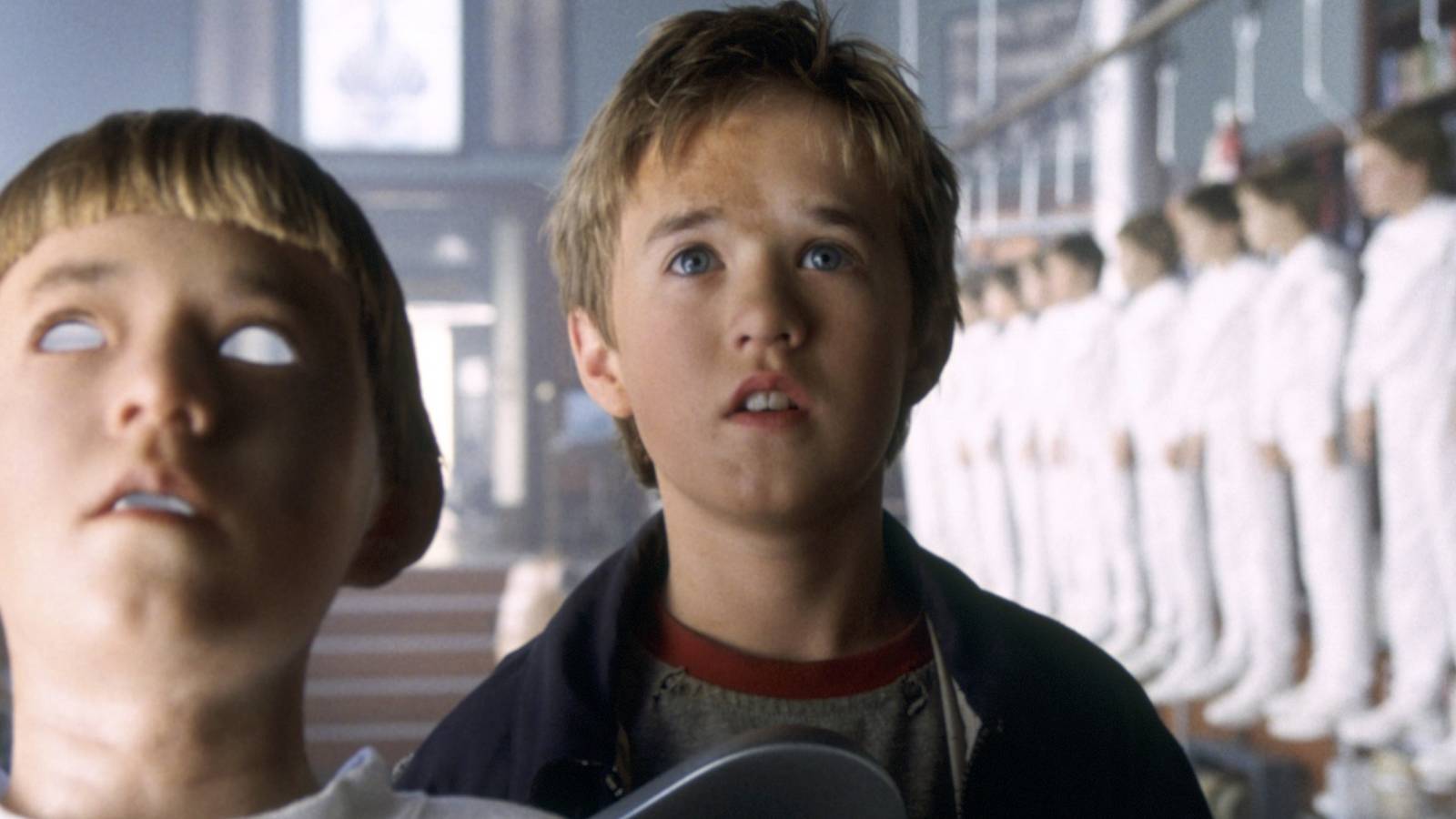
No science fiction movie is perfect. Even the sci-fi movies we say are truly perfect aren't actually perfect because perfection is an unreachable ideal, and when movies get close enough to it, it's easy enough to anoint them. It's admirable, and they should be acknowledged. So if we're going to acknowledge those movies as perfection, we should also acknowledge those that come close to it as well, the ones that reach a robotic hand up and touch the stars before being brought back down to Earth. These are sci-fi movies that have individually perfect performances, scenes or visual effects, but don't coalesce into a more perfect whole. Acknowledging their flaws doesn't make them any less enjoyable or impressive, and it shouldn't invalidate them for anyone who does view them as perfect based on their personal preferences. If anything, their flaws make them more interesting to discuss and analyze instead of throwing a bunch of hollow hyperboles at them. Let's celebrate near-perfection with these ten sci-fi movies. 'Planet of the Vampires' (1965) Image via Società Italiana di Distribuzione Looked at from a modern point of view, Mario Bava's Planet of the Vampires might look like a cheesy sci-fi movie limited by its low budget that has long since been surpassed by the films that it may have inspired, like Alien. From another perspective, it's a stylish and atmospheric sci-fi movie, whose visuals look pulled straight from the genre's pulpiest origins. Either way, it's obviously an influential cult classic that may not be perfect, but is a perfect artifact of a bygone era of sci-fi cinema. After receiving a distress call, two spaceships land on a strange, fog-dense planet. Exploring the colorful, surreal landscape causes the crews to become hypnotized and homicidal. They also discover a derelict ship with the large remains of some alien race, in the film's most direct connection to Ridley Scott's sci-fi horror masterpiece. To compare the two is a disservice to Bava's film, which was made for a fraction of the budget and operates on its own weird wavelength that fully embraces its B-movie elements instead of trying to elevate them. 'Return of the Jedi' (1983) Image via Lucasfilm Star Wars is one of the most influential sci-fi films of all time, changing the course of Hollywood history with its unprecedented box office success and complete consummation of pop culture in 1977. The Empire Strikes Back is even better, setting a standard for sequels that many blockbusters still aspire to. Return of the Jedi also set a less desirable standard for disappointing third entries that fail to finish their franchises strong. Years later, after decades of varying successes and disappointments, the sterling moments of Return of the Jedi shine far brighter, even if its flaws still dull its perfection. The first act of this third part is faultless, bringing back all the principal characters for a rescue mission of Han Solo (Harrison Ford) from the slimy clutches of Jabba the Hutt. It has all the elements fans love the franchise for, many of which are present in the rest of the runtime too. The assault on the second Death Star is exciting, if derivative, and the final confrontation between Luke (Mark Hamill) and Darth Vader (James Earl Jones/David Prowse) is an amazing emotional climax. All of that is undercut by the irredeemably silly antics of the Ewoks, who defeat the evil Empire with gags more suited to a cartoon show, and the added reveal of Princess Leia (Carrie Fisher) as Luke's sister, which wasn't originally planned. 'Back to the Future Part II' (1989) Image via Universal Studios Back to the Future is often considered one of the most perfectly written sci-fi films of all time. It's a beloved comedy classic that has had an immense influence on the genre and has only grown more beloved. In many ways, Back to the Future Part II has been just as influential, taking full advantage of its time-travel premise; many sci-fi films and television shows owe it a great debt. The movie may not be as emotionally resonant as the first, and unfortunately sidelines some characters, but it's still incredibly entertaining and exponentially expands on its predecessor. Making good on the promise of the first film's ending, the sequel sees Doc (Christopher Lloyd) and Marty (Michael J. Fox) fly into the future of 2015, where Marty's selfish actions see them return to a hellish version of 1985 before having to return to the 1955 of the first film. It's all so creative and fun; it's hard to find any faults, though there are a couple. The most significant is how the film treats the character of Jennifer (Elisabeth Shue, replacing Claudia Wells), who gets left out of the action and mostly faints, an unfortunate result of the fact that the character was included in the aforementioned ending of Part I before director Robert Zemeckis and co-writer Bob Gale ever knew there would be a sequel. 'Strange Days' (1995) Image via United Pictures Strange Days was a collaboration between Kathryn Bigelow and James Cameron. The latter crafted the original story based on a technology that allows users to experience the recorded sights and sensations of another person. Bigelow then infused it with her intense style and political themes, resulting in a potent thriller with some truly audacious sequences and extreme content. Alas, it wraps up a little too cleanly and is inextricably tied to the '90s thanks to its aesthetic, even if it has timeless themes. At the verge of the new millennium, Los Angeles has become a dystopian city where an authoritarian police force rules with an iron fist and engages in abusive, racist tactics. Amidst this chaos, ex-cop Lenny (Ralph Fiennes) makes money on the black market dealing SQUID recordings that give users a VR experience that isn't virtual since it's downloaded directly from a person's cerebral cortex. The POV sequences are alternately thrilling, lurid and horrifying, showcasing Bigelow's skills at hard-edged violence. That hard edge unfortunately doesn't extend to the film's climax, which would be more appropriate for a Cameron-directed piece of action escapism rather than Bigelow's cynical sci-fi noir. 'A.I. Artificial Intelligence' (2001) Image via Warner Bros. Pictures Steven Spielberg's sci-fi fable A.I. Artificial Intelligence, which began under Stanley Kubrick, is a movie that features some of the director's most effective storytelling, but which is also wildly uneven. Many people chalked that imbalance up to the fundamental differences between Spielberg and Kubrick as filmmakers, even though the darker elements come from the former and the more sentimental aspects from the latter. The film's oft-misunderstood ending is also far darker than many first realized, thanks to the overt sentimental sheen put over it that belies its depressing truth. It's one of Spielberg's most chilling and effective endings, even if the road to get there is uneven. David (Haley Joel Osment) is an android boy who has been adopted as a surrogate son for a family whose flesh-and-blood child has been hospitalized with a rare disease. When that real boy returns, the artificial is left out in the woods, and he goes on a Pinocchio-esque odyssey to return to the mother he has been programmed to "love." There's some striking sci-fi imagery throughout that odyssey, and memorable characters, like Gigolo Joe (Jude Law), but there are also some odd moments of humor and Spielbergian spectacle that don't gel with the rest of the narrative. 'Sunshine' (2007) Image via Searchlight Pictures Sunshine was director Danny Boyle and writer Alex Garland's sci-fi follow-up to their horror collaboration 28 Days Later. It didn't receive the same level of acclaim or success that film did, but has since gained a sizable cult following that is well deserved. It's an effective sci-fi thriller with a solid ensemble cast that uses its doomsday scenario to explore themes of science and spirituality. Where it loses most viewers is in its divisive third act, and even if it arguably acts as an extension of the film's themes manifested in a physical threat, the tonal shift is undeniably jarring. With the Sun slowly dying, and the resultant cooling of the Earth threatening the extinction of the human race, a group of scientists heads toward the massive star to reignite it. The crew is a diverse group of scientists, all of whom have different philosophical approaches which become more pronounced by their isolation and the overwhelming God-like presence of the Sun that looms over them. It's a fascinating kind of survival thriller, like an interstellar version of The Wages of Fear, but in the third act the film throws out all pretense of believability with a new human threat that turns the film into a spacebound slasher of sorts. 'The World's End' (2013) Image via Focus Features The final film in the Cornetto trilogy, The World's End has never been as beloved as Shaun of the Dead or Hot Fuzz, even though in its best moments it is every bit their equal and sometimes even superior. As the to-date last collaboration between Edgar Wright, co-writer/star Simon Pegg and co-star Nick Frost, it's a more melancholy effort that often explores far more mature and darker themes than its predecessors. That doesn't always jive with the over-the-top action or more satirical elements of the film, but the individual parts are more perfect than the whole of the other Cornetto movies. The film begins as a pub crawl between boyhood friends gathered back together by their one-time leader, Gary King (Pegg), who has remained in a state of arrested development and devolved into alcoholism. It's not long into their stomping on their old grounds that the group begins to have some close encounters with some invading body snatchers. Just like Shaun of the Dead and Hot Fuzz, the film wears its influences on its sleeve but also remixes them into something distinct. It's darker and weirder than its predecessors, and maybe not totally perfect, but it's damned near. The World's End Release Date August 23, 2013 Cast Simon Pegg, Nick Frost, Martin Freeman, Paddy Considine, Eddie Marsan, Rosamund Pike, Pierce Brosnan, David Bradley, Darren Boyd, Michael Smiley, Steve Oram, Reece Shearsmith, Nicholas Burns, Bill Nighy, Thomas Law, Zachary Bailess, Jasper Levine, James Tarpey, Luke Bromley Runtime 109 Minutes Director Edgar Wright Writers Edgar Wright, Simon Pegg
7 Great Sci-Fi Movies That Come Close to Perfection
Full Article
Original Source
Read the full article at Collider →KhanList aggregates and links to publicly available news content. We do not host full articles from third-party sources. Always verify important information with original sources.