
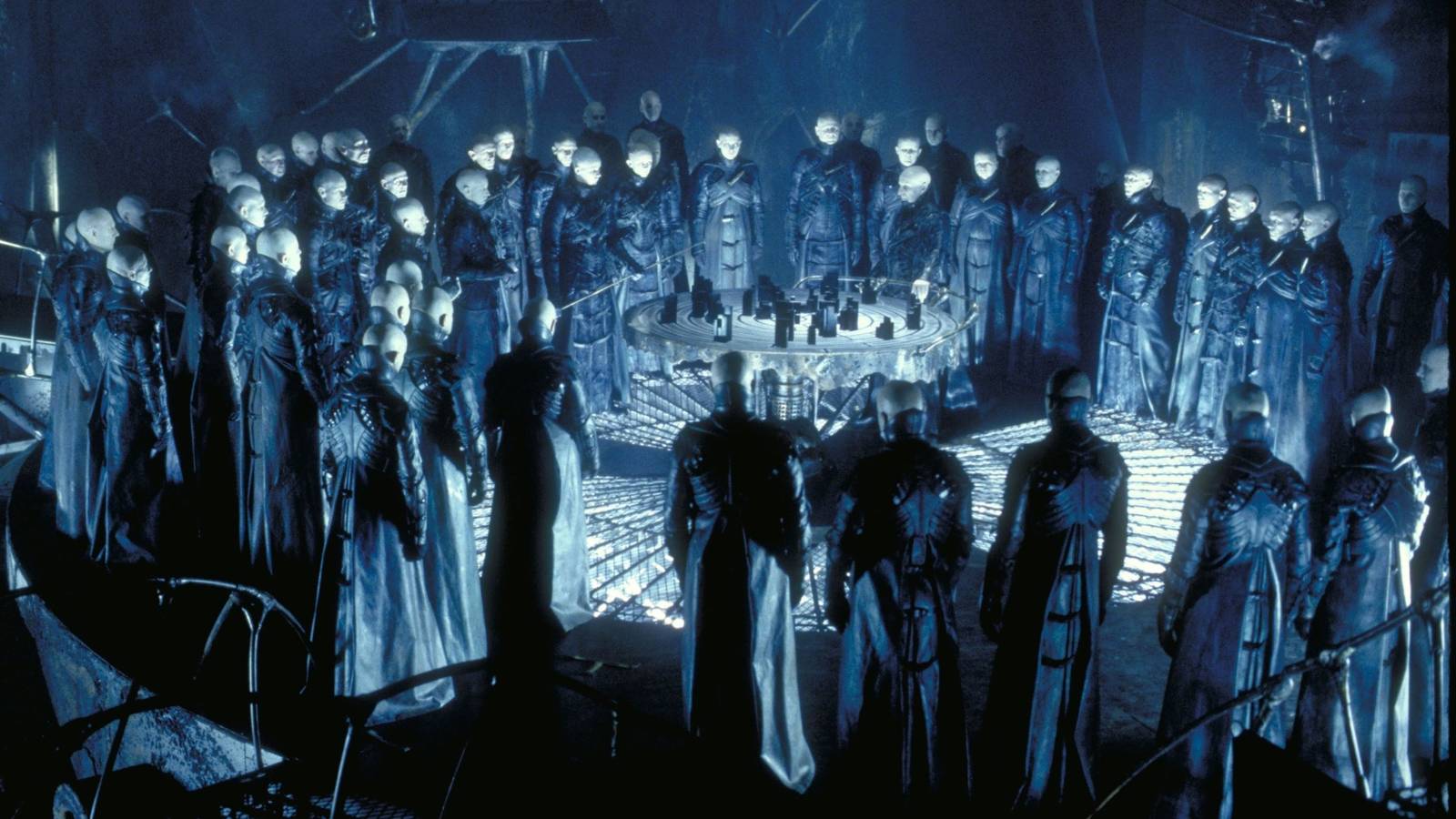
Published Sep 7, 2026, 5:20 PM EDT Shawn S. Lealos is an entertainment writer who is a voting member of the Oklahoma Film Critics Circle. He has written for Screen Rant, CBR, ComicBook, The Direct, The Sportster, Chud, 411mania, Renegade Cinema, Yahoo Movies, and many more. Shawn has a bachelor's degree in professional writing and a minor in film studies from the University of Oklahoma. He also has won numerous awards, including several Columbia Gold Circle Awards and an SPJ honor. He also wrote Dollar Deal: The Story of the Stephen King Dollar Baby Filmmakers, the first official book about the Dollar Baby film program. Shawn is also currently writing his first fiction novel under a pen name, based in the fantasy genre. To learn more, visit his website at shawnlealos.net. George R.R. Martin remains best known for his work in fantasy, as he built Westeros in his Game of Thrones novels, but he is also an accomplished sci-fi writer as well. Considering how successful he has been with Game of Thrones and the surrounding novels and TV shows based in that world, it might be interesting to know what influenced him. The good news is that Martin has been open about his influences over the years. Martin has openly suggested classic and modern sci-fi and fantasy movies for people to search out, revealing his favorites in the two genres. These include some very famous and popular movies, including Ridley Scott's Alien and Blade Runner, James Cameron's Aliens, and the Mad Max movie, The Road Warrior from 1981. However, among the movies on his recommendation list are some more obscure films. Martin wrote a Daily Beast article asking fans to go back and watch some of the classics, including sci-fi and fantasy movies from the black-and-white era, as well as some obscure films that not many people in the mainstream might have heard of. These are all movies that are considered minor masterpieces, even if they are not talked about much anymore. As far as Martin is concerned, more people should know these genre releases. Forbidden Planet (1956) Released in 1956, Forbidden Planet is a sci-fi movie that Martin says is William Shakespeare with Leslie Nielsen playing a Captain Kirk-type character, a decade before William Shatner made Kirk famous. When it comes to Shakespeare, Forbidden Planet is a loose adaptation of Shakespeare's The Tempest. It also created one of the most iconic sci-fi robots, Robby the Robot, a character who appeared in several other movies and TV shows over the years. Forbidden Planet has a strong legacy, and Robby the Robot was the inspiration for the Robot in Lost in Space years later. Martin even argues that the three main crew members of the C-57-D are clear forerunners for Kirk, Spock, and Bones McCoy on Star Trek a decade later. While dated today, the visuals were groundbreaking for their time, and they influenced almost every sci-fi space movie that came out after it. Beauty And The Beast (1946) There have been several adaptations of Beauty and the Beast over the years, but the one that Martin recommends is the 1946 version by Jean Cocteau. Originally titled La Belle et la Bête, this is a French surrealist romantic fantasy and is also Cocteau’s first feature-length film. As with all the movies in this franchise, it is based on the fairy tale by Jeanne-Marie Leprince de Beaumont. The story is about a young woman who is held captive by a beast, while this beast has to make her fall in love with him if a curse inflicted on him is ever to be lifted. Even more so than later releases, including the Oscar-nominated animated film from the 1990s, this version mixes realism and fantasy in a way that is surreal, and it was a strong influence on the French New Wave that would come into style in the following decades. Dark City (1998) Released in 1998, Dark City is a movie by director Alex Proyas (The Crow). The movie is a neo-noir sci-fi film that plays strongly into the German Expressionism design that predated the original film noir movies of the 1940s. Rufus Sewell stars as John Murdoch, a man who wakes up with amnesia and is hunted by reality-warping beings that are known as Strangers. Kiefer Sutherland also stars as a scientist. While the movie was a box-office bomb, the sci-fi release remains a cult classic and has received critical acclaim years after its initial release. The visuals here are unlike those of almost any other film, and the entire surreal atmosphere seems to be something that Martin comes back to all the time when discussing his favorite sci-fi and fantasy movies. Dark City is easily a precursor to The Matrix, which came out a year later. Dark Star (1974) Dark Star might be one of the most surprising recommendations on Martin's list. The film has a popular name behind it, as it was John Carpenter's debut feature-length movie. However, almost no one mentions it when talking about Carpenter's work, so Martin adding it to his list of favorites is an interesting choice. Martin actually calls the movie "the funniest science fiction film ever made." The plot follows a crew destroying unstable planets twenty years into a deep-space mission. The film looks cheap, and Martin jokes that Carpenter and Dan O'Bannon made it with loose change they found in their couch cushions. However, its comic set pieces are all on target, and while it is a comedy at heart, it still influenced Alien, with the alien-running-loose-on-a-ship plot idea. Ladyhawke (1985) Released in 1985, Ladyhawke is a 1985 medieval fantasy movie directed by Richard Donner (Superman). It stars Matthew Broderick, Rutger Hauer, and Michelle Pfeiffer in a story where two lovers (Hauer and Pfeiffer) are cursed, with one turning into a wolf at night and the other a hawk by day, so they can never be together in their human form. Martin calls Ladyhawke "one of the greatest fantasy films ever made," although he also asks people to ignore the "bloody soundtrack." What makes this movie stand out is that it is one of the rare fantasy romance movies on Martin's list, but with the revenge and curses involved, it is right up his ally. Invasion Of The Body Snatchers (1956) Most people consider the 1978 remake of Invasion of the Body Snatchers to be the best film in the entire franchise, but Martin disagrees. In fact, he calls the original 1956 Invasion of the Body Snatchers movie his favorite, and then said that "every time they remake it, it gets worse." That is a controversial take, but Martin is right that the original movie has a lot to love in this sci-fi story about paranoia. Invasion of the Body Snatchers is a movie set in the real world of Cold War paranoia, where the government convinced people that even their neighbors might be communists. That made the idea of a movie where aliens have started replacing people on Earth such a terrifying proposition at the time. When people yelled out warnings and no one listened, it really slammed this idea home. Dragonslayer (1981) Martin calls Vermithrax Pejorative the "best dragon ever put on film" and then added that it was "the coolest dragon name as well." Martin created a lot of great dragons in his books, and Game of Thrones has shown them in detail. Knowing that, when Martin calls Dragonslayer the movie with his all-time favorite dragon, it really stands out. In the 1981 film, Peter MacNicol stars as a sorcerer's apprentice who sets out to kill a dragon. This was the earliest efforts by Industrial Light & Magic to create effects outside of a Lucasfilm production, using a technique called "go motion," and it helped the movie earn an Oscar nomination for Best Visual Effects. The movie remains popular, especially on the convention circuit, and it is a fantasy film that George R.R. Martin wishes more people would recognize.
7 Great Fantasy & Sci-Fi Movies Recommended By George R.R. Martin (That You Might Not Have Seen)
Full Article
Original Source
Read the full article at Screenrant →KhanList aggregates and links to publicly available news content. We do not host full articles from third-party sources. Always verify important information with original sources.