
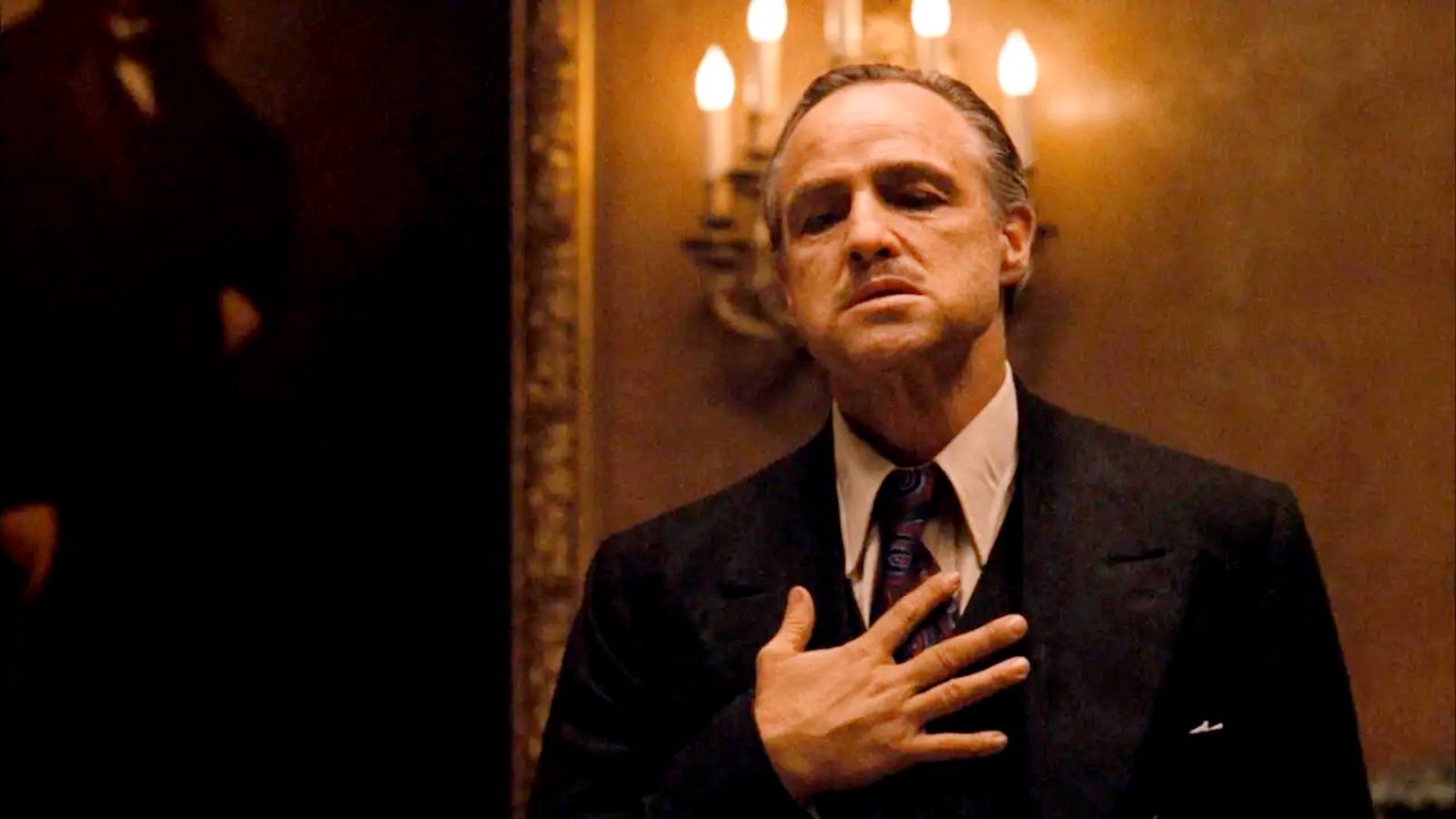
Published Aug 13, 2026, 10:56 AM EDT Senior Music Editor at Screen Rant, Sarah's love of sound and story drive the beat. A globetrotting brand whisperer and award-winning journalist, she’s built cross-cultural narratives around the world—but music has always been her true north. She launched DJ Mag North America, successfully introducing the iconic UK brand to the U.S. market. Previously, she carved a space for EDM inside the pages of VIBE, blending electronic and hip-hop culture long before it was trendy. The 1970s were a decade of enormous change in the arts, from music to movies and everything in between. New ideas were everywhere, and filmmakers seemed especially eager to experiment. That extended to individual genres too, including the gangster movie. The sharply dressed mobsters and moral certainties of earlier crime films gave way to compromised families, desperate street operators, and criminals whose lives often looked more exhausting than glamorous. Francis Ford Coppola turned organized crime into American tragedy, while filmmakers such as Martin Scorsese, Peter Yates, John Cassavetes, and Mike Hodges approached the genre from completely different directions. Naturally, The Godfather movies loom over any discussion of gangster cinema from the decade, but they were hardly alone. Just as the greatest movie epics of the 1970s pushed scale and ambition in wildly different directions, the era's best gangster films could be sprawling family sagas or intimate stories about men barely hanging onto their place in the underworld. What connects these movies is not a single definition of the gangster film, but how completely each one understands the criminal world it creates. Some unfold across generations. Others are claustrophobic character studies where the violence feels almost incidental until suddenly it is not. Decades later, these seven movies remain among the strongest examples of just how ambitious gangster cinema became during the 1970s. Get Carter (1971) Michael Caine had already established himself as a major British star by the time Get Carter arrived, but Mike Hodges' crime thriller gave him one of the coldest roles of his career. Caine plays Jack Carter, a London gangster who returns to Newcastle after the suspicious death of his brother. What begins almost like one of cinema's great detective movies quickly turns into a methodical journey through a criminal network Carter knows all too well. The film has none of the romantic mythology that sometimes surrounds screen gangsters. Carter is intelligent, controlled, and frightening precisely because Hodges never asks the audience to pretend he is a good man underneath it all. Newcastle's industrial landscape gives the movie an unusually bleak texture, while Caine's performance helped redefine the British gangster as something sharper and far less charming than audiences were accustomed to seeing. The Godfather (1972) There is a reason The Godfather remains the reference point against which How interested are you in watching more 1970s gangster films after reading this article? Very interested — I want to seek out several of these movies soon Very interested — I want to seek out several of these movies soon 0% Somewhat interested — I might try one or two if they’re easy to find Somewhat interested — I might try one or two if they’re easy to find 0% Curious, but I’d rather stick with more modern crime movies Curious, but I’d rather stick with more modern crime movies 0% Not very interested — this era or genre doesn’t really appeal to me Not very interested — this era or genre doesn’t really appeal to me 0% When you choose a gangster movie, what usually matters most to you? Complex characters and moral ambiguity Complex characters and moral ambiguity 0% Intense, stylish action and suspense Intense, stylish action and suspense 0% Epic, sweeping family or criminal sagas Epic, sweeping family or criminal sagas 0% Intimate, realistic stories that make crime look unglamorous Intimate, realistic stories that make crime look unglamorous 0% multi-answer If you were browsing a streaming service, which of these would most encourage you to click on a 1970s gangster film? Seeing big-name directors or stars like Coppola, Scorsese, Pacino, or Caine featured Seeing big-name directors or stars like Coppola, Scorsese, Pacino, or Caine featured 0% A guarantee that the film focuses more on character drama than on action A guarantee that the film focuses more on character drama than on action 0% Prominent placement in a curated “best of the 1970s” or “classic crime” collection Prominent placement in a curated “best of the 1970s” or “classic crime” collection 0% Recommendations or high ratings from critics and film fans Recommendations or high ratings from critics and film fans 0% so many gangster movies are measured. Francis Ford Coppola's adaptation of Mario Puzo's novel takes the familiar framework of a Mafia story and turns it into something much larger, examining family, power, loyalty, and the price of maintaining an empire built on violence. Marlon Brando's Vito Corleone may dominate the film's reputation, but Al Pacino's transformation is what gives the story its devastating shape. Michael begins as the member of the Corleone family who appears capable of escaping its world altogether. By the closing moments, he has become its new center. The brilliance of the movie lies in how inevitable that change feels even as the audience watches him cross one moral line after another. Mean Streets (1973) Before Goodfellas and Casino, Martin Scorsese made organized crime feel personal, cramped, and dangerously close in Mean Streets. Harvey Keitel stars as Charlie, a young man trying to reconcile his Catholic guilt with his involvement in Little Italy's criminal world. Robert De Niro's Johnny Boy makes that balancing act nearly impossible. Scorsese does not present these characters as powerful mob figures operating from elegant offices. They are small-time hustlers living from one debt, argument, or bad decision to the next. The loose camera work and street-level locations make the film feel almost overheard rather than staged, while its use of music taps directly into the era that produced some of the greatest classic rock albums of the 1970s. More importantly, Mean Streets established many of the obsessions that would define Scorsese's later crime movies without feeling like a rough draft of what came next. The Friends Of Eddie Coyle (1973) Few gangster movies make criminal life look less appealing than The Friends of Eddie Coyle. Directed by Peter Yates, the film stars Robert Mitchum as Eddie, an aging Boston gunrunner facing prison time who begins feeding information to federal agents in hopes of staying out of jail. Nobody involved appears to have much faith that loyalty will save him. Mitchum's exhausted performance gives the movie much of its power. Eddie is not a glamorous kingpin or an ambitious young gangster trying to rise through the ranks. He is a man who has spent too long in a world where relationships are transactional and everyone is looking for a way to protect themselves. The movie's violence is restrained, but its casual betrayals are arguably more unsettling than any shootout. The Godfather Part II (1974) Following The Godfather should have been nearly impossible, yet The Godfather Part II somehow expands the first movie while becoming even more tragic. Coppola divides the story between Michael Corleone's increasingly isolated rule in the 1950s and the early life of his father, Vito, played by Robert De Niro. The parallel structure allows the film to show two versions of power moving in opposite emotional directions. Vito builds a family and community around himself as his influence grows, while Michael's attempts to secure the Corleone empire leave him increasingly alone. Pacino's performance is colder than it was in the first film, but that restraint makes Michael's decline more disturbing. The movie is not simply about organized crime becoming bigger. It is about everything Michael destroys in the process of trying to preserve it. The Killing Of A Chinese Bookie (1976) John Cassavetes was hardly interested in making a conventional gangster movie, which is exactly what makes The Killing of a Chinese Bookie so fascinating. Ben Gazzara stars as Cosmo Vittelli, the owner of a Los Angeles strip club whose gambling habit puts him deep in debt to the Mob. His creditors eventually offer him a way to erase what he owes: kill a Chinese bookie. What follows is less a traditional crime thriller than an uncomfortable character study about a man desperately trying to maintain control of the identity he has constructed for himself. Cosmo takes enormous pride in his club, its performers, and his position within that small world. Cassavetes is far more interested in that emotional reality than in gangster-movie mechanics, which makes the bursts of violence feel strange and destabilizing when they finally arrive. Mikey And Nicky (1976) Elaine May's Mikey and Nicky strips the gangster movie down to one friendship disintegrating over the course of a long night. John Cassavetes plays Nicky, a small-time criminal convinced that the Mob has put a contract on his life. He calls his longtime friend Mikey, played by Peter Falk, for help, unaware that their relationship is already more compromised than he realizes. May treats the crime plot almost as background pressure while focusing on years of resentment, affection, jealousy, and betrayal between the two men. Falk and Cassavetes make Mikey and Nicky feel like people who have known each other long enough to understand exactly where to cause the most damage. By the time the gangster elements fully close in around them, the emotional betrayal is already more brutal than anything the Mob could do. It is one of the decade's most unconventional crime films and one of its most painful.
7 Gangster Movies From The 1970s That Are True Masterpieces
Full Article
Original Source
Read the full article at Screenrant →KhanList aggregates and links to publicly available news content. We do not host full articles from third-party sources. Always verify important information with original sources.