
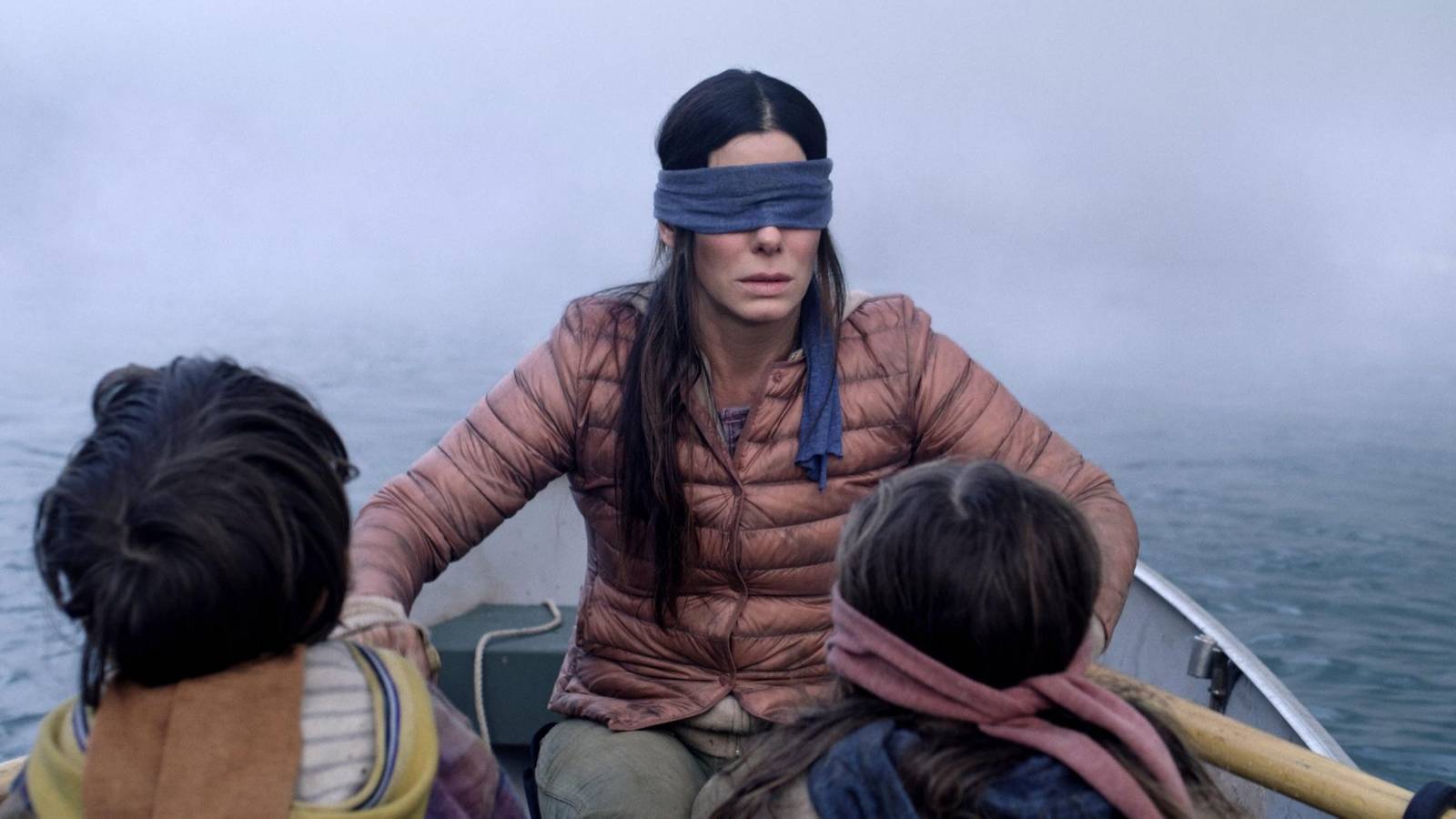
Image via Netflix Published Aug 7, 2026, 1:04 PM EDT Sign in to your Collider account Horror is firing on all cylinders right now. New great horror movies just keep coming out month after month, and it barely slows down. Just last year we got Bring Her Back, Sinners, The Ugly Stepsister, Weapons, Frankenstein, The Long Walk, 28 Years Later, Together, and Good Boy. That is an absurd run of quality horror for a single year, and it just keeps happening. But that also means even the greatest horror movies of the last decade can slip out of memory simply because there is too much competition for our attention now. That goes double for movies that debuted straight on a streaming service instead of theaters, since they never got the big cultural moment of an opening weekend to cement themselves in everyone's minds. Netflix, in particular, has gradually built up an enormous library of original horror films over the years, some legitimately great, and plenty of them have already faded out of the conversation, sitting there waiting to be rediscovered. So, here are Netflix horror movies that deserve way more love than they currently get. 'The Ritual' (2017) Image via Netflix The Ritual follows four college buddies who reunite years after one of their friends gets killed in a robbery. To honor him, they plan a hiking trip through the Swedish wilderness, and when one of them tweaks his knee, they decide to cut through the forest instead of sticking to the marked trail because apparently nobody in this group has ever seen a horror movie. They go on to find a gutted moose strung up in a tree, pagan symbols carved everywhere, and eventually a cabin full of twig effigies. And soon after, something starts picking them off one by one. The movie works so well because it doesn't rush to show you the monster. It lets the guilt between these four friends fester first, so by the time the monster finally shows up in full, you actually care who makes it out. It never blew up the way it should have because it only released theatrically in the UK, before dropping on Netflix a few months later. And when it finally became available to international audiences, it got buried under other bigger horror releases like The Cloverfield Paradox, Insidious: The Last Key, and Annihilation. 'Blood Red Sky' (2021) Image via Netflix Blood Red Sky follows Nadja (Peri Baumeister), a German single mother traveling overnight to New York with her young son, but she also happens to be a vampire who's struggling to control her bloodlust. Then, a group of hijackers takes over the flight, and Nadja is forced to unleash the exact thing she has spent years trying to suppress in order to keep her son alive. Director Peter Thorwarth makes the most of the cramped, claustrophobic setting, turning narrow aisles and tiny bathrooms into genuinely inventive kill scenes. When it first dropped on Netflix, Blood Red Sky became a huge international hit and even reached Netflix's #1 spot in 50+ countries. But it faded from the conversation soon after, probably because large portions of the movie were in German. Foreign-language movies often have to work twice as hard to remain part of the mainstream conversation. Without a theatrical run or a franchise behind it, Blood Red Sky had its big moment, and then quietly disappeared despite being one of Netflix's most entertaining horror originals. 'Apostle' (2018) Image via Netflix Gareth Evans, the filmmaker behind The Raid movies, took a hard left turn away from bone-crunching action and into folk horror with Apostle. The result was a brutal, atmospheric nightmare that remains criminally underseen. Set in 1905, it follows Thomas Richardson (Dan Stevens), an ex-priest who infiltrates a remote Welsh island cult to rescue his kidnapped sister. The whole thing plays like a slow-burn Wicker Man for the first hour, then goes completely feral once Thomas figures out what is actually happening on the island. Apostle remains largely forgotten today because it fell into the same trap as many straight-to-streaming Netflix originals. They come out, people talk about them for a few days, and then they get buried under the endless stream of new releases. And folk horror had not yet become the trend it is today. If this had come out post-Midsommar, people would not have shut up about it. '1922' (2017) Image via Netflix Stephen King adaptations are notoriously hit-or-miss, but 1922 is one of the rare hits that somehow flew completely under the radar. Thomas Jane plays Wilfred James, a Nebraska farmer whose wife wants to sell her inherited land and move the family to the city. Rather than lose the farm, Wilf convinces his teenage son to help him murder her and dump the body in an old well. The killing is easy. What comes after is not, as Wilf starts seeing rats everywhere, an infestation that feels less like vermin and more like his own guilt clawing its way back up out of that well. Jane completely disappears into a thick period accent and a man rotting from the inside out, and director Zak Hilditch plays it dead seriously all the way through to one of King's darkest endings. Critics loved it, giving it a 92% critic score on Rotten Tomatoes, but almost nobody saw it. And that was largely because it dropped the same year as IT came out and became the highest-grossing horror movie of all time. 1922 got completely overshadowed by a much flashier King adaptation. Collider Exclusive · Horror Survival Quiz Which Horror Villain Do You Have the Best Chance of Surviving? Jason Voorhees · Michael Myers · Freddy Krueger · Pennywise · Chucky Five killers. Five completely different ways to die — if you're not smart enough, fast enough, or self-aware enough to avoid it. Only one of them is the villain your particular set of instincts gives you a fighting chance against. Eight questions will figure out which one. 🏕️Jason 🔪Michael 💤Freddy 🎈Pennywise 🪆Chucky TEST YOUR SURVIVAL → 01 Something feels wrong. You can't explain it — you just know. What do you do? First instincts are the difference between the survivor and the first act casualty. ALeave immediately. I don't need to understand a threat to respect it. BStay quiet and observe. If I can see it, I can understand it. If I can understand it, I can avoid it. CStay awake. Whatever this is, I am not going to sleep until I feel safe again. DConfront it directly. Fear grows in the dark — I'd rather know what I'm dealing with. ECheck everything, trust nothing. The threat might be closer than I think — and smaller. NEXT QUESTION → 02 Where are you most likely to find yourself when things go wrong? Setting is everything in horror. Where you are determines which rules apply. ASomewhere remote — a cabin, a campsite, off the grid and away from people. BA quiet suburban neighbourhood where nothing ever happens. Except tonight. CIn my own head — the most dangerous place of all, depending on what's already in there. DWherever children are — because something about this place attracts the worst things. ESomewhere ordinary — a house, a toy store, a place where the last thing you'd expect is a threat. NEXT QUESTION → 03 What is your most reliable survival asset? Every survivor has a quality the villain didn't account for. What's yours? APhysical fitness — I can run, I can swim, I can outlast something that relies on brute persistence. BSpatial awareness — I always know the exits, the hiding spots, the fastest route out. CPsychological resilience — I've faced my worst fears before. They don't have the same power over me. DEmotional steadiness — I don't panic. Panic is what gets you caught. EScepticism — I don't underestimate threats because of how they look. Size is irrelevant. NEXT QUESTION → 04 What kind of fear is hardest for you to fight through? Knowing your weakness is the first step to not dying because of it. AThe unstoppable — something that will not stop, cannot be reasoned with, and is always getting closer. BThe invisible — a threat I can feel but can't locate, watching from somewhere I can't see. CThe psychological — something that uses my own mind and memories against me. DThe unknowable — something ancient, shapeless, that feeds on the fear itself. EThe mundane — a threat so ordinary-looking that no one will believe me until it's too late. NEXT QUESTION → 05 You're with a group when things start going wrong. What's your role? Horror movies are brutally clear about who survives group situations and who doesn't. AThe one who says "we need to leave" first — and means it, even when no one listens. BThe one who stays quiet, watches the others, and figures out the pattern before anyone else does. CThe one who holds the group together when panic sets in — because someone has to. DThe one who asks the questions nobody wants to ask — because ignoring them gets people killed. EThe one who takes the threat seriously when everyone else is laughing it off. NEXT QUESTION → 06 What's the horror movie mistake you're most likely to make? Honest self-assessment is a survival skill. Denial is not. AGoing back for someone — I know I shouldn't, but I can't leave them behind. BAssuming I'm safe once I've found a hiding spot. That's when it finds me. CFalling asleep when I absolutely cannot afford to. Exhaustion is its own enemy. DLetting my curiosity override my instincts — I always need to understand what I'm dealing with. EDismissing the threat because of how it looks. That's exactly what it wants. NEXT QUESTION → 07 What's your best weapon against something that can't be stopped by conventional means? Every horror villain has a weakness. The survivors are always the ones who find it. AThe environment itself — I use the terrain, the water, the geography against it. BPatience — I wait, I watch, and I strike at the one moment it doesn't expect. CLucidity — if I can stay in control of my own mind, it loses its primary weapon. DCourage — facing it directly, refusing to run, taking away the fear it feeds on. EImprovisation — I use whatever's at hand, however unconventional. Creativity over brute force. NEXT QUESTION → 08 It's the final scene. You're the last one standing. How did you make it? The final survivor always has a reason. What's yours? AI kept moving. I never stopped, never hid for too long, never let it corner me. BI figured out the pattern before anyone else did — and I used it against the thing following it. CI stayed awake, stayed lucid, and refused to give it the one thing it needed most. DI stopped being afraid of it. And the moment I did, everything changed. EI took it seriously from the start — and I never once made the mistake of underestimating it. REVEAL MY VILLAIN → Your Survival Odds Have Been Calculated Your Best Chance Is Against…Your instincts, your strengths, and your particular way of thinking under pressure point to one villain you actually have a fighting chance against. Everyone else — good luck. Jason VoorheesJason is relentless, but he is also predictable — and that is the gap you would exploit. He moves in straight lines toward his target. He doesn't strategise, doesn't adapt, doesn't outsmart. He simply pursues. Your ability to keep moving, use the environment, and resist the panic that freezes most victims gives you a genuine edge. The Crystal Lake survivors were always the ones who stopped running in circles and started thinking about terrain, water, and distance. You think like that. Which means Jason, for all his indestructibility, would face someone who simply refused to be where he expected. Michael MyersMichael watches before he moves. He is patient, methodical, and almost impossible to detect — until it's too late for anyone who isn't paying close enough attention. But you are paying attention. You notice the shape in the window, the car parked slightly wrong, the silence where there should be sound. Michael's power lies in the invisibility of ordinary suburbia — the fact that nothing ever looks wrong until it already is. Your spatial awareness and instinct to map every room, every exit, and every shadow before you need them is precisely the quality Laurie Strode had. You are not a victim waiting to happen. You are someone who already suspects something is wrong — and acts on it. Freddy KruegerFreddy wins by getting inside your head — using your own fears, your own memories, your own subconscious as weapons against you. That strategy requires a target who can be destabilised. You are harder to destabilise than most. You've faced uncomfortable truths about yourself and you haven't looked away. The survivors on Elm Street were always the ones who understood what was happening and chose to face it rather than flee from it. Freddy's greatest weakness is that his power evaporates in the presence of someone who refuses to give him the fear he feeds on. Your psychological resilience — the ability to stay grounded when reality itself becomes unreliable — is exactly the quality that keeps you alive here. PennywisePennywise is ancient, shapeshifting, and feeds on terror — but it has one critical vulnerability: it cannot function against someone who genuinely stops being afraid of it. The Losers Club didn't survive because they were braver than everyone else. They survived because they faced their fears together, and faced them honestly. You ask the questions others avoid. You look directly at what frightens you rather than turning away. That directness — the refusal to let fear fester in the dark — is Pennywise's worst nightmare. It chose the wrong target when it chose you. You are exactly the kind of person whose fear tastes like nothing at all. ChuckyChucky's greatest advantage is that nobody takes him seriously until it's already too late. He exploits the gap between how something looks and what it actually is. You don't have that gap. You take threats seriously regardless of how they present — and you never make the mistake of underestimating something because of its size or appearance. Chucky relies on surprise, on the delay between recognition and response. You close that delay faster than almost anyone. Your instinct to treat every unfamiliar thing with appropriate scepticism — rather than dismissing it because it seems absurd — is the exact quality that keeps you breathing. Against Chucky, not laughing is already winning. You are very good at not laughing. ↻ RETAKE THE QUIZ 'Bird Box' (2018) Image via Netflix Bird Box stars Sandra Bullock as Malorie, a mother navigating a post-apocalyptic world where seeing mysterious creatures makes people violently kill themselves. The movie jumps between two timelines. One follows the early days of the outbreak, where Malorie joins a group of survivors as they try to understand the creatures. The second timeline follows Malorie five years later, where she leads her two children on a blindfolded journey down a dangerous river in search of a new home. The movie was everywhere when it first dropped on Netflix. There were memes, headlines, endless debates, and even the infamous blindfold challenge that had people doing dangerously stupid things in real life. But today, Bird Box has completely disappeared from horror conversations, and it's primarily because A Quiet Place and its sequels came out with a similar premise and became the definitive version of this idea that people remember, even though Bird Box did it first. 'Gerald's Game' (2017) Image via Netflix Gerald's Game is yet another King adaptation that follows Jessie (Carla Gugino) and her husband Gerald (Bruce Greenwood) as they head to a remote lake house to rekindle their marriage. Gerald handcuffs Jessie to the bedposts for a kinky roleplay, but then drops dead of a heart attack, and Jessie is left alone in an isolated house with no way to call for help. She is forced to fight for survival while old buried trauma starts clawing its way to the surface, and a towering, gaunt figure starts appearing at the foot of the bed. The film refuses to hand you easy answers, and the line between psychological horror and supernatural horror stays blurry until the very end. For decades, the novel was considered unfilmable, because most of the story takes place inside Jessie's mind. But Mike Flanagan, once again proving he might be the best horror filmmaker working today, turns what could have been a gimmicky one-location survival thriller into something genuinely disturbing. Instead of relying on endless voiceover, he turns Jessie's inner thoughts into conversations between different versions of herself, and consequently, lets Gugino deliver one of the best performances of her career. 'Cam' (2018) Image via Netflix Cam might be the smartest, most original horror movie Netflix has ever put its name on, and almost nobody has seen it. Alice (Madeline Brewer) works as a cam girl under the name Lola, grinding to crack the Top 50 on her site while keeping the job secret from her mother. Right as she finally breaks through, she gets locked out of her account, but finds an exact copy of herself still livestreaming under her name, performing increasingly disturbing content that Alice herself never would've done. Written by Isa Mazzei, a former cam girl herself, the movie treats online sex work with a level of authenticity and respect that Hollywood never does. And Brewer carries the entire back half of the film essentially opposite herself, and it is a phenomenal performance that should have made her a horror icon overnight. Ironically, despite being a Netflix original, it has already been removed from the platform, which makes it the perfect closing example of exactly what this whole list is warning you about. If any of the other films on this list catch your eye, now is probably the time to watch them before the same thing happens to them. Cam Release Date November 10, 2018 Runtime 94 minutes Director Daniel Goldhaber Writers Isa Mazzei, Daniel Goldhaber, Isabelle Link-Levy Main Genre Horror Website https://www.thisiscam.com/ Cinematographer Katelin Arizmendi Producer Adam Hendricks, Greg Gilreath, Isabelle Link-Levy, John H. Lang Production Company Blumhouse Productions, Divide/Conquer, Gunpowder & Sky Budget $1 million
7 Forgotten Netflix Horror Movies That Are Perfect From Start to Finish
Full Article
Original Source
Read the full article at Collider →KhanList aggregates and links to publicly available news content. We do not host full articles from third-party sources. Always verify important information with original sources.