
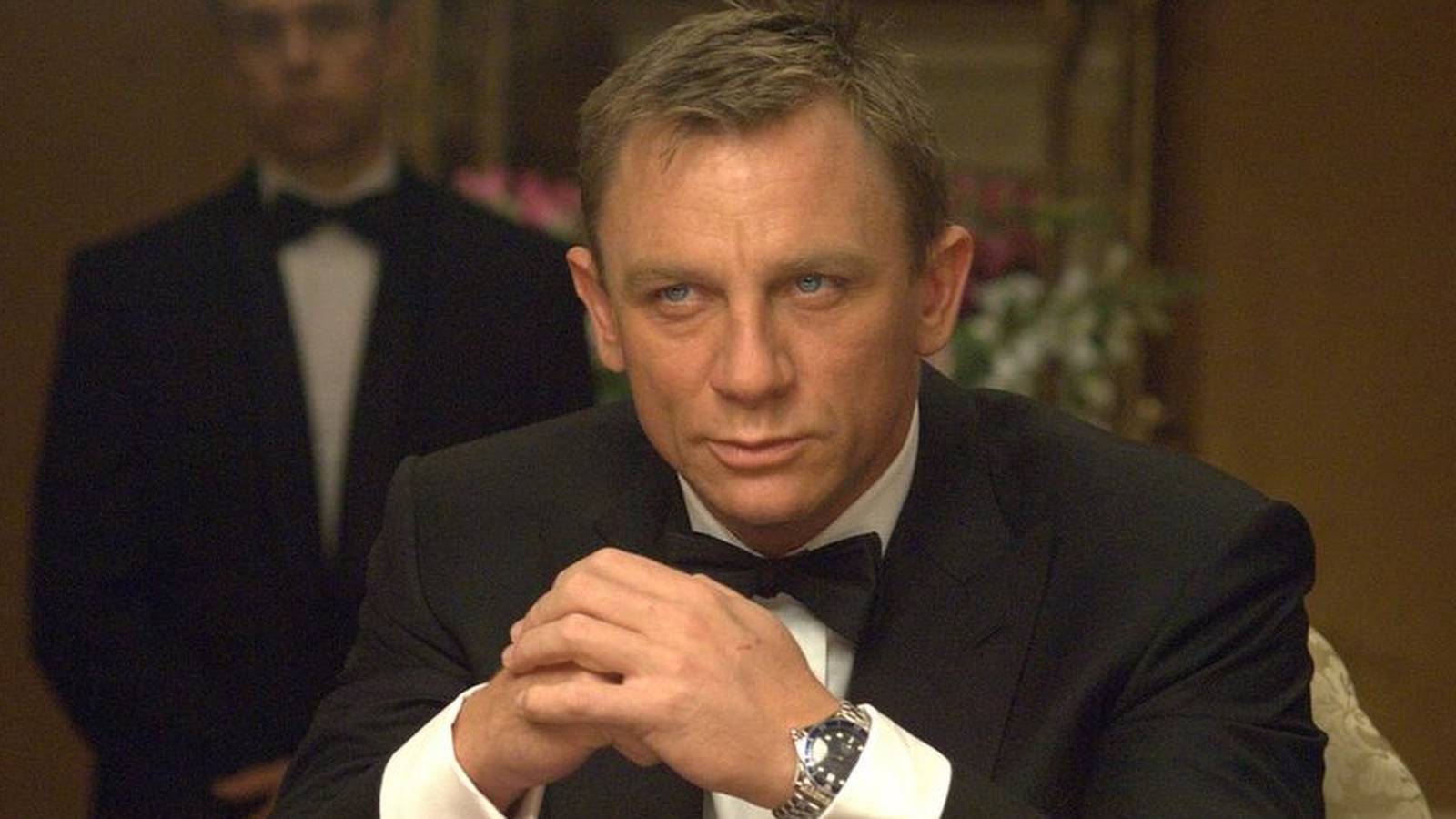
Image via Sony Pictures Releasing Published Oct 31, 2026, 6:08 PM EDT At any given moment, Scott Simone has at least three books jockeying for his attention. He’ll never turn down a campus novel with a literary bent, nor will he hesitate to add yet another mystery to his Leaning Tower of Pisa-inspired to-be-read pile — which is built upon the bedrocks of too many short story collections, how-are-these-real true crime books, and classics waiting to be cracked open again. Topics that have him ripping through pages the fastest include closed-circle murders, unhappy professors, life-questioning philosophical deep dives, so long as they feature sharp sentences, a dark sense of humor, and at least a little malice. He’s spent so much time in book shops over the years he is, to his wife’s chagrin, continuing to build a library that doesn’t quite respect the dimensions of the apartment meant to contain it. Sign in to your Collider account The spy novel has the patina of cliché, as spies have become victims of their own popularity. One end of the spectrum is James Bond, impeccably dressed in a tux awaiting his shaken (read: watered down) martini. On the other is the darker side, agents shrouded in shadows exchanging cryptic messages. There have been decades of film and television adaptations, not to mention one too many literary imitators, that have dipped into these wells so often that they now seem dry. Now you may think that spy fiction is predictable or, worse, has nothing left to offer. But there's still so much within that spectrum of spies left to discover, and the books that helped create those clichés offer more than you'd expect. They drill into the heart of the living contradictions spies personify, explore the depths of sordidness, and turn intrigue into hilarity. The best spy fiction has a great knack for overturning your expectations, and chances are, by the time you've finished one, you'll be looking for your next assignment. 'The Mask of Dimitrios' (1939) Image via Penguin Books There are plenty of cultural examples — think the likes of Murder, She Wrote and Castle — of the writer-cum-detective who's suddenly a world-class sleuth. But Charles Latimer, the mystery novelist at the center of Eric Ambler's The Mask of Dimitrios, is not one of them. He's shown the corpse of a notorious criminal named Dimitrios after a chance encounter with a police official while vacationing in Istanbul. Latimer's curiosity gets the better of him, and he sets off across Europe to investigate the dead man's past. Latimer quickly discovers he doesn't quite have the chops to make it as an international man of mystery. But Ambler doesn't make Latimer a complete fool, either. He has a knack for finding the right officials, knowing when to ask the right question and when to sit back, and recognizing when he's being taken advantage of. Being capable of a clever move one moment only to find himself completely outmatched the next grounds the character in ways most novels never can with their protagonists. We've all confronted situations in which curiosity overpowers our better judgment. So in a genre that's now packed with superhero-level spies, Ambler gives us someone who's unmistakably human. 'The Spy Who Came in from the Cold' (1963) Image via Victor Gollancz Pretty much every spy novel gives you an unwavering need to root for the good guy, no matter the unsavory things he may have had to do along the way. John le Carré isn't so generous in The Spy Who Came in from the Cold. Alec Leamas works for British intelligence, so he must be the good guy. But there are the years he spent lying to people, the agents he sent into danger, and the orders he carried out even when he barely believed in them. Then there's Jens Fiedler, an East German intelligence officer who still has all the principles Leamas has lost. It's a trick le Carré plays that has the reader looking at the enemy with sympathy while squinting a distrustful eye upon the man for whom we're supposed to be rooting. Just when you think you've worked out who is deserving of your sympathies, le Carré makes you reconsider. Leamas takes on a final assignment, and we're given enough information to believe we understand what's happening. But as the operation gets underway, ordinary conversations acquire a sinister taste, and people who've little to do with espionage find themselves caught up in it anyway. Le Carré makes the distinction between hero and villain increasingly difficult to defend, forcing readers to confront how easily they, too, have excused appalling behavior simply because it came from the right side. 'Our Man in Havana' (1958) Image via Penguin Classics Spy novels lean heavily on one particular crutch: the perception that agents are smart. They can read people like no other, spot liars and frauds with precision. Graham Greene kicked that crutch aside when drafting Our Man in Havana. James Wormold, a vacuum-cleaner salesman who needs money to support his daughter's expensive tastes, enters the murky world of British intelligence. He doesn't know the first thing about espionage; he simply makes it up as he goes along, inventing informants and fabricating reports. And the superiors who recruited him are so impressed by it all that they send someone to help manage his operation. But something more sinister lingers beneath all the absurdity. Wormold has borrowed the names of real people for his imaginary agents, and soon those people begin facing very real danger. His superiors, though, continue congratulating themselves on their extraordinary intelligence gathering. They're so invested in Wormold's supposed success that questioning his reports would mean questioning their own judgment. Greene makes the intelligence establishment look like a bunch of fools, then demonstrates just how dangerous those fools can be. He manages to make the whole thing so funny that you occasionally forget how appalling it really is. 'The Eye of the Needle' (1978) Image via Penguin Books Spy novels have a penchant for ridiculously elaborate operations, in which plans hinge on dozens of moving parts. Ken Follett takes that to another level in The Eye of the Needle, giving the old house-of-cards metaphor an almost literal interpretation. The novel centers on the deception campaign the Allies used to fool the Germans into expecting an invasion at Calais. There were inflatable tanks, dummy aircraft, and barracks with roofs but no walls. It took a ton of ingenuity and military planning, yet one small nail threatened to deflate the whole thing: a German spy, Henry Faber, discovered the deception. Follett is just as interested in how these grand operations ultimately depend on individual human judgment. Faber manages to see through one of the greatest military deceptions in history, only to find his own mission dependent on deceiving Lucy, a lonely woman he encounters on an isolated Scottish island. She's trapped in an unhappy marriage, and Faber's unexpected attention offers a welcome distraction. Follett reduces the fate of an enormous military operation to the relationship between two people, making their smallest interactions as consequential as all those inflatable tanks. Collider Exclusive · James Bond Personality Quiz Which James Bond Actor Are You Most Like? Connery · Moore · Dalton · Brosnan · Lazenby · Craig Six actors. Six completely different visions of the same man — dangerous, charming, complicated, and almost certainly wearing a very good suit. Only one of them shares your particular way of moving through the world. Eight questions will figure out which Bond you really are. 🏴Connery 😄Moore 🎭Dalton ✨Brosnan 🤵Lazenby 💠Craig FIND YOUR BOND → 01 How do you carry yourself when you walk into a room? Bond is always the most interesting person in the room. The question is how he makes you feel it. AWith absolute authority — I don't announce myself. I simply make everyone aware that I've arrived. BWith a raised eyebrow and a ready quip — I'd rather disarm a room than dominate it. CWith focused intensity — I'm taking everything in, and people can tell. DWith polish and ease — I look like I belong everywhere, because I've decided I do. EWith quiet confidence — I'm still figuring out my place, but I carry myself as if I already know it. FWith guarded stillness — I notice everything and give nothing away until I choose to. NEXT QUESTION → 02 How do you handle a dangerous situation? Every Bond faces it differently. What does your version look like? AWith dangerous calm — I've been here before, and the threat already knows it's made a mistake. BWith improvisation and a degree of theatrical flair — tension should never be wasted. CHead-on and without hesitation — I don't need gadgets. I have training, and I use it. DWith the right tool for the job — I came prepared, and preparation is its own form of confidence. EInstinctively — I react faster than I think, and it usually works out. FWith controlled brutality — I don't enjoy it, but I don't flinch from what the moment requires. NEXT QUESTION → 03 How do you charm someone you need on your side? Bond always gets what he needs. The method varies considerably. AI make them feel like the most interesting person in the room — for exactly as long as I need them to be. BI make them laugh — a shared laugh is the fastest way to make someone trust you. CI'm direct and honest — I tell them what I need and why. Manipulation wastes time. DWith surface perfection — the right words, the right smile, deployed with enough precision to look effortless. EBy being present and genuine — I'm still developing my technique, but sincerity covers a lot of ground. FReluctantly and sparingly — I'd rather earn trust through actions than manufacture it through charm. NEXT QUESTION → 04 How do you handle your emotions on the job? Every Bond deals with this differently. Most of them not particularly well. AI suppress them completely — detachment is a professional requirement, not a personal failing. BI deflect with humour — a well-timed joke is the best defence against genuine feeling. CI let them show — I'm not ashamed of feeling things, and I think pretending not to is its own kind of weakness. DI compartmentalise with precision — everything in its place, nothing bleeding into the mission. EWith difficulty — I haven't quite worked out the system yet, and sometimes it shows. FBy burying them — deeply, imperfectly, in ways that eventually cost me something important. NEXT QUESTION → 05 How would your colleagues describe your working style? MI6 has opinions about all of its 00s. What are theirs about you? AEffective and uncompromising — results-focused to the point where the methods occasionally become a concern. BReliably brilliant in the field, occasionally exasperating in the briefing room. CPrincipled to a fault — they'd rather do it right than do it fast, and they'll tell you so. DPolished, capable, and slightly too good at making it look easy. ERaw potential — still developing, but there's something there that's hard to teach. FA weapon. Pointed at problems, usually effective, occasionally unpredictable. NEXT QUESTION → 06 How do you feel about operating within the rules? The licence to kill comes with terms and conditions. Not everyone reads them. ARules are for people who haven't earned the judgement to know when to break them. BI follow them in spirit and bend them in practice — the important thing is the outcome. CI take them seriously — there are things I won't do regardless of what the mission requires. DI work within them effectively and creatively — the system has its uses if you know how to navigate it. EI'm still working out where my lines are — the job has a way of moving them on you. FI follow orders until I decide the order is wrong. Then I act on my own judgement and accept the consequences. NEXT QUESTION → 07 What is your relationship with love? Every Bond has a different answer. None of them have found it easy. AA liability I've learned to manage — I don't let it interfere with the work, and I try not to examine why. BA pleasure I take seriously in the moment, lightly in the long term, and honestly in between. CSomething I want genuinely — and struggle to reconcile with the life I've chosen. DPart of the performance — I'm charming, and I enjoy it, but I keep the door to anything deeper firmly closed. ESomething that surprised me — I found it when I wasn't looking and it changed everything, briefly. FA wound I carry — something happened, and I haven't fully processed what it means for everything since. NEXT QUESTION → 08 When the mission is over, how do you want to be remembered? The name is Bond. The rest is entirely up to the man behind it. AAs the original — the one who defined what this could be before anyone else knew what it was. BAs someone who made it enjoyable — who understood that entertainment is its own kind of excellence. CAs someone who took it seriously — who refused to coast and pushed harder than the role required. DAs the complete package — who had the looks, the timing, and the ability to make it all seem inevitable. EAs an underrated chapter — one that deserved more time and more credit than it received. FAs the one who made it human — who found the cost beneath the cool and didn't look away from it. REVEAL MY BOND → The Name Has Been Determined Your Bond Is…Six actors. One role. Your answers point to the Bond who shares your presence, your method, and your particular way of carrying the weight of being the most dangerous person in the room. Sean ConneryYou are the original — and you carry that fact without needing to announce it. There is an authority in the way you occupy a room that others spend careers trying to replicate. You don't explain yourself, justify yourself, or soften yourself for anyone's comfort. The confidence is structural, not performed. Connery's Bond established everything — the tone, the danger, the cool — because Connery himself had the innate presence to make something that had never existed feel inevitable. You share that quality: the sense that you were always going to end up exactly here, doing exactly this. The name is Bond. In your case, it always was. Roger MooreYou understand something that more serious people miss: that wit is its own form of intelligence, and that making people laugh is not a retreat from danger but a way of mastering it. Moore's Bond is underrated precisely because the effortlessness looks easy — and effortlessness is the hardest thing to manufacture. You have the same quality: a lightness that disarms people before they realise how sharp you actually are. The raised eyebrow, the perfectly timed quip, the refusal to be rattled — these are not affectations. They are a philosophy about how to move through a world that would like to take itself too seriously. You have never let it. Timothy DaltonYou took the role seriously when everyone wanted you to coast — and that refusal to take the easy version of anything is the most defining thing about you. Dalton's Bond has genuine moral weight: he feels the cost of what he does, he has lines he won't cross, and he is not interested in the version of himself that pretends otherwise. You share that intensity. You push harder than the situation technically requires, because you have a standard and you hold yourself to it. He was ahead of his time — the Bond the franchise wasn't quite ready for yet, arriving exactly when he was meant to. You know what that feels like. Pierce BrosnanYou are the complete package — and you know it, which is part of what makes you so effective and occasionally so infuriating to the people around you. Brosnan arrived at the role looking exactly like Bond was supposed to look, and he delivered on that expectation with a professionalism that made it seem effortless. You have the same quality: a smooth competence, a charm that operates like a precision instrument, and the ability to make even difficult things look like they weren't. His era was the most commercially successful in the franchise's history. There is a reason for that. The reason is that some people simply fit their moment perfectly. You are one of those people. George LazenbyYou stepped into something enormous with less preparation than anyone around you thought was sufficient — and you delivered something genuine anyway, which is the more impressive achievement. Lazenby's single outing is, by many measures, one of the finest Bond films ever made — and he is not a small part of why. You share his quality of raw authenticity: less polished than the alternatives, more honest for it, capable of something real that technique alone can't produce. He was underestimated, and then he wasn't, and then history caught up with him. You are the kind of person history catches up with. Give it time. Daniel CraigYou stripped everything back and found what was underneath — and what was underneath was harder, more honest, and more human than anyone expected. Craig's Bond is the franchise's most psychologically complete: a man doing a brutal job, carrying its costs imperfectly, capable of love and loss in ways that can't be dismissed. You share that depth. You don't hide behind the role or the charm or the suit — you let the work show what it actually costs. He was controversial from the moment he was announced and definitive by the time he was finished. The sceptics became the believers. That arc — of being underestimated and then undeniable — is one you know intimately. ↻ RETAKE THE QUIZ 'Who Is Vera Kelly?' (2018) Image via Tin House The double life of the spy is often romanticized, and could even be seen as one of the perks of the job. Rosalie Knecht paints a different portrait of it in Who Is Vera Kelly?. Vera is a gay woman in 1960s America, so she's used to keeping secrets long before the CIA sends her to spy in Argentina. There, she poses as a Canadian student while investigating suspected Soviet connections. But Knecht strips away the glamour of a spy's secret identity, showing how Vera has spent much of her life concealing who she really is, even from the people closest to her. Knecht uses an unusual structure to make the point. She moves between Vera's teenage years and her assignment in Buenos Aires, and we begin to understand just how much practice she's had at keeping people at a distance. Her relationship with her mother was difficult enough, and hiding her sexuality only made it harder to let anyone get close. She knows how to get a stranger talking, even coax a secret out of them. But ask her to trust someone with one of her own, and she's considerably less sure of herself. When a military coup leaves her without contact with her handlers, those difficulties become even more dangerous. Knecht makes Vera's search for somewhere she belongs every bit as compelling as the secrets she's trying to uncover, giving espionage fiction a refreshingly intimate point of view. 'The Peacock and the Sparrow' (2023) Image via Atria Books I.S. Berry mulls a difficult question in The Peacock and the Sparrow: When intelligence agencies are supposed to tell governments what's happening in the world, what happens when the government has already decided what it wants to hear? The novel focuses on a monarchy-threatening uprising in Bahrain. Shane Collins' superiors want evidence that Iran is supporting the opposition. His overly ambitious station chief will seemingly do anything to provide it, whether the evidence actually exists or not. Collins is guilty of much the same thing in his personal life. The years he's spent manipulating people for information haven't exactly made him an expert on human relationships. But when he becomes infatuated with Almaisa, a Bahraini artist, he begins seeing a different side of the country. He can't quite abandon the prejudices he's accumulated over his career, though, or recognize how his own desires are clouding his judgment. Berry makes Collins' personal failings a reflection of the intelligence establishment he serves and, in doing so, exposes how easily intelligence gathering can become an elaborate exercise in confirming what everyone already believes. 'Casino Royale' (1953) Image via Jonathan Cape James Bond is arguably the most well-known of spies, so he's the perfect introduction to the genre. And Ian Fleming introduces practically everything that would make 007 famous in Casino Royale. He has his particular opinions about martinis (them being wrong notwithstanding), insists upon the finest food, and dresses with an almost obsessive attention to detail. It's how Fleming makes espionage seem like an extraordinarily appealing profession. But the polished exterior belies the broken interior. Sure, Bond may be exceptionally disciplined when it comes to his profession, but, time and again, he makes spectacular misjudgments about those closest to him. Take his relationship with Vesper Lynd, the intelligence officer assigned to assist him, which slowly exposes just how poorly prepared he is for genuine emotional intimacy. Fleming doesn't pull his punches when it comes to the physical ramifications of the spy profession, as Casino Royale is far more brutal than the films suggest. That's what makes Fleming's original Bond so fascinating: All his cultivated sophistication provides little protection against the things he can't control. Casino Royale Release Date November 17, 2006 Runtime 144 minutes Director Martin Campbell Writers Neal Purvis, Paul Haggis, Robert Wade, Ian Fleming Producers Barbara Broccoli, Michael G. Wilson Main Genre Action Budget $150 million Studio(s) Sony Distributor(s) Sony Executive Producer(s) Wayne Anthony, Callum McDougall
7 Essential Spy Thriller Books for Beginners
Full Article
Original Source
Read the full article at Collider →KhanList aggregates and links to publicly available news content. We do not host full articles from third-party sources. Always verify important information with original sources.