
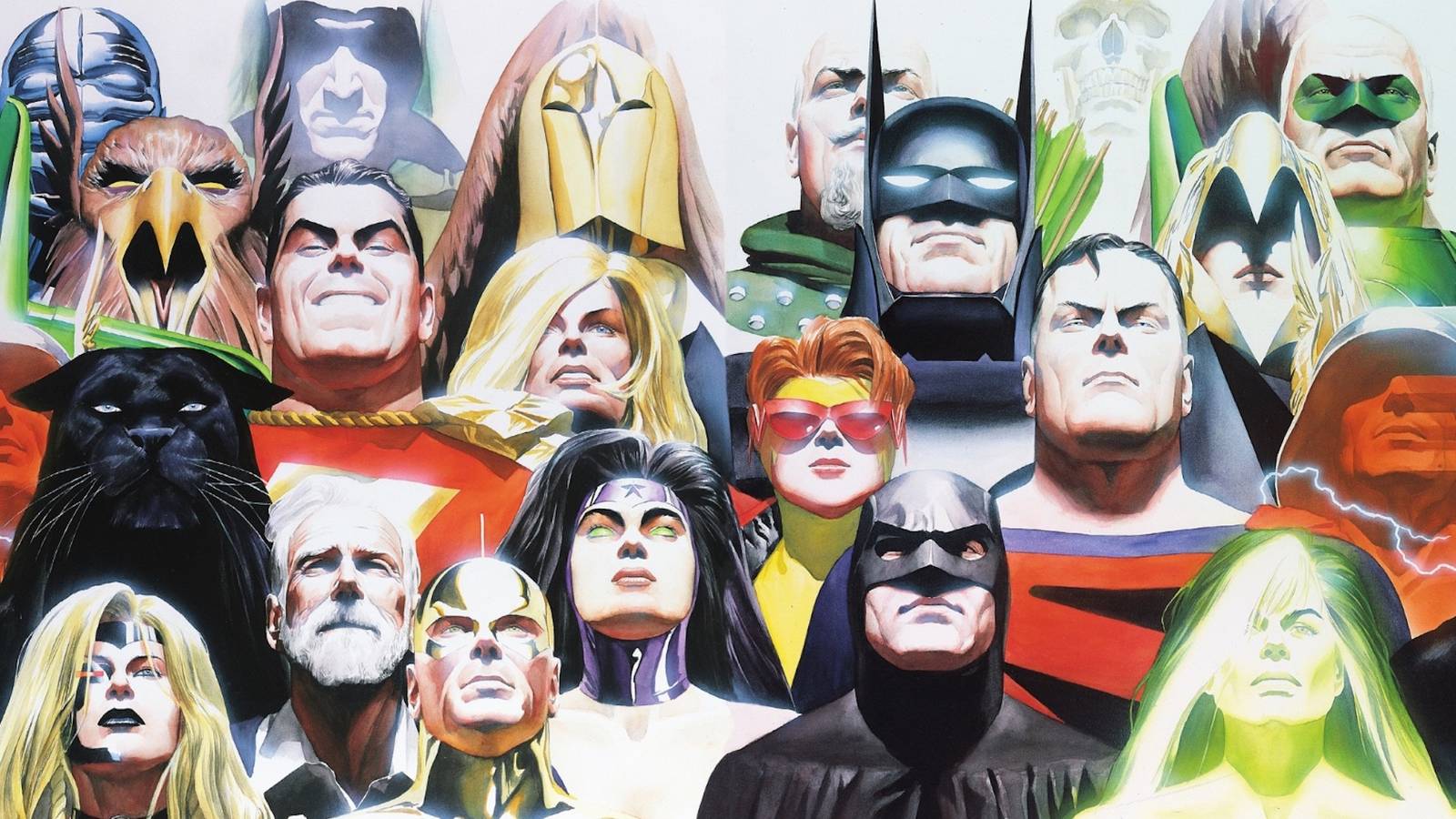
Since its inception over 30 years ago, DC’s Elseworlds imprint has released some of the publisher’s best known stories. The various books of the Elseworlds line transported the likes of Superman, Batman, Wonder Woman and the entire Justice League into different time periods, such as the Civil War. Other entries gave fans creative mashups, such as Superman: War of the Worlds. The Elseworlds line was an outgrowth of DC’s “Imaginary Stories.” A hallmark of the publisher’s Silver Age output, these stories, much like Elseworlds, envisioned DC’s biggest icons in outlandish situations. Mostly relegated to the Superman line of comics, these “Imaginary Stories” saw the Man of Steel marry Lois Lane, or Lana Lang. In others, he would die, or be transformed into some creature. These stories were fun, whimsical one-offs that nevertheless shook up the tried and true formulas. DC’s original Elseworlds line ran from 1989 up to 2003, at which point the books began to taper off, before ceasing publication altogether. A revival attempt in the late 2000s failed to launch, and the line went dormant for another 14 years before being revived in 2024. New Elseworlds books such as Dark Knights of Steel continue the trend of bold and fresh approaches to DC’s stable of heroes. Here are 7 Elseworlds stories that embody the best of what the line has to offer. Batman/Dracula: Red Rain (1991) Writer: Doug Moench, Artist: Kelley Jones By the time Batman/Dracula: Red Rain hit comic shops in 1991, the Elseworlds imprint was already off to a grand start. Two years earlier, Gotham By Gaslight was the line’s unofficial debut, with Holy Terror, also released in 1991, as the first book to carry the Elseworlds logo. These books showed the vast potential in the Elseworlds concept, and Batman/Dracula: Red Rain fulfilled this promise, thanks to Doug Moench’s script and Kelley Jones’ moody art. Red Rain’s premise was so simple and so effective that it begged the question of why it did not happen earlier. Moench and Jones explore the common ground Batman and the Lord of the Vampires share. Red Rain’s unforgettable ending, where Batman becomes a vampire to defeat Dracula, threw down the gauntlet for the rest of the Elseworlds line. A few years later, the pair would become the regular creative team on the flagship Batman title, bringing the same eerie aesthetic that was Red Rain’s trademark to the mainstream DC Universe. Batman/Dracula was also the beginning of one of the most creative partnerships to ever work on the character. A few years later, the pair would become the regular creative team on the flagship Batman title, bringing the same eerie aesthetic that was Red Rain’s trademark to the mainstream DC Universe. Furthermore, Red Rain inspired two sequels: 1994’s Bloodstorm and 1998’s Crimson Mist. The saga of the vampire Batman would not come to an end until 2015’s Convergence. Superman: Speeding Bullets (1993) Writer: J.M. DeMatteis, Artist: Eduardo Barretto While Batman seemed to get the lion's share of Elseworlds stories, the Man of Steel would also receive some epic adventures under the banner, and Speeding Bullets was the first. The concept behind Speeding Bullets was genius, asking what might have happened had Kal-El’s rocket been found by Thomas and Martha Wayne. Just like every other Earth in DC’s multiverse, Thomas and Martha were fated to die, with young Bruce looking on in horror. Yet matters took a very different course: young Bruce’s powers manifested themselves that night in Crime Alley, and he gave Joe Chill serious, life-threatening burns thanks to his Heat Vision. He would then spend his teenage years in isolation before taking up the mantle of Batman. At the same time, Wayne Enterprises was fighting off a hostile takeover by Lex Luthor, which forced Bruce to take a more active role in his company. Batman obtained Green Lantern's Power Ring in the Elseworlds special Darkest Knight. J.M. DeMatteis is no stranger to psychologically piercing stories, and Speeding Bullets is cut from this cloth. The anguish Bruce feels over having great powers and yet being able to do nothing about the evil that has infested his world gives Speeding Bullets an emotional edge that sets the bar high for future Superman Elseworlds stories. The Golden Age (1993) Writer: James Robinson, Artist: Paul Smith Many classic Elseworlds stories were prestige-format one-shots, but DC also experimented with miniseries such as The Golden Age. A love letter to DC’s Golden Age heroes, the four-issue book chronicled the team’s final adventure before disbanding in the early 1950s. Building off already existing lore, Robinson and Smith elevated the Golden Age characters to new heights. While many Elseworlds stories remain firmly separate from the DC Universe, some elements of The Golden Age have seeped into the main continuity. A year after The Golden Age was released, writer James Robinson would co-create a new take on Starman with artist Tony Harris. The duo’s Starman also drew extensively on Golden Age history. Some parts of it are called back to The Golden Age. Furthermore, The Golden Age also inspired Geoff Johns, who would put on his own spin on the Justice Society a decade later. Writers: Brian Augustyn and Mark Waid, Artist: Joe Staton Annuals were a massive part of the comic book landscape once, and it was not uncommon for publishers to run a crossover or themed event in them. In 1994, every DC Annual was an Elseworlds story. For the first time, characters such as Steel, Lobo or the Legion of Super-Heroes could receive their own Elseworlds adventure. Batman was appearing in several titles at the time, including Legends of The Dark Knight. Each Annual was a different take on Batman. Augustyn and Waid structure the Annual’s story in a similar fashion to Welles’ masterpiece. “Citizen Wayne” was easily the best of these Batman Annuals. As the name implies, the story is a riff on Orson Welles’ Citizen Kane. Augustyn and Waid structure the Annual’s story in a similar fashion to Welles’ masterpiece. The seeming murders of Bruce Wayne and Harvey Dent invite deeper and deeper questions, ultimately leading to a grand climax. The story would get a follow-up six years later in “The Mystery of Citizen Wayne,” appearing in The Batman Chronicles #21. Kingdom Come (1996) Writer: Mark Waid, Artist: Alex Ross In 1993, Marvel Comics released Marvels, a four-issue miniseries that was a showcase for up-and-coming artist Alex Ross, whose fully-painted art elevated the book above the publisher’s other fare at the time. In 1996, DC released their “response” to Marvels: Kingdom Come. Whereas Marvels was a celebration of history and legacy, Kingdom Come looks ahead to a dark, dystopian future where Superman returns from exile to guide a new generation of heroes. However, not everyone is on board with Superman’s plan, and before long, he is forced to open prisons to hold the malcontents. Meanwhile, Batman is seemingly plotting against his former friend, throwing his lot in with Lex Luthor, who has spent the last decade psychologically manipulating Captain Marvel. This leads to a showdown between the Captain and Superman that had been building since the Golden Age. Kingdom Come was a massive success for DC, and remains in print to this day. A few years later, DC would revisit the book in The Kingdom, a series of one-shots that dived further into the heroes and villains that made Kingdom Come a classic. Some elements of Kingdom Come, such as Gog as well as Wonder Woman’s armor, have been incorporated into the mainline DC Universe. Justice Riders (1997) Writer: Chuck Dixon, Artist: J.H. Williams III The beauty of the Elseworlds concept was how flexible it was, allowing for stories to be set in any time frame, even the Old American West. Justice Riders was a clever riff on the Justice League, recasting them as rugged cowboys and outlaws trying to stop corrupt land baron Maxwell Lord, who just destroyed Wonder Woman’s hometown of Paradise. While Justice Riders is sold as a Justice League Elseworlds adventure, it is very much Wonder Woman’s story. Paradise’s destruction kicks Justice Riders off, and her quest to avenge it ultimately brings the Justice League together. Wonder Woman received very few Elseworlds stories during its original run, making Justice Riders even more important. “Yes, Tyrone, There is a Santa Claus,” appearing in DC Infinite Holiday Special (2007) Writer: Kelley Puckett, Artist: Pete Woods While the Elseworlds imprint had mostly wound down by 2007, DC still occasionally snuck a story out here and there, such as “Yes, Tyrone, There is a Santa Claus.” This light-hearted, Christmas-time romp begins with an earnest young boy’s holiday letter to the Man of Steel, which inspires him to play Santa. On his way to the boy’s house, he is intercepted by Batman. The Dark Knight admonishes Superman, telling Kal-El he has better things to do. It turns out, it was a ruse on Batman’s part, so that he could play Santa, not Superman. Elseworlds would make a few more sporadic appearances in the years that followed, including the aforementioned (and aborted) 2009 revival attempt. The line’s 2024 return was a cause for celebration, but stories like “Yes, Tyrone …” kept the Elseworlds spirit alive during the DC imprint’s “wilderness” years. The story kept with the imprint’s malleability by showing its lighter side.
7 DC Comics Elseworlds Stories That Are Considered Near-Perfect
Full Article
Original Source
Read the full article at Screenrant →KhanList aggregates and links to publicly available news content. We do not host full articles from third-party sources. Always verify important information with original sources.