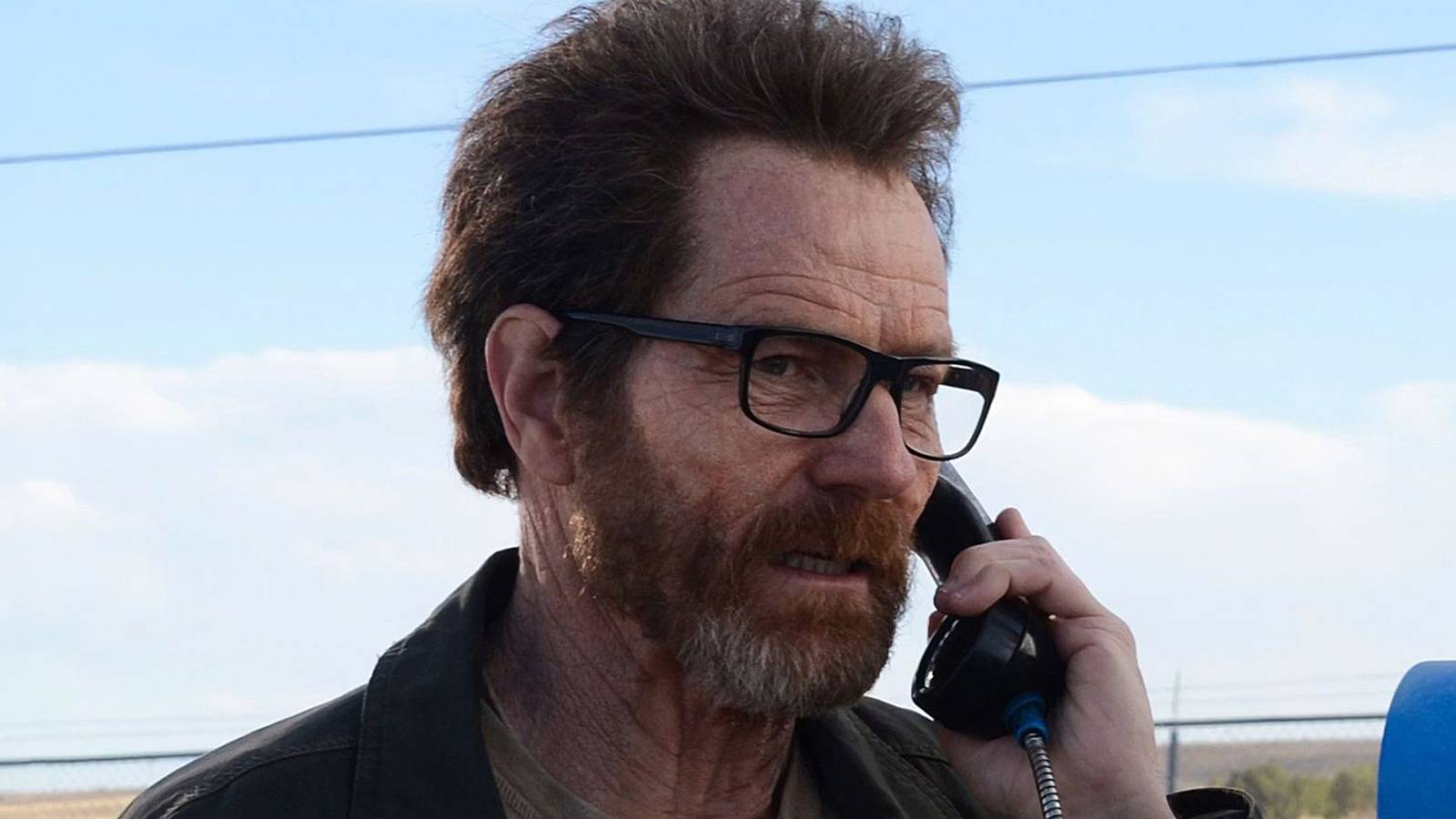
Image via AMC Published Aug 5, 2026, 7:41 AM EDT Dyah (pronounced Dee-yah) is a Senior Author at Collider, responsible for both writing and transcription duties. She joined the website in 2022 as a Resource Writer before stepping into her current role in April 2023. As a Senior Author, she writes Features and Lists covering TV, music, and movies, making her a true Jill of all trades. In addition to her writing, Dyah also serves as an interview transcriber, primarily for events such as San Diego Comic-Con, the Toronto International Film Festival, and the Sundance Film Festival. Dyah graduated from Satya Wacana Christian University in October 2019 with a Bachelor's degree in English Literature, concentrating on Creative Writing. She is currently completing her Master's degree in English Literature Studies, with a thesis on intersectionality in postcolonial-feminist studies in Asian literary works, and is expected to graduate in 2026. Born and raised between Indonesia and Singapore, Dyah is no stranger to different cultures. She now resides in the small town of Kendal with her husband and four cats, where she spends her free time cooking or cycling. Sign in to your Collider account Spoiler Alert: This list contains spoilers for multiple TV shows.Crime dramas never go out of fashion, but every great series eventually reaches its end. Whether it's a multi-season epic or a tightly scripted miniseries, the genre explores the gritty realities of those who uphold the law, those who operate outside of it, and those caught somewhere in between. Sometimes, it follows people failed by the justice system despite deserving its protection; other times, it examines those forced into a life of crime by circumstances beyond their control. No matter which side they fall on, they all share one thing in common: their endings are shaped by the choices they make throughout the series. Some face the collapse of a once-feared criminal empire, while others fight to reclaim their innocence after being failed by the very system meant to protect them. Whether tragic, bittersweet, or unexpectedly hopeful, the best crime drama finales deliver endings that feel both inevitable and earned. From a feared mafia on the verge of extinction to a wrongly accused man seeking justice, here are crime show endings that are genuine masterpieces. 'Peaky Blinders' (2013–2022) Image via BBC Every criminal empire is bound to meet its inevitable demise. Peaky Blinders follows the Shelby family as they expand from a humble gambling operation into an international business empire. But that rise comes at a bloody cost, requiring family patriarch Thomas Shelby (Cillian Murphy) to eliminate anyone who dares cross him. While Tommy is far more merciful toward his family, he still has no qualms about cutting them out of the business—especially his cousin Michael Gray (Finn Cole), the son of his late aunt. Although Tommy's conflict with Michael finally ends with a gunshot in the finale, one battle remains: his failing health—or so he believes. After discovering his terminal diagnosis was fabricated by a doctor working with fascist allies determined to bring him down, Tommy tracks the doctor down, ready to kill him. Yet he ultimately walks away. It's a fitting callback to the show's recurring theme of the eleventh hour, symbolizing an armistice that proves Tommy has finally found peace after letting go of the criminal empire that brought him both power and misery. 'The Night Of' (2016) Image via HBO If there's a crash course in just how unjust the American judicial system can be, it's The Night Of. In just one night, the typically high-strung college student Naz Khan (Riz Ahmed) finds himself behind bars after one party changes the entire course of his life. Waking up next to a dead woman with all the evidence pointing to him, Naz's innocence is immediately called into question, largely because of his Pakistani-American heritage and lack of financial means to afford the best lawyers. Although Naz ultimately regains his freedom in the finale, it comes at a grave cost. While the ending never reveals the exact circumstances surrounding the woman's death, Naz walks away with a bittersweet 6-6 hung jury. Unfortunately, his time in prison has altered him both physically and psychologically, leaving him unrecognizable from the young man audiences first met. As a result, The Night Of becomes less about who committed the crime and more about what the justice system does to underprivileged and underrepresented men like Naz. 'Bosch' (2014–2021) Image via Prime Video In a sea of uniform blue, there will always be a black sheep like Detective Harry Bosch (Titus Welliver). Bosch follows a case-of-the-season format, but one thread that ties every season together is Bosch's growing skepticism toward the LAPD. As an authoritative figure, Bosch excels at putting bad guys behind bars. The bigger question, however, is whether the people above him—chiefs, the feds, and mayors—actually want to keep them there. The series finale becomes the culmination of Bosch's pent-up disappointment and disillusionment with the system. He finally arrests gang leader Mickey Peña (Gino Vento), but the FBI wants to use him as an asset in a larger investigation, despite Peña being responsible for the arson that killed an entire family. Peña is ultimately freed, only to be murdered by the grieving father of one of the victims, who is then shot by police. Bosch has crossed plenty of lines before, but none more outrageous than turning in his badge and walking away from a justice system built on compromise and political bargaining. 'The Sopranos' (1999–2007) Image via HBO The Sopranos arguably committed one of television's cardinal sins: cutting to black. Working for the mafia has always been an uncertain business, and Tony Soprano (James Gandolfini) bears much of that burden while hiding his panic attacks to avoid scrutiny from his peers. The glory days of the mafia are long gone. With racketeering and traditional scams becoming less profitable in the credit card era, and RICO constantly closing in, it's only a matter of time before the old crime families fade away. That moment finally arrives in the finale of The Sopranos. Tony brokers a truce with New York after the assassination of a rival boss, bringing a bloody mob war to an end. Yet he also faces a possible indictment after one of his associates likely becomes an informant. Knowing his time may be running out, Tony reunites with his family at Holsten's diner. As he nervously watches every customer who walks in, the screen suddenly cuts to black. Whether Tony lives or dies remains one of television's greatest mysteries. Collider Exclusive · TV Medicine Quiz Which Fictional Hospital Would You Work Best In? The Pitt · ER · Grey's Anatomy · House · Scrubs Five hospitals. Five completely different ways medicine goes sideways on television — brutal, chaotic, romantic, brilliant, and ridiculous. Only one of them is the ward your instincts were built for. Eight questions will figure out exactly where you belong. 🚨The Pitt 🏥ER 💉Grey's 🔬House 🩺Scrubs FIND YOUR HOSPITAL → 01 A critical patient comes through the door. What's your first instinct? Medicine under pressure reveals who you actually are. AStay completely present — block everything else out and work through it step by step, right now. BTriage fast and delegate — get the right people on the right problems immediately. CTrust my gut and move — I work best when I stop overthinking and just act. DAsk the question everyone else is ignoring — what's the thing that doesn't fit? ETake a breath, make a joke to cut the tension, and then get to work — panic helps no one. NEXT QUESTION → 02 Why did you go into medicine in the first place? The honest answer says more about you than the one you'd give in an interview. ABecause I wanted to be where it matters most — right at the edge, when someone's life is actually on the line. BBecause I wanted to help people — genuinely, one patient at a time, in a system that makes it hard. CBecause I was drawn to the intensity of it — the stakes, the drama, the feeling of being fully alive. DBecause medicine is the most interesting puzzle there is — and I needed a problem worth solving. EBecause I wanted to make a difference — and also, honestly, I didn't know what else to do with my life. NEXT QUESTION → 03 What do you actually want from the people you work with? Who you want beside you under pressure is who you are. ACompetence and calm — I need people who don't fall apart when things get bad. BTrust and reliability — I want to know that when I pass something off, it's handled. CConnection — I want colleagues who become family, even if that gets complicated. DIntelligence and the willingness to be challenged — I have no interest in people who just agree with me. EFriendship — people I actually like spending twelve hours a day with, because those hours are going to happen either way. NEXT QUESTION → 04 You lose a patient you fought hard to save. How do you carry it? Every doctor who's worked a long shift has had to answer this question. AI carry it. All of it. I don't look for ways to put it down — that weight is part of doing this work honestly. BI process it and move — you have to, or the next patient suffers for the one you just lost. CI feel it deeply and lean on the people around me — I don't think you're supposed to handle that alone. DI go back over every decision — not to punish myself, but because I need to understand what I missed. EI grieve it genuinely, find some way to laugh about something unrelated, and try to be kind to myself — imperfectly. NEXT QUESTION → 05 How would your colleagues describe the way you work? Your reputation on the floor is usually more accurate than your self-image. AIntense and completely present — no small talk during a shift, but exactly who you want there. BSteady and dependable — not the flashiest in the room but never the one who drops something. CPassionate and occasionally chaotic — brilliant on the hard cases, prone to drama everywhere else. DBrilliant and difficult — right more often than anyone else, and everyone knows it, including me. EWarm and self-deprecating — not the most intimidating presence, but genuinely good at this and easy to like. NEXT QUESTION → 06 How do you feel about hospital protocol and procedure? Every institution has rules. What you do with them is a choice. AProtocol is the floor, not the ceiling — I follow it until the patient needs something it can't provide. BI respect it — the system is broken in places, but the structure is there for a reason and I work within it. CI follow it until my instincts tell me not to — and my instincts are usually right, even when they cause problems. DRules are for people who haven't thought hard enough about when to break them. EI try to follow it and mostly do — with a few memorable exceptions that still come up in meetings. NEXT QUESTION → 07 What does this job cost you personally? Nobody works in medicine without paying a price. What's yours? AEverything outside these walls — I've given this job my full attention and the rest of my life has gone around it. BMy idealism, mostly — I came in believing the system could be fixed and I've made a complicated peace with that. CStability — my personal life has been as chaotic as the OR, and that's not entirely a coincidence. DMy relationships — I am not easy to know, and the people who've tried to would probably agree. EMy sense of gravity — I use humour as a coping mechanism, which not everyone appreciates in a hospital. NEXT QUESTION → 08 At the end of a long shift, what keeps you coming back? The answer to this question is the most honest thing about you. AThe fact that it's real — that nothing else I could be doing would matter this much, right now, today. BThe patients — individual human beings who needed something and got it because I was there. CThe people I work with — I have walked through impossible things with these people and I'd do it again. DThe next unsolved case — there's always another puzzle, and I'm not done yet. EBecause despite everything — the exhaustion, the loss, the absurdity — I actually love this job. REVEAL MY HOSPITAL → Your Assignment Has Been Made You Belong In…Your answers have pointed to one fictional hospital above all others. This is the ward your instincts, your temperament, and your particular brand of dysfunction were built for. The PittYou are built for the most unsparing version of emergency medicine television has ever shown — one that puts you inside a single fifteen-hour shift and doesn't let you look away. You need your work to be real, not romanticised — meaning over drama, honesty over aesthetics. You find purpose inside the work itself, not in the chaos surrounding it. You've made peace with the fact that this job takes from you constantly, and gives back in ways that are harder to name. Pittsburgh Trauma Medical Center demands exactly that kind of person — and you would not want to be anywhere else. ERYou are the person who keeps the whole floor running — not the most brilliant in the room, but possibly the most essential. You show up, do the work, absorb the losses, and come back the next day without needing the job to be anything other than what it is. You care about patients as individual human beings, not as cases to solve or dramas to live through. You believe in the system even when it fails you — and you understand that emergency medicine is about holding the line just long enough. ER is television about endurance. You have it. Grey's AnatomyYou came to medicine with your whole self — your ambition, your emotions, your relationships, your history — and you have never quite managed to leave any of it at the door. You feel things fully and form deep attachments to the people you work with. Your personal and professional lives are permanently, chaotically entangled — and that entanglement drives both your greatest disasters and your most remarkable saves. You understand that extraordinary medicine often happens at the intersection of clinical skill and profound human connection. It's messy at Grey Sloan. You would not have it any other way. HouseYou are drawn to the problem above everything else — the symptom that doesn't fit, the diagnosis hiding underneath the obvious one. You're not primarily motivated by the patient as a person — though you are capable of caring, even if you'd deny it. You work best when the stakes are highest and the standard answer is wrong. Princeton-Plainsboro exists to house one extraordinary, impossible mind — and everyone around that mind is there because they're smart enough to keep up. The only way forward here is to think harder than everyone else in the room. That is exactly what you do. ScrubsYou understand that medicine is tragic and absurd in almost equal measure — and that the only sane response is to hold both of those things at the same time. You are warm, self-aware, and funnier than most people in your field. You use humour to get through terrible moments — and at Sacred Heart, that's not a flaw, it's a survival strategy. You lean on the people around you and let them lean back. The laughter and the grief are genuinely inseparable here. Scrubs is a show about learning to become someone worthy of the job. You are still very much in the middle of that process — which is exactly right. ↻ RETAKE THE QUIZ 'Breaking Bad' (2008–2013) Image via AMC Nobody dies a hero or a villain in the Breaking Bad finale, especially Walter White (Bryan Cranston). The former chemistry teacher may have started cooking meth to put food on the table and pay his mounting medical bills. But after getting his first real taste of success—something that had long eluded him in his academic career—something inside him changes. His noble intentions slowly disappear, and the Albuquerque drug empire becomes the one place where he truly feels respected and seen. Yet Heisenberg never completely lets go of his humanity, as the finale makes clear. Before his death, Walter ties up every loose end, ensuring his family will be financially secure while finally admitting the truth to Skyler (Anna Gunn): he didn't build his meth empire for them, but for himself. It was never about survival—it was about his own pride and ego. After rescuing Jesse (Aaron Paul) and wiping out his rivals, Walter dies inside a meth lab, ending his story in the very place that defined both the best and worst parts of who he became. 'Boardwalk Empire' (2010–2014) Image via HBO The past finally catches up with Nucky Thompson (Steve Buscemi) in Boardwalk Empire. The treasurer of Atlantic City has spent his life clawing his way out of an abusive childhood while building not only a criminal empire but also the image of a beloved public politician for those unaware of his illicit dealings. He's the very definition of duality: on one hand, he flashes the warmest smile to potential voters; on the other, he doesn't hesitate to smash someone's face into a bar. Earlier in the series, Nucky takes Jimmy Darmody (Michael Pitt) under his wing, only to kill him after uncovering his betrayal. But the dead never truly stay buried—they live on through those they leave behind. That makes Nucky's death in the finale all the more tragic. Instead of falling to a rival mobster, he's killed by Jimmy's son, bringing his story full circle. It's a fitting end, signaling the rise of a new generation of organized crime as the old guard finally surrenders to the Commission. 'Mare of Easttown' (2021) Image via HBO Mare of Easttown shows how a murder mystery can parallel a mother's grief, and the finale makes that connection all the more heartbreaking. Detective Mare Sheehan (Kate Winslet) may be the town's best detective, but she's emotionally drained after the death of her son. Understandably, grief clouds her judgment. Still, when a teenage girl is found murdered, and another remains missing from a cold case, Mare has no choice but to push through her pain before anyone else becomes a victim. The finale finally reveals the killer, but with a devastating twist. Mare initially arrests John Ross (Joe Tippett) after he confesses, only for one last piece of evidence to expose the truth: the real killer is John's tween son, Ryan (Cameron Mann), who accidentally shoots the girl while trying to scare her away from his father. The cruelest part is that Ryan is the son of Mare's best friend, Lori (Julianne Nicholson), beginning another cycle of a mother's grief just as Mare starts emerging from her own. In the end, grief is inevitable—it's how we live with it that matters. Mare of Easttown Release Date 2021 - 2021-00-00 Network HBO Cast Kate Winslet Marianne 'Mare' Sheehan Showrunner Brad Ingelsby Directors Craig Zobel Writers Brad Ingelsby Seasons 1 Producers Craig Zobel, Gavin O'Connor, Gordon Gray, Kate Winslet, Mark Roybal, Ron Schmidt, Brad Ingelsby, Karen Wacker Creator(s) Brad Ingelsby Story By Brad Ingelsby Streaming Service(s) Hulu, Dis, MAX
7 Crime Show Endings That Are Genuine Masterpieces
Full Article
Original Source
Read the full article at Collider →KhanList aggregates and links to publicly available news content. We do not host full articles from third-party sources. Always verify important information with original sources.