
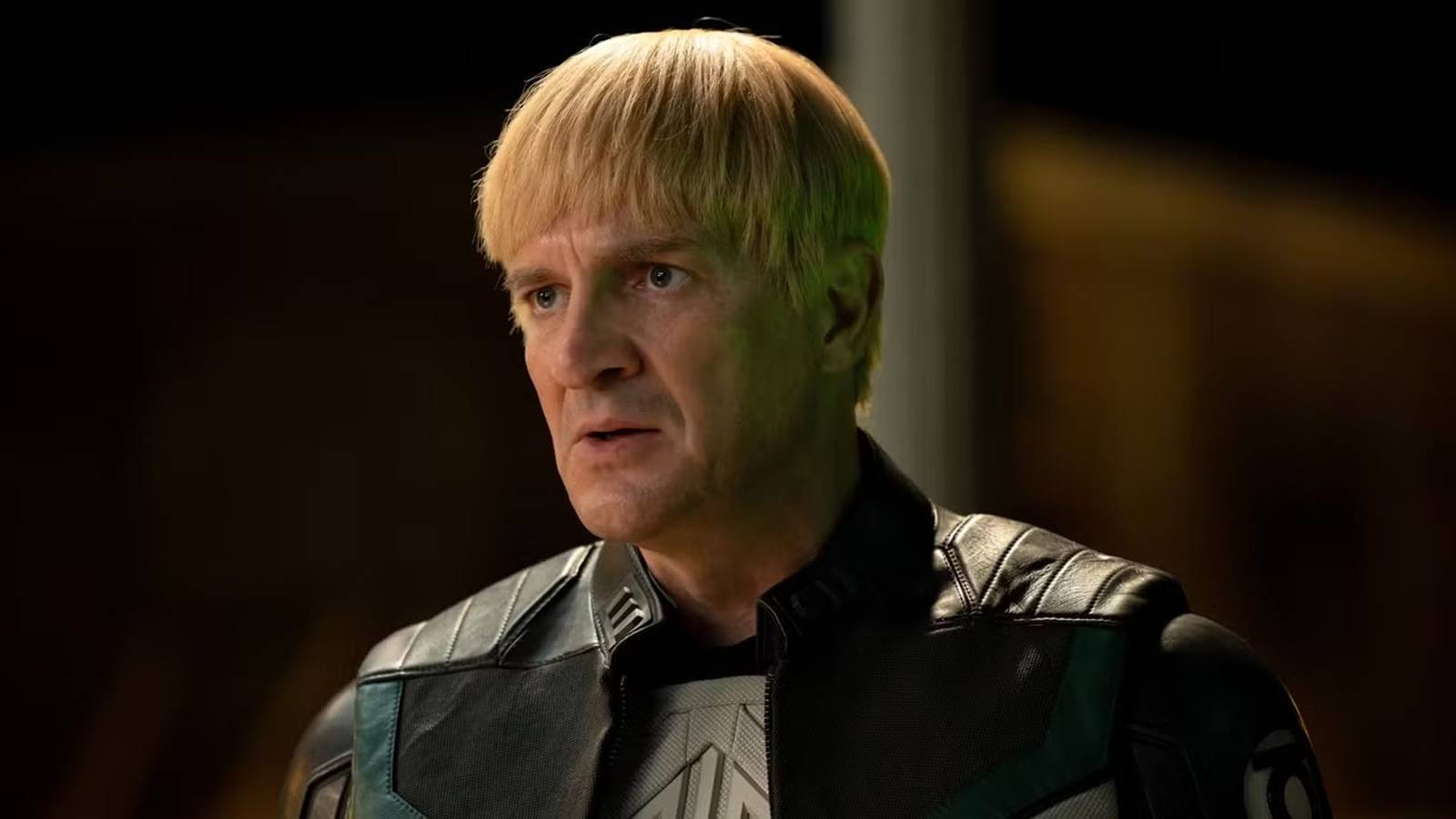
Image via HBO Published Oct 7, 2026, 7:41 AM EDT Michael John Petty is a Senior Author for Collider who spends his days writing, in fellowship with his local church, and enjoying each new day with his wonderful wife and precious daughters. At Collider, he writes features, reviews, recaps, interviews, and breaking news on select occasion. In addition to writing about stories, Michael has told a few of his own, from supernatural thrillers to historical fiction. His Western short story, The Devil's Left Hand, received the Spur Award for "Best Western Short Fiction" in 2025 from the Western Writers of America, of which he is a member. Michael currently resides in North Idaho with his growing family. Sign in to your Collider account Spoiler Alert: This list contains spoilers for Lanterns Season 1.Now that Lanterns has wrapped up its first season, longtime comic book fans have been comparing the Green Lantern adaptation to the DC Comics source material. While there are some clear similarities between the way the HBO series deals with Hal Jordan (Kyle Chandler) and John Stewart (Aaron Pierre), there are also some glaring differences that folks online have taken to heart. However you feel about these adjustments to the source material, here are some of the biggest changes that Lanterns lays out. From re-writing origin stories to seeing our favorite DC heroes at the very end of their lives, Lanterns boldly (and perhaps unevenly) takes a stab at the Green Lantern mythos by grounding the concept rather than reaching for the stars. While Chandler and Pierre may have been great, that doesn't mean that fans responded well to every change. That said, here is how we would rank some of these major comic-to-screen changes on Lanterns — it may not be an exhaustive list of comic book alterations, but these are some of the biggest that stuck with us. 7 The Death of Hal Jordan Image via HBO Yes, Hal Jordan has been killed off before in the original DC Comics. After becoming the supervillain Parallax, Hal sacrifices himself in The Final Night crossover event by using his nigh-unlimited power to heroically re-ignite the sun and save all of Earth. This results in his spirit being merged with the Spectre, a spirit of vengeance who wanders about the Earth. Conversely, Lanterns kills Hal off mid-argument with Kerry Kane (Kelly Macdonald), who shoots him in the head the moment he tells her that he loves her. Talk about a cold way to die. While Lanterns asserts that Hal dies a hero, he really doesn't. He dies a victim of Kerry's impulsive act that is then never even paid for. Rather than sacrificing himself on his own terms to save those he loves, Hal is gunned down unceremoniously and without cause. To add insult to injury, despite his tenure as a villain, Hal was given a true hero's funeral in the comics, while only his lover/murderer and former rival/protégé are in attendance at his burial on Lanterns. But that's what happens when you turn Green Lantern into an HBO show. 6 There Can Only Be One Green Lantern Image via HBO Admittedly, the idea of only one Green Lantern existing on Earth at a time is not entirely a new concept, but it's certainly an outdated one. When Hal Jordan first arrived on the scene in Showcase #22 back in 1959, he was the only member of the Green Lantern Corps assigned to his particular sector. Now, over time, this eventually changed. Characters like Guy Gardner and John Stewart were eventually introduced as Hal's "backup" in case something happened to him, though they eventually earned their own power rings at his side. It's not since the 1980s that Earth has had only one Green Lantern at a time, and with Geoff Johns' monumental run on Green Lantern in the early 2000s, the Guardians of Oa officially began assigning two Lanterns to every sector. Now, again, Earth has already had two or more for quite some time — even Kyle Rayner and John Stewart overlapped for a while — but what Lanterns asserts, that only one person can wear the ring at a time, is an outdated concept. More than that, the comics have shown time and again that, with enough willpower, one power ring can even multiply into two. 5 The Limited Use of the Green Lantern Power Ring Image via HBO On Lanterns, Hal and John use the power ring quite sparingly. It's used to make counterfeit dollars, life-like birds, and protective bubbles or shields — and that's about it. The most imaginative construct that either John or Hal conjure up is that elaborate digging machine early on when investigating William Macon (Garret Dillahunt). Not only does Lanterns fail to capture the true essence of how power rings work and are best utilized by Green Lanterns, but it also depletes their power so arbitrarily that we wonder how Hal ever got anything done. In the comics, Green Lantern rings need to be charged every 24 hours, especially when utilized constantly in the field. However, on Lanterns, the actual charging time window varies depending on plot conveniences and the ring is shown to die after very brief moments of use. It's a shame too, because it means that we're not able to really see what either Hal or John can actually do with one of the greatest weapons in the DC Universe. Despite being one of the worst comic book movies ever, the 2011 Green Lantern movie actually does this element of the mythos justice. 4 John Stewart's Entire Backstory One of the most glaring changes made from page-to-screen was John Stewart's origin story. While some like the direction that Lanterns went with John, revealing that his parents trained him from birth to be the next Green Lantern after his father was rejected from the role, others weren't too pleased. While John's origin has shifted in some ways over the years (it's certainly not as fixed as Hal's), he was traditionally raised in social justice movements by his mother, who taught him to care for others above himself. More than that, his initial training with Hal is much friendlier than anything we see on screen here. Obviously, the version of John's mother — named Bernadette Stewart (Jasmine Cephas Jones) here — doesn't much resemble the woman we meet in the comics. Beyond that, although John has been retconned to be a former U.S. Marine in the comics after the success of the animated Justice League series, even his service history has been altered from the DC material. For instance, his discharge in the comics is honorable since he was willing to challenge corrupt authority, while it's dishonorable due to Hal's interference in his mission. Collider Exclusive · Universe Personality Quiz Which Iconic Universe Do You Belong in the Most? Star Wars · Lord of the Rings · Harry Potter · Game of Thrones · Star Trek Five legendary universes. Five completely different visions of what the world could be — or already was. One of them is the world your instincts, your values, and your particular way of existing were built for. Eight questions will tell you which one. 🚀Star Wars 💍Lord of the Rings 🧙Harry Potter 👑Game of Thrones 🖖Star Trek FIND YOUR UNIVERSE → 01 What gives your life its deepest sense of meaning? Every universe is built around a different answer to this question. ABeing part of something larger than myself — a cause, a rebellion, a fight for freedom that outlasts me. BThe journey itself — the places I'll go, the companions beside me, the world I'll discover on the way. CLearning — unlocking what I'm capable of, understanding the world's hidden mechanics, growing into something more. DLegacy — the name I leave behind, the power I build, the mark I make before the world moves on without me. EUnderstanding — exploring what exists beyond the horizon and asking what it means to be alive in a universe this vast. NEXT QUESTION → 02 Which kind of world do you most want to inhabit? The environment shapes who you become. Choose carefully. AA galaxy of planets, each with its own culture — connected by conflict, trade, and the Force. BAncient lands of breathtaking beauty, deep history, and a creeping darkness at the edges. CA world hidden inside our own — full of wonder, community, and magic waiting to be learned. DA brutal, beautiful continent where power is everything and every alliance is a calculation. EA future where humanity has reached the stars — and must decide what kind of species it wants to be. NEXT QUESTION → 03 How do you prefer your conflicts resolved? The shape of a world's conflicts tells you everything about its soul. AThrough sacrifice and courage — someone has to make the impossible choice so others don't have to. BThrough fellowship — the impossible becomes possible when the right people walk the same road. CThrough growth — confronting what you fear, understanding what you lack, and becoming equal to the challenge. DThrough strategy — outthinking, outmaneuvering, positioning yourself so the outcome was never in doubt. EThrough dialogue — finding the third option, the peaceful resolution, the answer that doesn't require a body count. NEXT QUESTION → 04 Who do you want beside you when things get difficult? Your ideal companions reveal the world you were made for. AA small crew — a pilot, a rogue, a warrior — each broken in their own way, unbeatable together. BA fellowship of different kinds of people, bound by purpose and deepened by the long road. CFriends who grew up alongside me — who knew me before I knew myself, and stayed anyway. DAllies whose loyalty I've earned — and tested — and whose ambitions align with mine, for now. EA crew of brilliant, curious, principled people from every corner of known space. NEXT QUESTION → 05 What is your relationship with power? How you seek, wield, or resist power is the map of who you are. AI want to use it to protect — and I'm terrified of what I might become if I'm not careful. BI distrust it. The most important power in this story is the courage to give it up. CI want to earn it — through knowledge, through effort, through becoming someone worthy of it. DI want to wield it. Preferably before someone else decides to wield it against me. EI want to understand it — its structures, its limits, its ethical dimensions. Power without accountability is the real threat. NEXT QUESTION → 06 How does your universe treat good and evil? A world's moral architecture tells you more about it than any map. AThere is a dark side and a light side — and the choice between them is always present, always personal. BEvil is real and ancient and patient — and goodness, however small, is the only thing that can undo it. CGood and evil are real, but they live inside people — and people are complicated, always capable of both. DGood and evil are mostly a matter of perspective and proximity. Power is the only honest currency. EEvil is usually the result of ignorance, fear, or broken systems — and understanding it is the first step to solving it. NEXT QUESTION → 07 What role would you naturally fall into? Every universe has archetypes. Which one fits you without trying? AThe reluctant hero — ordinary origins, extraordinary moment, changed forever by the choice to act. BThe unlikely carrier — the one nobody expected to matter most, quietly bearing the weight of everything. CThe student — not yet who I'll become, learning through every mistake, growing into something the world needs. DThe player — sharp enough to see the game for what it is, ambitious enough to try to win it. EThe explorer — drawn to the unknown, driven by curiosity, most alive when standing somewhere no one has stood before. NEXT QUESTION → 08 What do you ultimately believe about the future? The answer to this is the clearest window into which universe already lives inside you. AThat hope is real — that even in the darkest galaxy, a new hope is always possible. CThat even the smallest person can change the course of the future, if they have the courage to try. CThat love and friendship and doing what's right will matter in the end, even when everything says otherwise. DThat the wheel keeps turning — that power shifts, winters end, and what endures is those willing to fight for it. EThat humanity — or whatever we become — is capable of extraordinary things, if we choose to be. REVEAL MY UNIVERSE → Your Universe Has Been Chosen You Belong In…Your answers point to the iconic universe your values, your instincts, and your particular way of seeing the world were built for. This is where you would find your people — and your purpose. Star WarsYou believe in the cause — in the idea that freedom is worth fighting for even when the odds are impossible and the empire is vast. You are drawn to the moral clarity of a universe where hope itself is a form of resistance. You'd find your people in the Rebellion — a ragtag coalition of true believers held together by conviction more than resources. Star Wars is fundamentally a story about ordinary people choosing to matter in an extraordinary conflict — and that is exactly your kind of story. The Force may or may not be with you. But the will to use it for something larger than yourself certainly is. Lord of the RingsYou understand, in the deepest part of yourself, that the journey matters as much as the destination — and that the world's beauty is worth protecting even at great cost. Middle-earth is a world of ancient wonder, deep friendship, and a darkness that only retreats when enough small acts of courage accumulate. You would thrive here because you value the fellowship more than the glory — the road more than the arrival. Tolkien's universe rewards patience, loyalty, and the willingness to carry something heavy across a very long distance. Those are not burdens to you. They are simply how you move through the world. Harry PotterYou believe that love, loyalty, and doing what's right are not naive sentiments — they are the most powerful forces in any world, magical or otherwise. The Wizarding World is a place of wonder hidden in plain sight, where learning is transformative and the bonds you form at school follow you into every battle. You would flourish here because you take both the magic and the friendships seriously — and you understand that one without the other is incomplete. Harry Potter's universe ultimately rewards those who choose to stand for something even when standing is terrifying. That choice — made quietly, without guarantee — is something you understand completely. Game of ThronesYou see the world clearly — its power structures, its hypocrisies, its brutal arithmetic — and you are not paralysed by that clarity. You use it. Westeros is a world that rewards intelligence, adaptability, and the willingness to understand that every alliance is also a negotiation. You would survive here — possibly thrive here — because you don't confuse the world as it is with the world as you'd like it to be. Game of Thrones is a story about what happens when the idealists and the realists collide. You are sharp enough to know which one lasts longer. Winter always comes. You are already prepared. Star TrekYou believe the future is worth building — that curiosity, cooperation, and the expansion of understanding are not just ideals but the most practical path forward for any civilisation. Star Trek is a universe where the questions matter as much as the answers, and where encountering something utterly alien is cause for wonder rather than fear. You would belong here because you are fundamentally optimistic about what intelligence and decency can achieve — while being honest about how hard that achievement is. The Federation is the universe's most ambitious thought experiment: what if we actually got better? You don't just hope that's possible. You think it's the only thing worth working toward. ↻ RETAKE THE QUIZ 3 A Lantern That Merges Willpower and Fear Image via HBO When Thaal Sinestro (Ulrich Thomsen), a former Green Lantern and mentor of Hal's, finally meets John, he reveals that he has forged a lantern that is riddled with the yellow energy of fear. In the comics, fear is the antithesis of a Green Lantern's willpower, so much so that for a long time, green power rings wouldn't even work against the color yellow. While that weakness was eventually done away with, the idea that a Green Lantern is meant to overcome fear (rather than embrace it) has been baked into the character's mythos. Lanterns subverts this idea by giving John a green power battery that still contains some fear energy inside. In fact, when he reworks his own personal Lantern oath, he does so by noting that he plans to embrace his fears. Not only does this run in contrast to traditional Green Lantern lore, but it seems to be a bad precedent to set for a hero whose willpower is the basis for using the ring itself. Even if John becomes one of the greatest Green Lanterns, it will be despite these yellow alterations rather than because of them. 2 Abin Sur Is Killed by a Manhunter Image via HBO Another major shift made from the usual DC lore is that Manhunters aren't typically infiltrators who can take on human flesh and appearance. In the comics, they were a group of robotic guardians created to keep the peace throughout the universe — only, due to their inability to feel emotion, their "justice" became homicidal. The machines instead committed genocide on different alien worlds, forcing the Guardians of Oa to backtrack on their Manhunter program, replacing it with the Green Lantern Corps. Aside from the fact that Zoe (Poorna Jagannathan) is nothing like your usual Manhunter, the real change here is that she is the one responsible for Abin Sur's death, Hal Jordan's predecessor. DC has reinterpreted Abin Sur's death a few times over the years, having been killed by Legion, Atrocitus, and even Parallax in the live-action Green Lantern film. So, this change in Lanterns — in which Zoe kills Abin after he first shows her mercy — is one that actually works. It not only reveals something interesting about Abin as a character, but reminds us that the Manhunter cannot erase its programming. 1 Hal Jordan's Downfall Image via HBO Now, some may hate the changes made to Hal Jordan on Lanterns, especially those concerning his downfall from the Corps. That's fair. On one hand, it's easy to see why many have reacted so poorly to Hal's actions in Rushville. On the other hand, unpacking his backstory to reveal that the Green Lantern has dealt with generational depression (and thus unpacking his personal fears) makes for some interesting character examination. While not perfect, it's a complicated way to go about adapting Hal's fall from grace. In the comics, Hal becomes Parallax after Coast City — and nearly everyone he loves and cares for — is annihilated by alien tyrants. Angered and frustrated at the Guardians for not letting him rewrite the past, he turns on them, tears down the Corps, and turns to the dark side, as seen in Emerald Twilight. Sure, it's later revealed that Hal was possessed by the fear entity also known as Parallax, but it was a major shock to readers at the time. Lanterns, instead, ties Hal's fall directly to his fears of losing the ring, only to redeem him after years incarcerated as he seeks to make amends with those he hurt. His last adaptation may have been dumb, but Lanterns at least tries to give Hal some psychological depth. Lanterns Release Date August 16, 2026 Network HBO Cast Aaron Pierre John Stewart Showrunner Chris Mundy Directors Alik Sakharov, James Hawes, Stephen Williams, Geeta Patel Writers Damon Lindelof, Chris Mundy, Tom King, Vanessa Baden Kelly, Justin Britt-Gibson, Breannah Gibson Franchise(s) DC Universe Main Genre Sci-Fi Seasons 1 Producers Breannah Gibson, Kiegan Downs Creator(s) Tom King, Chris Mundy, Damon Lindelof Streaming Service(s) MAX Release Window 2026 Executive Producer(s) Chris Mundy, James Gunn, James Hawes, Tom King, Damon Lindelof, Peter Safran, Ron Schmidt
7 Biggest Comic Book Changes in HBO's 'Lanterns,' Ranked
Full Article
Original Source
Read the full article at Collider →KhanList aggregates and links to publicly available news content. We do not host full articles from third-party sources. Always verify important information with original sources.