
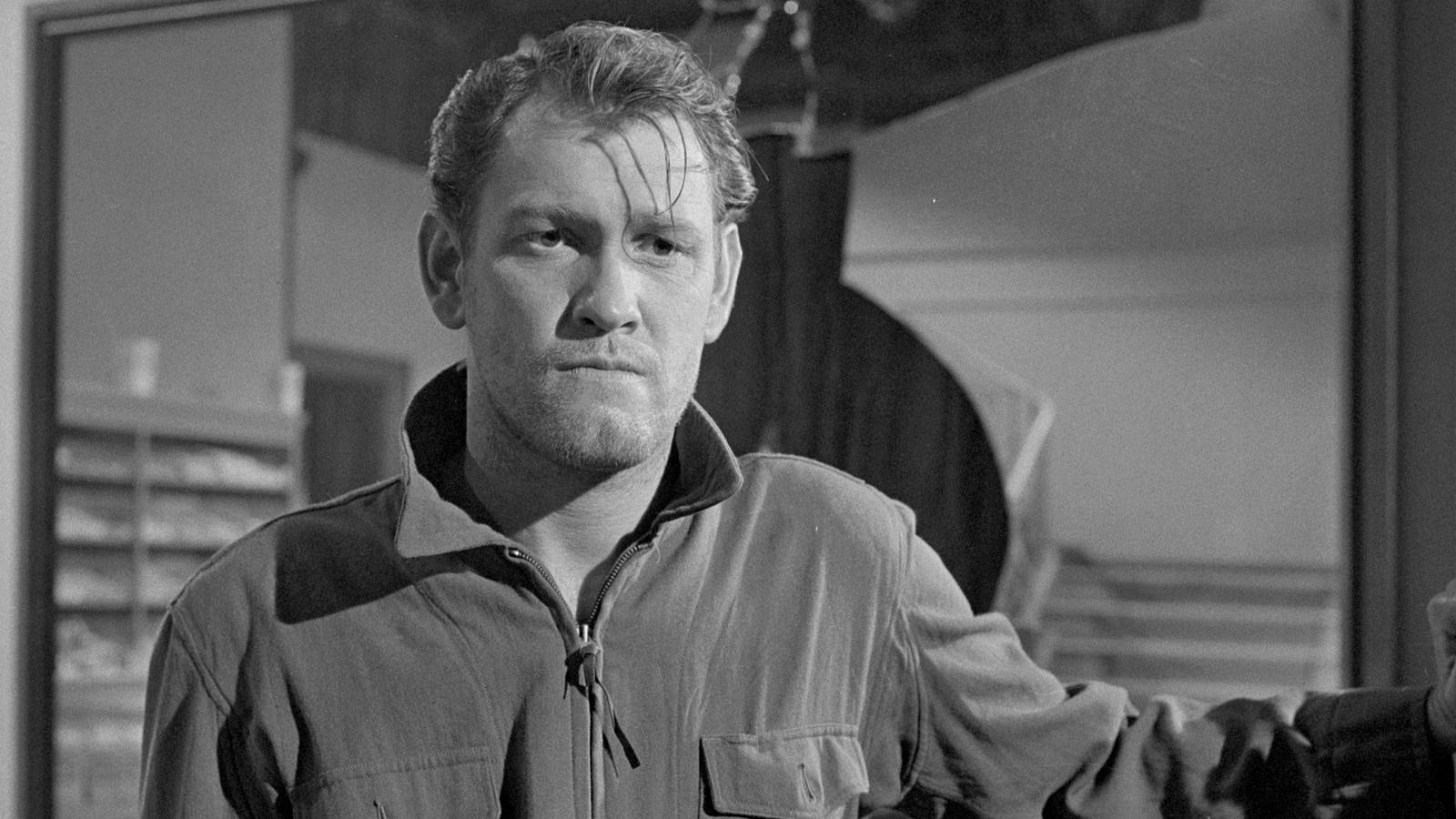
Published Aug 30, 2026, 7:00 PM EDT After joining Screen Rant in January 2025, Guy became a Senior Features Writer in March of the same year, and now specializes in features about classic TV shows. With several years' experience writing for and editing TV, film and music publications, his areas of expertise include a wide range of genres, from comedies, animated series, and crime dramas, to Westerns and political thrillers. The Twilight Zone is a groundbreaking work of sci-fi and horror that revolutionized television as a whole during the 1960s. But it’s even more than a historic landmark in screen storytelling. The show’s philosophical meditations on its themes, voiced by creator Rod Serling in narrations at the end of each episode, have resonated far beyond the era it helped define. Many of these closing monologues serve as life lessons for our own epoch. Indeed, one of the best Twilight Zone episodes ends with a quote that feels like it was written specifically with Millennials and Gen Z in mind. Serling could never have predicted how the 2020s would look, yet in this quote he hits upon a central feature of our age with eerie precision. Although it expresses a timeless truth, the line in question wasn’t nearly as pertinent to the social ills of 1959 as it is to a problem afflicting billions of people in 2026. The episode in question is far from the only time that The Twilight Zone predicted the present. But it would never do so again with such a profound sense of universality, that addresses a formative aspect of our species rather than scientific or historical developments. The Twilight Zone’s Greatest Life Lesson Comes In Its First Episode The very first episode of The Twilight Zone has a simple premise, yet explores depths of the human psyche that few other screen storylines have ever broached. It features one of best opening scenes in TV history, an extended sequence in which a man realizes he’s entirely alone in his home town. As he gradually descends into madness, it’s suddenly revealed that he’s been experiencing a simulation of reality, so that space agency scientists can determine his suitability for undertaking a lunar mission on his own, unaccompanied by any other astronauts. It’s following this revelation that Rod Serling shares his greatest life lesson with us. “There's one thing we can't simulate that's a very basic need,” Serling explains. “Man's hunger for companionship.” 67 years after they were spoken, these words have never been truer. In part, they have endured because they present a thesis that’s fundamentally timeless, and not related to any technological advancement or historic development. More importantly, though, this quote has taken on fresh significance in the 21st century, when the theme it addresses has never been more relevant. It’s almost as if Rod Serling is speaking directly to the generation of young people coming of age in the 2020s. Loneliness Is Now More Relevant Than Ever As A TV Theme From Netflix’s near-perfect psychological comedy-drama Bojack Horseman, to HBO’s dystopian masterpiece Station Eleven, the theme of loneliness is everywhere in contemporary television. It’s no wonder, because more people are living an isolated existence in real life than ever before, whether due to remote working, atomized housing conditions, or overdependence on the online world. At the same time, it seems as though humanity is attempting to do exactly what Serling says we can’t in The Twilight Zone. We’re trying to simulate companionship in the form of handheld devices and screens, and it isn’t working. The digital world is warping our social interactions and stunting our ability to communicate with one another in person. Mental health conditions such as anxiety and depression have to record numbers globally in the 2020s according to the World Health Organization, and our lack of genuine companionship appears to be a major reason why. People are hurting precisely because they crave that “basic need” Serling identified 67 years ago. Among the many ways in which The Twilight Zone broke new ground, the most relevant to today isn’t any formal or genre innovation. It’s the show’s philosophical exploration of the social themes that resonate even more with us today than with those who were watching in 1959, when the loneliness of our age was first elucidated with a single sentence. Release Date 1959 - 1964-00-00 Network CBS Showrunner Rod Serling The Twilight Zone is an anthology series that debuted in 1959, featuring a collection of standalone episodes encompassing drama, psychological thriller, fantasy, science fiction, suspense, and horror. Known for its macabre or unexpected twists, each story is distinct, exploring various speculative themes and human experiences.
67 Years Later, The Twilight Zone’s Greatest Life Lesson Is More Important Than Ever
Full Article
Original Source
Read the full article at Screenrant →KhanList aggregates and links to publicly available news content. We do not host full articles from third-party sources. Always verify important information with original sources.