
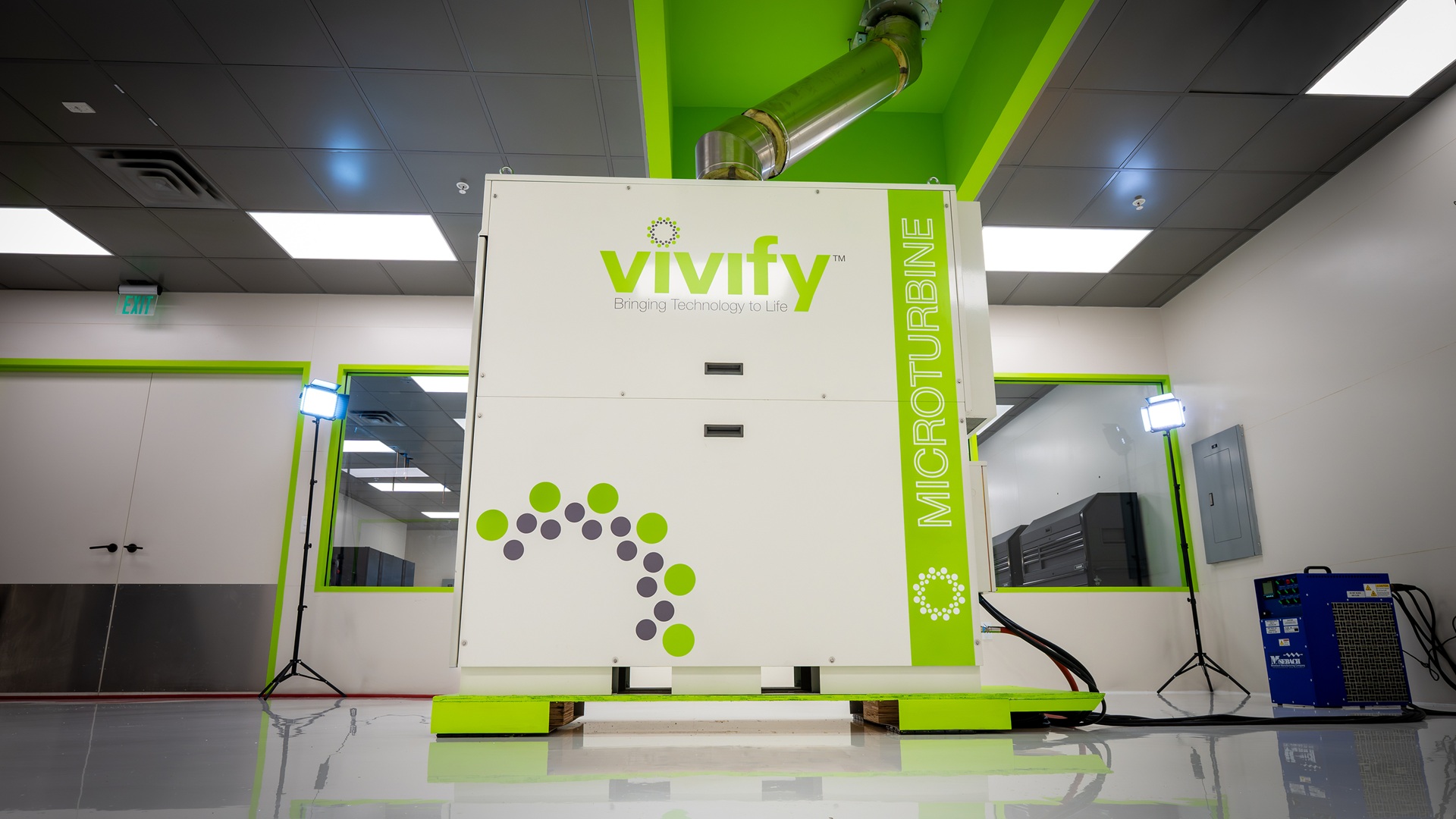
A US hydrogen energy company has recently launched independent testing of its HOG hydrogen power turbine in order to verify its performance and advance it to one megawatt (MW). Vivify Technology’s validation program will focus on the 65-kilowatt (kW) nominal turbine test unit. The Florida energy and infrastructure firm said the system, HOG, serves as the technical basis for the containerized Flying Pig power platform and its planned larger commercial systems. Jason Herring, Vivify Technology’s founder and CEO, said the firm does not expect people to accept HOG’s performance claims without a proof. “We are putting the entire system under independent measurement, and we will publish the results.” The program is designed to independently measure how the complete hydrogen system performs. The results are set to be made public by the end of the year. Putting HOG to the test The HOG (Hydrogen Oxygen Generator) is a hydrogen-based power system that uses water (including dirty and salt water) as its main input to produce electricity directly on site for facilities looking to reduce their reliance on the grid. It is also an emissions-free, self-supporting, closed-loop system. It generates hydrogen and demand, and combines the firm’s proprietary Pulsar system, multi-stage turbines, transformers, an H2O input generator, as well as combustion chambers. The generated hydrogen is then used in the system to produce electricity and heat. The firm announced an independent validation program for its hydrogen system.Credit: Vivify Technology The company’s newest Flying Pig containerized system is based on the HOG. Each Flying Pig module is designed to provide about one megawatt (MW) of power. It incorporates micro-hydro and steam turbines, eight Pulsar units, water handling, transformers and other equipment. Vivify said that the independent validation of HOG will examine five areas, such as energy balance and efficiency, sustained electricity generation and power quality, hydrogen production and water use, emissions, and safety. The tests will measure the complete system rather than the turbine or another individual component. Targeting megawatt power The data should reveal how much energy the HOG uses and how much electricity it generates. The program will also include hydrogen-flow verification, water mass measurements, continuous monitoring and thermal inspections. An independent physics review and witnessed testing are also planned. The framework requires at least 72 hours of continuous operation. Meanwhile, the firm prefers 30 days of monitoring. The testing framework follows standards from the Environmental Protection Agency (EPA), the International Electrotechnical Commission (IEC) and the International Organization for Standardization (ISO). The initial tests will evaluate the 65 kW turbine configuration behind the Flying Pig system. The system is designed to reach one megawatt by adding modular units. “A completed validation program establishes an independently measured performance baseline for larger-scale deployment, permitting, interconnection, and commercialization,” Vivify Technology stated in a press release. According to the company, independent data could help evaluate the technology before wider deployment. Additionally, completing the validation program could support future permitting, grid interconnection, commercialization and wider use. Herring told H2 Tech that the company aims to offer an alternative to traditional energy systems rather than compete within them. “Data centers, disaster zones, military operations, remote industrial sites, even the next frontier beyond Earth – they all point to the same truth: the world needs power that can move, scale, and operate outside the old rules,” he concluded. Get the latest in engineering, tech, space & science - delivered daily to your inbox.Based in Skopje, North Macedonia. Her work has appeared in Daily Mail, Mirror, Daily Star, Yahoo, NationalWorld, Newsweek, Press Gazette and others. She covers stories on batteries, wind energy, sustainable shipping and new discoveries. When she's not chasing the next big science story, she's traveling, exploring new cultures, or enjoying good food with even better wine.
65 kW hydrogen turbine undergoes independent tests ahead of 1 MW rollout by US firm
Full Article
Original Source
Read the full article at Interestingengineering →KhanList aggregates and links to publicly available news content. We do not host full articles from third-party sources. Always verify important information with original sources.